Photo credit: The Avid Outdoorsman
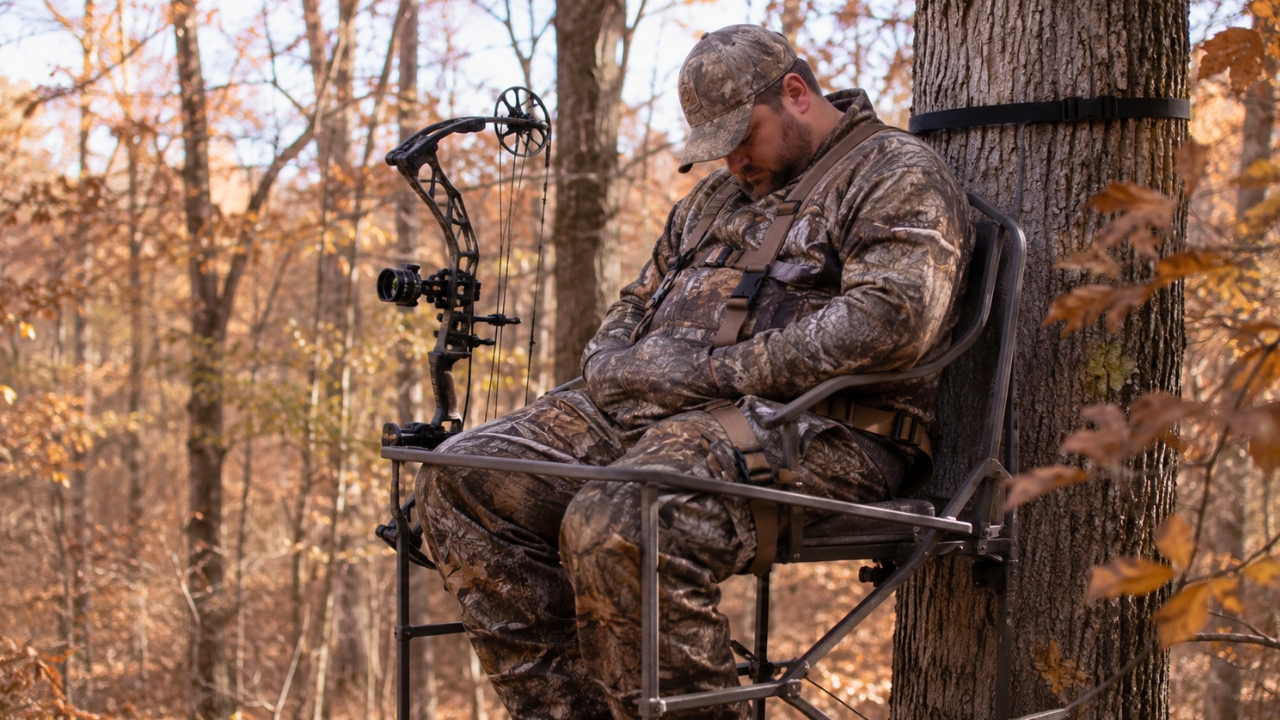
The hunter was supposed to be watching the woods.
Instead, the woods watched him sleep.
That is how these stories usually start. A hunter climbs into the stand with good intentions. He plans to stay sharp, keep scanning, listen for movement, and be ready when something steps out. Then the morning gets quiet, the body gets tired, and “resting my eyes” turns into an actual nap.
In a Reddit thread, hunters were talking through whether to hunt or not, and one story involved a hunter who fell asleep in the stand and woke up to a buck underneath him. That alone would be enough to make a person question every serious thing ever said about staying alert.
But the story got even better.
He shot the buck, then took another nap before tracking it.
That is a level of calm most hunters do not have.
Waking up to a deer under your stand is one of those moments that can scramble a person. You are not easing into the situation. You are going from asleep to hunt mode instantly. Your brain has to catch up with the animal, distance, angle, weapon, and safety all at once. One wrong move and the deer is gone. One rushed shot and the whole thing can turn into a bad tracking job.
The fact that he was able to wake up, process the buck, and make a shot says the nap did not completely ruin him.
It may have helped in one weird way: he was still.
A sleeping hunter is not checking his phone, shifting his feet, digging in his pack, eating snacks, tapping the stand rail, or looking around too aggressively. He is just sitting there, quiet enough that a buck apparently felt comfortable walking right under him. That does not mean falling asleep is a real strategy, but it does show how much stillness matters.
The buck came in while he was doing absolutely nothing.
That is funny because hunters spend so much energy trying to do the right thing. They buy gear, watch the wind, plan routes, hang stands, worry about scent, and study deer movement. Then a tired guy falls asleep and wakes up with a buck underneath him like the deer showed up for roll call.
Hunting can be rude like that.
The second nap is what makes the story feel legendary. Most hunters after shooting a buck are wide awake. Adrenaline hits. Hands shake. The brain starts replaying the shot. Was it good? Did he mule kick? Which direction did he run? How long should I wait? Did I hear him crash? Should I text someone? Should I climb down now?
This hunter apparently decided the buck could wait and went back to sleep.
Now, to be fair, waiting before tracking is often the right move. If a deer does not drop in sight, hunters are usually told to give it time, especially if they are not completely sure about the hit. Pushing too soon can bump a wounded deer and turn a short recovery into a long, miserable one.
So the waiting part makes sense.
The nap part is the funny part.
Most people wait by sitting there wide-eyed, replaying everything, trying not to climb down too early. This hunter waited by going back to sleep like he had scheduled a recovery nap into the plan. That is either incredible discipline or a man who was seriously tired.
Probably both, but leaning tired.
There is also a real safety side to all this. Falling asleep in a stand can be dangerous if a hunter is elevated and not properly secured. A harness matters. A sleepy hunter can shift, slump, startle awake, or lose balance. The story is funny because it ended with a buck and a nap, not a fall. But anyone who gets tired in a tree stand needs to take that risk seriously.
A box blind or ground setup is one thing.
An elevated stand is another.
Still, as hunting stories go, this one is hard not to love. It has everything camp humor needs: an accidental nap, a buck doing exactly what bucks are not supposed to do, a successful shot, and a second nap that makes the whole thing feel almost lazy on purpose.
The hunter may have done the right thing by waiting before tracking.
He just did it in the least anxious way possible.
And honestly, there is something almost unfair about that. Plenty of hunters sit all day alert, focused, uncomfortable, and freezing, then see nothing. This guy fell asleep, woke up to a buck, shot it, and slept some more before recovering it.
The woods does not reward effort evenly.
Sometimes it rewards stillness.
Sometimes it rewards patience.
And sometimes, apparently, it rewards a man who can sleep through half the hunt and still wake up at exactly the right time.
Commenters treated it like the kind of hunting story that makes everyone laugh and also quietly wonder if they should nap more.
Several hunters joked that sleeping might be the ultimate scent-control and movement-control strategy. A sleeping hunter is quiet, still, and not doing all the little things that normally get deer on edge.
Others pointed out that waiting before tracking is often smart. If a deer runs after the shot, giving it time can prevent bumping it and making recovery harder. The second nap may have sounded ridiculous, but the delay itself made sense.
A lot of people understood the exhaustion part. Early mornings, long sits, cold weather, and real-life schedules can make hunters tired enough that a stand starts feeling like a recliner.
Some commenters also brought up safety. Napping in a stand only stays funny if the hunter is secured and cannot fall. A harness and safe setup matter even more when fatigue kicks in.
The main takeaway was simple: the nap was accidental, the buck was unlucky, and the hunter somehow turned sleeping in the stand into a successful strategy.