Photo credit: SPRINGFIELD ARMORY/Youtube
Spend enough time around training ranges and you notice something: instructors are not usually showing up with the newest, loudest, most “influencer-approved” 9mm. They show up with pistols that run, pistols that students can get mags for, pistols that can be fixed quickly, and pistols that don’t make class day about the gun instead of the shooter.
That doesn’t mean every instructor carries the same thing, or that there’s one “best” answer. It means there are patterns. These are the kinds of 9mms you keep seeing on instructor belts and in loaner bags because they’re boring in the right ways, tough in the right places, and familiar to a lot of hands.
1. Glock 19 (Gen 3/4/5)
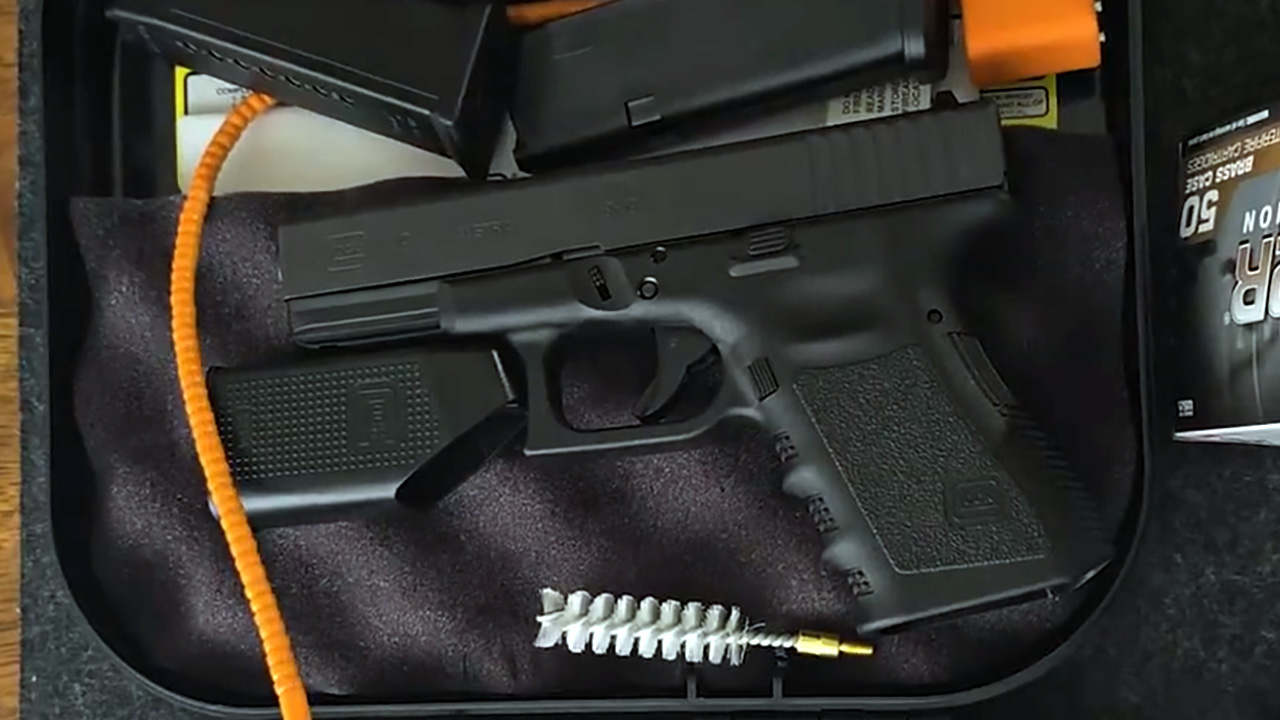
If you hang around a class long enough, you’ll see why the Glock 19 is the default answer. It’s not romantic. It’s not fancy. It just points naturally for most folks, carries without dragging your pants down, and eats practice ammo like it’s its job.
For instruction, it matters that magazines are everywhere, holsters are everywhere, and parts are everywhere. When something breaks, it’s usually a quick fix, not a gun-down drama. There’s a reason so many trainers can teach off one platform and know exactly what a student is dealing with.
2. Glock 17 (Gen 3/4/5)
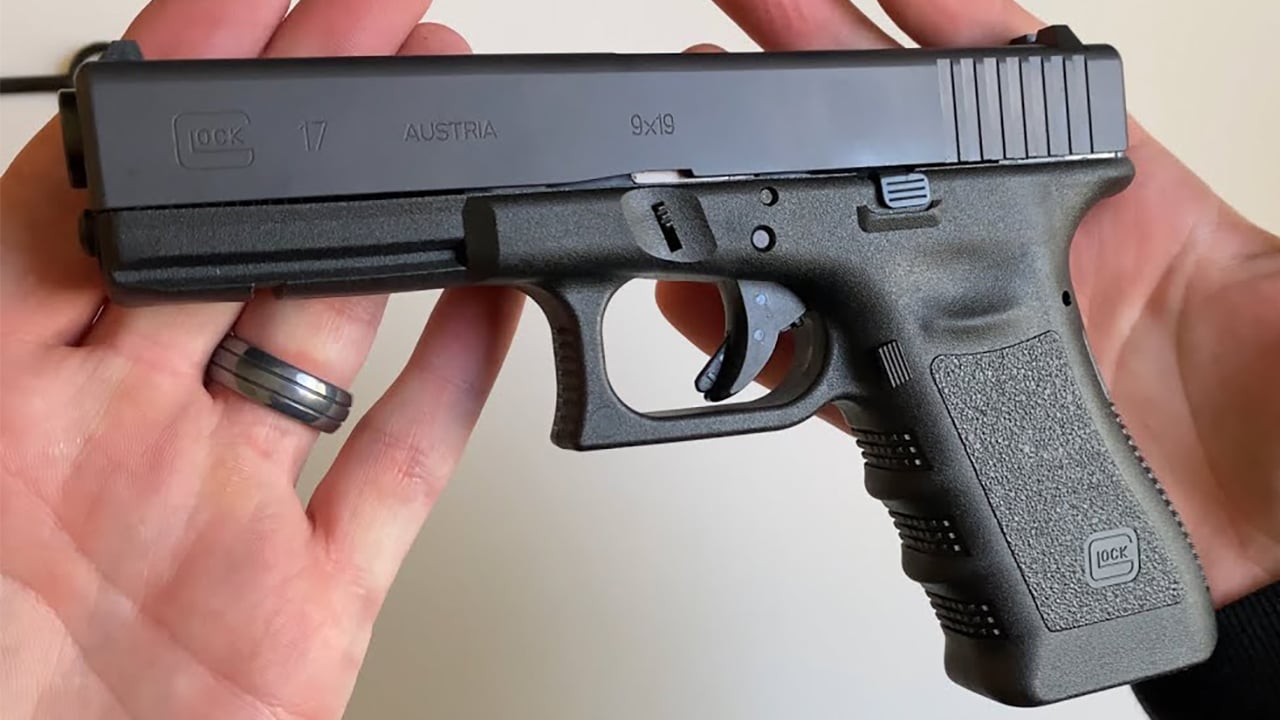
The Glock 17 shows up when an instructor wants the full-size grip and a little more sight radius, especially for longer strings and higher round counts. It’s a “range work” pistol that still makes sense for duty-style instruction.
It’s also a common loaner because it’s easy to shoot well even when someone is new. Bigger grip, softer feel, fewer bobbles with reloads. For classes where fundamentals matter, that extra size helps more students than it hurts.
3. Glock 45
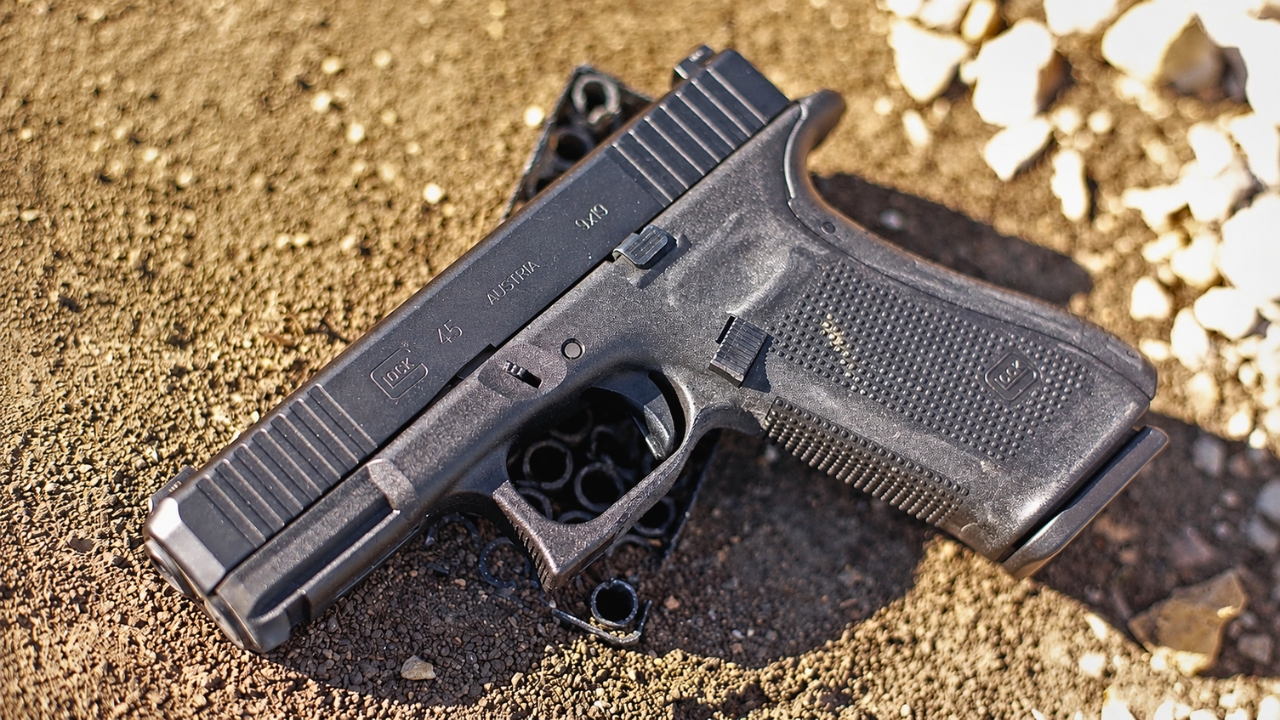
The Glock 45 is the “full grip, compact slide” setup that a lot of working shooters have settled into. It carries better than a 17 for some body types but gives you the hand-filling frame that keeps new shooters from shifting their grip every three rounds.
Instructors like consistency. A gun that runs like a 19 but handles like a 17 is right in that sweet spot for teaching recoil management and fast, clean manipulations.
4. Glock 34

When you see a Glock 34 on the line, it’s usually under somebody who shoots a lot and cares about performance. The longer slide and sight radius make it easier to call shots and easier to demonstrate what “good” looks like at speed.
It’s not everyone’s carry gun, but for teaching, it makes sense. A gun that’s forgiving helps an instructor focus on the student instead of fighting their own equipment in front of the class.
5. SIG Sauer P320 (Full Size/Carry/X-Series)

Like it or not, the P320 is a major player now, and instructors use them because a ton of students show up with them. The grip modules and sizes give options without changing the whole system.
The good ones run hard, and the X-Series style guns are easy to shoot well. Also, when you teach a platform that’s common, you spend less time explaining oddball controls and more time building solid habits.
6. SIG Sauer P365 / P365 XL / P365 XMacro
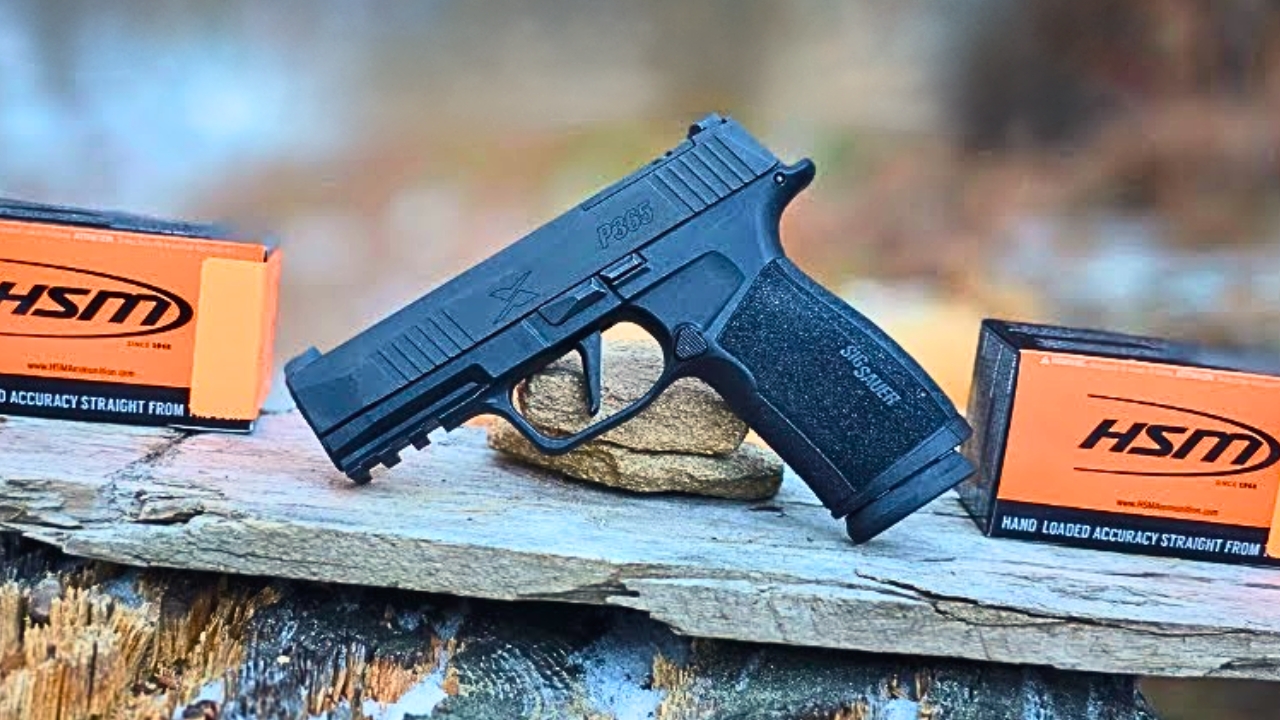
Micro-compacts used to be a compromise you tolerated. The P365 family turned into something instructors actually carry daily and still teach with, because it shoots bigger than it looks.
For concealed-carry classes, these show up constantly. The key is being honest: small guns are less forgiving. The P365 line is one of the few that gives students a fighting chance without feeling like a tiny bar of soap in recoil.
7. Smith & Wesson M&P9 M2.0 Compact
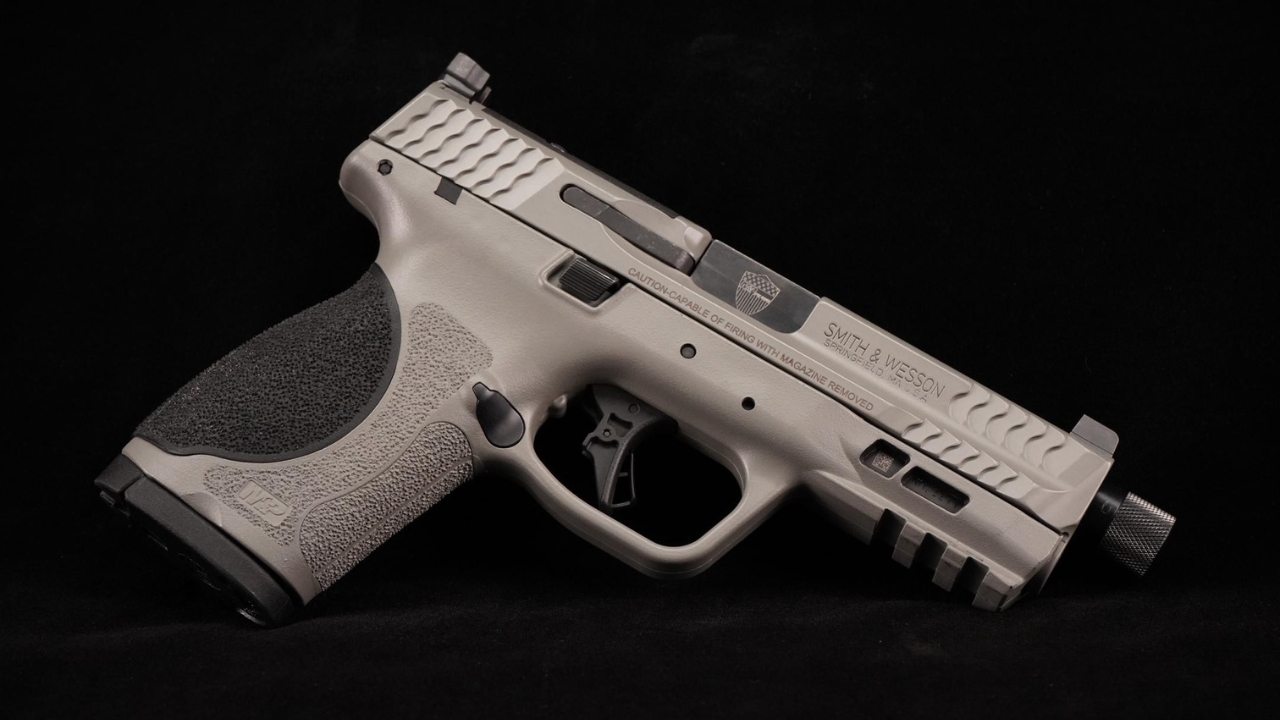
The M&P9 M2.0 Compact is one of those pistols that quietly won a lot of instructors over. The grip texture is aggressive enough that sweaty hands and dusty range days don’t turn into a control problem.
It’s also a pistol that fits a lot of hands. That matters when you’re teaching. If a student is struggling with reach and grip, an instructor with an M&P has an easy time demonstrating alternate backstraps and proper hand placement.
8. Smith & Wesson M&P9 M2.0 Full Size
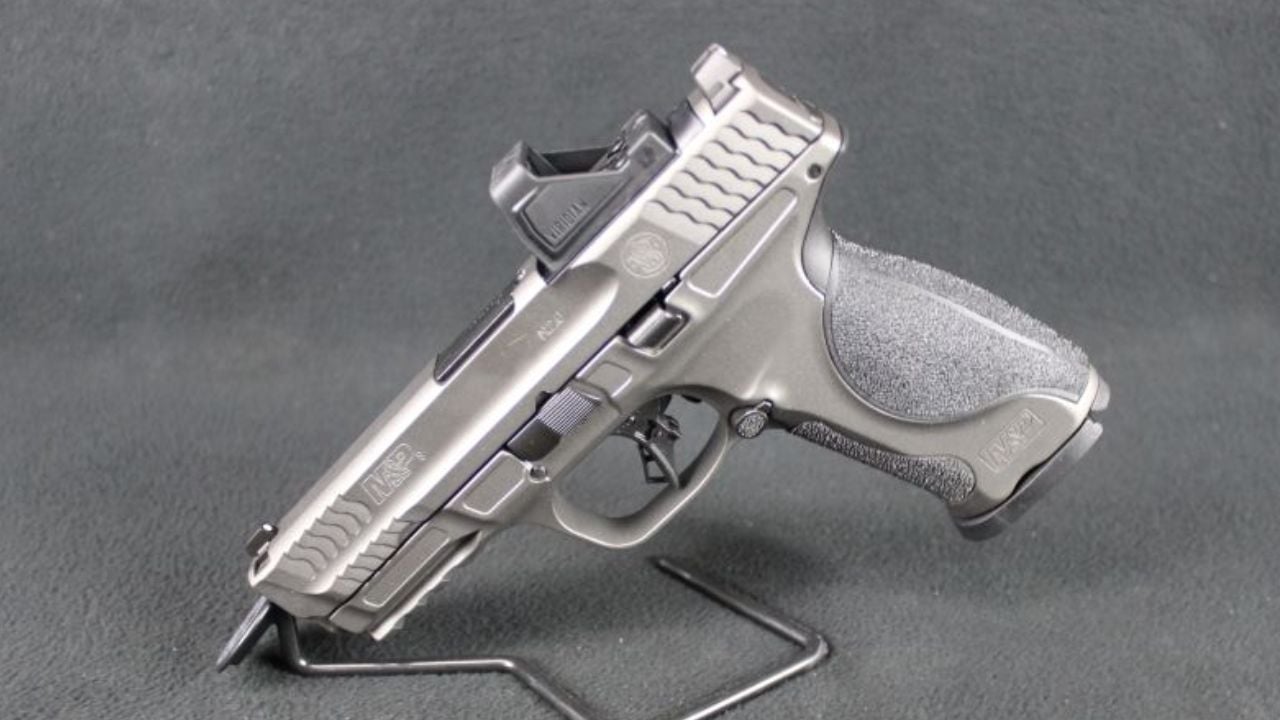
The full-size M&P9 M2.0 is common in higher-round-count courses where comfort and controllability matter. It’s a steady shooter, and the ergonomics work for a wide range of students.
This is also one of those guns that tends to keep running even when it’s filthy. Training guns get neglected. Anybody who says otherwise isn’t being honest about how many pistols get tossed into bags between weekends.
9. CZ 75 SP-01
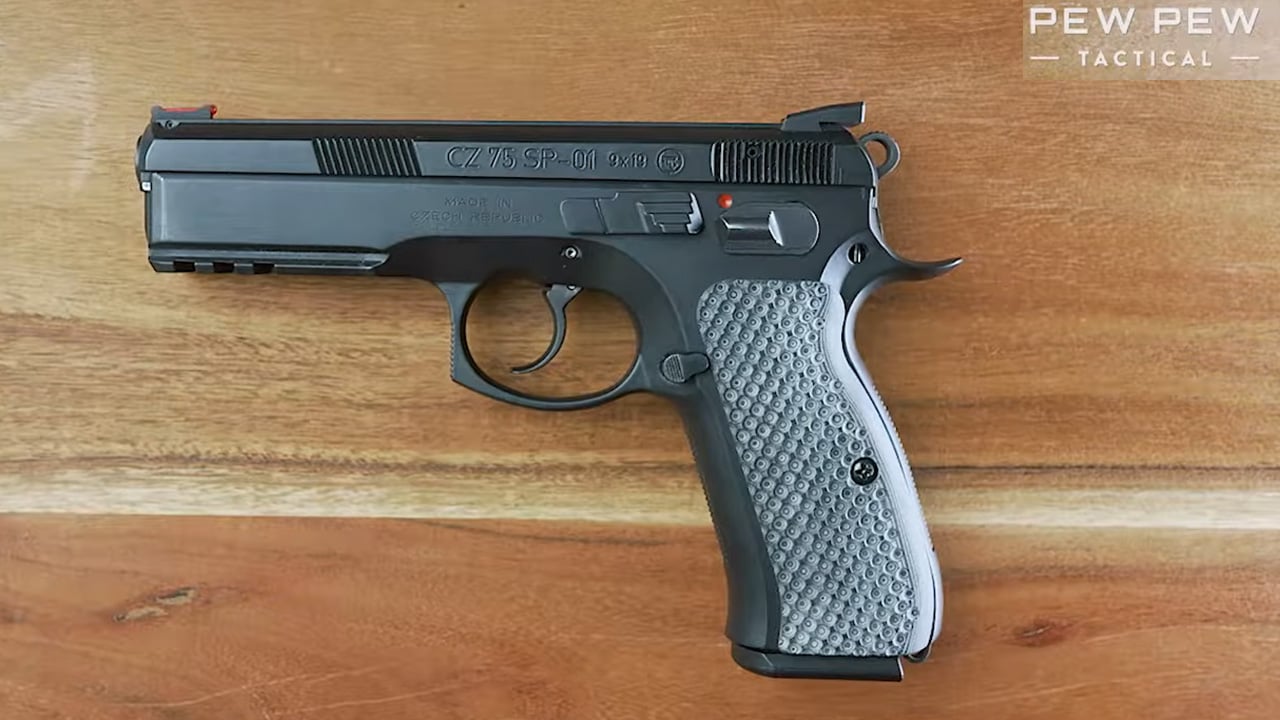
When a CZ SP-01 shows up, it’s often in the hands of someone who likes a heavier, softer-shooting gun and doesn’t mind a hammer-fired system. The weight is real, but so is the control you get back.
For teaching recoil control and follow-up shots, it’s almost cheating. The downside is it’s not the simplest platform for brand-new shooters, but good instructors who run them usually know how to explain DA/SA without confusing folks.
10. CZ P-10 C

The CZ P-10 C is a striker-fired pistol that a lot of instructors consider a sleeper. It’s accurate, it points well, and it has a good feel in the hand without being overly blocky.
It doesn’t have the same accessory ecosystem as a Glock, but it’s far better supported now than it used to be. If an instructor wants something a little different without going “weird,” this is a common pick.
11. CZ P-07

The P-07 is one of those pistols that makes sense for instructors who still like a decocker and a hammer, but want a lighter, modern frame. It’s compact enough to carry, big enough to shoot hard.
It also teaches a student something useful: managing a first double-action pull and then running clean singles. That’s not for everybody, but it builds discipline if it’s taught right.
12. Heckler & Koch VP9
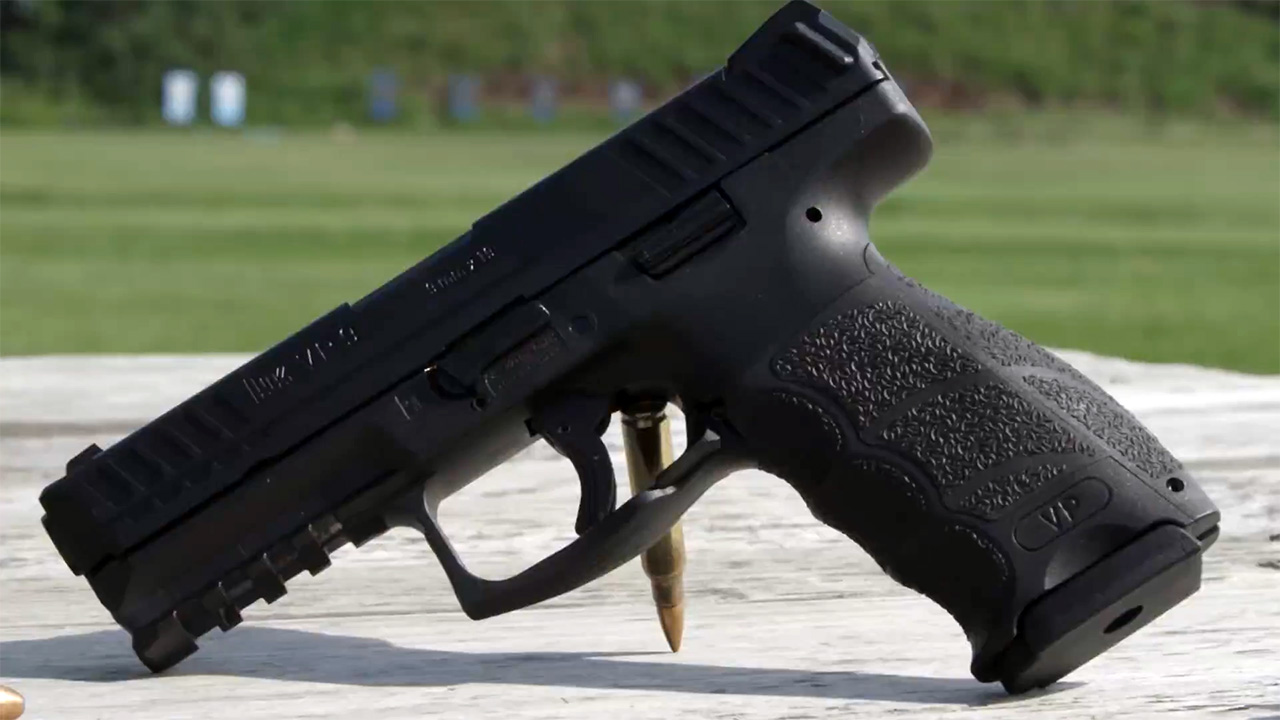
The VP9 shows up because it’s easy to shoot well and feels good in the hand. The grip panels and backstraps let an instructor get the fit close for different students, and fit matters more than folks want to admit.
It’s not the cheapest gun to buy or feed with accessories, but it’s a smooth, reliable shooter. In a class, that counts for a lot.
13. Heckler & Koch P30
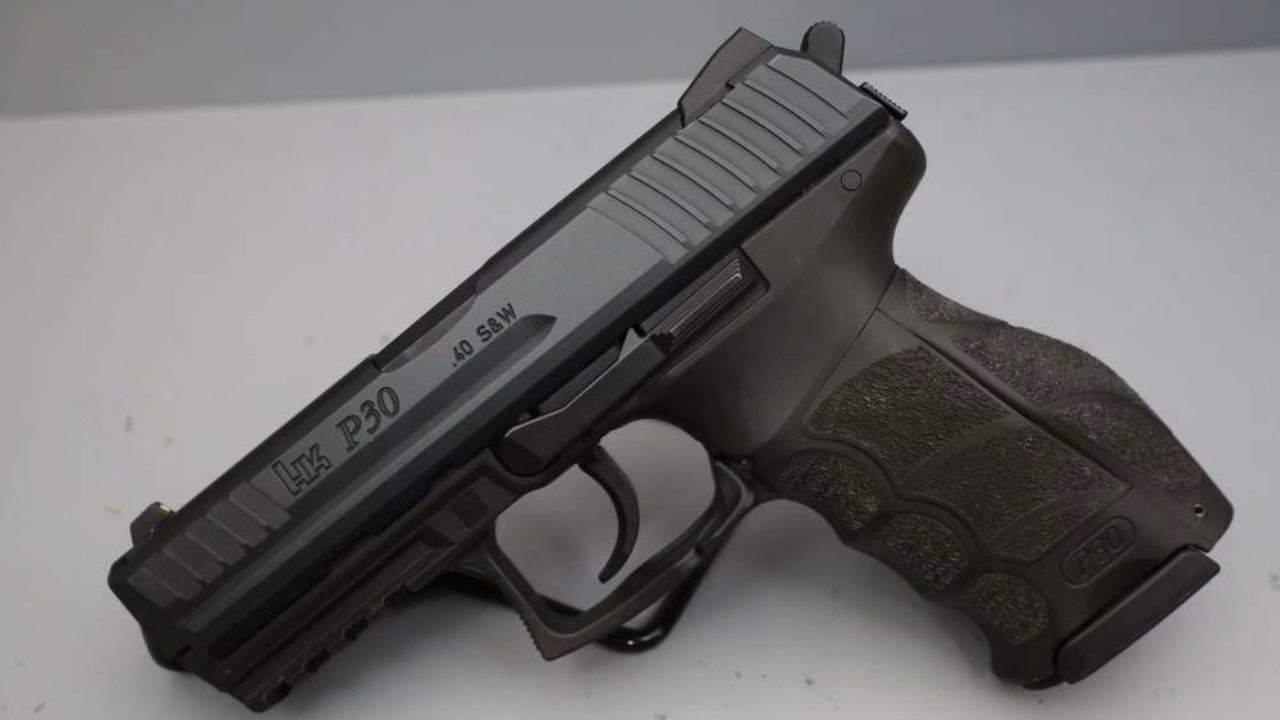
The P30 is the hammer-fired cousin that instructors run when they want HK reliability and DA/SA controls. It’s built like it expects to be abused, which is basically what training pistols sign up for.
It’s also a gun that rewards proper grip and trigger control. It will tell on you if you’re sloppy. For teaching, that’s not a bad thing.
14. Walther PDP (Compact/Full Size)
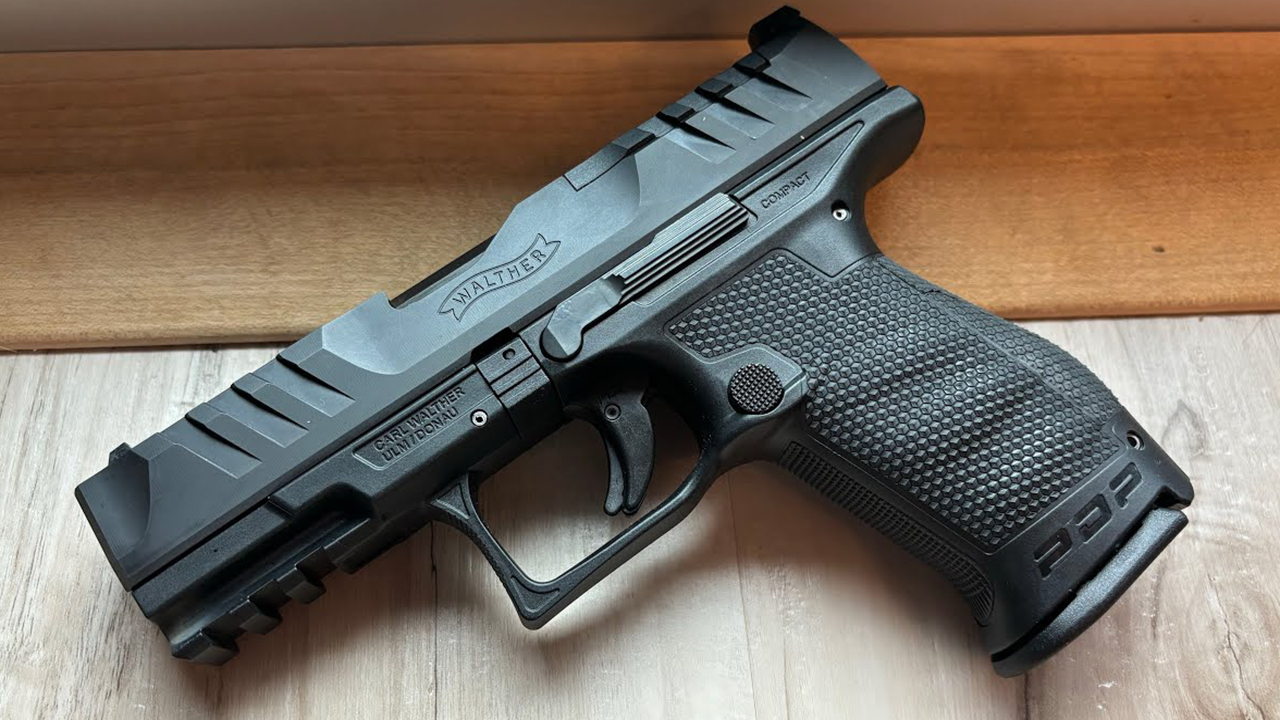
Walthers have a way of making average shooters look better, and the PDP keeps that going. The trigger feel and the ergonomics help students understand what a clean press is supposed to be.
Instructors like guns that help demonstrate. The PDP is one of those. The only caution is it can feel a little snappy in some configurations, so technique has to be there.
15. Beretta 92G / 92FS

The Beretta 92 is old-school, but it still shows up because it works and because some instructors came up on it. It’s soft shooting, especially with decent ammo, and it’s got a track record you can’t fake.
It’s big, and the slide-mounted safety can be a training moment all by itself. Still, if you want to teach fundamentals on a smooth-running pistol that doesn’t beat hands up, it’s hard to hate on the 92.
16. Beretta PX4 Storm Compact
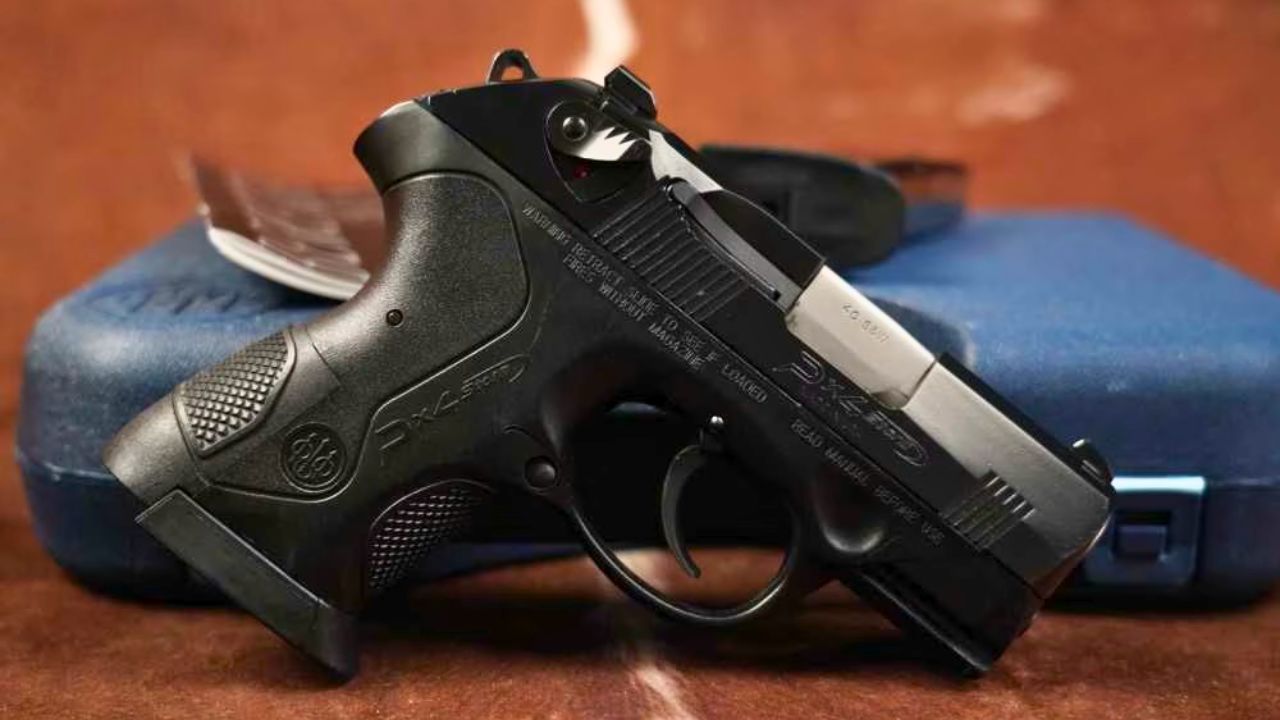
The PX4 Compact is one of those pistols that gets laughed at online until you actually shoot it. The rotating-barrel design can feel surprisingly soft, and instructors who like them tend to really like them.
It’s not as common as striker-fired guns, so students may not have immediate familiarity. But as a teaching tool for recoil control and tracking the front sight, it’s a nice option.
17. Ruger Security-9
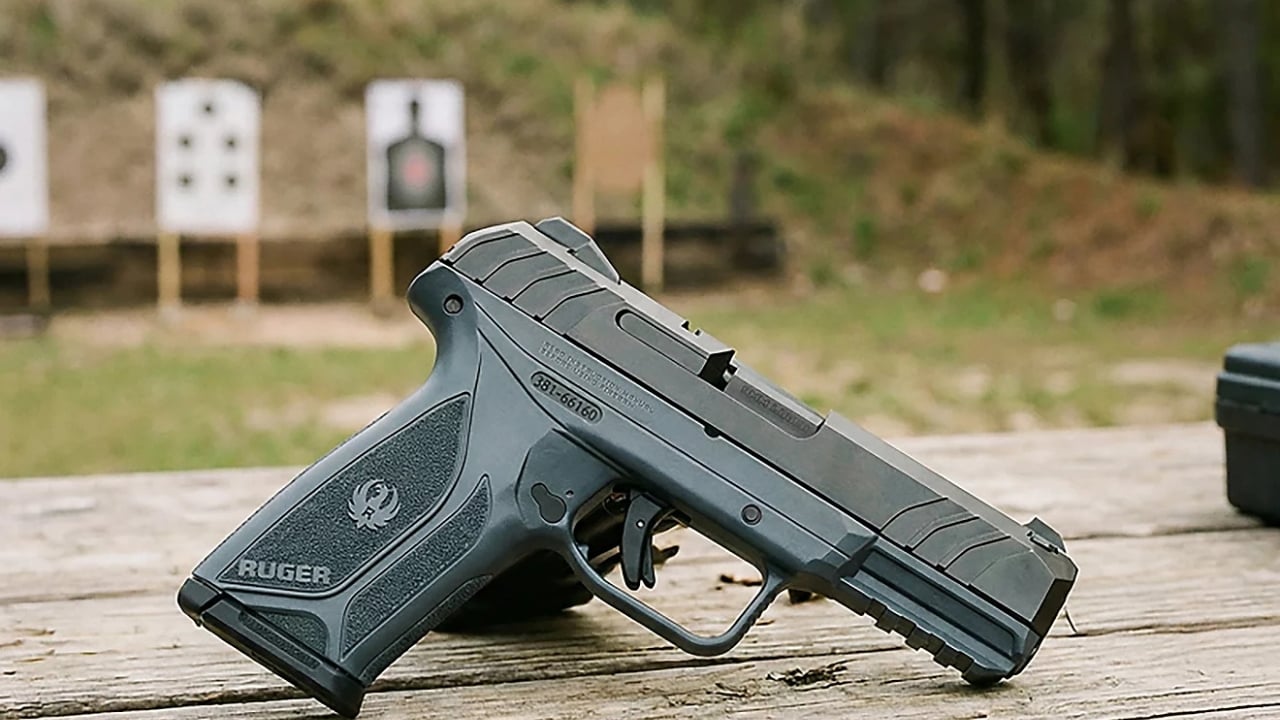
The Security-9 is not a boutique pistol, and that’s part of why it ends up in classes. It’s a realistic gun for a realistic budget, which is what a lot of new shooters are actually shopping with.
Instructors who use them typically appreciate that Ruger made something simple and workable. It’s not the softest shooter and the trigger isn’t magic, but it’s a solid “regular person” pistol to teach on.
18. Ruger Max-9
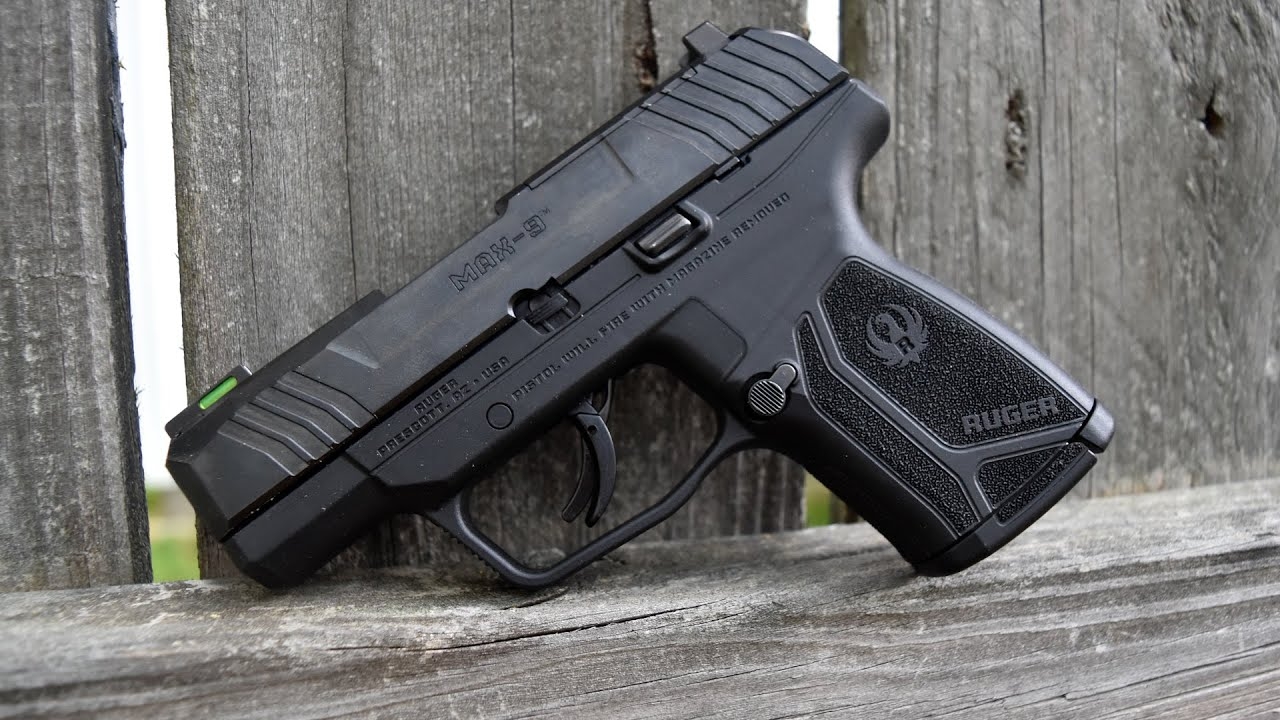
The Max-9 shows up in carry-focused instruction because many students are carrying micro 9s now, whether we like it or not. It’s thin, it hides well, and it’s priced where folks can actually buy it and still afford ammo.
Small guns are harder to run. An instructor with a Max-9 is usually making a point: you can carry a small pistol, but you still have to train like it’s a real tool, not a lucky charm.
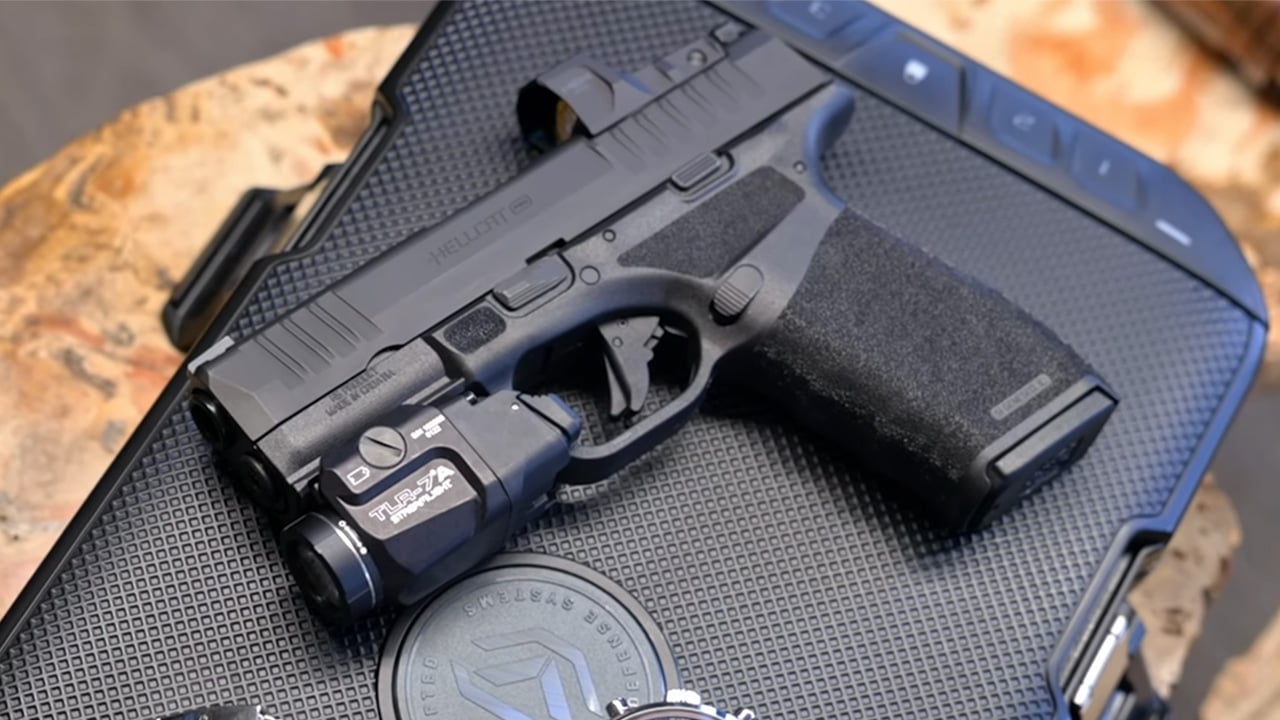
19. Springfield Armory Hellcat Pro
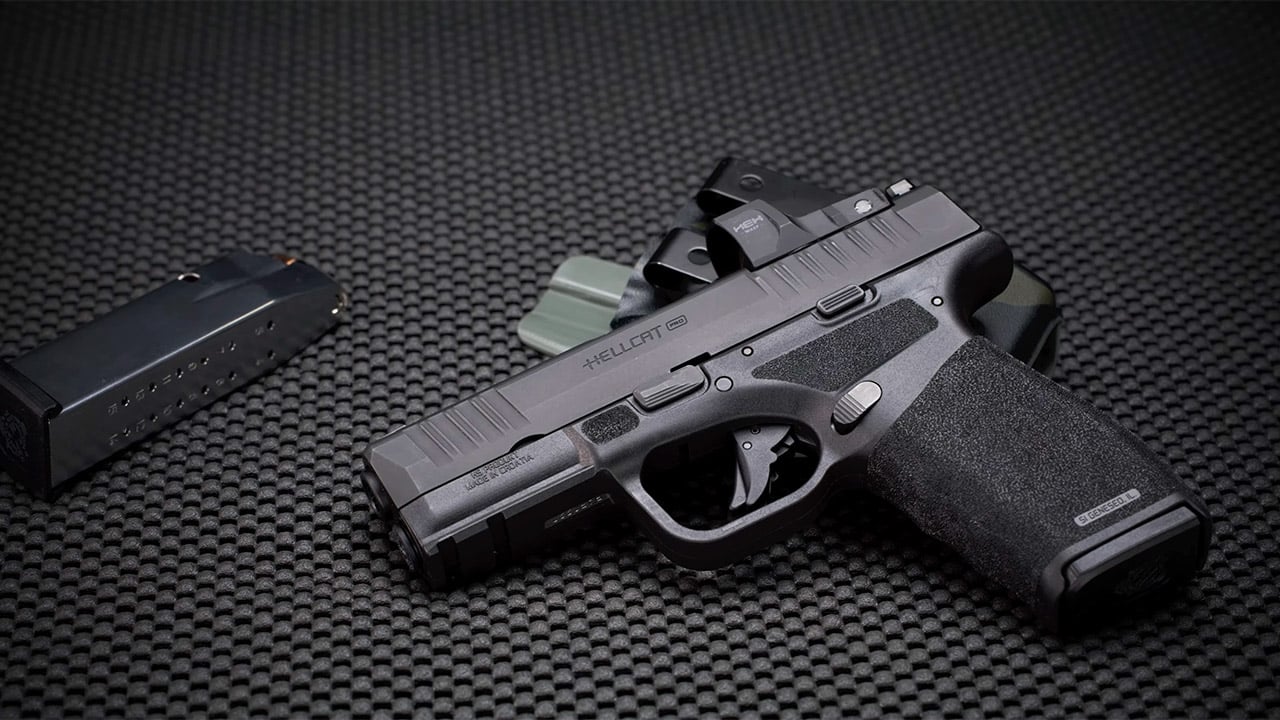
The Hellcat Pro is common because it splits the difference between “tiny carry gun” and “shootable class gun.” You get a longer grip and more capacity without going back to a brick on your belt.
Instructors like it for concealed-carry courses because it’s what a lot of students own. And when the instructor runs one too, they can diagnose grip issues and recoil control problems faster because they know exactly how that platform behaves.
20. FN 509
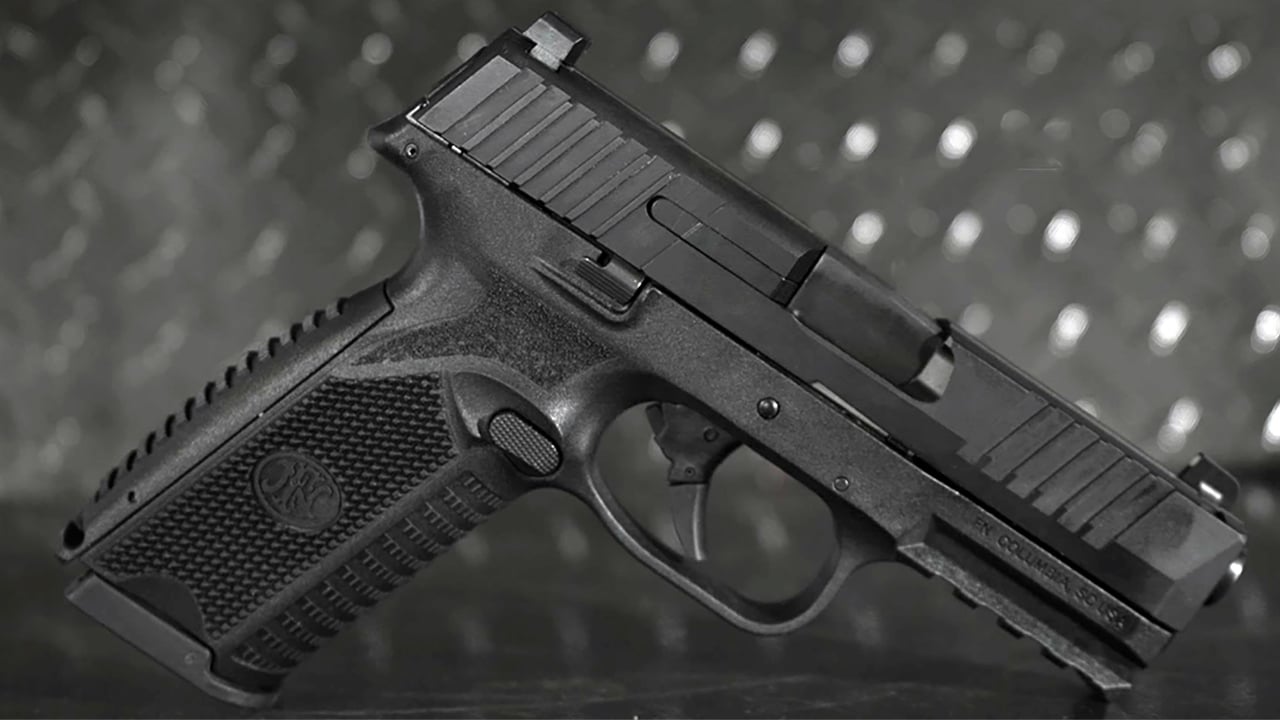
The FN 509 isn’t as common as the big three, but it’s common enough on training lines to earn a spot here. It’s a durable, duty-leaning pistol that holds up well to hard use.
It also has a feel that some shooters prefer over other striker guns, especially with gloves or in wet conditions. For outdoorsmen who carry around the farm or while checking trail cameras, that matters more than internet opinions.
None of these pistols will fix bad habits, and every one of them can be made miserable with the wrong holster, cheap magazines, or neglect. But there’s a reason instructors keep circling back to the same handful of 9mms: they’re predictable, support is strong, and they let the class be about shooting instead of troubleshooting. If you’re picking a pistol to learn on, “boring and proven” is not an insult. It’s the whole point.
Like The Avid Outdoorsman’s content? Subscribe to our newsletter so you never miss an article.
Here’s more from us: