Photo credit: Hunt Fish Shoot/YouTube
The .45 ACP market is not as crowded as it once was, but the pistols that remain give shooters some remarkably different ways to launch the same big cartridge. You can still choose a classic all-steel 1911, a hammer-fired duty pistol, a high-capacity tactical gun, or a modern striker-fired design with an optic sitting on top.
The best .45 ACP pistol therefore depends partly on what you expect it to do. Some guns below are built around duty reliability, others prioritize capacity, and several exist because the 1911 remains one of the finest-shooting pistol designs ever made. What they share is that they give the .45 ACP cartridge a platform worthy of it. These are the 20 I would put at the top of the list.
Glock 21 Gen5 MOS

The Glock 21 Gen5 MOS is probably the easiest .45 ACP pistol to recommend to someone who wants one gun that can take abuse, carry a serious ammunition load, and accept a modern red-dot sight without turning the purchase into a project. The Gen5 version holds 13 rounds in the standard magazine and finally brings the big Glock fully into the current optics-ready era.
What makes the G21 so good is not refinement. The trigger is not remarkable and the grip is still substantial. Its appeal is predictability. The gun is straightforward to maintain, recoil is surprisingly manageable for its weight, magazines are widely available, and there is an enormous aftermarket. If I wanted a full-size .45 to shoot heavily rather than admire, the G21 would be near the very top of my list.
FNX-45 Tactical

The FNX-45 Tactical is one of the few .45 ACP pistols that still feels genuinely overbuilt in the best possible way. It gives you a hammer-fired DA/SA system, threaded barrel, optics capability, suppressor-height sights, and 15-round magazines in a package designed around serious use rather than retro appeal.
It is undeniably large, but that size helps tame the cartridge. The grip gives you plenty of leverage, and the pistol feels much more controllable than a compact .45 loaded with the same ammunition. FN currently lists the Tactical with 10- or 15-round magazine configurations, and there are very few factory .45s that combine this much capacity with such a mature design.
FN 545 Tactical
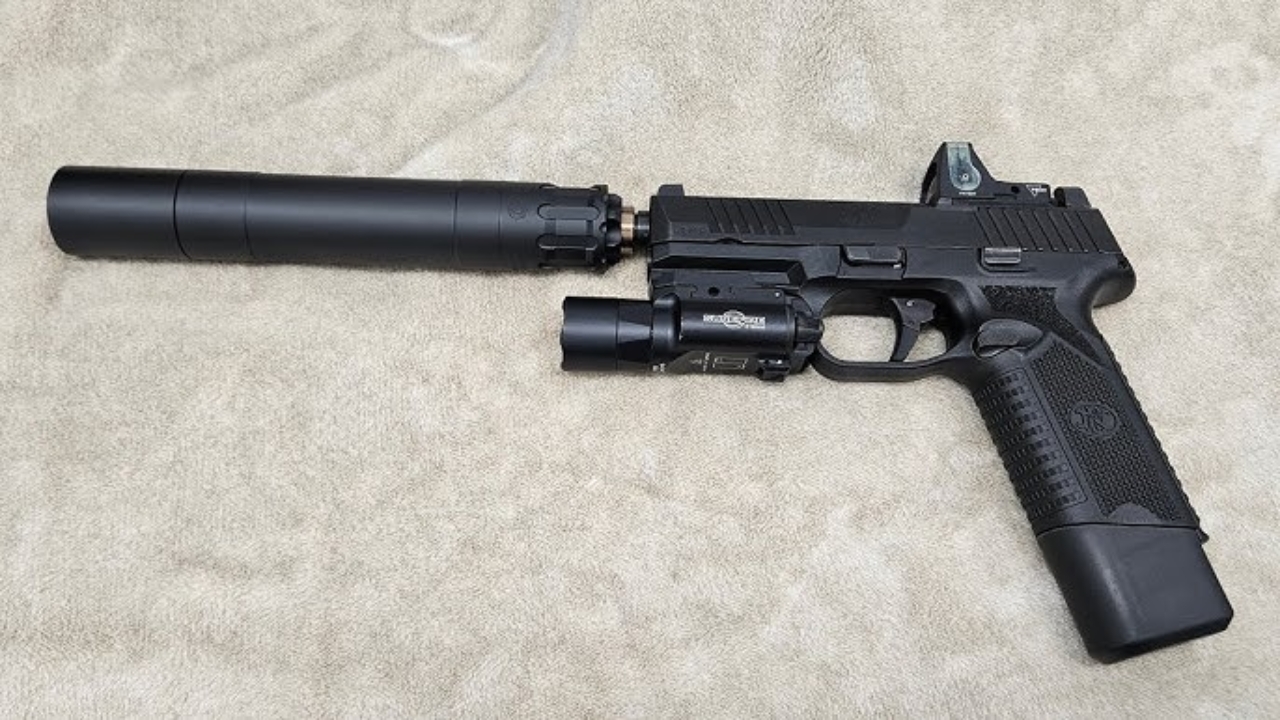
The 545 Tactical is what happens when FN takes the modern striker-fired formula and scales it properly for .45 ACP. You get an optics-ready slide, threaded barrel, suppressor-height sights, excellent grip texture, and significantly more capacity than shooters traditionally associate with the cartridge.
The extended magazine is the headline feature because it can push capacity to 18 rounds, but the standard magazine already gives you plenty to work with. More importantly, the pistol does not feel like an old .45 design updated reluctantly. It feels like a current defensive handgun that simply happens to be chambered in .45 ACP. For someone who wants capacity and modern features without moving to 10mm, this is one of the strongest options available.
Heckler & Koch HK45
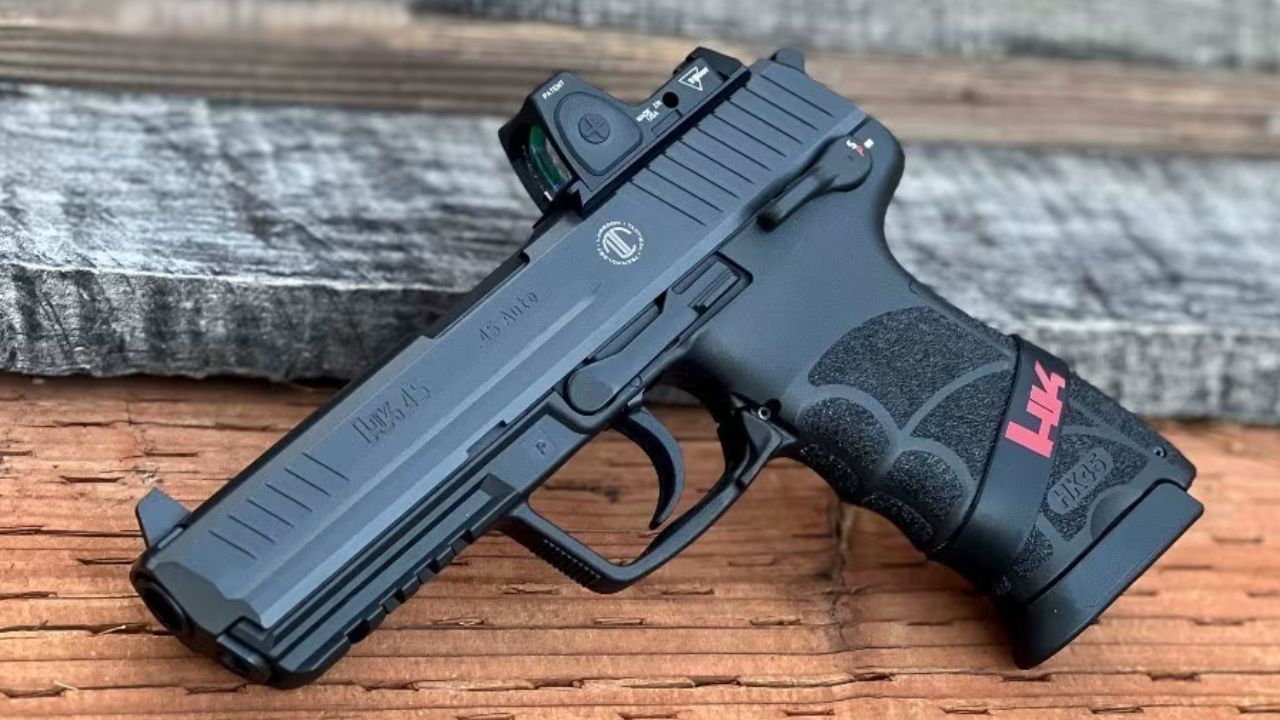
The HK45 is one of the best examples of what a traditional hammer-fired .45 can still do better than many newer designs. The grip is much more ergonomic than the older USP, the controls are fully developed, and the recoil system helps make the pistol feel softer than its size and weight suggest.
Capacity is only 10 rounds, which looks modest next to the FN offerings, but the HK45 is not really trying to win a magazine-capacity contest. It is about durability, controllability, and a trigger system that gives shooters multiple options. HK continues to support DA/SA and LEM-style variants, and the platform was designed around extensive hard use. If reliability matters more than specifications on a box, the HK45 remains extremely difficult to dismiss.
Heckler & Koch USP45 Expert
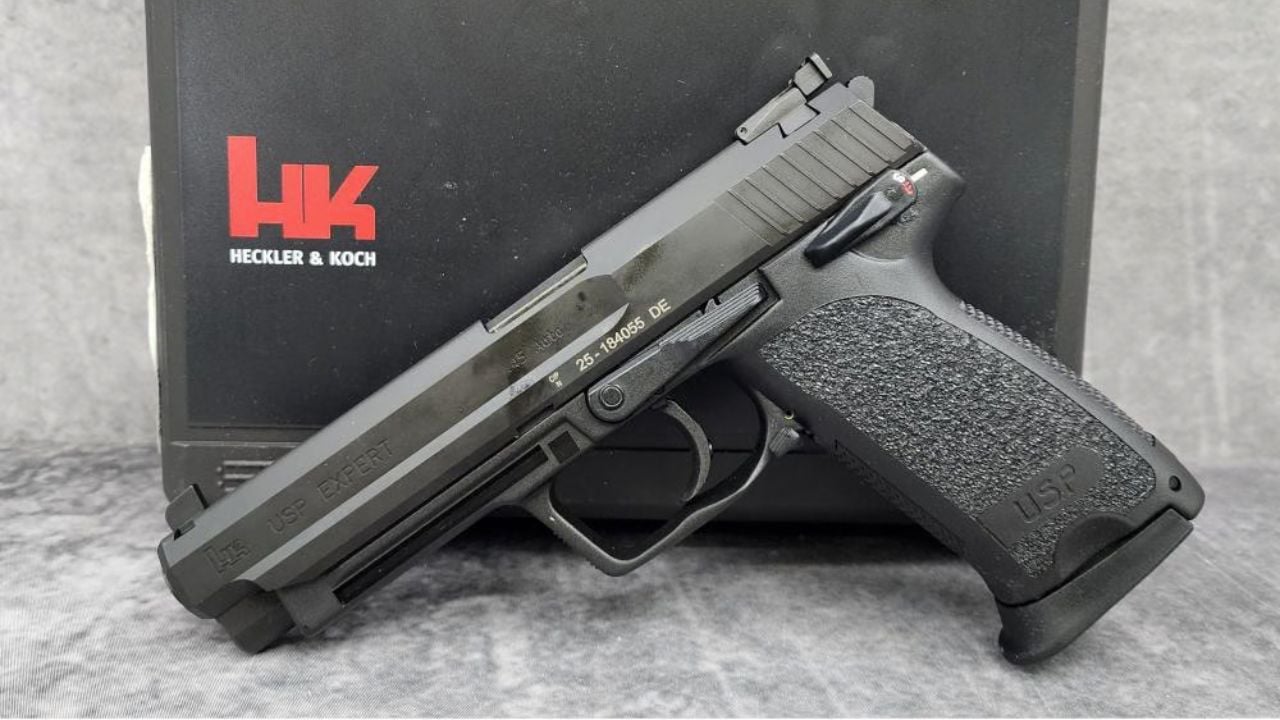
The USP45 Expert is what I would choose if I wanted the old-school HK durability of the USP but cared more about shooting performance than compactness. The longer slide and barrel give the pistol excellent balance, and the trigger setup is more refined than the basic service-oriented USP.
It is a large handgun, and the grip can be a lot for smaller hands. That is part of the bargain. The Expert gives you enough mass and sight radius to make .45 ACP feel extremely controlled, while retaining the rugged mechanical design that made the USP famous. It may not be as fashionable as an optics-ready striker gun, but for shooters who still value iron sights, hammer-fired operation, and mechanical longevity, it belongs in the conversation.
Smith & Wesson M&P45 M2.0
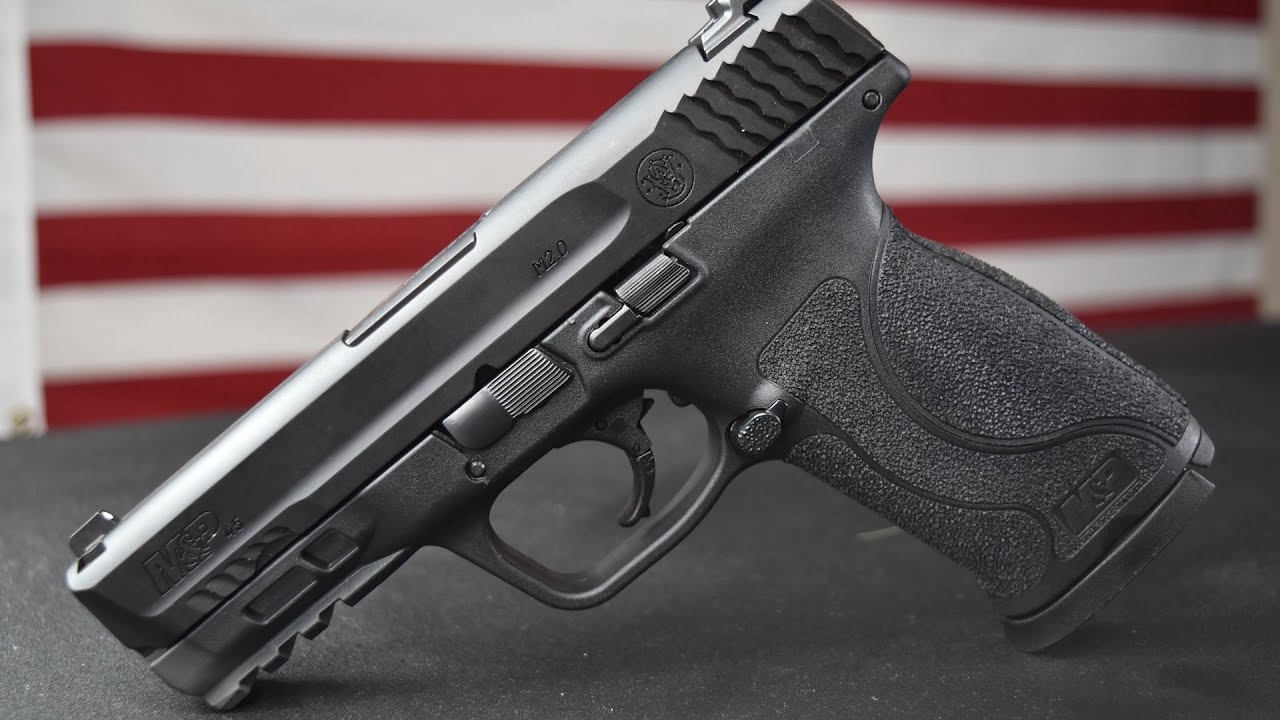
The M&P45 M2.0 is one of the most underrated ways to get into a modern full-size .45. The grip shape is far easier for many shooters to manage than the older large-frame polymer .45s, and Smith & Wesson’s modern grip texture gives you excellent control without needing aftermarket panels or sleeves.
The biggest advantage is familiarity. If you already shoot an M&P in 9mm, the .45 version does not require relearning the entire platform. The controls, grip angle, and overall feel remain familiar while the larger cartridge gives the gun a different personality. It lacks the outrageous capacity of the FN 545, but it is a very sensible defensive .45 for someone who wants polymer simplicity without moving to Glock.
Springfield Armory 1911 TRP

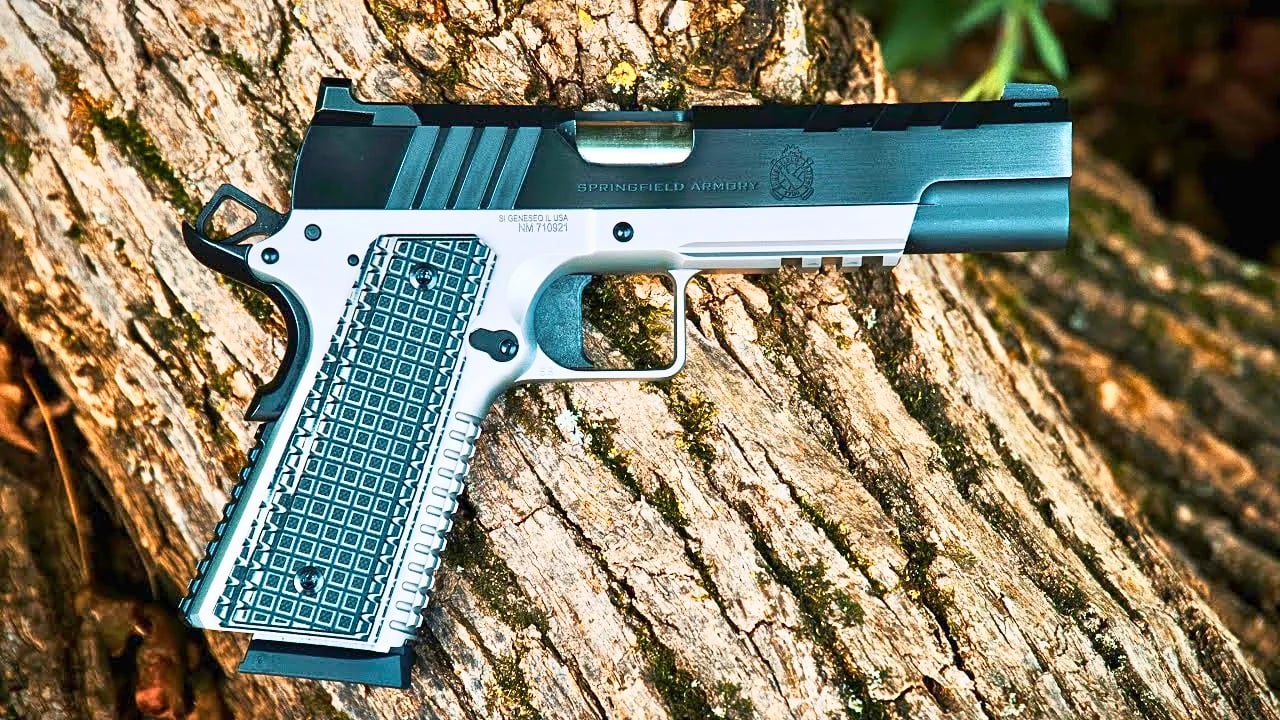
The TRP sits in a sweet spot between ordinary production 1911s and full custom guns. Springfield gives it the kind of fit, checkering, sights, and overall refinement that noticeably separate it from an entry-level Government Model without pushing it into true custom-shop pricing.
The steel frame makes .45 ACP feel exactly the way it should in a full-size 1911. Recoil comes straight back, the trigger breaks cleanly, and the grip remains slim despite the large cartridge. Springfield continues to offer modern TRP configurations, including railed .45 ACP versions. If I wanted one serious .45-caliber 1911 that could serve equally well at the range and in a defensive role, the TRP would be an easy finalist.
Dan Wesson Specialist
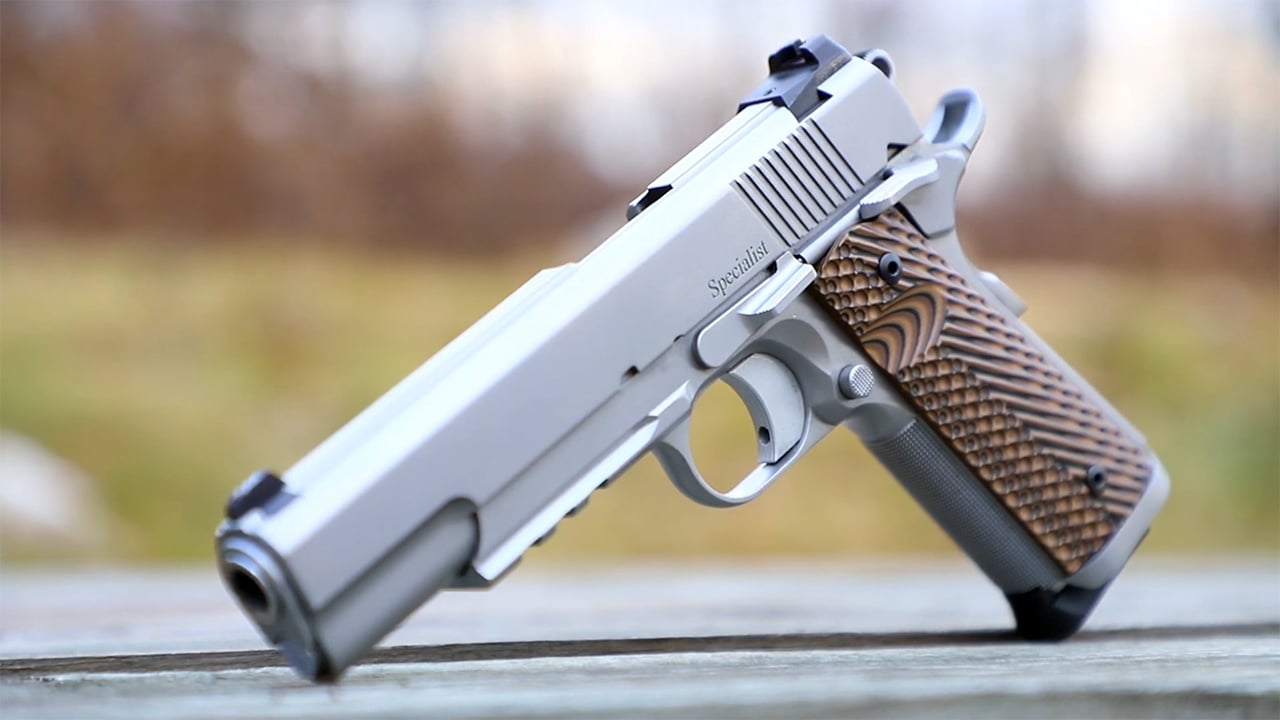
The Specialist is one of the best answers for someone who wants near-custom 1911 quality without immediately moving into the price range of a fully hand-built gun. The fit, machining, trigger, sights, and overall construction are a significant step above the average production 1911.
The full-size steel frame also makes it an excellent .45 ACP host. It stays settled during rapid fire and gives the cartridge the kind of controllability that keeps people loyal to the 1911 platform. Recent testing still lists the Specialist in .45 ACP alongside other chamberings, reinforcing that this is not merely an old model living on reputation. For the money, it may be one of the best ways into a genuinely premium 1911.
Wilson Combat CQB

The CQB has been one of the defining high-end fighting 1911s for years. Wilson Combat’s attention to barrel fit, trigger quality, grip treatment, and reliability is exactly what you are paying for.
A cheaper 1911 can fire the same ammunition, but that misses the reason people buy a CQB. The pistol feels exceptionally sorted. The trigger is clean, the gun settles naturally in the hand, and the entire package is built around practical shooting rather than decoration. Independent testing has repeatedly praised the CQB for accuracy and reliable operation. It is expensive, but this is one of the few cases where the extra money buys refinement you can actually feel.
Nighthawk Custom GRP

The GRP is Nighthawk’s no-nonsense fighting 1911, and that is a big part of why I like it. It does not need elaborate engraving or flashy finishes to justify its place. The attraction is hand-built fit, excellent trigger work, and the kind of accuracy that comes from a pistol assembled by people who specialize in the platform.
A GRP is obviously not necessary for someone who simply wants a functional .45. But the difference between a merely good 1911 and a carefully built one becomes obvious once you start shooting them side by side. The GRP remains available in .45 ACP and is built around an 8+1 configuration. If money is secondary to quality, it belongs near the top.
Colt Gold Cup Trophy

The Gold Cup Trophy carries one of the most recognizable names in target-oriented 1911 history. Colt built the modern Trophy around the classic Government Model format but added competition-minded touches such as better sights, frontstrap treatment, and a Series 70-style firing system.
What I like about the Gold Cup is that it still feels like a Colt. It has enough refinement to shoot exceptionally well without becoming a totally different interpretation of the 1911. The .45 ACP version has been part of Colt’s Gold Cup Trophy lineup, and the platform remains one of the most natural pairings of cartridge and pistol design. For traditionalists who also care about accuracy, the Gold Cup still makes a strong case.
Springfield Armory 1911 Operator
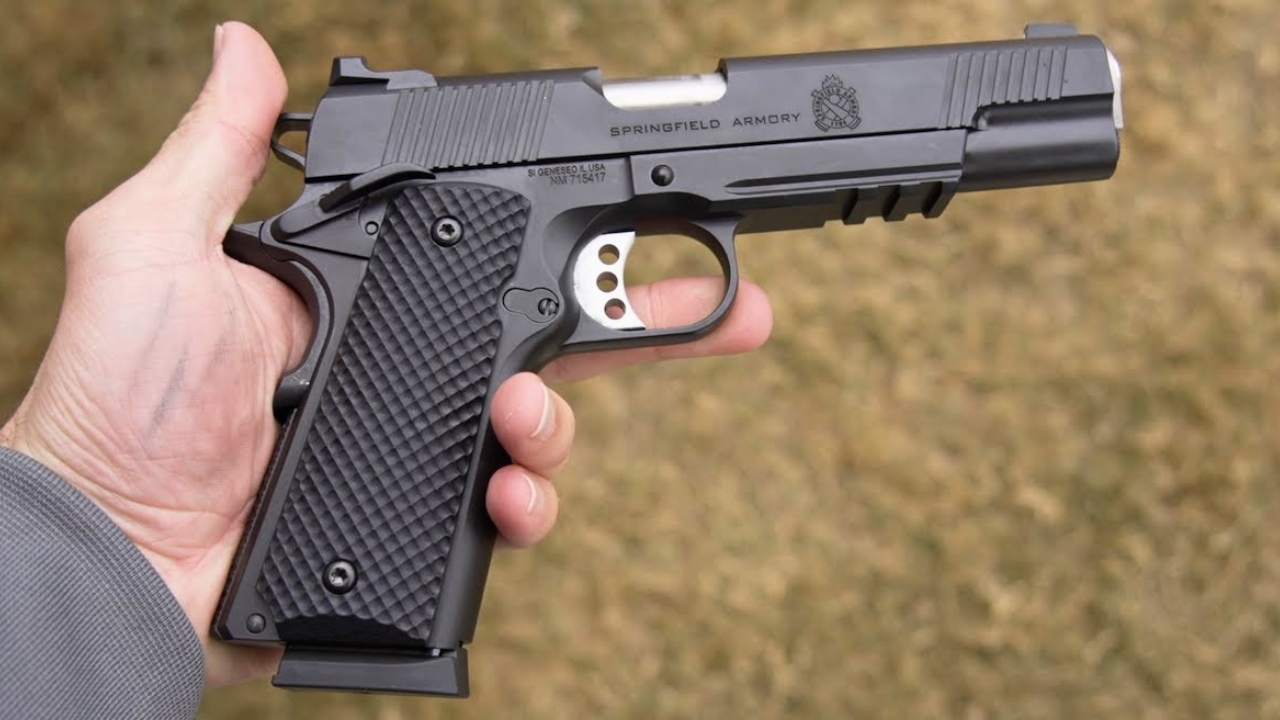
The Operator is less ornate than the TRP and that may actually make it more attractive to some shooters. It gives you the full-size forged 1911 format, an accessory rail, useful sights, good controls, and a configuration designed around practical use.
Springfield has continued expanding the Operator line, including a current .45 version cut around the Aimpoint COA system. The appeal is that you do not need to spend custom-1911 money to get a serious fighting pistol. If you want the trigger and ergonomics of a 1911 but also want to mount a light and possibly an optic, the Operator makes far more sense than a purely traditional Government Model.
Ruger SR1911

The SR1911 remains one of the better choices for someone who wants a straightforward American-made 1911 without immediately entering the premium category. Ruger machines the pistol around familiar 1911 dimensions and keeps enough standard architecture that aftermarket compatibility remains one of its strengths.
The gun is not fitted like a Nighthawk or Wilson, but it also does not cost anything close to one. What you get is a practical .45 with a good trigger, familiar controls, and widespread parts support. That matters if the pistol is going to be shot a lot instead of spending its life in a presentation case. The SR1911 is not the fanciest choice here, but it may be one of the easiest to justify.
Springfield Armory Garrison Target
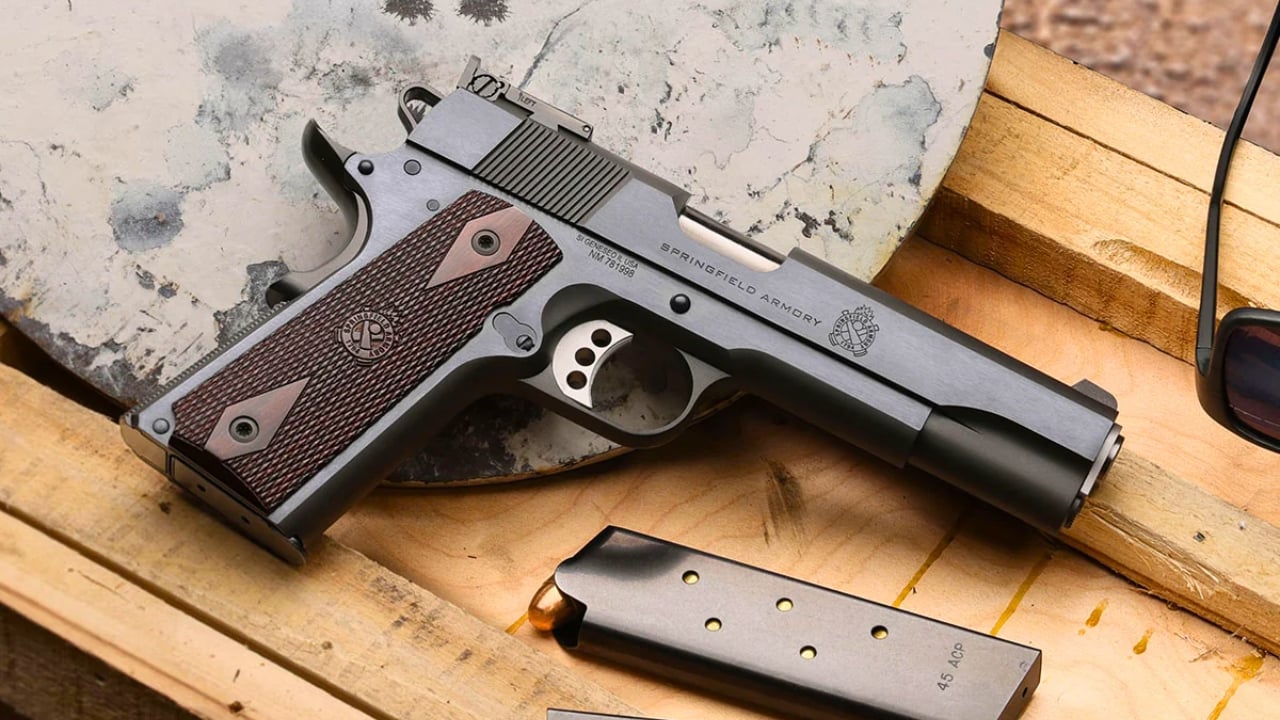
The Garrison Target takes one of Springfield’s more traditional 1911s and gives it adjustable sights that make the pistol much better suited to deliberate range shooting. Springfield launched the Target version in .45 ACP in 2026, pairing forged steel construction with a fully adjustable rear sight.
I like this gun because it avoids turning the 1911 into something overly tactical or expensive. You still get the classic lines, steel frame, and single-action trigger that make the platform so satisfying, but the sights give you enough adjustment to take accuracy seriously. For a shooter who wants a .45 primarily for the range, the Garrison Target makes a lot of sense.
Ed Brown Kobra Carry
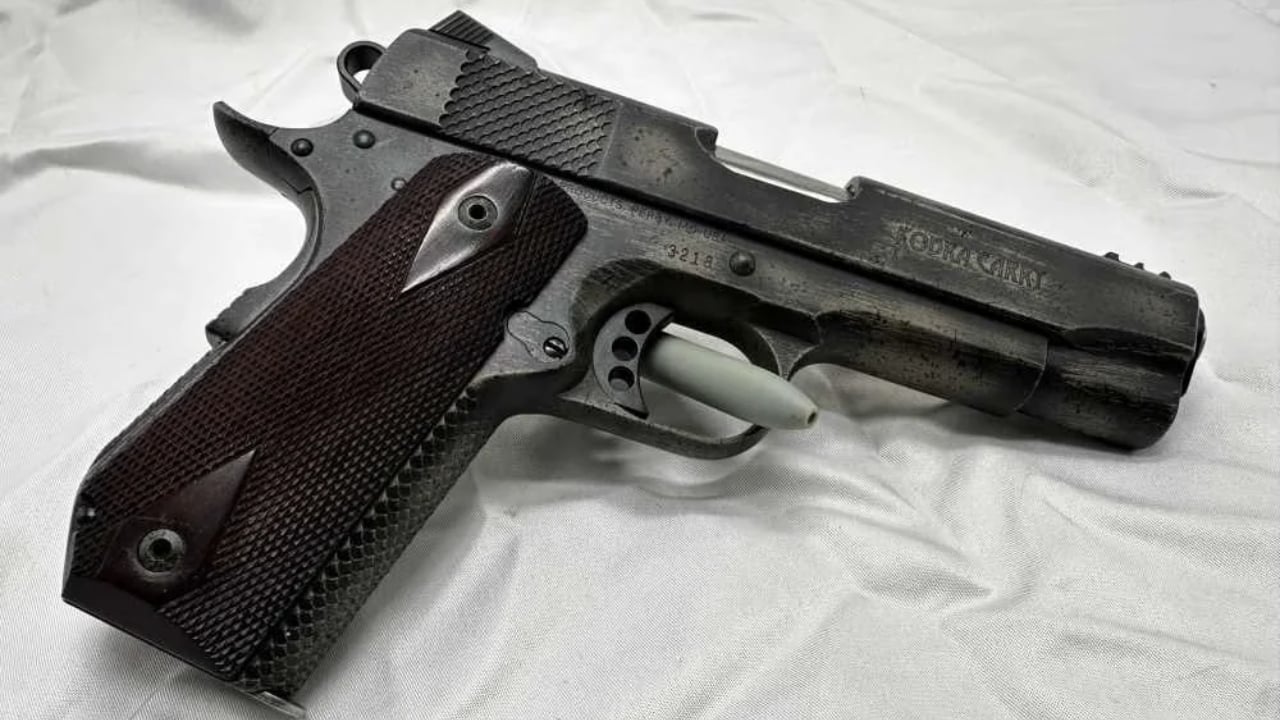
The Kobra Carry is one of the better examples of how to shrink a 1911 without ruining what makes the platform good. The Commander-length format keeps the pistol relatively compact while retaining enough steel and grip area to control .45 ACP properly.
Ed Brown’s execution is the real attraction. The fit, checkering treatment, slide work, and overall refinement put it firmly in the premium category. A current 25th Anniversary version remains chambered in .45 ACP with a 7-round magazine. It is expensive and not the highest-capacity option here, but as a carry-oriented premium .45, it is still one of the best interpretations of the concept.
Glock 30 Gen5

The Glock 30 Gen5 is one of the most practical compact .45 ACP pistols if you genuinely want to carry the cartridge instead of simply owning a full-size gun. Glock updated the platform with Gen5 features, including the Marksman barrel, revised frame without finger grooves, and ambidextrous slide-stop setup.
The pistol is thick, and there is no pretending otherwise. The advantage is that the width gives you enough grip to control .45 ACP without making the gun punishing. The G30 has always packed an impressive amount of firepower into a relatively short package. The Gen5 version makes the concept much easier to recommend today.
Heckler & Koch HK45 Compact
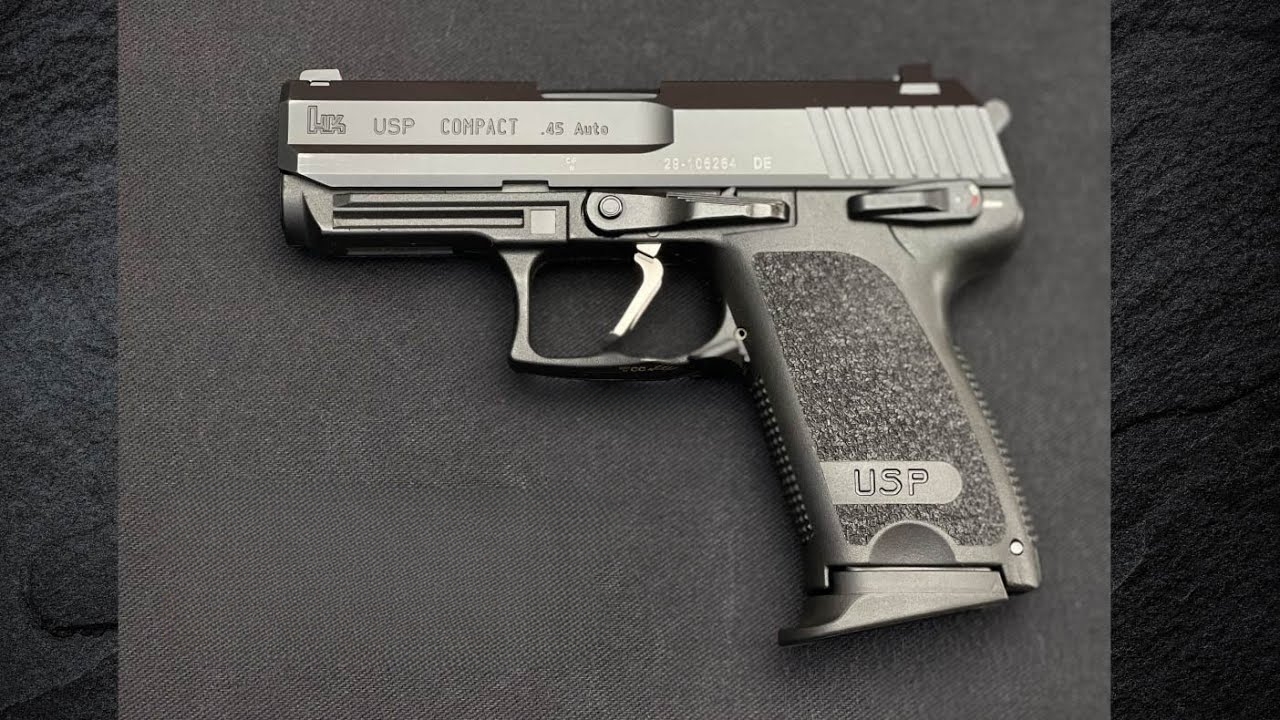
The HK45 Compact sacrifices two rounds compared with the full-size HK45 but becomes considerably easier to carry. The grip is shorter, the slide and barrel are reduced in length, and the pistol still accepts the larger 10-round HK45 magazines when additional capacity matters.
What separates it from many compact .45s is shootability. The gun does not feel like a full-size cartridge was stuffed into a tiny frame as an afterthought. The ergonomics, recoil system, and hammer-fired trigger give it a controlled personality. If I wanted a compact .45 but did not want a striker-fired Glock, the HK45 Compact would be one of my first choices.
Springfield Armory 1911 Emissary
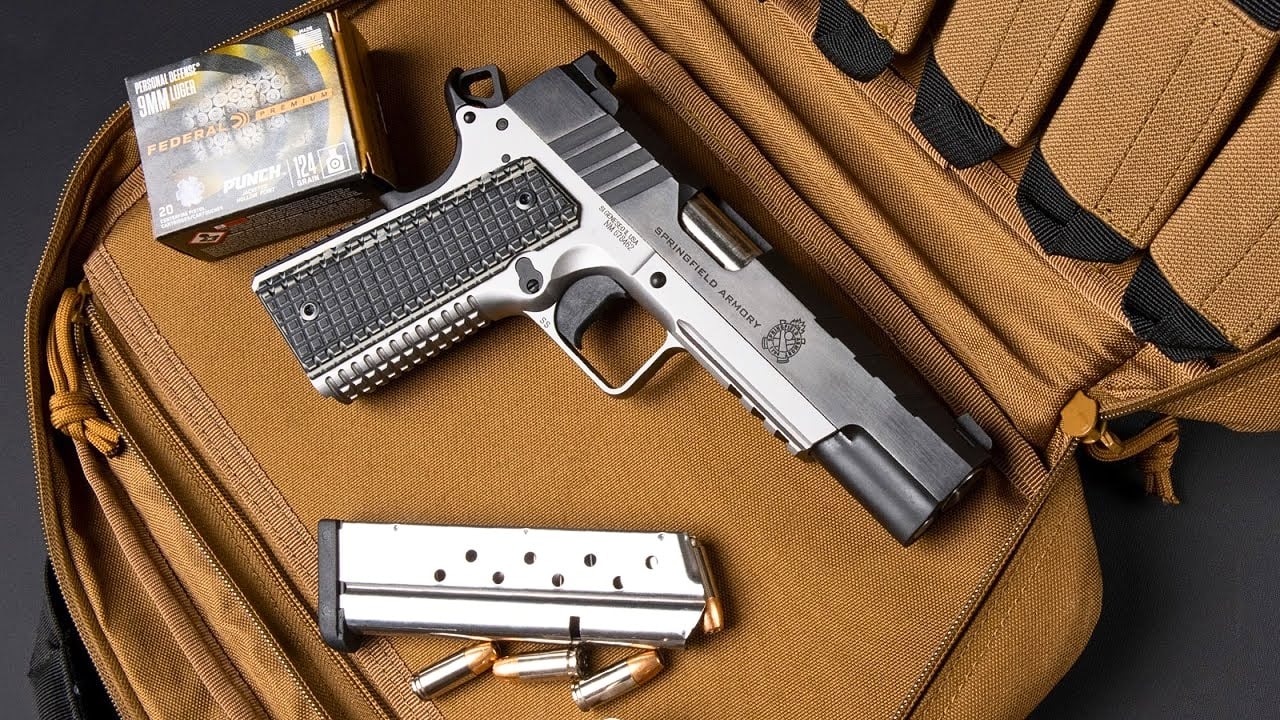
The Emissary occupies an interesting middle ground between a traditional Springfield 1911 and the company’s more duty-focused TRP. It has modern styling, aggressive grip treatment, and a heavier visual presence than something like the Garrison.
What matters more is that underneath the styling you still have the parts that make a good .45 1911 so enjoyable: a steel frame, single-action trigger, comfortable grip angle, and enough weight to make the cartridge easy to manage. It is a good option for someone who wants a 1911 that looks current without going all the way into a competition or full-custom build.
Les Baer Premier II

The Premier II represents an older philosophy of high-end 1911 building. Instead of chasing optics cuts, modular grip frames, or oversized capacities, Les Baer focuses on extremely tight fitting and serious mechanical accuracy.
These pistols can feel almost absurdly tight when new, but that is part of the design philosophy. Once broken in, the Premier II gives you the kind of trigger and barrel-to-slide relationship serious 1911 shooters appreciate. If your priority is putting .45 ACP into very small groups rather than carrying the latest tactical configuration, the Premier II still has a lot to offer.
Colt Government Model
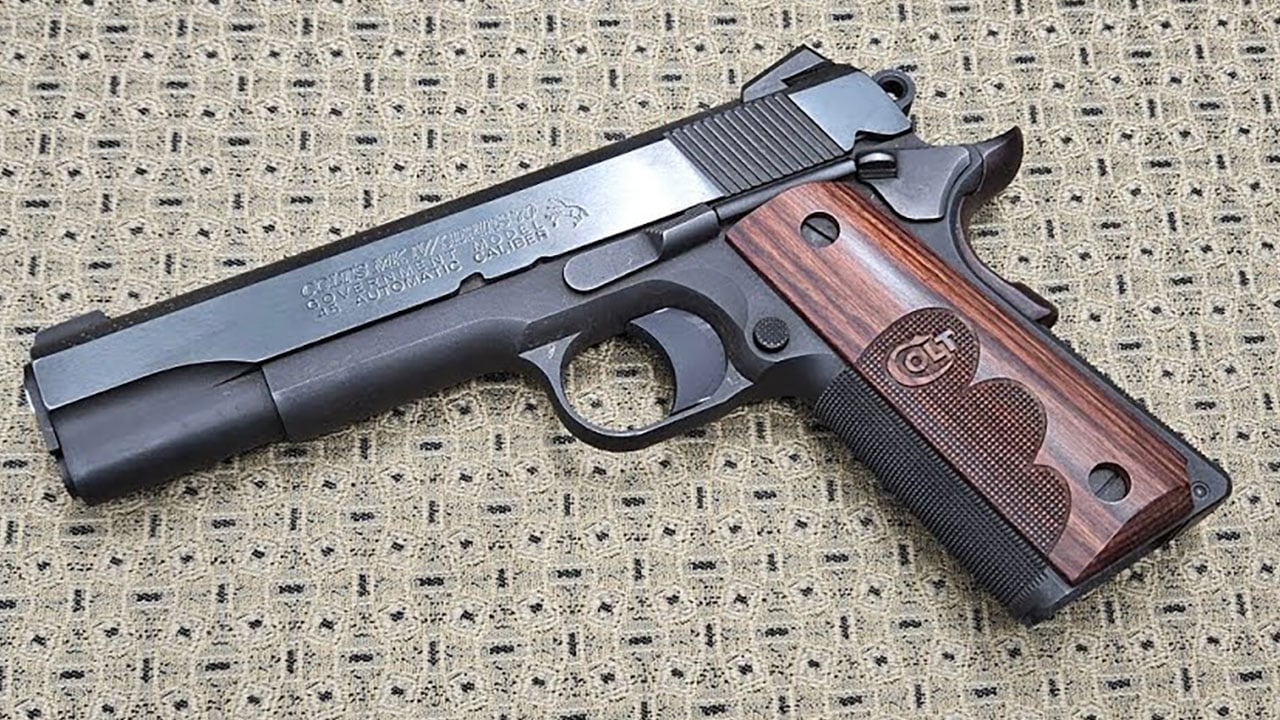
Sometimes the best version of a cartridge does not need to be the most complicated. The full-size Colt Government Model remains one of the most natural homes for .45 ACP because the cartridge and pistol were developed around one another.
Modern guns beat it in capacity, accessory support, and ease of mounting optics, but the Colt still gives you excellent balance, a thin grip, manageable recoil, and a trigger system that remains one of the benchmarks for semiautomatic pistols. If I were building a .45 collection rather than buying only one defensive handgun, I would absolutely want a proper Colt Government Model in it. It is still the reference point against which an enormous portion of this list is judged.
Like The Avid Outdoorsman’s content? Subscribe to our newsletter so you never miss an article.
Here’s more from us: