Photo credit: The Avid Outdoorsman
A Texas landowner who bought more than 50 acres said he checked his trail cameras and found something that left him stuck between wanting to be reasonable and needing to protect his property.
The landowner shared the situation in a Reddit post titled “Discovered a trespasser on a trail cam. Advice is appreciated”. He said he had bought the eastern Texas property within the last year. Early on, he had already found a few minor dumping issues on the land, cleaned them up, and moved on.
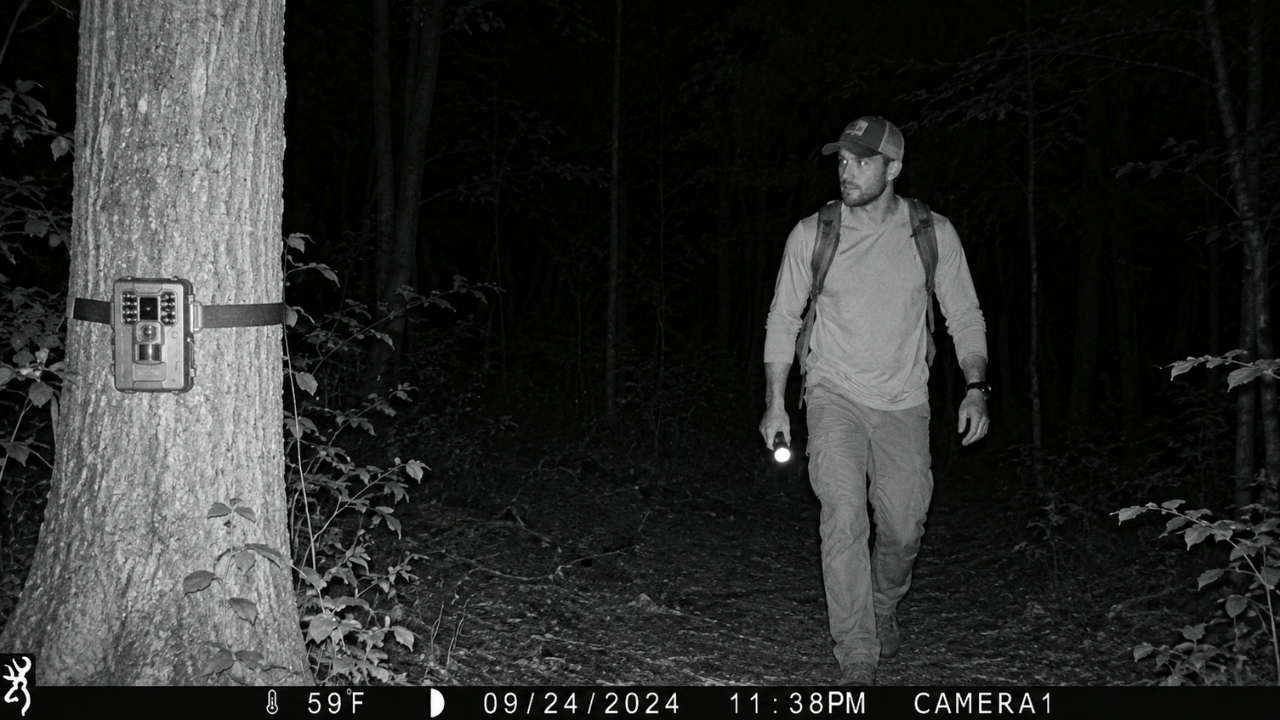
But during a later trip to the property, he pulled the cards from his trail cameras and saw evidence that someone had been walking through. He said the camera captured dogs on two separate days. On a third day, it caught a man walking past the camera with what looked like a shotgun and the same dogs.
That put the landowner in an uncomfortable spot. He lived almost three hours away, so he was not there often enough to know who regularly moved through the area. Maybe the man was local. Maybe he had hunted the land years earlier. Maybe he did not know the property had changed hands. Or maybe he knew exactly what he was doing and simply did not care.
The problem was that the man had walked past a no-trespassing sign. That made the landowner less willing to treat it like an innocent stroll through the woods.
He said he was not completely upset at the idea of someone walking through the land, and he did not necessarily have a problem with a local taking a hog every once in a while. But he did have a problem with someone hunting the area like it belonged to him and coming onto the property whenever he wanted.
The Dogs Made the Situation Harder to Read
The presence of dogs changed how commenters interpreted the situation.
The landowner was not sure what the man was hunting at that time of year if it was not hogs. Some commenters wondered if the dogs were hounds used for raccoon hunting. One user noted that the dogs appeared similar to coonhounds, though the picture quality made it hard to know for sure.
That possibility mattered because hound hunters sometimes end up crossing boundaries while following dogs. That does not make trespassing acceptable, but it can explain why someone might move through land instead of sitting in a stand or blind.
Still, the landowner was not only looking at dogs wandering through. He had a picture of a man with what appeared to be a shotgun. That made the whole thing feel more serious. Someone armed, walking past a no-trespassing sign, with dogs on private land is not the same as a lost dog crossing a fence.
The owner’s tone was careful. He did not immediately call the man a poacher. He wondered aloud whether the person might live nearby and know the area better than he did. He even said that if he could speak to the man and understand his motives, he might feel better about it.
That is the conflict at the center of the story. He wanted to be fair. He also did not want to be a pushover.
Being Three Hours Away Made Security a Real Problem
The landowner’s distance from the property shaped every part of the decision.
If he lived on-site, he might be able to talk to the man, watch access points, meet neighbors, check signs regularly, or notice vehicles parked nearby. Living almost three hours away meant he had to rely on cameras, occasional visits, and whatever relationships he could build with nearby residents.
That distance also made the earlier dumping more concerning. Someone had already treated the land like a place they could leave trash. Now someone else, or maybe the same local pattern, was moving through with dogs and a gun.
The owner said he had considered solar-powered cloud-delivering cameras after the dumping but backed off when it did not seem to get worse. After the trespasser showed up on camera, he realized he might have to get more serious about security.
That is a familiar shift for absentee landowners. At first, they hope small problems are isolated. Then a camera catches someone, signs get ignored, or equipment disappears, and the property suddenly feels less like a quiet getaway and more like something that has to be actively defended.
The landowner did not want to overreact. But he also understood that if people learn nobody is around, they may get bolder.
Commenters Split Between Talking First and Calling the Sheriff
The comment section reflected the same tension the landowner felt.
Some commenters told him to go straight to law enforcement or the game warden. Their argument was simple: the man had ignored posted signs and entered private land with a gun. That is not the kind of person you want to confront alone, and it is not the kind of behavior you want to reward with casual permission.
One commenter suggested placing another camera where the man may have parked so the landowner could capture a license plate and contact the sheriff. Another said a cellular camera would be useful because even if the trespasser found it, the photo would already be uploaded.
Others took a more neighborly approach. They said the man might not mean harm. Maybe he had old permission from before the sale. Maybe he was walking land he believed was still owned by a timber company. Maybe he lived nearby and would respond reasonably if contacted.
Several users encouraged the landowner to talk to neighbors first. In a rural area, neighbors may know who the man is, where he lives, or whether he has been hunting there for years. They may also become the best security system the landowner has, especially since he lives so far away.
That advice appealed to the poster. He said he did not want to make enemies of his new neighbors and was considering sending a letter to an adjacent landowner to introduce himself.
The Safety Concern Could Not Be Ignored
Even commenters who supported a civil approach warned him to stay safe.
The biggest concern was that the man appeared to be armed. A conversation with a trespasser is one thing. A conversation with a trespasser carrying a shotgun in the woods is another.
One commenter said it was kind to give him the benefit of the doubt, but the landowner should not confront an armed trespasser directly. If there was any safety concern, authorities should handle it.
Another commenter shared a more frightening example from his own experience, saying someone had fired near his stand on private property despite posted signs. His point was that an armed trespasser is not only a property issue. If the landowner, his family, or guests are in the woods, a person shooting at game without permission could put someone in danger.
That is why the landowner’s instinct to understand the man’s motives had limits. Maybe he was harmless. Maybe he was not. The camera photo did not answer that question.
The safest plan was to gather more information without walking into a confrontation.
The Best Advice Was to Build Local Relationships
One of the more useful threads of advice was not about cameras or signs at all. It was about neighbors.
A commenter said that in small rural areas, good relationships with nearby residents can be worth more than almost anything. Neighbors may warn about trespassers, report dumping, let the owner know when nearby land is going up for sale, or simply keep an eye on things when the owner is hours away.
The landowner seemed open to that. He said he had located the adjacent landowner and planned to send a letter. That was a smart move because the person in the photo may have been known locally. A neighbor might recognize the dogs, the man, the clothing, or the direction he came from.
That kind of approach also avoids starting with threats. A new landowner who immediately paints every tree, posts angry signs, and calls law enforcement on everyone may make enemies fast. But a landowner who introduces himself, explains the situation, and asks for help may find out whether this was an old habit, a misunderstanding, or a known troublemaker.
If the man turns out to be reasonable, the owner can set clear rules. If he is not, the owner can involve authorities with more confidence.
Commenters gave the landowner two main paths: document and report, or talk to neighbors first.
Some said the man had already crossed the line by walking past no-trespassing signs with a firearm. They recommended repositioning cameras, trying to get a license plate, calling the sheriff or game warden, and avoiding any direct confrontation.
Others urged him not to assume the worst right away. Since the land had previously been owned by timber companies, the trespasser might have believed it was still open or may have had old informal permission. They suggested asking neighbors whether they recognized him and trying to resolve it without creating a feud.
Several commenters emphasized that distance made the issue harder. Since the owner lived nearly three hours away, cellular cameras and trusted neighbors could help him know what was happening when he was not there.
The landowner seemed to land somewhere in the middle. He did not want to make enemies, but he also did not want someone treating his land like public ground. His next steps were to reach out to nearby landowners, consider better cameras, and decide whether the sheriff or game warden needed to be involved.
For anyone buying rural land away from home, the lesson is a hard one. Owning the property does not automatically mean everyone knows the rules changed. If people have been using it for years, the new owner may have to mark the lines, build relationships, and make it clear that casual access is over.