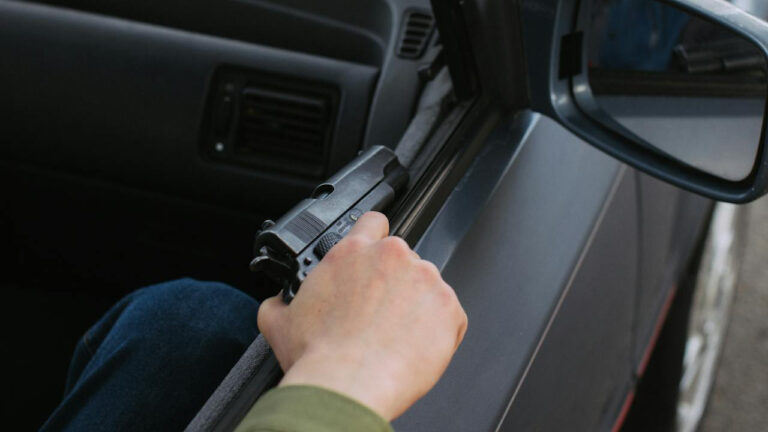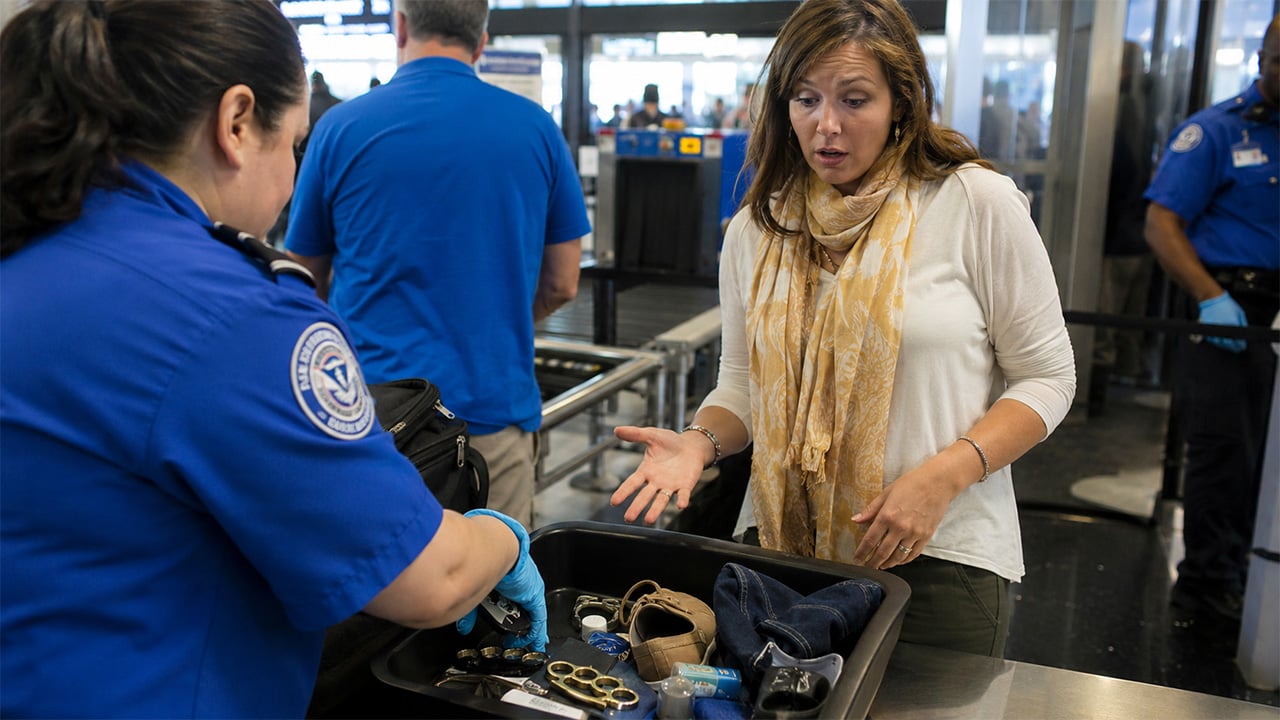
Photo credit: AI-generated image created using ChatGPT. Illustrative only
Every outdoorsman I know has a “pocket check” routine before a trip. Knife comes out. Multitool comes out. That little can of pepper spray you forgot was in the side pouch comes out. Because airports don’t care if something was a gag gift or an honest mistake—once it’s in your carry-on, you’re the one explaining it.
That’s exactly what a 22-year-old traveler in California found out after she forgot a self-defense item was tucked into a pocket of her carry-on. When TSA spotted it at screening, the day went from “headed back to college” to “am I about to get fined or arrested?” The details came from the original post describing the encounter and the questions that followed.
It wasn’t a pocketknife—TSA found brass knuckles
The traveler said she forgot she had brass knuckles in her carry-on bag. She described them as something she’d gotten as a gag gift, but also framed them as “purely for non-lethal self defense” after dealing with serious issues in her college town the year before, including being robbed and stalked.
Her explanation will sound familiar to anyone who’s ever left gear in the wrong bag: it was in a pocket she didn’t check, and she genuinely didn’t mean to pack it. That “forgot it was there” moment is common. Unfortunately, brass knuckles aren’t treated like a forgotten flashlight or an extra bottle of water.
They offered her one simple option: dispose of it
At the checkpoint, the TSA agent told her she could dispose of the item. She agreed. From her description, there wasn’t any bargaining back and forth—no “run it to the car,” no “find a way to mail it,” no “gate check it.” It was a straight choice presented in the moment, and she chose to surrender it.
That’s the part that trips people up: even if something might be legal to own in some places, it doesn’t mean you’ll be allowed to keep possession of it inside the security area while you figure things out. When you’re standing there with a prohibited item in your bag, the options shrink fast.
She got paperwork, questions, and her ID taken briefly
After she agreed to dispose of the brass knuckles, she said TSA gave her a “prohibited item notification” paper. Agents also took her driver’s license and asked where she was headed and why. She told them she was going back to college.
She also noted TSA put the item in a drawer and then sent her on her way. Before she left, she said they told her she’d “probably be fine since it was [her] first offense.” That last line is reassuring, but it’s also vague enough to keep a person awake that night wondering what “probably” really means.
The real worry: fines, charges, and whether she needs a lawyer
Once she made it past the checkpoint, the anxiety hit. She wrote that she was “so worried” and asked what could happen next. She emphasized she had no prior issues with the law—no tickets and never arrested—and asked if she was overthinking it or if she should get a lawyer.
That’s a normal reaction, especially for younger travelers who haven’t had many run-ins with official processes. When someone takes your ID, asks questions, and hands you paperwork, it feels like the start of something bigger—even if the immediate situation ends with you catching your flight.
From an outdoorsman’s perspective, it’s a good reminder that airports are a different world. Stuff that rides around in a truck console or a range bag without anyone thinking twice can become a major headache at a checkpoint. And brass knuckles, unlike a basic pocketknife, tend to get treated as a straight-up weapon rather than a tool.
What people homed in on: intent matters less than what’s in the bag
In her edit, the traveler thanked everyone who commented and said it was comforting to hear different perspectives. While she didn’t list those responses in detail, the situation itself highlights what seasoned travelers and most security folks focus on: what matters at the checkpoint is the item, not the story.
It doesn’t mean intent is irrelevant in every possible legal sense. But the practical lesson is that “I forgot” won’t put the item back in your possession, and it won’t guarantee you avoid follow-on consequences. The best defense is never letting prohibited gear end up in your carry-on in the first place.
If you hunt, fish, camp, or carry defensive tools day-to-day, you’ve got more chances than most folks to make this kind of mistake. A range bag gets repurposed as a travel bag. A coat pocket with a backup knife gets tossed into luggage. A “just-in-case” tool ends up in the wrong pouch. It happens fast.
A practical outdoorsman checklist before you head to the airport
This story is a good excuse to tighten up your own routine. Before you leave for the airport, empty every pocket and every “admin” compartment like you’re cleaning out a blind bag after season. That means the little zipper pockets inside the big pockets, too—the ones you never use until you do.
Second, don’t assume an airline or gate agent can solve it for you at the last minute. Even when an item could theoretically be transported legally in checked baggage, you may not be given a clean chance to fix it once it’s already been flagged at the checkpoint. You want to make the call at home or in the parking lot, not under fluorescent lights with a line stacking up behind you.
And if you’re traveling to and from places with different laws—especially as a student bouncing between home and campus—take ten minutes to verify what’s legal where you are and where you’re going. “Self-defense tool” can mean very different things depending on the state, the city, and the setting.
The traveler in this case said TSA took the item, gave her a notification sheet, asked a few questions, and let her continue her trip. That’s about as good as a bad surprise at the checkpoint can go. The bigger win for the rest of us is learning from it: do the pocket check, go bag by bag, and keep the stuff that causes problems out of your carry-on—every time.
Like The Avid Outdoorsman’s content? Subscribe to our newsletter so you never miss an article.
Here’s more from us: