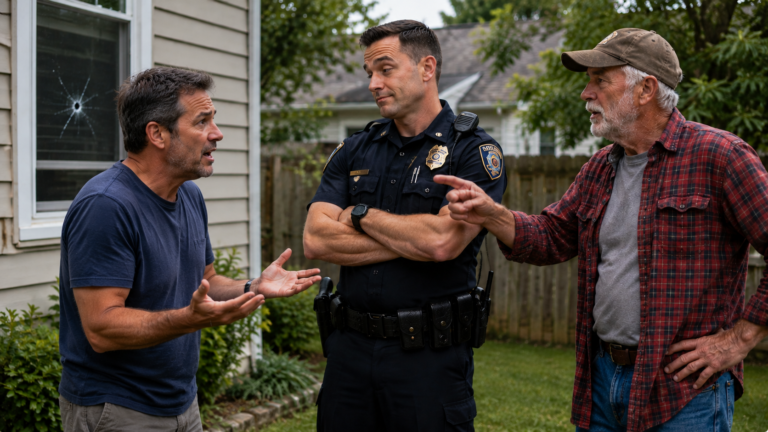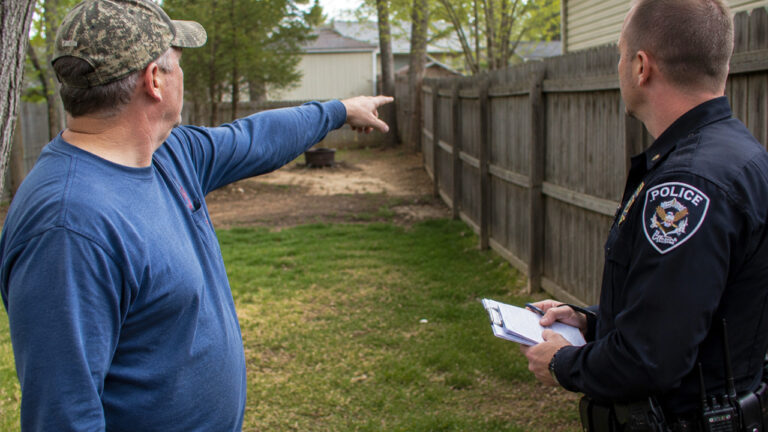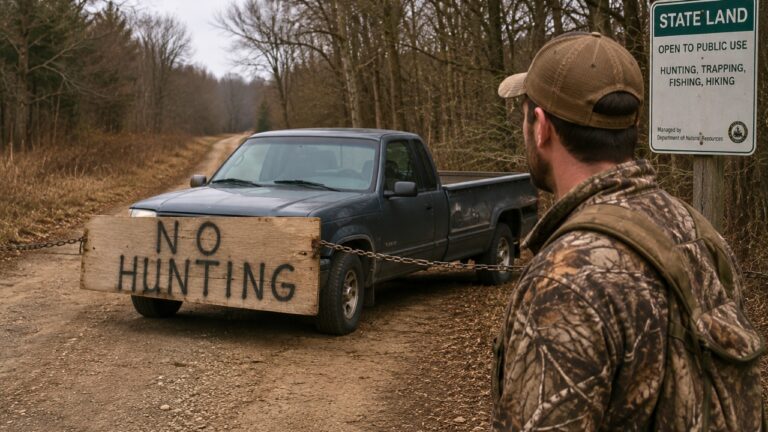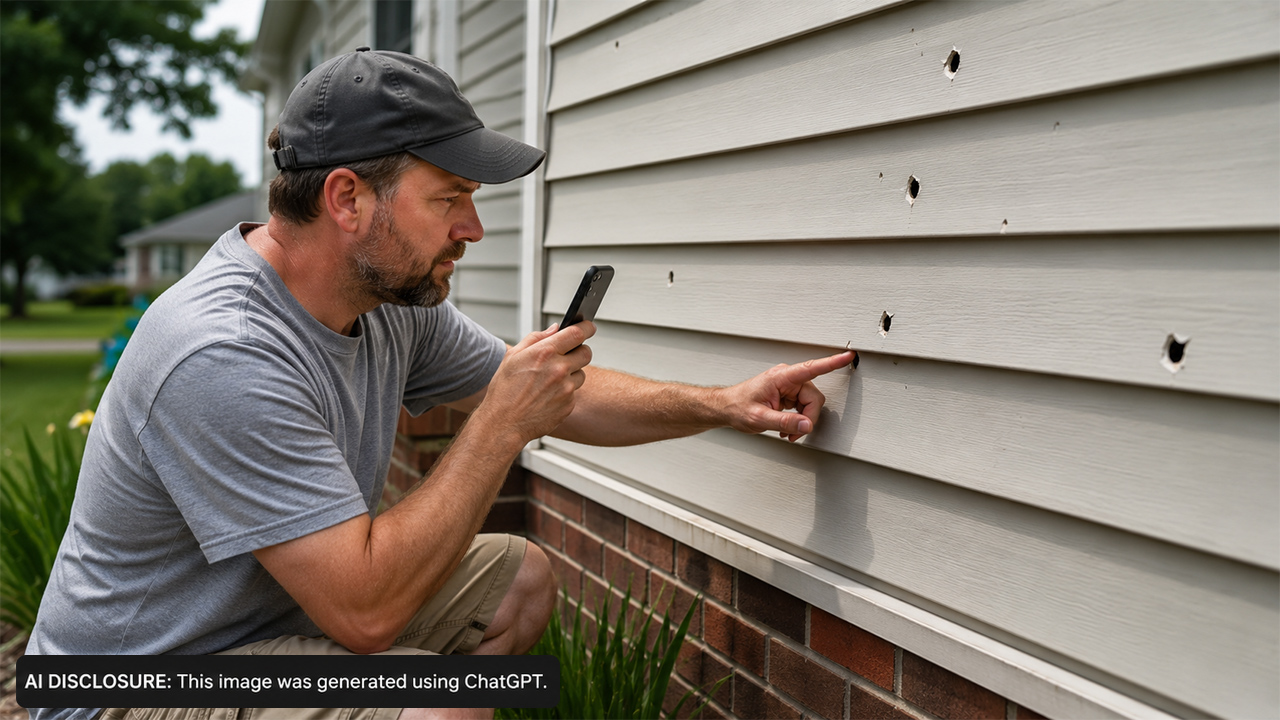
Photo credit: AI-generated image created using ChatGPT. Illustrative only
There’s a big difference between a neighbor sighting-in a rifle now and then and a neighbor running a backyard range that’s sending rounds past the target, over a street, and into somebody else’s trees. That’s the situation one Florida homeowner says he’s dealing with in Walton County—regular target practice that turns into loud, snapping “zinging” sounds and visible impacts through branches where kids play.
He says it happened once about a year ago, he confronted the shooter, and it stopped. Then it started up again, and this time multiple households say they watched rounds rip through tree limbs in a residential cul-de-sac. Deputies responded, but the homeowner’s frustration boiled over when he was told the shooter could be acting legally—and that it was hard to pin down exactly what was happening without clearer proof.
A backyard “range” that doesn’t stay in the backyard
According to the homeowner’s account in the original post, the neighbor lives a couple hundred feet away and started using his backyard for target practice. The homeowner said he wouldn’t even have a problem with it if the rounds were contained.
The issue is what happens after the trigger press: rounds reportedly penetrate the target, cross the street, and then ricochet “wildly through the air.” He and nearby neighbors say they can hear the loud whizzing and can physically observe impacts through branches on multiple properties.
Seven households watching the same thing
What makes this one more than a simple “he said, she said” is that the homeowner claims seven people in the cul-de-sac witnessed the same dangerous pattern. He says three different properties have eyewitnesses who watched rounds cutting branches, and he’s collected audio recordings from his place and security camera footage from a neighbor’s property.
That’s the kind of documentation most outdoorsmen understand: you can’t fix a problem like this with a gut feeling. The homeowner says he’s trying to do it the right way—recording what can be recorded, getting others to corroborate, and calling law enforcement instead of walking over and escalating the situation himself.
The first law enforcement response didn’t stop the shooting
The homeowner says he confronted the shooter when the “zinging” started again, but the neighbor angrily denied the rounds were leaving his property and told him to call the police. So he did. A sheriff’s office deputy responded, spoke with him, his wife, and multiple neighbors, and then spoke with the shooter before leaving.
Then it got worse. The homeowner says that within minutes of the deputy leaving, the neighbor began shooting again—this time “directly into” his property. He describes impacts low to the ground in an area where his children play, which changes the whole tone from “annoying neighbor problem” to immediate safety risk.
“He has an acre” and the legality question
When he called again, he says the same deputy told him the neighbor has an acre and is legally allowed to shoot on his property, and asked him to email evidence. The homeowner then checked property information online and says the lot is about 0.9 acres, not a full acre, and he suspects the shooter misrepresented the lot size.
He also points to Florida Statute 790.15(4), saying it’s illegal to shoot in a neighborhood with a density of more than one house per acre. He describes this as a typical residential neighborhood where the standard lot size is around 0.23 acres—meaning the density is nowhere close to rural spacing, even if one parcel is slightly larger.
Even if you know the law, this is where reality gets messy: deputies on scene often need something they can confidently articulate and prove. And when the complaint is “rounds are leaving his property,” proving exactly where shots originated and where they went can be harder than it sounds unless there’s clear physical evidence.
Why “prove the direction” becomes the sticking point
From a practical gun-owner standpoint, ricochets are a nightmare because they don’t behave like clean, predictable trajectories on paper. If rounds are skipping off hard ground, steel, rocks, or even certain types of backstops, you can get odd angles and that telltale whine as a bullet goes somewhere it shouldn’t. That still doesn’t make it acceptable—but it can complicate the “prove it” part.
The homeowner says he’s having trouble finding the kind of evidence that’s hard to ignore—actual bullets, fresh strikes in siding, or impacts in a tree trunk that can be photographed clearly. With forested property, that’s not surprising. A bullet can bury into leaf litter, disappear into sandy soil, or fragment on impact, and unless you see the strike happen or find the damage quickly, it can be nearly impossible to recover.
That’s also why these cases sometimes stall out: neighbors can hear it and see branches snap, but law enforcement wants a clear trail—impact marks, recovered projectiles, or video that captures the shooter’s firing and the impacts in the same frame. Without that, you can end up with a deputy who believes something is off but isn’t comfortable taking enforcement action that has to stand up later.
What practical next steps usually look like for landowners
The homeowner asked what he can do to get a faster resolution because he feels like he’s “under active fire.” He’s already doing several of the right things: documenting the problem, involving neighbors, and repeatedly calling when the activity is occurring—especially when it appears to endanger children.
In situations like this, the most useful moves tend to be the boring ones: keep everything time-stamped, keep your reports consistent, and keep the focus on safety. If you can capture a clear video sequence—shots fired followed immediately by audible strikes/whizzes and visible impacts—that’s stronger than audio alone. Likewise, photos of fresh damage (tree bark strikes, splintering, or penetrations) taken immediately, with date/time and location, can help build a timeline.
It’s also smart to avoid direct confrontation. This neighbor already responded with anger and denial, and told the homeowner to “call the police.” Once that line is crossed, a face-to-face argument near firearms is the last place you want to be, no matter how justified you feel.
Finally, when a local response doesn’t match what you believe the law says, the next step is usually going up the chain—asking for a supervisor, requesting follow-up from someone with more experience, or seeking advice from an attorney who deals with property and nuisance issues. That’s not about “getting somebody in trouble.” It’s about creating enough pressure and clarity that the shooting stops or is brought into safe, legal compliance.
At the end of the day, safe shooting isn’t complicated: a proper backstop, a lane that stays on your land, and a setup where a miss or pass-through still ends safely. If a neighborhood is hearing rounds “zing” through the air and watching branches get clipped where kids play, that’s a problem that deserves a real fix—not a shrug and a suggestion to email evidence.
Like The Avid Outdoorsman’s content? Be sure to follow us.
Here’s more from us: