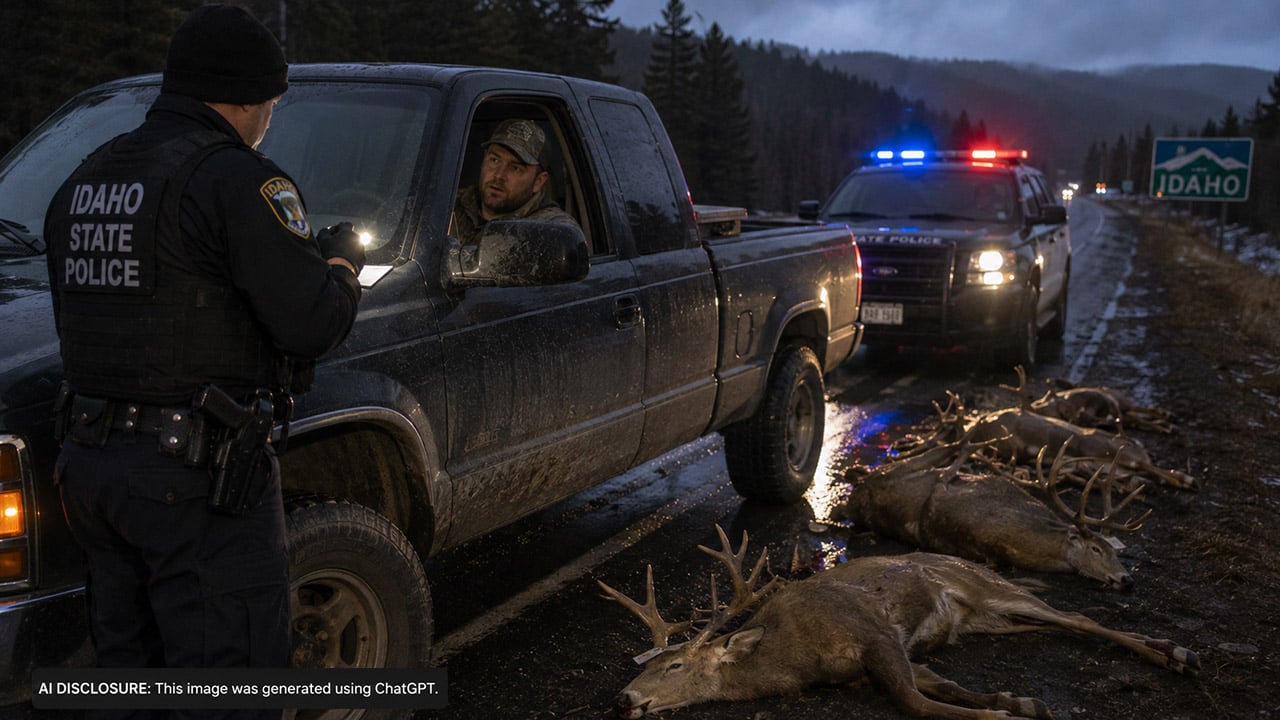
Photo credit: AI-generated image created using ChatGPT. Illustrative only
A poaching case doesn’t usually unravel all at once. Most of the time it starts small—something that looks routine on the side of the road, a hunch, a quick look that turns into a long night for somebody. In south-central Idaho, that first thread turned into a multi-year deer poaching ring that put seven men in jail and cost some of them their hunting privileges for life.
Details shared in the source post lay out how Idaho investigators tied the group to repeated illegal hunts in Unit 54 south of Twin Falls—an area managed tightly enough that legal hunters can wait about a decade to draw the right tag.
The traffic stop that opened the door
Wildlife cases often hinge on one thing: proof. In this one, the investigation began when a traffic stop turned up a trailer carrying five trophy mule deer heads—with very little meat to match. That’s the kind of detail that makes any seasoned officer pause, because it doesn’t look like a normal, legal hunt where meat care is front and center.
From there, the case didn’t stay roadside for long. Investigators used warrants to search homes, businesses, and vehicles, building out what prosecutors later described as an organized effort that ran for years.
What investigators said they found over time
According to the report, electronic data from cell phones and social media filled in the blanks. Investigators said it revealed a bigger pattern: a group making annual trips from the Treasure Valley to near Jackpot, Nevada, and hunting without the required tags.
This is where these cases get serious fast. Once you’re dealing with multiple years and multiple animals, you’re no longer talking about a one-off bad decision or a mistaken unit boundary. You’re talking about a system—planning, travel, coordination, and repetition.
Why Unit 54 matters to law-abiding hunters
Unit 54 isn’t just another spot on the map. It’s described as “carefully managed,” and the judge emphasized that legal hunters only have about a 9% chance of drawing the correct tag. In plain terms, it’s a place where people do everything right and still wait a long time for their opportunity.
Judge Benjamin Cluff put it bluntly during sentencing: the average law-abiding hunter waits 10 years, and the men involved “jumped to the front of the line.” That’s the part that tends to hit hardest for folks who buy licenses, apply year after year, and pass up temptation because they know the rules keep the resource healthy.
The sentences: jail time, big bans, and a courtroom that went quiet
Seven men received jail sentences for illegally taking deer across multiple years of trips in Unit 54. The penalties clearly surprised people sitting behind them. Family and friends in the courtroom reportedly gasped as each sentence included jail time—because a lot of folks still think wildlife crimes are treated like minor paperwork issues.
They aren’t, at least not in this case. The judge’s message was plain: “This was just a criminal enterprise from 2017 on. You knew what you were doing. I’m almost left speechless that you could do this four years in a row without consequence.”
Prosecutors identified Robert Zeko as a ring-leader. The judge sentenced him to up to five years and ordered his hunting privileges revoked for life in Idaho. Oregon resident Bobby Ephram was also sentenced to up to five years and received a lifetime hunting ban. Nicholas Zeko was sentenced to 90 days in jail and also lost hunting privileges for life.
Three others involved were sentenced to between 15 and 30 days, and they lost hunting privileges for up to 15 years. On top of the jail time and bans, the men will pay fines and restitution to Idaho Department of Fish and Game, plus court costs.
The plea deal structure and why it matters
The plea deal detail is worth paying attention to, because it shows how these cases often get resolved. Each man pleaded guilty to charges for each animal he personally took. In exchange, the state agreed to drop additional charges related to animals taken by others.
That’s not a “free pass.” It’s a way to lock in convictions and penalties without gambling on a drawn-out courtroom fight over who did what on which day. For hunters reading this, it’s also a reminder that “group hunt” thinking can ruin a lot of lives. Even when charges are tied to individual kills, investigators can still build a wider picture of organized activity—and courts can still treat it like an enterprise, not an accident.
Four takeaways for hunters who do it right
First, a trailer full of heads and not much meat is a flashing red light. Legal hunters don’t always get perfect meat conditions, but the culture of modern hunting—especially in the West—is built around meat care. When the focus looks like trophies first and everything else second, it draws the kind of attention nobody wants.
Second, the days of thinking “nobody will know” are gone. The report notes phone and social media data helped show the bigger pattern. That doesn’t mean hunters should be paranoid; it means you should assume your choices have a paper trail, and if you’re doing the right thing you’ve got nothing to worry about.
Third, tag systems matter, especially in limited-entry units. When a unit is managed to the point that legal hunters are staring down 10-year waits, enforcement tends to be serious. It has to be, or the whole program falls apart.
Finally, courts can and will treat repeat poaching like a real crime with real consequences—jail, restitution, and years (or a lifetime) without hunting privileges. If your identity is tied to hunting, losing it for life is a punishment that doesn’t end when you walk out of jail.
This case wrapped up sentencing for the suspects authorities have been able to locate. In total, 14 people were charged, and three involved have not been found or appeared in court. However you feel about tag odds and draw systems, there’s nothing complicated about the core lesson here: if you want to hunt a premium unit, wait your turn, buy the tag, and do it clean—because the alternative can follow you for the rest of your life.
Like The Avid Outdoorsman’s content? Subscribe to our newsletter so you never miss an article.
Here’s more from us: