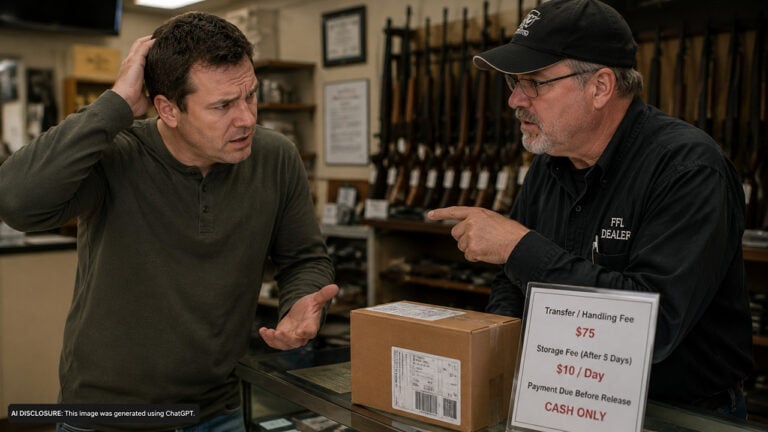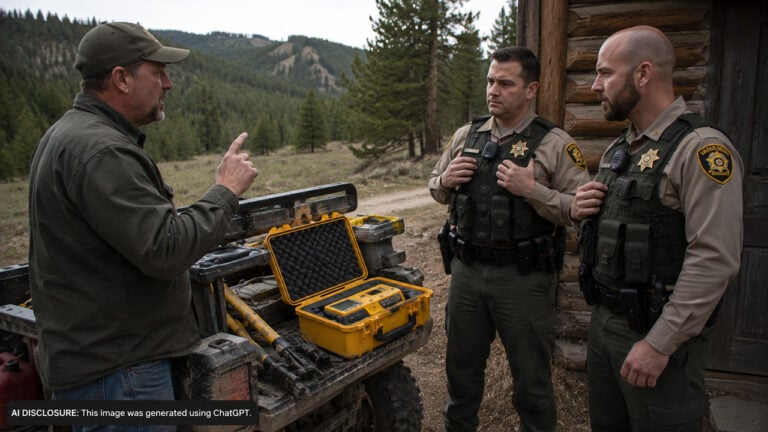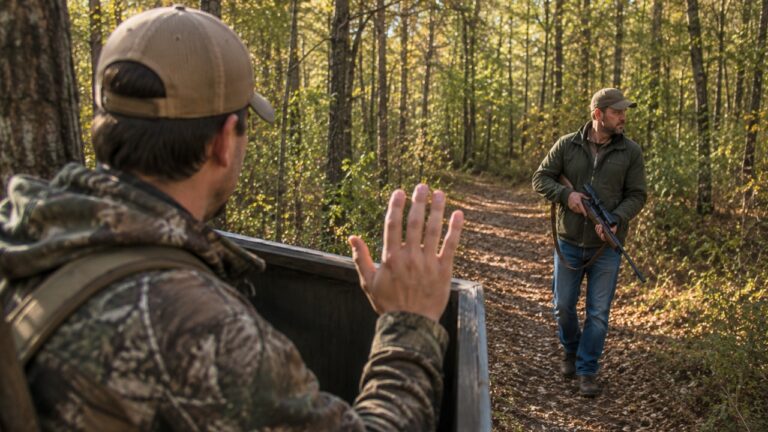
Photo credit: AI-generated image created using ChatGPT. Illustrative only
Most gun owners have had the thought at least once: “If I’m doing everything legal, I should be left alone.” A Dallas man says that’s exactly what he was trying to prove—until a quick walk near police headquarters ended with handcuffs, an impounded vehicle, and his handgun taken for months.
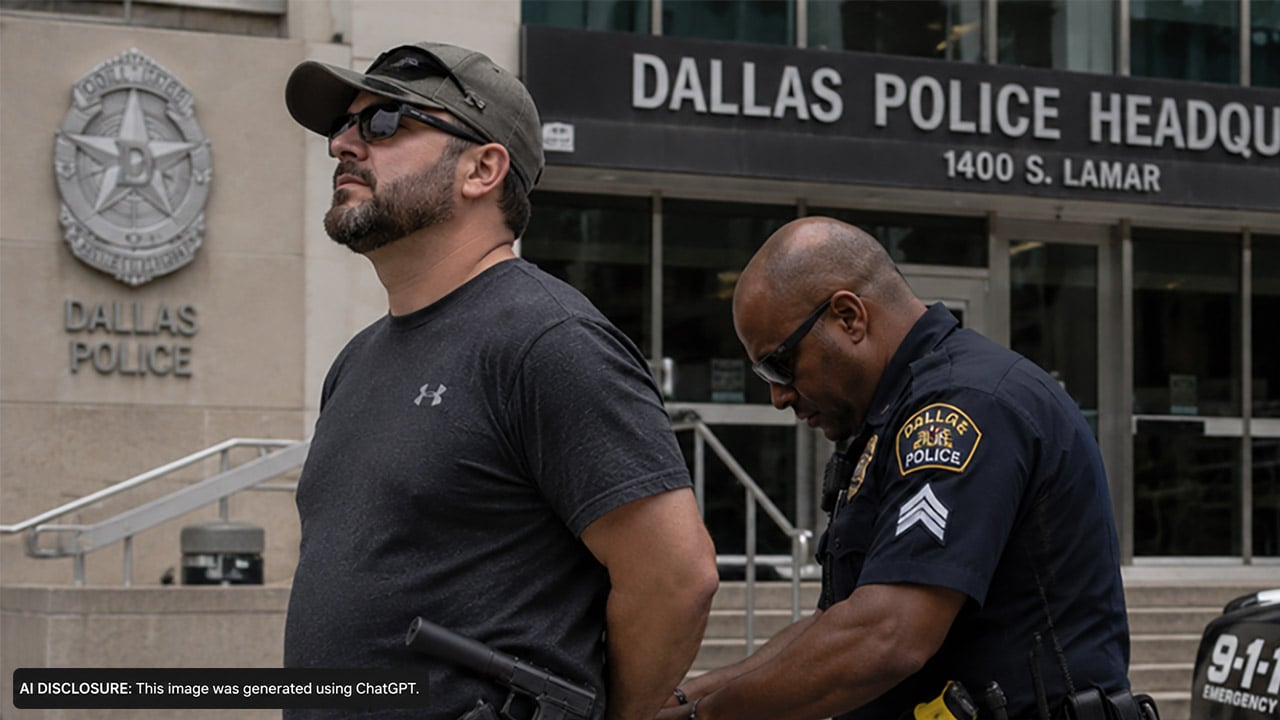
The incident, described in the source post, centers on 38-year-old Matthew Rankin, a Second Amendment activist who walked into Dallas Police Department headquarters on the morning of April 1 while openly carrying a pistol fitted with a suppressor. Officers spoke with him inside, turned him away from the museum area, and later arrested him outside for jaywalking—then confiscated his gun.
Walking in armed changed the temperature immediately
According to the account, officers were cautious as soon as they saw Rankin and the suppressed handgun. One officer asked what he was looking for and where he worked, the kind of questions that come when folks are trying to figure out whether they’re dealing with a threat, a protest, or just a guy making a point.
Much of it was captured on body camera video, and the interaction didn’t sound casual. When Rankin tried to enter the headquarters’ museum section, an officer stopped him and gave a clear directive: “Sir, while you’re armed you got to step back over there. You can’t come in here.”
Getting turned away wasn’t the end of it
This is the part that will feel familiar to anyone who’s carried a firearm in public: even if you’re legal, the rules change depending on the doorway you’re trying to walk through. Government buildings, posted areas, and certain secure facilities are often where “it’s legal in Texas” runs headlong into “not in here.”
From what’s described, Rankin didn’t just get denied entry and sent on his way. After the indoor interaction, officers arrested him outside for jaywalking. That’s a small offense on paper, but it can turn into a big deal fast once police decide an arrest is on the table.
A jaywalking arrest turned into a tow and a months-long gun seizure
The consequences weren’t limited to a citation. Officers towed Rankin’s car and confiscated his firearm, and the gun was held for months, according to the source material.
That’s the practical gut-punch for regular working people. Getting your vehicle towed isn’t just a hassle—it’s fees, time off work, and a logistics mess. And when a firearm is taken and not promptly returned, you’re effectively disarmed through a process that feels less like “public safety” and more like punishment, whether that was the intent or not.
Rankin says it violated his rights—and he’s taking it to court
Rankin, who took the video referenced in the report, is now suing the City of Dallas, Dallas police chief Daniel Comeaux, and multiple officers involved. He alleges violations of his Fourth, Second, and 14th Amendment rights.
Those claims line up with what many gun owners worry about in these situations: whether the stop, the arrest decision, and the seizure of property were truly justified—or whether a minor infraction became the hook used to take someone’s gun. The lawsuit is aimed not just at getting his own situation addressed, but at the policies and decisions that allowed it to unfold that way.
The suppressed pistol is what most folks will fixate on
For outdoorsmen, suppressors are usually about hearing protection and making range time or ranch work more manageable—not some Hollywood mess. But in a city setting, walking into a police headquarters openly carrying a suppressed pistol is going to set off alarm bells, even before anyone says a word.
That doesn’t make it illegal by itself, and the source material doesn’t claim it was. It does explain why officers went into “control the scene” mode immediately. If your goal is to test the edges of policy or make a public point, understand you’re also choosing the environment where the response will be the least forgiving.
What gun owners can take from this without playing courtroom quarterback
Even with limited details beyond what’s in the report, a few practical lessons land hard. First, “legal carry” isn’t a magic shield against being detained, questioned, or denied entry—especially at sensitive facilities. Second, minor offenses can snowball if an officer decides they want a custodial arrest instead of a warning or a ticket.
And third, property seizures can drag on long after the immediate incident. If you carry regularly—whether it’s on the road, at the feed store, or when you’re running errands—think through the real-world costs of a situation going sideways: towing fees, missed work, legal bills, and months without the firearm you rely on. Staying calm, staying respectful, and avoiding unnecessary friction points won’t guarantee a smooth outcome, but it’s often the best tool you’ve got when you’re standing there with a badge in front of you.
Rankin’s lawsuit will sort out, in a formal way, whether Dallas and the officers involved crossed the line. For the rest of us, it’s a reminder that carrying a firearm responsibly isn’t just about muzzle discipline and good gear—it’s also about choosing your battles and understanding how fast “a simple interaction” can turn into a long, expensive fight.
Like The Avid Outdoorsman’s content? Subscribe to our newsletter so you never miss an article.
Here’s more from us: