Photo credit: AI-generated image created using ChatGPT. Illustrative only
There are a few things in the hunting world you don’t get to “sort of” comply with: licensing, reporting, and the line between being a transporter and being a guide. Two men from Wasilla learned that the hard way after running what federal prosecutors described as an illegal guide-outfitter operation out of Kodiak for deer and black bear hunts.
In a case detailed in the original post from the U.S. Attorney’s Office for the District of Alaska, Theodore Turgeon and Charles Emmi were sentenced for Lacey Act violations tied to commercially arranged hunts that crossed state lines. The sentences didn’t just involve fines and supervision—both men were also hit with worldwide hunting and fishing bans.
How it was set up: a business name, a boat, and a denied license
Court documents say Turgeon and Emmi formed “The Rock Outfitters LLC” in March 2021, describing it as a coastal and Great Lakes passenger transportation company. They attempted to get a transporter license through Alaska’s Big Game Commercial Services Board, but were denied because Turgeon had a 2018 federal conviction for violating the Marine Mammal Protection Act.
That denial mattered. Transporters and guides aren’t the same thing in Alaska, and the state is strict about who can legally provide big game commercial services. Within months of the denial, Emmi obtained a transporter license under a new business name, “The Rock Kodiak,” that did not list Turgeon as an owner, according to the court filings. Investigators also tied both men to a jointly owned vessel, the M/V Sound Choice, which was used during the hunts.
Where the line was crossed: “transporter” work that turned into guiding
The case wasn’t just about paperwork. Prosecutors laid out specific field actions that went beyond transportation and into guide services—without either man holding a big game guide-outfitter license in Alaska.
One example came from a November 2022 trip where a four-person hunting party paid $16,000 for what was presented as transporter services for waterfowl and Sitka black-tailed deer hunting out of Kodiak. During that trip, Turgeon allegedly outfitted a Texas client with his personal rifle, sighted in the scope, accompanied him in the field, spotted deer for him, and then helped quarter and pack out a doe and buck. That’s the kind of hands-on assistance that changes the whole legal category of what’s being provided.
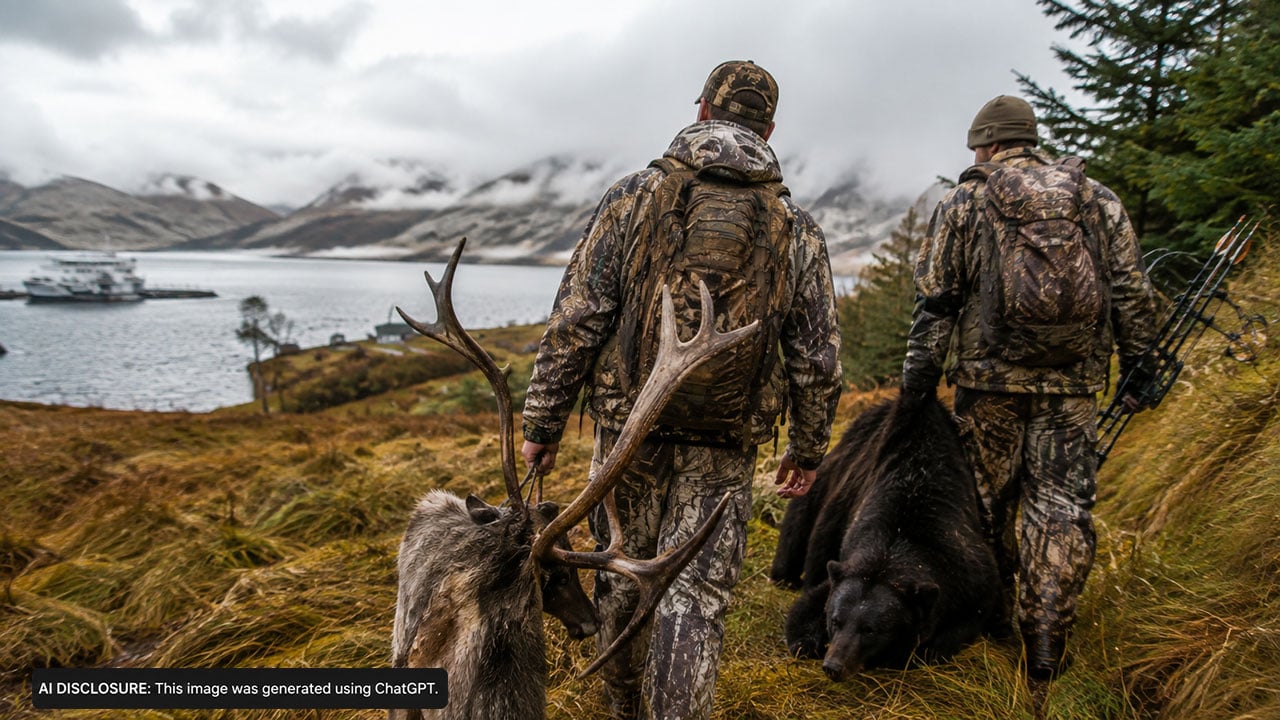
Then there was the May 2024 black bear hunt. Court documents state the pair collected $13,500 from three clients from Arizona, South Carolina, and Oregon to provide transportation out of Cordova. But prosecutors say they also assisted with spotting black bears from the M/V Sound Choice, directed the clients on where to offload from a skiff and stalk bears, and stayed in the field while the hunts were happening. All three clients successfully harvested black bears with that assistance.
False reporting added fuel to the fire
Anyone who’s dealt with state wildlife agencies knows one thing: when the regulations require reporting, they expect the report to match reality. Alaska transporters are required to submit a Transporter Activity Report (TAR) documenting who was transported, where they went, and what game and weight was harvested.
In this case, prosecutors say the TAR filed for the November 2022 hunt listed only two of the four clients and under-reported harvested game by at least two deer. That kind of mismatch doesn’t look like a simple mistake once the rest of the trip details are on the table, and it’s exactly the sort of thing that draws attention when wildlife is being moved across state lines.
The quote that tells you everything about intent
There are cases where a guy makes a bad call, gets corrected, and never repeats it. This one didn’t read that way. During the May 2024 trip, Turgeon reportedly admitted to clients that he was illegally guiding them and made a statement showing open contempt for Alaska’s rules.
That attitude is the fastest way to turn a wildlife case into a “make an example” case. In sentencing, the court emphasized the importance of following Alaska’s wildlife regulations to protect game populations for future generations. And the government’s statements made it clear they viewed illegal guided hunts as harming ethical hunters and lawful guides who do it the right way.
The penalties: prison, probation, forfeiture money, and worldwide bans
Turgeon and Emmi pleaded guilty on Dec. 9, 2026. Emmi pleaded guilty to four misdemeanor counts of Lacey Act violations tied to commercial activity in illegally taken wildlife. Turgeon pleaded guilty to four felony counts of Lacey Act violations tied to commercial activity in illegally taken wildlife.
Turgeon was sentenced to six months in federal prison, followed by three years on supervised release. He was fined $20,000 and ordered to forfeit $14,982.61 in lieu of forfeiting the M/V Sound Choice, plus forfeiture of the rifle and scope used during the November 2022 hunt. He also received a worldwide hunting and fishing ban and was barred from getting a transporter or guide license during his supervised release.
Emmi received four years of federal probation, a $30,000 fine, and 100 hours of community service. Like Turgeon, he was ordered to forfeit $14,982.61 in lieu of forfeiting the M/V Sound Choice, and he received a worldwide hunting and fishing ban along with being barred from obtaining a transporter or guide license during probation.
That “worldwide” piece is what jumps off the page. Most hunters understand losing a state license or privileges in a particular unit. A court-ordered ban that reaches beyond Alaska is a completely different kind of consequence—and it’s the kind of penalty that follows you long after the money is paid.
When hunters ask why the rules are written so tightly around commercial services, this case is a clean example: the state sets the licensing framework, but once wildlife is taken illegally and moved across state lines as part of commercial activity, the federal side can come down hard under the Lacey Act. If you’re paying for a hunt or providing services for one, it’s worth knowing exactly who is licensed for what—and what “helping out” in the field actually means under the law.
Like The Avid Outdoorsman’s content? Subscribe to our newsletter so you never miss an article.
Here’s more from us: