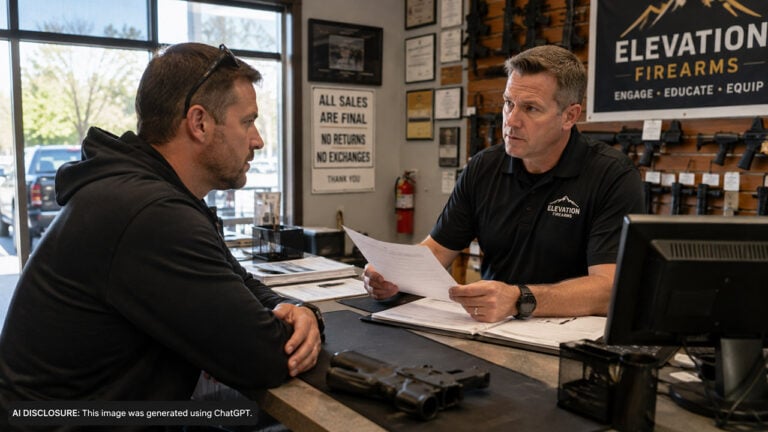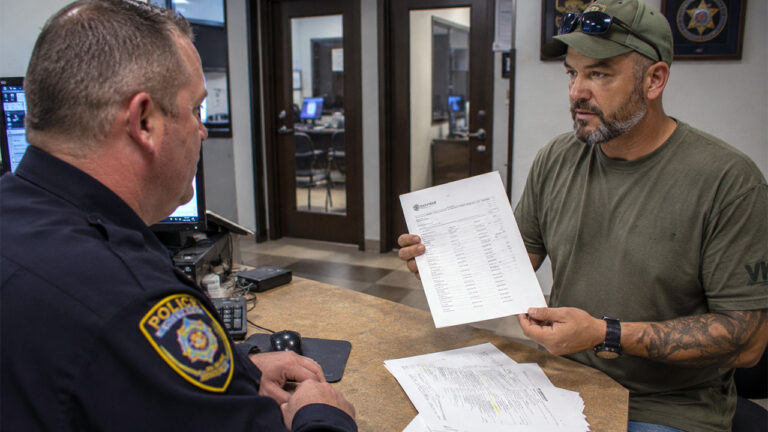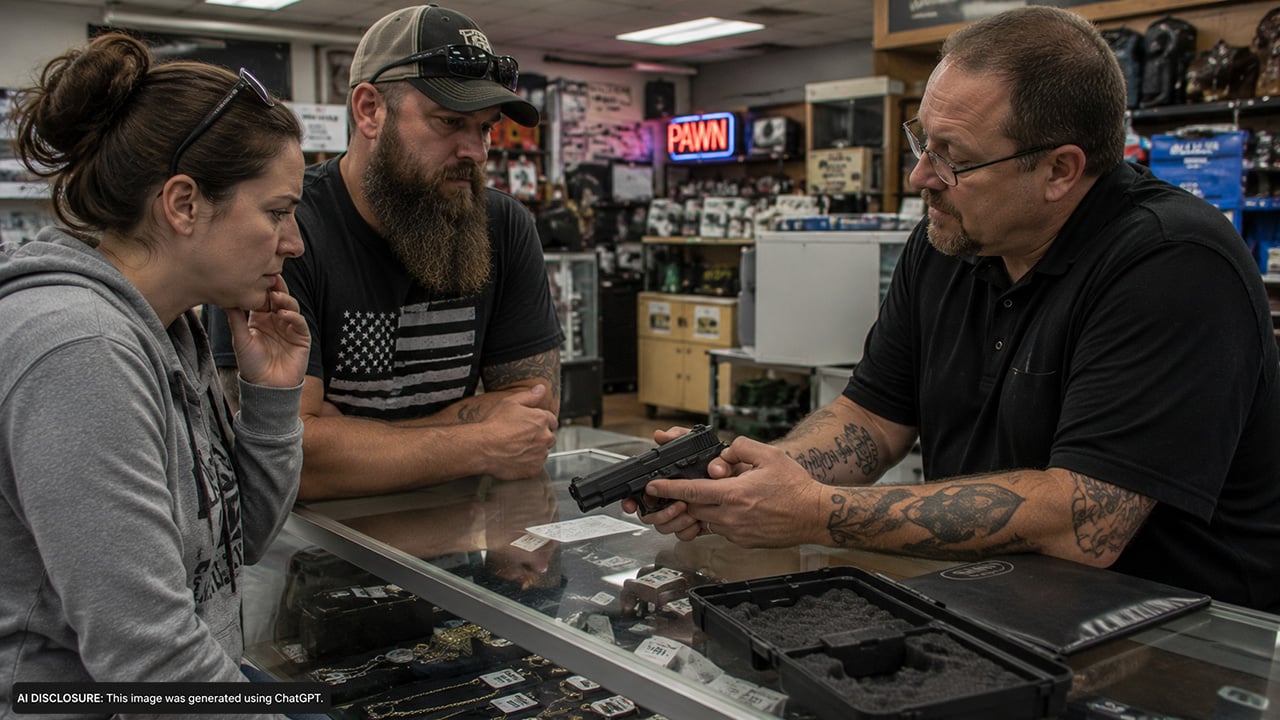
Photo credit: AI-generated image created using ChatGPT. Illustrative only
A storage unit break-in is bad enough. But when you can actually see your stolen property sitting for sale online, the frustration turns into something else entirely—especially when one of those stolen items is a firearm and you’re thinking about public safety as much as your own loss.
That’s the spot a Southern California family found themselves in, as detailed in the original post. After discovering their storage unit had been hit sometime within the last week, they filed a report, got a case number, and were directed to upload an itemized list of stolen property. Then the owner started hunting for their gear online—and found it.
The break-in: a familiar problem with an unfamiliar twist
According to the account, the family’s storage unit in the Los Angeles area was broken into sometime between visits, likely within a seven-day window. The mother found the damage, police responded, and the paperwork started: case number, documentation link, and the long task of listing what was taken.
They had insurance through USAA and expected to be reimbursed financially. But anyone who’s ever lost heirloom gear—granddad’s old knife, a first deer rifle, photos, family keepsakes—knows the check isn’t the point. In this case it was sentimental items, including vintage purses passed down from a deceased family member, that mattered most.
Tracking stolen property online and stumbling into a pawn shop
The owner did what a lot of practical folks would do: started searching resale sites like Mercari and eBay for distinctive items. They had about 13 Loungefly bags stolen, and some were easy to identify because of unique all-over prints and a personal touch—special Velcro used to secure straps that didn’t come from the factory.
At first, it looked like a regular seller. The owner even had a friend place an order on one bag, hoping a shipping address might help identify who had it. The confirmation email told a different story: the seller’s email appeared to be a pawn shop Gmail account, tipping them off that at least some of the stolen property had moved through a storefront.
The shop was said to be about a 1.5-hour drive away, in San Bernardino County, and closed on Sunday. The plan was to drive out when it opened, see if more items were on site than what was listed online, and then involve local law enforcement.
Where the situation gets tense: “Do we really have to buy back our own stuff?”
Here’s the hard truth: people assume a police report and proof of ownership automatically means the shop hands it over. In the real world, it can get messy fast.
The owner’s worry was simple and common: even with a police report and evidence the goods were stolen, would the pawn shop demand payment to release the items? They’d read that victims sometimes end up paying to recover their own property, then trying to recoup the money later in small claims court.
That’s a gut punch, especially when the theft total is already deep into felony territory. The owner estimated the items visible online totaled $1,315, and the overall stolen property was likely $3,500 at minimum—possibly $5,000 to $6,000. They also noted that some of the stolen items had been listed for sale previously, so not everything needed to be recovered—just the pieces that couldn’t be replaced.
The firearm angle: why a stolen gun changes the stakes
When the stolen property includes a gun, you’re not just talking about money or sentiment. You’re talking about liability concerns, documentation, and the very real chance that firearm could end up in the wrong hands.
Gun owners tend to be practical about this: you want the serial number documented, you want the firearm entered as stolen, and you want a clean paper trail showing you did your part. In a best-case scenario, that means the report includes make/model/serial, and the investigating agency can coordinate with the shop so it’s held as potential evidence or recovered property.
The conflict in this situation—based on the headline angle—is that the shop wouldn’t agree to hold the firearm for police. Whether that’s because of store policy, a misunderstanding, or something else, it puts the rightful owner in a terrible position: do you walk away and hope law enforcement can move quickly, or do you feel pressured into spending money just to keep a stolen gun from re-entering circulation?
What a levelheaded next step looks like in the real world
The owner’s instinct to avoid a direct confrontation was a good one. Showing up angry and making accusations across a counter can put you behind the eight ball, and it can also spook whoever brought the goods in. The smarter approach is methodical: bring the case number, bring your documentation, and loop law enforcement in before emotions take over.
In a situation like this, you’re trying to do a few things at once without stepping in it: preserve evidence, confirm the items are actually yours, and get the right agency talking to the shop. The owner planned to call the local sheriff once they got to the pawn shop and confirmed the items were present. That’s generally the right direction, because the shop is in a different county, and you want the jurisdiction that can physically respond to that location.
It also matters how you prove ownership. Distinctive marks, photos, receipts, prior listings, serial numbers (especially on firearms), and any unique identifiers can help. The owner had a strong tell with the custom Velcro straps. In the gun world, that equivalent is clean serial documentation and purchase records.
Why pawn transactions don’t always resolve like folks expect
A lot of outdoorsmen assume pawn shops are required to do the right thing instantly. Some do. Others dig in, especially if they believe they legally purchased or accepted the item in good faith and don’t want to eat the loss.
Most states have rules requiring pawnbrokers to log items, record seller identification, and hold items for a set period before resale. But the process of “I found it online, now give it back” isn’t always immediate. Sometimes law enforcement has to verify, sometimes a hold has to be requested properly, and sometimes the victim is pushed toward a civil route if the shop won’t voluntarily release property without being made whole.
That’s why the owner was trying to get their ducks in a row before making the drive: if they walked in unprepared, they could get stonewalled. If they walked in with solid documentation and the right agency already engaged, the chances of the items being retained and traced back to the person who pawned them go up.
Storage unit theft is a harsh reminder that “out of sight” can turn into “gone for good” in a hurry. Insurance helps, but it doesn’t bring back heirlooms—and when a stolen firearm is involved, the urgency isn’t just personal. The best move is the same one we preach with anything outdoors and firearm-related: stay calm, document everything, and let the right authorities handle the recovery so you don’t end up paying twice or making a bad situation worse.
Like The Avid Outdoorsman’s content? Be sure to follow us.
Here’s more from us: