Photo credit: Dutchmen Photography/Shutterstock.com
Police officers and practical-pistol competitors live in different worlds, but when you study the pistols they carry and shoot hard, the overlap is obvious. Both groups need guns that run through thousands of rounds without complaint, tolerate neglect and abuse and offer enough accuracy and controllability to make hits at speed. They also care about logistics: holsters, magazines, spare parts and optics support all have to exist in the real world, not just in a catalog. When agencies and high-level shooters switch platforms, they rarely do it for fads; they do it because something about reliability, ergonomics or support got noticeably better—or failed them badly.
Reliability that survives dirt, weather and bad grips
Duty pistols chosen by agencies go through structured tests that would make most casual shooters wince: thousands of rounds across different lots of training and duty ammo, mud and sand exposure, drop tests, temperature swings and one-handed operation drills. If a design chokes repeatedly when it’s filthy, fails in the cold or sheds parts, it usually doesn’t make the cut. Competition shooters don’t have formal procurement protocols, but they punish pistols in their own way by running long match days, loading to max capacity, practicing on dirty bays and shooting through rain and heat. Guns that can’t handle slightly off grips, quick reloads and marginal lubrication tend to get replaced quickly. In both worlds, “reliable” doesn’t mean “it ran fine on two clean range days”; it means “it keeps going when everything around it is trying to make it fail.”
Triggers that are predictable, not necessarily light
Both cops and competitors are less obsessed with raw trigger weight than they are with feel and consistency. A medium-weight trigger that breaks the same way every time and resets cleanly is far more useful than an ultra-light setup that feels mushy or inconsistent. For officers, that consistency shows up in qualification scores and in shootings reviewed after the fact, where controllable, defensible hits matter more than how “nice” the trigger felt in the squad room. For competitors, a repeatable break and reset dictate how fast they can transition between targets and how confidently they can run partials without throwing shots into no-shoots. Platforms that offer decent factory triggers, or that accept high-quality drop-in units without compromising safety, tend to find favor because they let shooters perform without forcing them to fight gritty pulls, long resets or unpredictable walls.
Modern support for optics and lights
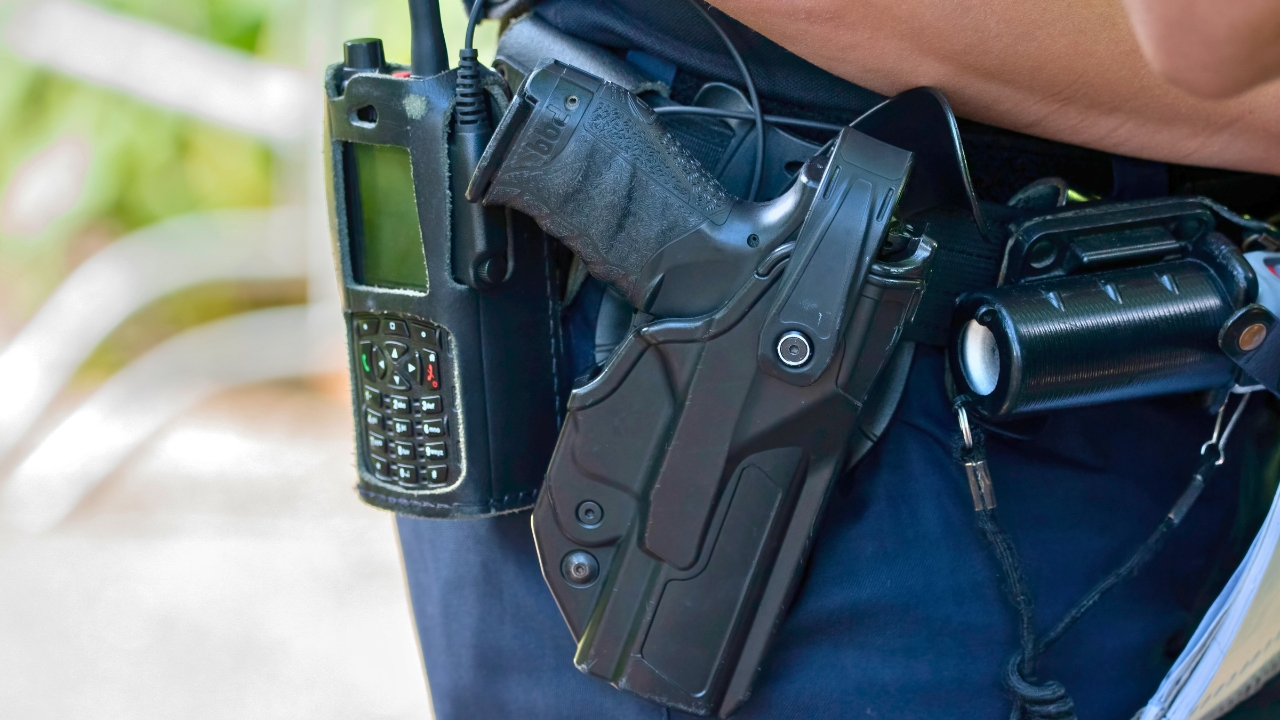
Another point of convergence is the expectation that a duty-size 9mm will carry a weapon light and, increasingly, a slide-mounted optic. Agencies moving to pistol-mounted optics want factory slide cuts, durable mounting systems and backup iron options that work with common dots and holsters; they’ve been burned enough by improvised milling and oddball plates to know what happens when you cheap out. Competitors in carry optics divisions want similar things, along with the ability to swap optics without machining every time they change brands. Both groups expect rail space that accepts mainstream lights, and they want holster makers, duty gear companies and concealment builders to be able to support their setups without months of waiting. A pistol that gets all of that right stands a much better chance of being widely adopted than one that requires workarounds just to run a dot and a light.
Ergonomics, capacity and parts ecosystems
Finally, there’s the simple question of how the gun fits hands and lives over the long haul. Duty-size pistols need to accommodate officers with different hand sizes and grip strengths, so interchangeable backstraps, grip inserts and controllable texture matter more than they used to. Competitors want the same adjustability so they can tune recoil control and reach to controls, especially when running high round counts. Capacity in the 15–20 round range has become the norm for full-size 9mms, and both communities expect magazines to be durable, widely available and supported by baseplates, springs and followers from multiple sources. Just as important is the broader ecosystem: armorer courses, spare parts kits, aftermarket support and multiple holster vendors all contribute to whether a pistol stays viable for a department or a shooter investing in one platform for the long term. When cops and competitors independently gravitate toward the same models, it’s a strong signal that those boxes are being checked well.
Like The Avid Outdoorsman’s content? Subscribe to our newsletter so you never miss an article.
Here’s more from us: