Photo credit: TheBackwoodsHermit/YouTube
The gun world loves to act like every new cartridge is here to fix everything that came before it. Better efficiency. Better shape. Better long-range numbers. Better recoil for the performance. Better marketing, at the very least. Some of those newer rounds are genuinely good. A few are smart improvements. But a lot of older or more established calibers stay right where they are because replacing a cartridge is harder than beating it on paper. A caliber does not survive for decades only because people are stubborn. It survives because it keeps solving real problems cleanly enough that the replacement never becomes necessary for most shooters.
That is why some calibers remain so hard to replace. They are available, familiar, proven, and supported by a mountain of rifles, pistols, magazines, holsters, ammo loads, and real-world experience. More important than that, they fit the way people actually shoot and hunt. A cartridge that feeds well, shoots predictably, stays affordable enough to practice with, and works across a wide range of normal use builds loyalty that newer rounds have a hard time breaking. The replacement may be slightly flatter, slightly faster, or slightly more efficient. But if the older caliber already works without much fuss, a lot of people will keep asking the same question: replaced by what, exactly?
Familiarity is one of the hardest advantages to beat
One reason some calibers remain hard to replace is that familiarity itself has value. Shooters know what to expect from them. They know the recoil, the trajectory, the typical loads, the kind of guns they run well in, and the jobs they handle best. That may not sound exciting, but it matters a lot. A familiar caliber reduces uncertainty. It lets people focus on shooting, hunting, and carrying instead of constantly wondering whether they picked the right tool or whether their ammo supply is going to become a hassle later.
This is especially important with calibers that sit at the center of major roles. A hunter with a .30-06, .308, or .270 usually understands exactly what the rifle will do. A carrier with a 9mm usually understands what the pistol, ammo, and training life around that caliber will look like. That kind of deep familiarity is not easily displaced by a newer cartridge that needs explanation every time it enters the room. Once a caliber becomes part of the rhythm of ordinary shooting life, replacing it gets much harder than winning a spec-sheet argument.
Broad support keeps older calibers alive
A caliber becomes very hard to replace once the support around it gets too broad. Rifles are chambered for it everywhere. Pistols are built around it in every size class. Ammunition is available in multiple loadings, from practice rounds to premium hunting or defensive options. Magazines, spare parts, reloading components, and advice are all easy to find. At that point, the caliber is not just a cartridge anymore. It is an ecosystem, and ecosystems do not get replaced easily.
That is one reason 9mm, .22 Long Rifle, .308 Winchester, .30-06 Springfield, .223 Remington, and 12 gauge keep holding their ground so well. Even if a newer option can outperform them in one area, the newer option usually cannot instantly reproduce the same level of support. Shooters do not only buy ballistics. They buy a whole ownership experience. A caliber with massive support makes life easier, and easy tends to beat interesting over the long haul.
Real-world performance matters more than edge-case improvement
A lot of newer calibers struggle to replace older ones because their advantages live mostly in narrow conditions. They may be a little flatter at distance, a little more efficient in a short-action rifle, or a little better in the wind with certain loads. Those things can matter. But many shooters and hunters do not spend most of their lives operating in those edges. They spend their time at ordinary ranges, on ordinary hunts, with ordinary budgets and ordinary skills. In that world, a caliber that already performs well enough is incredibly difficult to dislodge.
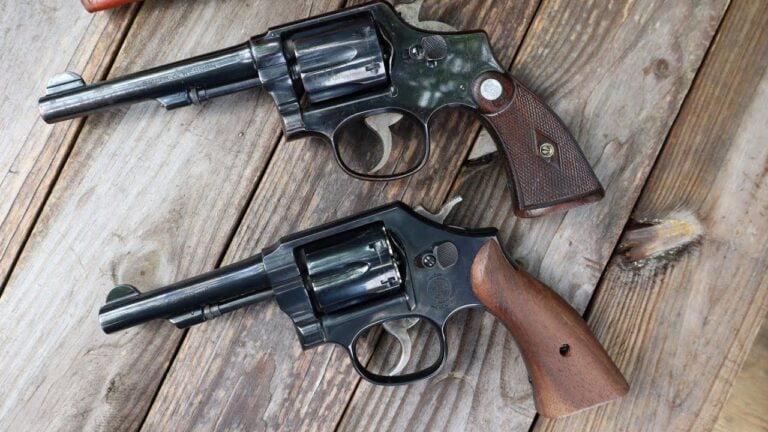
That is why rounds like .308, .30-30, .357 Magnum, and .45 ACP remain so resilient. They do not need to dominate every category. They only need to keep doing their real jobs well enough that most users never feel under-equipped. A replacement has to offer more than a slight gain in one direction. It has to make the older caliber feel unnecessary across real use, and that is a much higher bar than many new cartridges can clear.
Shootability keeps many calibers in place
A caliber can stay relevant simply because people shoot it well. That may sound too obvious, but it is one of the strongest forces in the whole market. A round with manageable recoil, predictable handling, and enough performance to stay useful creates confidence. Confidence leads to practice. Practice leads to better shooting. Better shooting leads to more loyalty. That cycle is incredibly hard to break once it gets established.
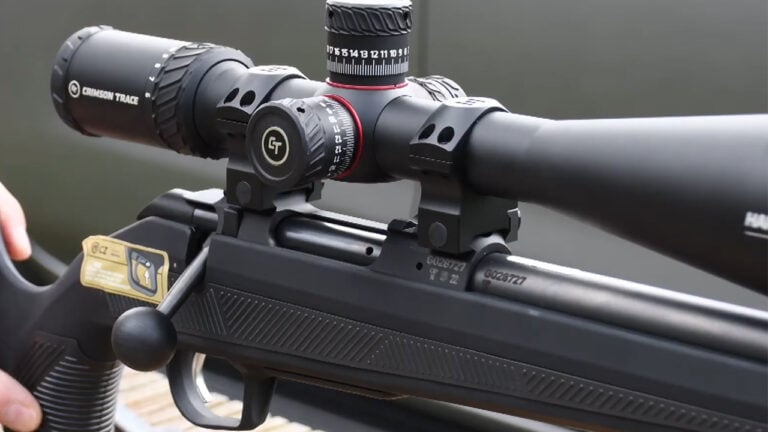
This is one reason calibers like 9mm, .243 Winchester, 7mm-08 Remington, and 6.5 Creedmoor hold onto their ground so strongly. They let a lot of shooters stay comfortable enough to train honestly while still offering real field or defensive performance. A replacement may come along with slightly more power or slightly better reach, but if it makes practice more miserable or turns average shooters into flinchers, the old caliber usually survives just fine. A cartridge that people shoot willingly is often a cartridge they keep.
Versatility is one of the strongest survival traits
Some calibers remain hard to replace because they are simply too versatile. They work across multiple gun types, multiple roles, or multiple classes of game in a way that gives owners more than one reason to keep them around. The .357 Magnum is a great example of this. It works in revolvers, lever guns, defensive roles, range roles, and even field use, while also letting people shoot .38 Special. The .22 Long Rifle is another obvious example. Training, plinking, small game, pest control, and general utility all live under the same banner.
Versatility makes replacement difficult because any challenger has to replace all the use cases, not just one. A cartridge that is slightly better for defense but worse for training, or slightly better for open-country hunting but worse for everyday ownership, is not actually replacing anything completely. It is only moving one piece of the puzzle. The calibers that stay alive the longest are often the ones that solve enough different problems that owners do not feel any pressure to choose a single successor.
Tradition matters more than the market likes to admit
People sometimes talk about tradition as if it is irrational, but a lot of tradition in the gun world is simply repeated proof. A caliber becomes traditional because generations of shooters found it useful enough to keep recommending, buying, and relying on. That does not mean every old round deserves eternal loyalty. It means some of them earned it honestly. A deer hunter with a .30-30 or .270 is not clinging to history for emotional reasons alone. He is often carrying a cartridge that still makes complete sense for the way he hunts.
That kind of generational trust is hard for newer calibers to break into. A new round does not only need good numbers. It needs time, experience, and enough ordinary success stories that people stop seeing it as a trend and start seeing it as a normal answer. That takes years, sometimes decades. Until then, the older caliber with a deep history of real use keeps its footing.
Replacement gets harder when the original has no serious flaw
A caliber is easiest to replace when it has a glaring weakness. Maybe the recoil is excessive for the performance. Maybe the ammo is scarce. Maybe the design is awkward in modern firearms. Maybe the cartridge simply stops fitting what shooters need. But some calibers do not really have that kind of fatal flaw. They may not be the absolute best in every category, but they are good enough across enough categories that nothing pushes them out. That is when replacement becomes extremely difficult.
Take .308 Winchester. It may not be the flattest, the lightest-kicking, or the sexiest rifle round in the rack. But what exactly is so wrong with it that it needs replacing? The same question applies to 9mm in defensive handguns, .22 LR in rimfires, and .30-06 in broad hunting use. These calibers remain hard to replace because they are still fundamentally sound answers. The market can circle around them with fresh ideas all day, but the old rounds keep sitting there without much obvious weakness to exploit.
The market often ends up expanding instead of replacing
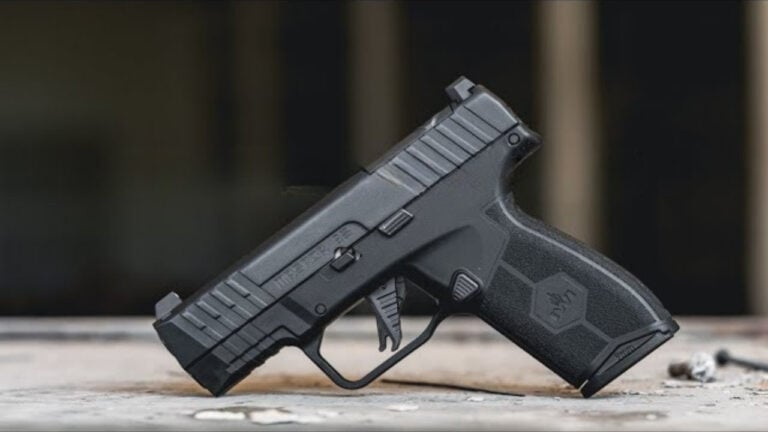
Another reason some calibers remain hard to replace is that the market often does not actually replace anything. It just expands. A new cartridge finds a lane beside the old one instead of knocking it out. Shooters add a 6.5 Creedmoor without giving up their .308. Hunters try 7mm-08 without getting rid of their .30-06. Carriers adopt a micro-9 while still trusting full-size 9mm pistols or old .45s. This is more common than true replacement, and it says a lot about how durable established calibers really are.
That happens because the older round still keeps doing at least one thing too well to throw away. A new cartridge may be better for one specific role, but the older cartridge remains easier to feed, easier to shoot, easier to support, or simply easier to trust. So instead of disappearing, it stays. And once that pattern repeats across enough years, the caliber stops looking old-fashioned and starts looking nearly permanent.
In the end, boring reliability is hard to beat
A lot of hard-to-replace calibers have one trait in common: they are boring in the best possible way. They work. They feed, fire, hit, and remain available without creating much drama. They do not need explanation. They do not need apology. They do not need the owner to constantly remind himself why he chose them. That kind of boring is a tremendous advantage in the gun world.
That is why some calibers remain hard to replace. They are not merely surviving on nostalgia or inertia. They are surviving because they continue to fit real life better than the more exciting alternatives do. A new cartridge can grab attention quickly. Keeping it is much harder. The older calibers that remain in the safe, in the holster, and in the cabinet year after year usually stay there for the same basic reason: they still make too much sense to push out.
Like The Avid Outdoorsman’s content? Subscribe to our newsletter so you never miss an article.
Here’s more from us: