
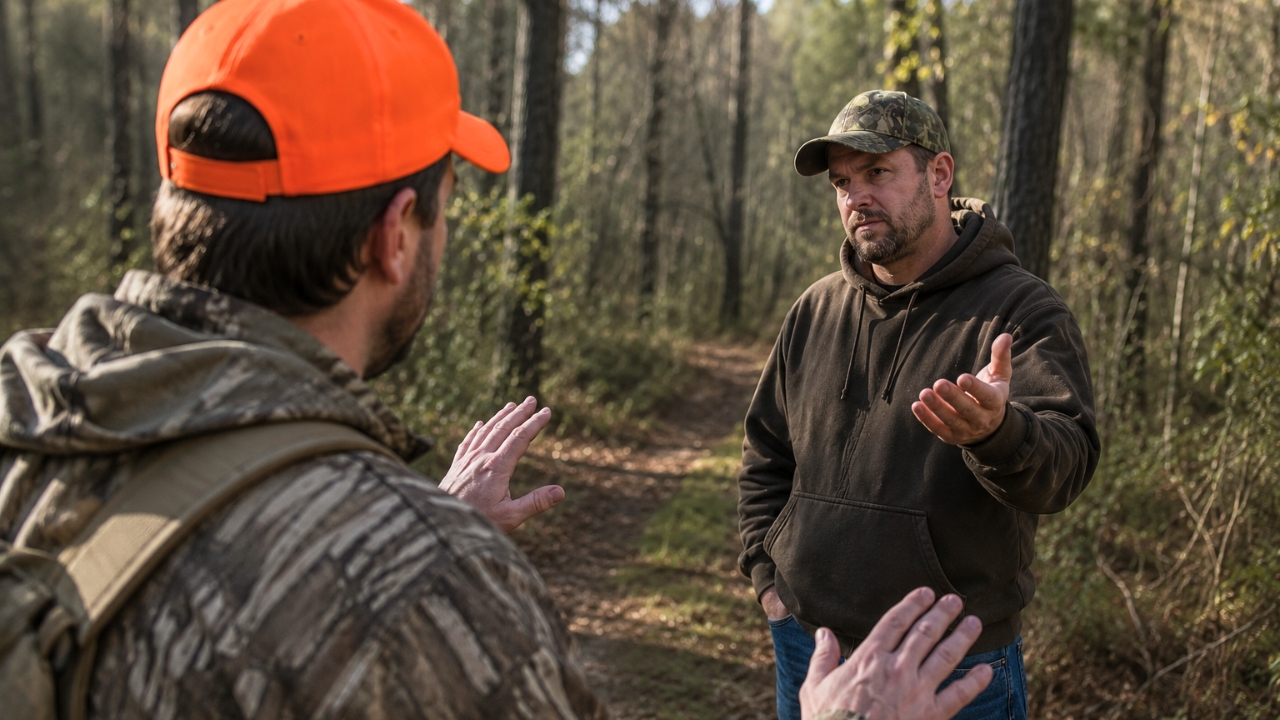
Photo credit: The Avid Outdoorsman
There are few things more aggravating than another hunter who keeps sliding closer every time you make a move. You get in early, find good sign, set up with the wind right, and try to hunt clean. Then here comes another guy easing down the same ridge, sitting just over the rise, calling over you, or moving every time you move like he thinks your scouting did half the work for him. On public land, he may have every legal right to be there. That does not make it smart, safe, or respectful. Crowding another hunter is one of those problems that can turn a decent hunt into a tense one fast, and the way you handle it says a lot about your judgment.
First, Decide If It Is Intentional
Not every crowded setup is personal. Sometimes another hunter genuinely does not know you are there. Thick brush, rolling ground, low light, wind, and quiet setups can hide people better than you think. A hunter might walk in from another access point and have no idea you are sitting 80 yards away. That is frustrating, but it is different from someone seeing your truck, hearing your call, spotting your orange, and still pushing in closer.
Before you get mad, take a minute to read the situation. Did he walk in blind? Did he stop once he noticed you? Did he back out, wave, or shift away? Or did he keep working toward the same deer, bird, or trail after it was obvious you were already there? Intent matters. A mistake can usually be handled quietly. A pattern needs a different approach.
Make Yourself Known Without Starting a Fight
If the other hunter may not know you are there, make yourself visible or call out if it is safe. Keep it simple. “Hunter over here” is enough. You are not looking for a debate. You are letting him know another person is already set up nearby. During firearm season, this matters for safety before it matters for manners.
Do not start with insults, threats, or sarcasm. That may feel good for three seconds, but it usually makes the other guy defensive. If he is decent, he will give you space once he realizes what happened. If he is not decent, yelling probably will not fix him anyway. Either way, you stay in control by keeping your own reaction clean.
Do Not Let Pride Keep You in a Bad Setup
This is the hard part. Sometimes the smartest move is to leave, even when the other guy is the one being annoying. Nobody likes backing out of a spot they found first. It feels like letting bad behavior win. But if the setup is now unsafe, blown out, or full of tension, staying may not gain you anything.
A crowded setup can ruin shot angles, spook game, and create confusion about where everyone is aiming. If you cannot hunt confidently and safely, move. That is not weakness. That is experience. The best public-land hunters have backup spots for this exact reason. The woods are full of people who make bad decisions. You do not have to let their bad decision become yours.
Keep the Conversation Short If You Talk
If you end up talking to the other hunter, do not turn it into a courtroom hearing. Say what needs to be said and move on. Something like, “I’m set up right down this trail, so I’m going to back out and give this area some room,” keeps it calm while still making the point. If he keeps pushing closer after that, you know what kind of hunter you are dealing with.
Do not get sucked into arguing over who got there first, who scouted it longer, or who has more right to the spot. On public land, those arguments rarely go anywhere useful. On private or leased land, the rules should already be clear. Either way, a long argument in the woods does not help the hunt, and it sure does not make anyone safer.
Watch for Safety Problems
Crowding is annoying, but unsafe crowding is a different matter. If another hunter sets up where shooting lanes overlap, walks into your line of fire, shoots too close, calls animals between you, or moves around without knowing where you are, that needs to be taken seriously. This is especially true in turkey woods, thick cover, shared fields, and pressured public areas where people can end up working the same animal from different directions.
If you feel unsafe, leave and document what happened. Mark the location, note the time, and write down details while they are fresh. If shots were fired dangerously close, if someone threatened you, or if the behavior crossed into harassment or illegal activity, report it to the proper authority. You do not need to prove you are tougher than the other guy. You need to get home.
On Private Land, Verify Permission Fast
If someone is crowding you on private land, the first question is whether he is supposed to be there at all. Do not assume. Call the landowner, lease manager, or whoever controls access. It could be a trespasser, but it could also be a family member, neighbor, or guest nobody told you about. That kind of miscommunication happens more than people want to admit.
If the person does not have permission, document the situation and let the landowner or game warden handle it. If he does have permission, then the property needs clearer rules. Stand assignments, guest limits, parking areas, and hunting zones should not be figured out in the dark with rifles involved. Private-land access only works when everyone knows where they belong.
Do Not Mess With His Gear
If the crowding hunter leaves a stand, blind, camera, decoy, or gear nearby, leave it alone. Do not move it, damage it, hide it, or “teach him a lesson.” That is how you turn yourself into the problem. You may be completely right about him crowding you, but touching his stuff gives him something to use against you.
Take pictures if needed. Note the location. If the gear is on private land where it does not belong, report it through the right channel. If it is on public land, check the local rules on stands and abandoned equipment. Some places have tagging or removal rules. Some do not. Either way, your frustration does not give you permission to handle someone else’s property however you want.
Build Your Hunt Around Pressure
Crowding happens less often when you plan for pressure from the start. That means scouting more than one spot, avoiding obvious access when possible, watching where other trucks park, and having routes that let you adjust quietly. If everyone is using the same trail, same field edge, same ridge, and same obvious funnel, conflict is almost guaranteed.
Sometimes the best move is not finding the prettiest sign. It is finding the place other hunters are less likely to bother with. A rougher walk, thicker access, less obvious terrain, or a spot that only works on a specific wind can keep you away from the crowd. Public-land hunting is not only about finding animals. It is also about finding space to hunt them right.
Crowding Shows Who Can Stay Level
Another hunter crowding your spot can make your blood pressure climb in a hurry. That is normal. But it also gives you a chance to show some discipline. You can make yourself known, stay safe, avoid touching gear, document real problems, and move when the setup is no longer worth it. That is how experienced hunters handle it.
The guy who crowds other hunters may never learn much. That is on him. Your job is to keep his poor judgment from dragging you into a worse situation. Hunt hard, keep backup plans, and do not let one inconsiderate hunter turn you into the angry guy everyone remembers at the access point.
Like The Avid Outdoorsman’s content? Subscribe to our newsletter so you never miss an article.
Here’s more from us:


