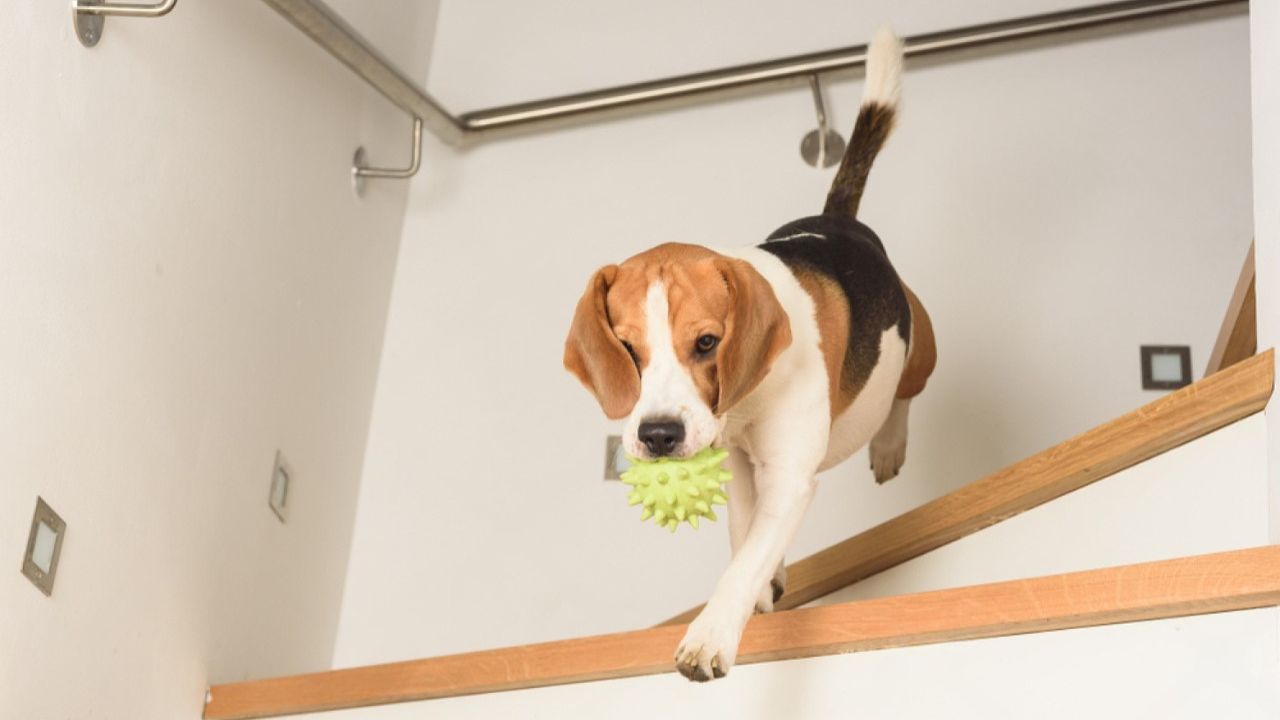
Photo credit: Przemek Iciak/Shutterstock.com
A dog pacing at night can drive you crazy, but it’s also one of those behaviors that usually has a reason behind it. Dogs don’t pace for fun. If they’re walking loops through the house, getting up and down repeatedly, shifting from room to room, panting, whining, or staring at you like they need something, they’re either uncomfortable, anxious, or trying to solve a problem they can’t communicate. Owners often assume it’s “restlessness” like a human being wired, but with dogs, nighttime pacing is often the first obvious sign that something is off.
The hardest part is that pacing can come from a bunch of different causes, and some are simple while others need medical attention. That’s why the right move is to look at the full picture: your dog’s age, recent routine changes, appetite, bathroom habits, mobility, and whether the pacing is new or getting worse. One weird night after a stressful day might not mean much. A pattern that’s happening multiple nights a week is worth taking seriously, because it usually doesn’t fix itself without addressing the cause.
Pain is one of the most common reasons, especially in older dogs
If your dog is pacing at night, pain is high on my list, even if the dog isn’t limping. Arthritis, back pain, hip pain, and even dental pain can flare when a dog lies still for a while. Joints stiffen, pressure builds, and suddenly the dog can’t find a position that doesn’t hurt. So they get up, walk around, try a different spot, lie down, then repeat the cycle. Owners interpret it as “can’t settle,” but it’s often “can’t get comfortable.”
This is especially common if you notice stiffness in the morning, reluctance on stairs, hesitation jumping, or a dog that takes longer to stand after naps. If those signs stack with night pacing, it’s worth discussing pain management with a vet. A lot of dogs sleep dramatically better once their discomfort is treated, and owners are shocked at how long the dog had been powering through it.
Needing to go outside is another big one that gets missed
Sometimes pacing is as simple as “I need to poop,” but the dog doesn’t know how to ask clearly, or they’re trying not to wake you up. Older dogs can also develop increased urgency due to bladder issues, hormonal problems, diabetes, kidney changes, or UTIs. If your dog is pacing and then standing near the door, sniffing the floor, circling, or having accidents, you’re likely dealing with a bathroom issue, not an anxiety issue.
Pay attention to frequency. If the dog suddenly needs to go out more at night, or you notice increased water intake during the day, that’s worth a vet call. Bathroom changes in dogs are often tied to something real, and it’s usually easier to manage early than after it becomes a nightly routine.
Anxiety and noise sensitivity show up more at night than people expect
Night is when the house is quiet, so small sounds stand out more. A dog that’s sensitive to noise may pace because they hear something you don’t: distant fireworks, coyotes, a neighbor’s dog, rodents in the wall, a new HVAC sound, or even a smoke detector chirp you’ve stopped noticing. Some dogs also react to changes in weather pressure before storms and get restless without any obvious trigger.
If pacing happens around the same time each night, look for patterns in the environment. Does the neighbor get home late? Does the garbage truck come early? Is the dog reacting to something outside the window? Dogs can build anxiety loops around these cues, and pacing becomes their way of releasing stress. You can’t “discipline” that out of them. You have to reduce the trigger and build a calmer nighttime routine.
Cognitive changes can make nighttime confusing for senior dogs
Older dogs can develop cognitive decline that changes their sleep-wake cycle. They may sleep more during the day, then wake up restless at night. They may wander, stare, get stuck in corners, or act like they don’t know what they’re doing. Owners often describe it as the dog being “up all night” or “acting confused.” Night pacing is one of the classic signs.
If your dog is older and pacing is paired with disorientation, staring, new accidents, or increased clinginess, it’s worth talking to a vet. Cognitive issues can’t always be “fixed,” but they can often be supported, and making the dog more comfortable can help everyone sleep.
GI discomfort can cause pacing too
Nausea doesn’t always look like vomiting. A dog that feels queasy may pace, lick lips, swallow repeatedly, burp, drool, or eat grass when they get outside. They may keep shifting because their stomach feels unsettled. If pacing is paired with appetite changes, gurgling belly sounds, loose stool, or repeated swallowing, think GI discomfort.
Sometimes it’s a one-off from something they ate. Sometimes it’s reflux that hits at night when they lie down. Sometimes it’s inflammation or intolerance. If it’s happening repeatedly, it deserves attention, because chronic nausea makes dogs miserable and can lead to dehydration or weight loss over time.
Skin irritation and itching can keep a dog from settling
Allergies and skin issues can make a dog pace because lying down makes them itch more, or because they’re uncomfortable. If your dog is chewing paws, scratching ears, rubbing face, or licking the belly at night, itching could be driving the pacing. People overlook this because it doesn’t look like an emergency, but chronic itch can wreck sleep and create infections fast.
Look for red paws, head shaking, ear odor, hot spots, or irritated belly skin. If you see those and pacing is happening, addressing the itch can solve the pacing problem.
When I consider it “call the vet” territory
If pacing is new, happens multiple nights in a row, and is paired with any of these—vomiting, diarrhea, refusing food, increased drinking/peeing, obvious pain, panting at rest, coughing, weakness, collapse, confusion, or sudden behavior changes—it’s worth calling. If the dog is older, I’m quicker to call because small issues can snowball faster in seniors. And if the dog can’t settle at all and seems distressed, that’s not something to ignore.
Also, if your dog paces and you can’t get their attention, or they seem disoriented, that’s a bigger red flag. That can be neurological, cognitive, or toxin-related, and it’s not a “wait a week” situation.
What you can do tonight while you figure it out
Start simple. Offer a bathroom break. Check water intake. Watch movement for stiffness and see if the dog seems sore when lying down or standing. Keep lights low and reduce stimulation. If you suspect anxiety, a calm routine helps: a quiet room, a familiar bed, white noise, and keeping the dog away from windows where they can “monitor” the outside all night.
And if it happens again, get a short video. It sounds silly, but it helps a vet understand the behavior and whether it looks like pain pacing, anxiety pacing, or disorientation. The better your description, the faster you get real answers.
Like The Avid Outdoorsman’s content? Subscribe to our newsletter so you never miss an article.
Here’s more from us: