Photo credit: Nitiphonphat/Shutterstock.com
Dogs don’t wake up one day and announce they can’t see like they used to. Most of the time, vision changes creep in slowly, and dogs compensate so well that owners miss it until something obvious happens—like the dog bumping into a chair or hesitating on stairs. The reason it’s easy to miss is because dogs rely on more than sight. Smell and hearing cover a lot, and routine covers the rest. If your dog knows the layout of the house, they can move around on autopilot even with weaker vision, so you think everything is fine. Then you rearrange furniture, the lights are low, or you go somewhere unfamiliar, and suddenly the “weird behavior” shows up.
Vision changes can come from normal aging, but they can also be caused by eye disease, injury, inflammation, diabetes-related changes, and other issues that need quick attention. Some causes are uncomfortable and some are urgent. The point isn’t to diagnose at home. The point is to recognize the behaviors that often show up when a dog’s vision is shifting, so you know when it’s time for an eye check instead of assuming the dog is being stubborn or dramatic.
1) They hesitate in dim light or at night
This is one of the earliest signs people notice, especially if the dog used to move confidently after dark. A dog with declining vision may pause at the hallway entrance, slow down when lights are off, or stick closer to you when you walk through the house at night. They aren’t “being cautious for no reason.” Low light removes the small visual cues they were relying on, and their confidence drops.
You may also notice more startle reactions at night because they can’t clearly see what’s coming toward them. If your dog suddenly seems unsure in low light, vision changes deserve a closer look.
2) They bump into things… but only sometimes
Dogs with declining vision often bump into objects when the object is new, moved, or placed in an unusual spot. They may be fine with the couch that’s always been there, but they clip a chair you slid six inches to the left. Owners think, “That was weird,” and move on. But if it happens repeatedly—especially in unfamiliar places—it’s often the dog’s visual map failing.
It can also show up as bumping into door frames or corners when they turn too tightly. They’re not clumsy out of nowhere. They’re misjudging space.
3) They avoid stairs or take them differently than they used to
Stairs require depth perception, and that’s where vision changes often show themselves. A dog may hesitate before stepping down, take stairs one step at a time, or refuse them altogether unless you guide them. People often blame joint pain, and sometimes that is part of it, but vision plays a big role too, especially on the way down.
If your dog suddenly “forgets” how to do stairs, or seems anxious about steps they used to handle easily, vision should be on your radar.
4) They startle more easily when you approach
If your dog used to notice you walking up and now they jump when you reach down to pet them, that can be vision or hearing. Dogs with vision decline rely more on sound and scent. If you approach quietly, they may not register you until you’re right there. That creates a startle response that looks like nervousness, but it’s often sensory.
This is why some dogs become more reactive or snappy when their senses change. They aren’t “getting mean.” They’re getting surprised.
5) They cling to you more in new environments
A dog that’s losing vision may become more attached outside the home. They follow your legs closely, hesitate to explore, or stick to your side in unfamiliar spaces. At home, they can navigate by memory. Somewhere new, they can’t. So they use you as their reference point.
Owners sometimes interpret this as anxiety or “neediness,” but it can be a confidence issue caused by not seeing clearly. If the clinginess shows up mainly in unfamiliar places, vision is a strong possibility.
6) They miss the toy, miss the treat, or misjudge grabs
Dogs with vision changes may snap at a treat and miss it, or they may search the floor for a treat that’s right in front of them. They might miss the ball when it rolls, or they might stop tracking fast-moving toys. That can look like disinterest, but it’s often a tracking issue. Their eyes aren’t picking up motion the same way.
This can also show up as a dog that plays differently—less chasing, more sniffing. They’re adjusting their play style to match what they can reliably do.
7) They stare at walls, corners, or “nothing”
Wall-staring can have different causes, but vision changes are one of them. Dogs can fixate on shadows, light flickers, reflections, or shapes that their eyes can’t interpret correctly. If the staring happens in certain lighting conditions or certain rooms, it can be tied to vision more than anything else.
If wall-staring is paired with bumping into things, nighttime hesitation, or eye discharge, vision becomes a likely explanation.
8) They get anxious around doorways, thresholds, or shiny floors
Depth perception issues can make thresholds and floor changes look confusing. A dog may hesitate to cross from carpet to tile, or they may refuse to walk on shiny floors that reflect light. People think the dog “doesn’t like the floor,” but the dog may be struggling to judge what the surface is doing visually.
If your dog suddenly avoids certain floors or acts unsure at doorways, it’s not always stubbornness. Sometimes they can’t interpret what they’re seeing.
9) Their eyes look different: cloudiness, redness, squinting, or discharge
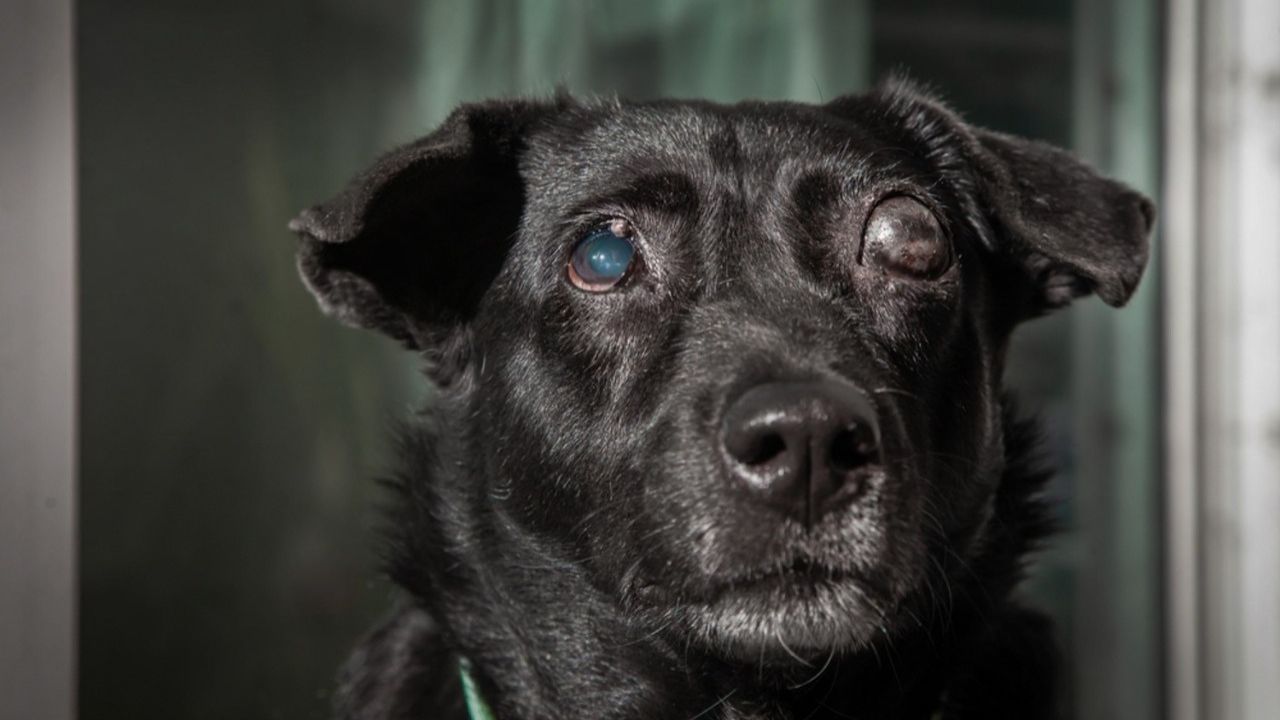
Sometimes you get physical signs along with behavior. Cloudiness can be age-related, but it can also be cataracts or other issues. Redness, squinting, excessive tearing, or thick discharge can indicate irritation, infection, injury, or pressure problems. Eye pain can cause a dog to act “off” even before you notice a major change.
If you see squinting or your dog is pawing at the face, don’t wait. Eye issues can get worse quickly, and some conditions are time-sensitive.
10) They stop enjoying activities that require visual tracking
A dog that used to love chasing a ball may suddenly prefer sniffing around instead. A dog that loved watching squirrels at the window may lose interest. A dog that used to sprint after a thrown toy might hesitate, or they might only chase if the toy makes noise. Owners interpret this as laziness or aging, but sometimes it’s vision. Tracking fast movement takes eyesight. If it’s not clear anymore, the dog stops trying because it’s frustrating.
You’ll often notice they do better with toys that have sound, scent, or slower movement. That’s the dog adapting.
When I say “don’t wait on this”
If your dog is squinting, has a red eye, has sudden cloudiness, pawing at the face, bumping into things suddenly, or seems disoriented, I treat that as a vet situation sooner rather than later. Eye pain and pressure problems are not things you want to wait out. Even if it turns out to be age-related vision decline, getting an evaluation helps you protect comfort and avoid accidents.
And if you can, record a short clip of the behavior you’re seeing. It helps a vet understand what’s happening, especially if the dog behaves perfectly normal at the office.
Like The Avid Outdoorsman’s content? Subscribe to our newsletter so you never miss an article.
Here’s more from us: