Photo credit: JJdoes.everything/YouTube
We may earn revenue from products featured on this page through affiliate links.
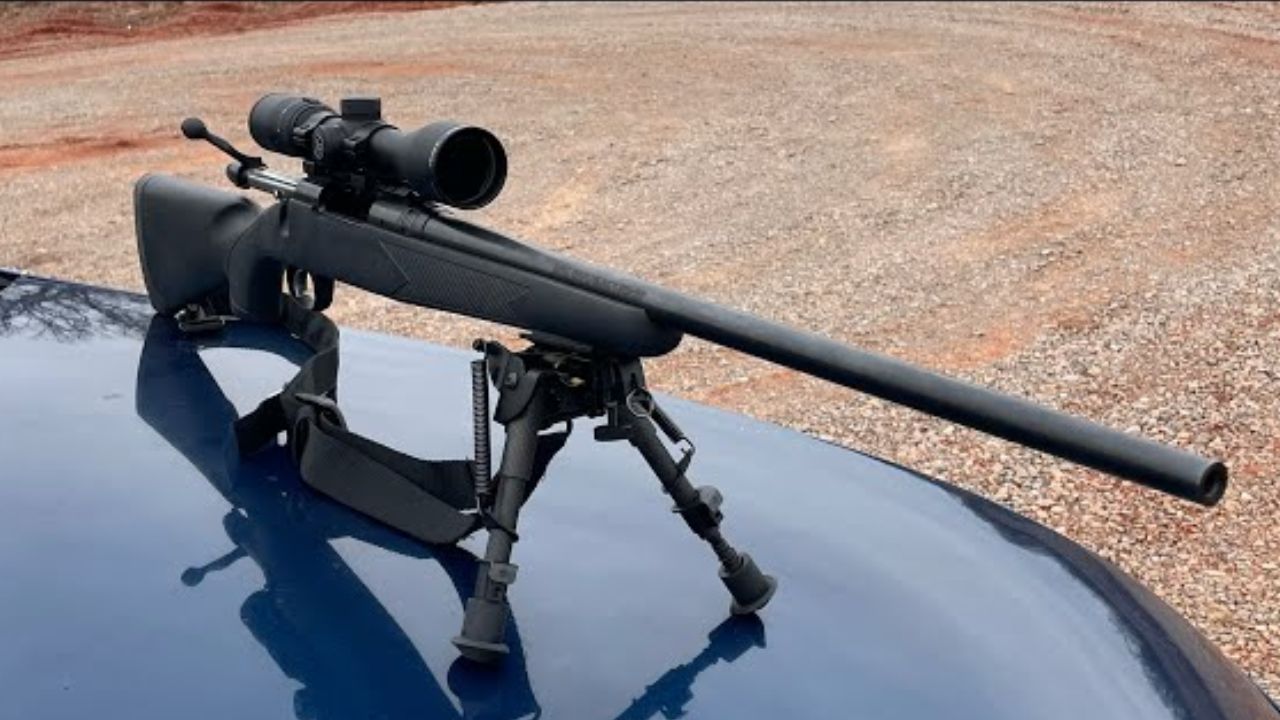
Lightweight rifles look like the perfect answer when you’re staring at a long hike on the map. Less weight on your shoulder, easier to sling all day, less fatigue when you’re climbing deadfall or shale. Then you get to the range and find out that the rifle you love to carry is the one that beats you up on the bench and sprays shots wider than your heavier rig ever did. That’s not because the rifle is “inaccurate” in the mechanical sense; it’s because light rifles amplify every mistake you make behind the gun. Recoil feels sharper, muzzle movement is harder to control, and tiny problems with grip, trigger press, or follow-through suddenly show up on paper in a way a heavier rifle would have hidden. If your fundamentals are sloppy, a 6½-pound gun will tell you about it in a hurry.
Recoil has nowhere to go, so it goes straight into your form
With a light rifle, the same cartridge has the same recoil energy, but there’s less mass to soak it up. That means more felt recoil and more abrupt recoil impulse, especially with magnums or stout .30-caliber loads. When the rifle weighs eight or nine pounds scoped, it tends to move slower and straighter under recoil, and the stock soaks up some of that hit. Drop that to six-and-change, and the gun jumps faster, torques more, and does it before your brain has time to process what’s happening. That’s where flinch grows legs. If you’re already a little recoil-shy, a featherweight rifle will train you to anticipate the bang and push the muzzle low or off to the side just before the shot breaks. On paper, that looks like random fliers; in the field, it’s a clean miss or a marginal hit that should have been a center-chest shot. The rifle didn’t suddenly get less accurate—you made the same mistake you’ve always made, and the lighter gun stopped hiding it for you.
Light rifles magnify wobble and expose bad position
Any rifle will tell on you if your position is garbage, but a light one shouts it. With more weight out front, a heavier rifle has some built-in stability; it resists little twitches and fights your pulse just enough that your sight picture feels calmer. Lightweight rifles give up that inertia. The muzzle reacts immediately to every bit of muscle tension, every shift in your breathing, and every time you try to steer the reticle instead of letting bone support carry the load. From field positions—kneeling, sitting, off sticks—you see it even more. The sight picture never really settles, so shooters start “snatching” shots when the crosshair swings over the target instead of building a position that lets it sit there. On a bench, bags and sleds mask this. On a hillside, you’re suddenly dealing with a gun that seems to wander all over the vitals at 200 yards. That’s not the rifle being unstable on its own; it’s your position not being solid enough for the lighter platform you picked.
Grip, trigger, and follow-through matter more when the gun is jumpy
Bad trigger work is one of the first things a lightweight rifle will punish. On a heavier gun, you can get away with a little side pressure or a rushed yank and still land inside “minute of deer” at 150 yards. On a light gun, the same sloppy press drags the muzzle sideways or down right as the sear breaks. Because the rifle has less mass, it doesn’t resist that movement; it follows your mistake. Follow-through gets exposed the same way. Many hunters lift their head and peel off the rifle the instant the shot goes, trying to see what happened. A heavier gun dampens that habit a bit. A lightweight rifle, especially off a less-than-perfect rest, lets that early movement start before the bullet is fully out of the barrel. The fix isn’t mystical. You have to run a straight-back trigger press with the pad of your finger, let the shot surprise you, and keep your face on the stock as the gun recoils. If you watch the reticle track up and back down into the target area instead of lifting your head to look, your groups with a light rifle usually tighten up faster than any hardware swap ever will.
Poor support and over-magnified glass pile on fast
Light rifles are usually bought for “real hunts,” which means guys try to shoot them from packs, improvised rests, or quick kneeling positions more than from benches. That’s exactly where weak support systems show their teeth. A wobbly bipod, cheap shooting sticks, or a pack that’s too tall leaves the rifle half-supported and your upper body doing the rest. With more mass out front, you could lean into that and fake your way through. With a six-pound mountain rifle, the sight picture never stops moving. Then there’s the magnification problem: light rifles often get topped with high-range scopes because people plan for long shots. Cranking to 12x or 15x at 200 yards on a light rifle turns normal wobble into a circus. You see every heartbeat and every tremor, so you start stabbing at the trigger when the crosshair passes over the animal. Running more modest magnification and a solid, repeatable rest goes a long way. A midweight optic and a real field support—something like a decent bipod and a rear bag, or a sturdy set of Bog-style tripod sticks you can actually buy at Bass Pro—will do more for your hit percentage than shaving another four ounces off the rifle ever will.
Why some “mountain” rifles feel harsher than others
Not all lightweight rifles behave the same way. Stock design, recoil pad quality, and barrel contour all change how punishing a gun feels. A light rifle with a straight, well-designed stock that sends recoil straight back into your shoulder is easier to manage than one with excessive drop at comb or heel. Likewise, a good recoil pad spreads the hit and slows it just enough that your brain doesn’t brace as hard before every shot. Barrel contour matters because pencil-thin tubes heat up quickly and can walk groups when you shoot more than a couple rounds, which many people discover while trying to “dial in” a new ultralight at the range. When the barrel is hot and the gun is light, it’s hard to tell if that third shot opened up because of your form or the steel moving. That’s one reason some hunters gravitate toward well-thought-out light rifles like the Savage 110 Ultralite or Browning X-Bolt Speed rifles you’ll see at Bass Pro. They’re still light enough to carry all day, but the stocks, bedding, and barrel designs are built to keep recoil more manageable and groups more predictable if you do your part.
How to train so a light rifle stops beating you
If you want the carry benefit of a light rifle without feeling like it’s out to embarrass you, you have to train differently than you would with a heavy varmint gun. Start with dry fire. Practice mounting the rifle from standing to a supported position—pack, sticks, rail—and work on watching the reticle stay as calm as possible through the “shot” and imaginary recoil. You’ll feel instantly where you’re muscling the gun instead of building bone support. Then move to live fire with honest round counts. Don’t blast 20 rounds of magnum ammo and call it data; that just bakes in flinch. Shoot slow, controlled three- to five-shot strings from realistic field positions. Film yourself if you can. You’ll often see your head lifting off the stock or your support hand tightening right at the break. Fix one thing at a time—position, grip, trigger, follow-through—and treat every shot like it’s at an animal, not paper. Over a few sessions, you’ll find the rifle stops feeling “wild” and starts telling the truth: when you run clean fundamentals, it shoots as well as you need. When you get lazy, it reminds you immediately. That feedback is brutal at first, but it’s exactly what you want long term. A light rifle that punishes bad form is the same rifle that rewards good form in the mountains, where every ounce you didn’t carry is energy you still have when it’s time to make one shot that actually counts.
Like The Avid Outdoorsman’s content? Subscribe to our newsletter so you never miss an article.
Here’s more from us: