Photo credit: Safari Outdoor/YouTube
First-time handgun buyers are walking into gun shops with a different wish list than a decade ago, and it is reshaping the glass cases in front of them. Instead of gravitating to full-size pistols, you are more likely to be weighing a new generation of micro-compacts that promise real firepower in a package that disappears under a T-shirt. The shift is not just about fashion or marketing; it reflects how you live, carry, and think about personal security in crowded cities, small apartments, and busy daily routines.
As you sort through options, you are stepping into a market where manufacturers have spent years shrinking frames, refining triggers, and squeezing extra capacity into tiny magazines. Those changes have made it easier for a first-time owner to choose a pistol that fits your hand, your waistband, and your budget without feeling like you are giving up too much performance compared with a traditional duty-size gun.
The new baseline: compact and micro-compact as “normal” carry guns
If you are buying your first handgun today, you are entering a world where smaller pistols are treated as the default rather than a compromise. Modern Compact Pistols are marketed around “Small Size, Strong Performance,” and that slogan captures how the industry now frames the tradeoff: you expect a gun that is easier to conceal and carry, but you also expect it to run reliably and shoot like a serious defensive tool. For many new owners, that balance makes a compact or micro-compact feel like the sensible starting point rather than a niche option.
Once you accept that a smaller gun can deliver strong performance, the question becomes how small you want to go. Micro-compacts push the idea further than a traditional Compact, trimming grip length and slide height so you can hide the pistol in places where a full-size would print badly or dig into your ribs. You see that logic echoed in buying guides that highlight Use Case Insights for Self Defense, where a Compact 9 mm is described as a sweet spot between size, capacity, and recoil control. Micro-compacts build on that same formula, then shave away every extra millimeter that is not strictly necessary for function.
Why concealment and comfort matter more to first-time buyers
For a growing number of new gun owners, the pistol you choose is the pistol you actually carry, not the one that shoots best on a square range. That reality pushes you toward guns that are easy to live with for ten or twelve hours at a time, in a car seat, at a desk, or on a quick grocery run. The New Chapter in Concealed Carry reporting describes how the concealed carry handguns world has always involved tradeoffs, but it also notes that Shooters who wanted deep concealment used to accept very low capacity and harsh recoil. Micro-compacts are attractive to you precisely because they soften those tradeoffs while staying small enough to disappear under light clothing.
Comfort is not just about how a gun feels in your hand, it is about how it feels on your body hour after hour. When you are new to carrying, a full-size pistol can feel heavy, bulky, and unforgiving of imperfect holster choices. By contrast, a micro-compact’s shorter grip and lighter weight reduce the pressure points that make you leave the gun at home. That is why so many first-time buyers are willing to accept the limitations of Small Handguns, even when they understand that But there are drawbacks, including reduced magazine capacity and a snappier feel under recoil. The calculation is simple: a slightly more demanding gun that you actually carry beats a more forgiving one that stays locked in a safe.
How modern features made tiny guns feel like full-size tools
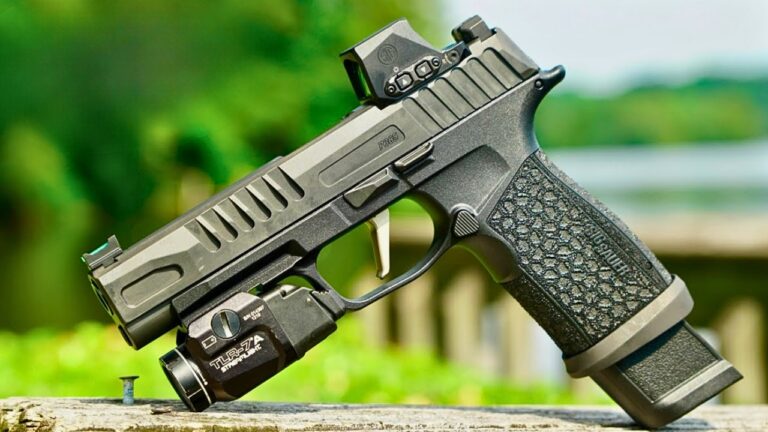
The micro-compact surge is not just about shrinking frames; it is about loading those small pistols with features that used to be reserved for duty guns. When you pick up a current micro-compact, you are likely to see an optic-ready slide, factory night sights, and a refined trigger that feels closer to a competition pistol than a pocket gun. Reporting on the Modern micro-compact phenomenon notes that features like an optic-ready slide, integrated night sights, a smooth trigger system, and enhanced grip textures make these guns more appealing to both new and veteran shooters in terms of firepower and comfort, which is exactly what you want when you are buying your first pistol and do not want to feel under-equipped.
Optics in particular have changed the equation for new shooters. Earlier data on Micro Compacts with Micro Red Dots at the Top of sales charts highlights how many models now ship with slides cut for tiny red-dot sights, and how owners describe the difference between night and day when they add one. If you are learning to shoot, a clear dot can make it easier to get hits quickly, which helps you feel confident that a small pistol is not a compromise in capability. Combined with better grip textures and improved triggers, these Modern features help micro-compacts punch far above their size class in your hands.
Capacity, recoil, and the real tradeoffs you are accepting
Even with all the engineering progress, physics has not changed, and you still have to decide which compromises you are willing to live with. A micro-compact’s shorter grip means fewer rounds in the magazine compared with a full-size pistol, and its lighter frame can translate into sharper recoil that you will feel more in your palm and wrist. Guides that walk you through Self Defense choices emphasize that a Compact 9 mm offers a balance between size, capacity, and recoil control, and that balance is exactly what you are tilting when you go even smaller. You gain concealment and comfort, but you give up some of the cushion that a heavier, longer gun provides when the slide cycles and the muzzle flips.
At the same time, the capacity gap is not as dramatic as it once was, which is part of why you see so many first-time buyers shrugging off the difference. Reports on 9 mm micro-compact sales note that Cloessner confirmed there isn’t one standout micro-compact model, but there are some notable trends, including higher capacity in very small frames, With the market seeing unprecedented demand as buyers compare where things truly fall out in 2023. When you can carry a micro-compact that holds double-digit rounds in a flush-fit magazine, the old argument that small guns are “five-shot only” no longer matches what you see in the display case.
Why full-size pistols still have a place, especially on the range
Even as micro-compacts dominate first-time carry conversations, full-size pistols have not become obsolete, and you should understand what they still do better. A larger frame gives you more room for your hands, a longer sight radius, and more weight to soak up recoil, all of which make it easier to shoot accurately at speed. When you look at discussions of whether you can conceal carry a full-size pistol, you see that While compact firearms are praised for concealability, full-size guns still offer larger magazine capacity and improved recoil management. If you plan to spend long weekends in training classes or shoot competitions, that extra comfort and control can matter more to you than how easily the gun hides under a polo shirt.
Full-size pistols also give you more real estate for accessories, which can be a deciding factor if you want to mount a weapon light or experiment with different optics. In the Concealed Carry Debate on Full Size vs. Micro, one of the points raised is that Finally, it’s easier to mount a wider variety of accessories on full size guns, with examples like the G3 TORO accepting lights and optics that simply do not fit on the shortest micro-compact rails. As a first-time buyer, you may not be thinking about a light-bearing holster or a competition optic yet, but if you expect your skills and interests to grow, a full-size or at least a traditional Compact can give you more room to expand.
How sales data and industry trends are reinforcing your instincts
Your personal preferences are not forming in a vacuum; they are being shaped by what is available on shelves and what friends, instructors, and online communities are recommending. Industry data on 9 mm micro-compact sales on the rise shows that Cloessner confirmed there isn’t one standout micro-compact model, but there are some notable trends, With the surge in demand spread across several brands rather than a single blockbuster. That kind of broad-based growth means your local shop is likely to stock multiple micro-compact options, each with slightly different ergonomics and feature sets, which encourages you to start your search in that size category.
At the same time, the popularity of Micro Red Dots on Micro Compacts at the Top of sales charts reinforces the idea that a small gun can be a complete defensive system rather than a backup. When you see instructors running micro-compacts with optics and lights through demanding drills, or you watch Shooters in a Concealed Carry class talk about how confidence and concealment go hand in hand, it validates your instinct that starting with a micro-compact is not a rookie mistake. Instead, it feels like you are aligning with where the market and training culture are already heading.
Choosing what actually fits your life, not just the display case
In the end, the reason more first-time buyers are choosing micro-compacts over full-size pistols is simple: you are buying for your real life, not an idealized scenario. If your daily routine involves office chairs, crowded public transit, or parenting duties, a small, light pistol that you can carry discreetly and comfortably will always have an edge. The industry’s focus on Small Size, Strong Performance in Compact Pistols, and the way micro-compacts push that idea even further, reflects the reality that you are more likely to prioritize discretion and ease of carry than the last few percentage points of shootability.
That does not mean you should ignore the limitations of Small Handguns, or forget that But the number of rounds they hold and the way they recoil will demand more deliberate practice from you. It does mean you can make a clear-eyed choice: start with a micro-compact that you will actually carry, invest in training that helps you manage its quirks, and, if you later add a full-size pistol for range work or home defense, treat that as an expansion of your toolkit rather than a correction. The market has moved in your direction, and the micro-compact on the counter in front of you exists precisely because buyers like you asked for a gun that fits your life first and everything else second.
Like The Avid Outdoorsman’s content? Be sure to follow us.
Here’s more from us: