Photo credit: WHO_TEE_WHO/YouTube
Deer cartridges do not stay popular for decades because hunters are stubborn or afraid of change. They stay popular because deer hunting has a way of exposing what really matters. A cartridge can look impressive in a catalog or on a ballistics chart, but once you get into a stand, walk a ridge, or wait on a field edge in bad weather, the old priorities start coming back. Hunters want a round that is accurate enough, easy enough to shoot well, available when they need it, and proven on actual deer instead of only in advertising.
That is why certain cartridges keep hanging around no matter what the newest trend happens to be. They offer practical recoil, enough power without going overboard, and a long record of clean kills when the shooter does his part. Some are better in thick woods. Some shine more in open country. Some are ideal for newer hunters, while others remain favorites because they simply do not leave much to complain about. The rounds that last usually do so because they keep matching real deer hunting better than the latest hype cycle.
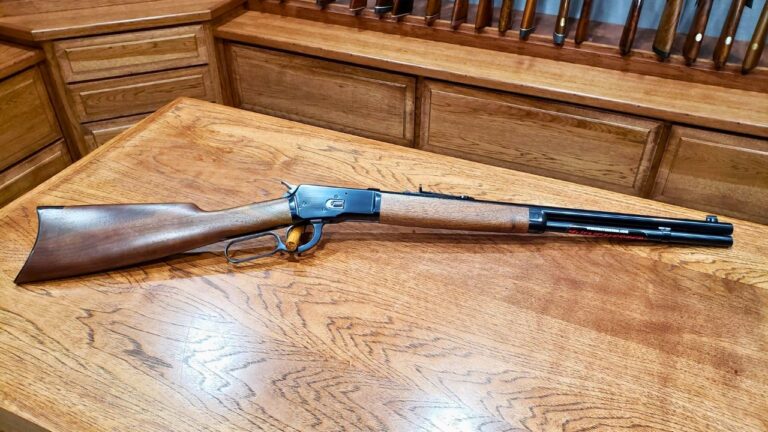
.30-30 Winchester
The .30-30 stays relevant because most deer are still taken at sensible ranges, not across giant open spaces where every shot turns into a long-range exercise. In timber, creek bottoms, brushy ridges, and cutovers, it remains exactly what it has always been: a practical deer round that works best when the rifle is quick to handle and the shot comes fast. Hunters who know that kind of country rarely need much convincing.
It also helps that the .30-30 has very little mystery left in it. Hunters know what it does, know what kind of ranges suit it, and know it kills deer cleanly with proper bullets and sensible shot placement. That kind of confidence matters. A cartridge does not need flashy speed to keep its place. It only needs to keep solving the actual problem, and the .30-30 still does that very well.
.243 Winchester
The .243 Winchester stays relevant because there will always be deer hunters who benefit from a round that is easy to shoot well. Mild recoil is not a small advantage. It usually means more practice, better accuracy, and less hesitation when the shot finally shows up. That matters for younger hunters, smaller-framed shooters, and plenty of experienced people who simply value precision over brute force on deer-sized game.
Its staying power also comes from the fact that it does its job cleanly when used inside its lane. Deer are not especially hard to kill with a well-placed bullet, and the .243 has spent decades proving it can handle that work without unnecessary punishment at the shoulder. Newer cartridges may promise small improvements, but the .243 keeps reminding hunters that shootability is often more valuable than chasing extra performance they do not really need.
.270 Winchester
The .270 Winchester remains relevant because it gives deer hunters a combination that is hard to stop liking once you spend enough seasons with it. It shoots flat enough for open-country confidence, recoils mildly enough for many people to handle well, and has a long history of performing exactly the way hunters hoped it would. It works in bean fields, across cut lines, and anywhere a little extra reach feels useful without stepping into heavy recoil.
That long-term usefulness is what keeps it around. The .270 is not trendy, and it does not need to be. Hunters know they can zero it, learn it, and trust it year after year without worrying that it suddenly stopped making sense. That kind of predictability becomes a real asset over time. A cartridge that keeps making clean hits and clean kills tends to keep its spot in deer camp, no matter what the market is trying to sell next.
.308 Winchester
The .308 Winchester stays relevant because it is one of the easiest deer cartridges to live with. Rifles are everywhere, ammunition is everywhere, recoil is manageable for most hunters, and field performance is fully settled by now. There is very little guesswork involved. That matters because a lot of hunters would rather carry a cartridge they understand completely than chase whatever new round is getting the most attention this season.
It also remains useful because it offers a nice balance between authority and control. The .308 has enough power for deer in any normal hunting situation, but it usually does not punish the shooter the way harder-kicking cartridges can. That balance helps people shoot it well, and deer cartridges stay relevant when they help people stay accurate under real conditions. The .308 keeps doing that, which is why it never really falls out of favor.
.30-06 Springfield
The .30-06 stays relevant because it is still one of the most practical all-around hunting cartridges a person can own, and deer season is often only one part of that bigger picture. Plenty of hunters like knowing their deer rifle can also handle larger game if needed. Even when used mostly for whitetails or mule deer, the cartridge keeps making sense because it is common, flexible, and fully proven.
On deer specifically, some people call it more cartridge than necessary, and they are not entirely wrong. But the .30-06 remains easy to defend because it offers broad ammo choices, familiar handling, and performance that no one questions. Hunters who already own one rarely feel under-equipped, and that matters. A cartridge with that much practical reach across different uses tends to stick around because it makes ownership simple and deer season easy.
.25-06 Remington
The .25-06 stays relevant because it offers a combination deer hunters tend to appreciate once they actually spend time with it: mild enough recoil, excellent speed, and a trajectory that feels forgiving without needing magnum punishment. In open country, fields, and longer-shot situations, it gives hunters real confidence while still being pleasant enough to practice with. That kind of balance always has a place in deer hunting.
It also remains appealing because it feels like a true hunting cartridge, not a fad. People who use one usually understand exactly why they like it. It handles deer cleanly, keeps recoil reasonable, and gives the shooter enough reach to stop second-guessing ordinary longer shots. There may be newer rounds doing similar things now, but the .25-06 got there a long time ago, and it still works just as well as it ever did.
7mm-08 Remington
The 7mm-08 stays relevant because it lives in a very smart middle ground. It gives deer hunters more than enough performance, keeps recoil modest, and fits neatly into short-action rifles that are easy to carry and easy to shoot. That practical balance is hard to argue with once you have spent a season or two behind one. It feels efficient without feeling compromised, which is a large part of its lasting appeal.
A lot of cartridges come and go because they are built around one major selling point. The 7mm-08 has lasted because it does several things well without making a scene about any of them. It is accurate, manageable, and effective on deer in the hands of a wide range of hunters. Cartridges that keep making life easier tend to survive trends. The 7mm-08 fits that description about as well as any modern deer round.
.35 Remington
The .35 Remington stays relevant because there are still plenty of deer hunters who spend their season in thick, close country where a fast-handling rifle and a solid, moderate-range cartridge make perfect sense. It has never needed to be a long-range darling. Its place has always been in woods hunting, where deer often appear suddenly and shots happen inside distances where practical handling matters more than flat trajectory.
That is exactly why it keeps its loyal following. In the right lever gun, the .35 Remington feels like a true deer cartridge built around real field conditions instead of numbers. Hunters who know its lane tend to trust it completely. A lot of newer rounds sound smarter in theory, but the .35 Remington keeps proving that ordinary deer hunting still rewards straightforward cartridges built for ordinary distances.
.257 Roberts
The .257 Roberts stays relevant because it remains one of those cartridges experienced hunters quietly appreciate even when it does not dominate store shelves or online discussions. It offers light recoil, very good deer performance, and a shooting experience that encourages confidence rather than flinch. For hunters who value placement and comfort, it continues to make a lot of sense even if it never became the loudest name in the room.
Its long-term appeal comes from how pleasant it is to own and use. Deer cartridges that last usually make practice easier, not harder, and the Roberts has always had that going for it. It may not be as common as some of the bigger household names, but the reason it still gets talked about is simple. People who know it tend to shoot it well, and cartridges that help shooters do that rarely disappear completely.
.44 Magnum
The .44 Magnum stays relevant as a deer cartridge because some hunters still prefer compact rifles or carbines that work well in thick cover, on short drives, or in stands where long shots are unlikely. In those roles, especially from a rifle, the .44 Mag delivers more than enough authority for deer at normal distances. It is not pretending to be a flat-shooting bean-field round, and that honesty is part of why it lasts.
It also benefits from being tied to practical rifle platforms that are easy to carry and enjoyable to use. For hunters who like lever guns, straight-wall-friendly options, or a short-range setup that hits with conviction, the .44 Magnum still fills a real niche. Deer hunting has never been one-size-fits-all, and cartridges that handle a common niche well tend to survive much longer than people expect.
.350 Legend
The .350 Legend stays relevant because it answered a very real deer-hunting need rather than trying to invent one. In states that require straight-wall cartridges, it gave hunters a useful option with mild recoil, workable range, and purpose-built deer performance. That practical role keeps it in the conversation in a way many newer cartridges struggle to achieve. When a round matches regulations and real hunting needs at the same time, it tends to stick.
Its staying power also comes from how approachable it is. The recoil is manageable, rifle options are plentiful, and hunters can use it effectively without feeling like they signed up for something overly specialized or punishing. It is a newer entry compared with many classics, but it already shows the traits that help a deer cartridge last. It solves a real problem cleanly, and that usually matters more than hype.
.45-70 Government
The .45-70 stays relevant because deer hunting still includes thick woods, close-range shots, and hunters who like carrying lever guns that hit hard and handle quickly. It is not the most common deer cartridge in the country, but it remains very much alive because its role never went away. In the right terrain, with the right expectations, it continues to be a very effective and very confident choice.
What keeps it relevant is not versatility across every possible deer scenario. It is clarity of purpose. Hunters who choose a .45-70 usually know exactly why they chose it, and that kind of clarity tends to create long-term loyalty. A cartridge that feels decisive, familiar, and well-matched to the environment does not need to win popularity contests to remain useful year after year.
Like The Avid Outdoorsman’s content? Subscribe to our newsletter so you never miss an article.
Here’s more from us: