Photo credit: BANISH Suppressors
Suppressors are showing up in more hunting camps for one big reason and a couple smaller ones that matter just as much in the field. The big one is cost. The federal tax on suppressor transfers dropped from $200 to $0 on Jan. 1, 2026, and the response was immediate. NSSF said ATF received about 150,000 eForms on Jan. 1 alone, compared with roughly 2,500 submissions on a typical day before the change. ATF’s own processing page later showed 240,270 Form 4 silencer applications received in the reporting period ending Feb. 12, 2026. That kind of demand spike does not happen because a niche gear category stays niche. It happens when a product crosses over into something a lot more hunters suddenly see as practical and worth doing now instead of someday.
The smaller reasons are the ones hunters feel after the first shot. American Hunter, citing NSSF’s 2025 Suppressor Owner Survey, reported that 30% of enthusiasts bought suppressors for hunting, making it the second most common reason after sport shooting. The same article pointed to lighter, shorter and easier-to-maintain designs, which helps explain why suppressors are showing up in ordinary deer camps and predator setups instead of being treated like gear for only the hardcore crowd. A few years ago, weight and bulk were easy excuses. In 2026, those excuses are getting weaker because the products themselves have changed and hunters have had more chances to see useful field setups up close.
The paperwork barrier looks different now
For years, suppressors had two obvious obstacles: they cost more than many hunters wanted to spend, and the buying process felt like a drawn-out project. The tax change attacked the first problem directly. Reuters reported that the average retail price of a suppressor was about $830 before the tax repeal, which means the old $200 tax was not a minor add-on. It was a meaningful extra hit on top of the can itself, especially for hunters already paying for optics, ammo, tags, travel and fuel. Once that $200 disappeared, suppressors looked a lot less like a luxury purchase and a lot more like a serious gear upgrade that could be justified the same way people justify a better scope or a more accurate rifle.
The second problem, the wait, also looks better than it used to. ATF’s current processing-times page, last updated Feb. 12, 2026, listed a median processing time of 11 days for individual eForm 4 applications during that reporting period. That is still a federal process and still not the same as buying a box of ammo, but it is far from the old reputation suppressor purchases carried for years. For a hunter trying to get set before a season, that matters a lot. Gear becomes normal faster when the process no longer feels like something that might stretch on forever. Once the tax came off and the turnaround looked more manageable, a lot of hunters who had been sitting on the fence stopped sitting there.
Hunters are treating them like field tools, not novelty gear
The hearing-protection argument is probably the most persuasive reason suppressors keep spreading through hunting camps. American Hunter reported that the American Academy of Otolaryngology-Head and Neck Surgery endorsed firearm suppressors in 2024 as an effective way to reduce the risk of hearing loss, especially alongside conventional hearing protection. That matters because real hunting situations are messy. People do not always get ear pro seated in time when a buck steps out fast or a coyote hangs for only a few seconds. A suppressor does not make a centerfire rifle quiet, but it does reduce blast and makes the shot more manageable in a way many hunters notice immediately.
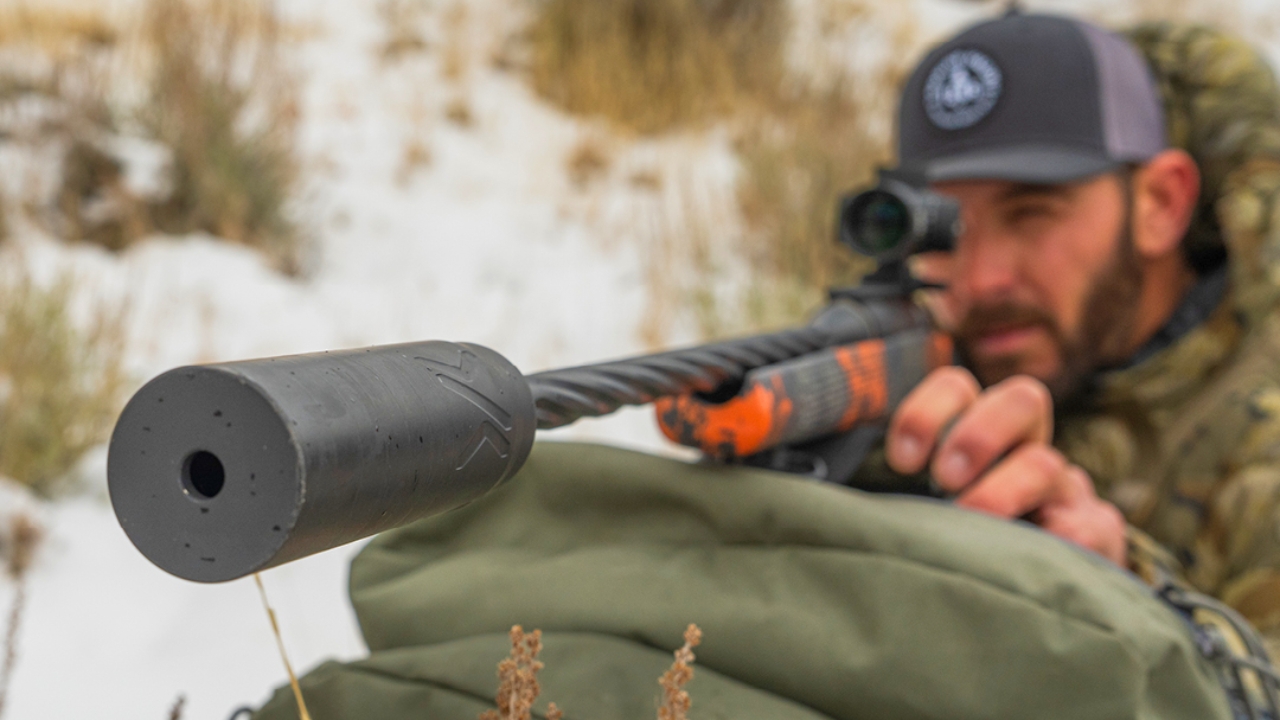
There is also the simple reality that once a few guys in camp start using suppressed rifles, other hunters get to experience the difference firsthand. They hear less blast, feel less punishment during sight-in, and often see that the setup is not nearly as awkward as they imagined. That kind of in-person proof spreads gear trends faster than marketing ever will. American Hunter’s reporting on the NSSF survey suggests hunting is already a major driver of suppressor ownership, not a side category, and that helps explain the camp effect. When enough hunters bring them, they stop being unusual. They start becoming part of what a normal modern rifle setup looks like.
This trend was building before 2026
The 2026 tax change accelerated the trend, but it did not create it from nothing. American Hunter reported that suppressor ownership had already been climbing hard, with more than 4.5 million registered suppressors as of Dec. 31, 2024, and NSSF reporting a 265% surge in annual suppressor registrations from 2020 to 2024. That matters because it shows the hunting market was already getting comfortable with the idea before Washington changed the math. The tax cut turned an existing movement into a much faster one.
The legal landscape also helped. Older American Hunter reporting noted how much suppressor hunting legality expanded over time, with far more states allowing hunting use than in the early 2010s. That kind of state-by-state normalization is easy to overlook, but it matters a lot. Hunters are not going to treat something as standard camp gear if they cannot use it legally in most of the places they hunt. Once suppressor use became lawful across most of the country and the products got lighter and better suited to hunting rifles, the remaining barriers were mostly money and hassle. In 2026, both of those barriers got hit at once.
Why this likely keeps growing
This does not look like a one-season fad. The strongest sign is that the market is still attracting a lot of new buyers instead of only serving longtime suppressor owners. American Hunter’s report on the NSSF survey said hunting is already one of the top reasons people buy suppressors, and the January demand spike shows that a huge number of people were ready to move the second the price structure changed. Once those buyers start bringing suppressed rifles into deer camps, hog camps and predator camps, the social part of the trend takes over. Hunters copy what works, especially when it protects hearing, makes rifles more comfortable to shoot and no longer feels financially absurd.
That does not mean suppressors are becoming unregulated or universal. They are still subject to federal rules and registration, and not every hunter will want the extra length or expense. But the broader shift is pretty clear. In 2026, suppressors are showing up in more hunting camps because they got easier to justify, easier to buy and easier to see as normal. The old picture of suppressors as specialty gear for a narrow slice of shooters is fading. More hunters now seem to view them the way they view good glass, a better trigger or a threaded barrel: not mandatory, but increasingly sensible if you spend real time in the field.
Like The Avid Outdoorsman’s content? Subscribe to our newsletter so you never miss an article.
Here’s more from us: