Photo credit: Rama – CC BY-SA 2.0 fr/Wiki Commons
The Sig P220 has built a reputation most modern .45s can’t touch. It comes from a time when handguns were engineered for durability, not marketing cycles. Shooters who’ve run one for years know how steady and predictable it feels, even after thousands of rounds.
If you’ve ever fought with a .45 that kicked like it was trying to escape your hands, the P220 shows how the caliber can feel controlled and balanced. It’s a reminder that some designs stay relevant simply because they were done right the first time.
Proven reliability in harsh conditions
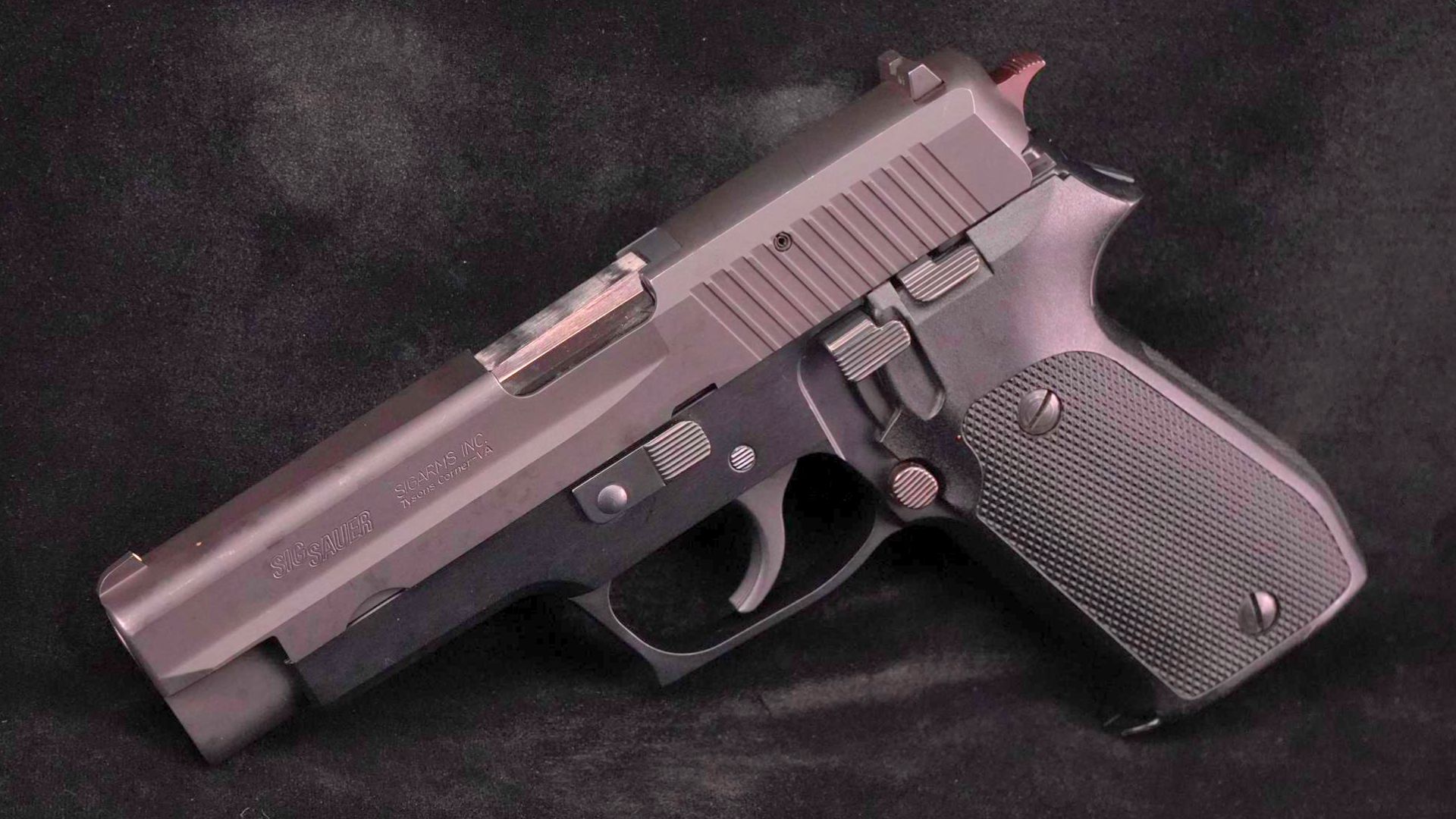
The P220 has been pushed through mud, cold, rain, and long periods without cleaning, and it still keeps cycling. That reliability comes from its simple internal layout and high-quality parts.
It doesn’t care if the weather changes or if you missed a cleaning session. When other pistols start acting up from grit or moisture, the P220 stays steady. It’s a sidearm built to survive real use, not just look good on a spec sheet.
Accuracy that holds up year after year
A lot of pistols shoot well when they’re new. Far fewer keep that accuracy as the round count climbs. The P220’s tight barrel fit and slide-to-frame relationship let it hold groups long after other guns start drifting.
You don’t get unexplained flyers or wandering impacts. Whether you’re shooting basic ball ammo or a preferred defensive load, the pistol delivers predictable results. That’s the mark of careful engineering, not luck.
A trigger system that actually makes sense
The DA/SA trigger on the P220 has a rhythm seasoned shooters appreciate. The first pull is long and deliberate, and every shot after that breaks clean in single action.
Nothing feels mushy or undefined. You get predictable control that rewards good fundamentals. It’s a system that makes more sense the longer you run it and quickly becomes one of the pistol’s standout features.
Built with materials that last
The P220 was developed in an era when metal frames were the standard for serious sidearms. That shows in how well they age.
Rails don’t chew themselves apart, locking surfaces don’t round off quickly, and slides don’t beat themselves into failure. You can shoot one for decades and still feel that tight, confident lockup. It’s longevity you can actually feel in the hand.
Recoil that’s surprisingly manageable
For a .45 ACP, the P220 behaves better than most shooters expect. Its metal frame and weight help tone down the push, and the recoil impulse feels smooth rather than abrupt.
That lets you stay on target instead of fighting the gun. If you’ve shot lightweight .45s that wear you out after a few magazines, the P220 feels like a completely different experience.
A design that never needed fixing
Some pistols go through endless redesigns because something was always slightly wrong. The P220 avoided that trap. Aside from normal updates, the original architecture stayed intact because it was already solid.
There are no awkward controls or strange engineering choices. Everything fits together in a way that feels deliberate. It’s a design built on performance, not trends.
A track record respected by professionals
The P220 didn’t earn its reputation through hype. It earned it through users who carried it in real-world roles. Military units, law enforcement agencies, and experienced civilian shooters trusted it for decades.
That kind of history isn’t manufactured. It comes from thousands of guns proving themselves under pressure and refusing to quit.
Excellent ergonomics for a .45 ACP
Many .45-caliber pistols feel oversized or blocky. The P220 doesn’t. Its grip profile works for a much wider range of hand sizes, and the pistol points naturally.
Controls fall where they should, and you don’t have to fight the gun to run it efficiently. Good ergonomics aren’t flashy, but they show their value every single range session.
A reputation for feeding reliably
The P220 isn’t picky about ammo. It runs hollow points, ball ammo, and defensive loads without stuttering.
Its feed-ramp geometry and magazine design work together cleanly, which means fewer headaches for the shooter. That consistency becomes especially noticeable when you start rotating different loads through the gun.
A balance of size and performance
The P220 sits in a useful middle ground. It’s big enough to shoot well but not so large that it feels cumbersome.
It carries better than many all-steel .45s, yet still delivers the stability you want on the range. You don’t have to choose between shootability and practicality—the pistol gives you both.
Strong aftermarket support where it matters
Even though the P220 isn’t the latest polymer release, aftermarket parts are still available from reputable makers.
Most upgrades refine personal preference—sights, grips, springs—rather than compensating for flaws. That alone says a lot. You’re not fixing the pistol. You’re tuning it.
Longevity that outlives trends
Many pistols fade when newer models crowd them out. The P220 stays relevant because it never depended on trends in the first place.
Replacement parts are still easy to find, armorer knowledge is widespread, and shooters still recommend it for serious use. That kind of staying power is rare.
A safe, intuitive decocker system
The P220’s decocker is placed exactly where your thumb expects it. It moves positively and doesn’t create confusion under stress.
Lots of DA/SA guns struggle with awkward or misplaced controls. This one doesn’t. The system feels integrated and natural, which helps build consistent habits.
True carry confidence
There’s a big difference between liking a pistol and trusting it. The P220 earns trust by behaving the same way every time you shoot it.
No surprises, no erratic behavior, no sudden malfunctions from minor neglect. It’s the kind of handgun you don’t second-guess, whether you’re carrying it daily or using it as a home-defense tool.
A reminder of what quality machining feels like
Run the slide on a P220 and you instantly understand the difference good machining makes. It feels smooth without being loose and tight without feeling forced.
That level of fit is something you notice every time you handle the pistol. It’s a product of care, not shortcuts, and it sets the P220 apart from a lot of modern mass-produced designs.
Like The Avid Outdoorsman’s content? Subscribe to our newsletter so you never miss an article.
Here’s more from us: