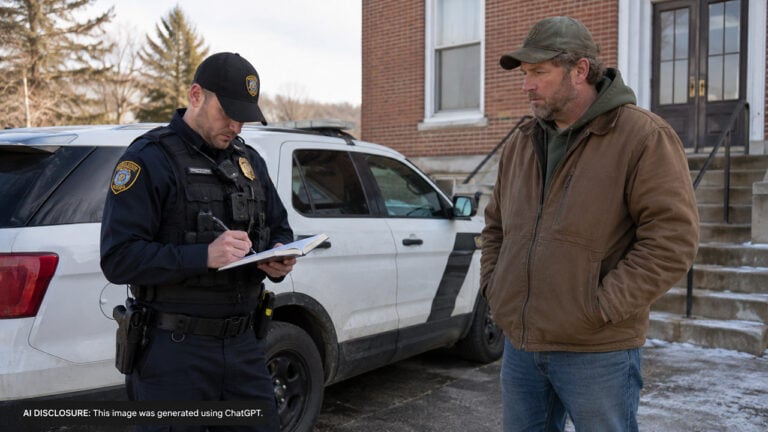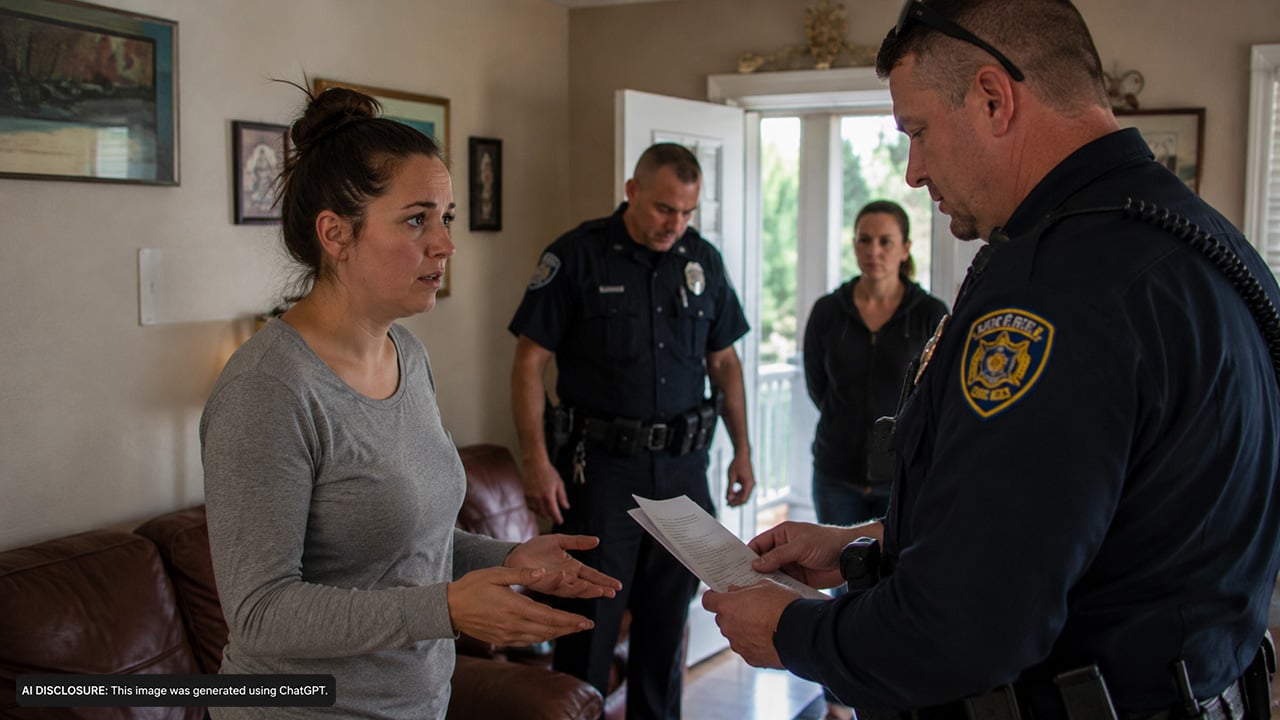
Photo credit: AI-generated image created using ChatGPT. Illustrative only
One day you’re going about your normal routine, and the next there’s a knock at the door that changes the way you look at your own home. That’s the spot one woman found herself in after an officer showed up and served her a restraining order filed by an ex-boyfriend she says she hasn’t even seen in two years.
In her telling, the paperwork wasn’t just out of the blue—it was loaded with claims she says were flat-out false, including accusations that she had been stalking him and his wife and that he viewed her as a threat. From there, the worry most gun owners understand kicks in fast: if someone is willing to lie to get legal pressure rolling, what’s next?
A surprise visit and a restraining order from the past
According to the original post, an officer came to her home and served a restraining order initiated by her ex. She said the two hadn’t had contact in roughly two years, which made the whole thing feel more like an ambush than a normal civil dispute.
Restraining orders are serious business in any community, but especially in rural areas and among outdoors folks where firearms ownership is common and sometimes tied to your way of life. Even when a person has done nothing wrong, that kind of document can bring law enforcement to your doorstep and put your reputation on the line with neighbors, employers, and family.
Allegations she says were fabricated
The woman wrote that the report contained “several lies,” including that she had been stalking the couple. She also said it claimed the ex considered her a threat to him and his current wife.
That matters because restraining orders often ride on the idea that there’s a safety concern. When the system is told there’s a threat, it can set off a chain reaction—extra patrol attention, restrictions on contact, and in some situations complications around firearms possession depending on state rules and what a judge orders.
Why a false report hits gun owners differently
Even if you’ve never been in trouble a day in your life, being accused of something tied to “danger” can have real consequences. Gun owners know the drill: once a claim is on paper, it has a way of sticking around, even if it’s bogus.
And while the woman didn’t describe the exact language of the restraining order, this is where a lot of folks get nervous. In some places and under some circumstances, certain protection orders can affect firearm possession or purchase, and the details can vary widely. The bigger point is simple: a false allegation can put you in a position where you’re proving you’re normal instead of the other person proving their story is true.
From a practical standpoint, there’s also the “show up at your house” factor. Hunters and shooters tend to keep gear, ammo, and valuable optics on hand. When official attention is suddenly directed at your home, it raises the stakes—privacy, security, and the risk of misunderstandings all go up at once.
Her theory: a cover story meant to protect his marriage
She said her best guess was that her ex got caught “doing something he shouldn’t be doing” and built an elaborate story to cover himself with his current wife—making her the scapegoat. That may or may not be the true motive, but it fits a pattern a lot of people recognize: when someone’s personal life is on fire, they sometimes try to redirect the blame toward the person least likely to fight back.
The scary part is how easy it can feel to light that fuse. A written accusation, a trip to court, a stack of paperwork, and suddenly the accused is forced to spend time, money, and energy untangling something they didn’t start.
What she wanted to know: can anything be done?
She said she didn’t have monetary damages, but she felt the situation was “so messed up and not fair,” and asked if there was anything she could or should do. That’s a common question when the harm is real but hard to price out—stress, fear, time off work, and the feeling that your own home isn’t fully yours for a while.
From a common-sense, outdoorsman’s perspective, the first “do” is usually about control and documentation. Get copies of every page you were served. Write down exactly when the officer arrived, what was said, and what you were handed. If you have texts, emails, social media messages, or any prior history that shows no contact for years, preserve it. Don’t “clean up” your phone and accidentally delete something you might need later.
The second “do” is to treat the order like it matters even if it’s nonsense. Violating a restraining order—on purpose or by accident—can turn a fake story into a real problem fast. For folks who hunt the same areas, fish the same public access points, or live in small towns where you run into people at the feed store, it’s worth thinking through how you’ll avoid accidental contact.
And the third “do” is to get competent local legal help if you can. These things are heavily state-dependent, and a short conversation with an attorney who handles protective orders can be the difference between a clean, organized response and a mess that drags out.
The real-world ripple effects: home, reputation, and safety
Out in the country, your name matters. When someone paints you as a threat, it doesn’t just stay in a courtroom file. It can affect work, friendships, and whether people feel comfortable around you—especially if they hear the word “restraining order” and fill in the blanks themselves.
There’s also a safety angle a lot of people don’t talk about. If you’re suddenly worried an ex is willing to make things up, you start thinking about cameras, locks, and keeping your routine tight. Not because you plan to escalate anything—but because you want a clear record of what’s happening at your property line and your front door.
For gun owners, another practical consideration is keeping storage squared away. Secure storage is just good practice, but it’s even more important when you’re dealing with a situation involving legal paperwork and heightened attention. The goal is to avoid misunderstandings and keep everything aboveboard.
False accusations can be hard to shake, but they’re easier to fight when you stay calm, keep your documentation straight, and don’t give the situation any extra oxygen. In the outdoors, we learn to slow down when something feels off—read the wind, check the sign, confirm what’s real. This kind of problem is no different. Keep it steady, handle the paperwork the right way, and protect yourself with facts instead of эмоtions.
Like The Avid Outdoorsman’s content? Subscribe to our newsletter so you never miss an article.
Here’s more from us: