Photo credit: Noah Wulf – CC BY-SA 4.0, /Wikimedia Commons
Some handguns win you over in the display case. Others look like a rental-counter tool—square, plain, and a little forgettable—until you start shooting them. Those “boring” pistols are usually built around a duty brief: run clean or dirty, feed a wide spread of ammo, survive being carried a lot, and keep the sights returning to the same place. They don’t chase fashion. They chase repeatable performance.
If you care more about hits than compliments, you end up respecting guns like this. They tend to have predictable triggers, consistent recoil, and parts support that doesn’t disappear the first time a model gets updated. You can train hard with them, carry them, and rely on them without feeling like you’re babysitting a finicky machine.
Glock 19

The Glock 19 is the definition of plain-looking competence. The blocky slide and polymer frame don’t win beauty contests, but the gun’s size hits a sweet spot: enough grip and slide mass to shoot well, small enough to carry without drama. It’s also one of those pistols that tends to keep running when you’re shooting a lot and cleaning a little.
What makes it perform is how predictable it stays. The recoil impulse is consistent, the mags are everywhere, and the parts ecosystem is deep. You can set it up with basic sights and a quality holster, then spend your money on ammo and training instead of chasing tweaks. If you want a pistol that quietly does its job year after year, this is the poster child.
Glock 17

The Glock 17 looks like a service pistol because it is one. It’s long, flat-sided, and unapologetically utilitarian, which is exactly why it shoots the way it does. The full-size frame gives you leverage, and the longer slide tends to track smoothly when you start pushing the pace.
Where it shines is in high-round-count reality. The gun usually feeds anything reasonable, it handles heat well, and it doesn’t ask for special treatment to stay consistent. The grip is big enough that you can build repeatable hand placement, which helps accuracy more than most people want to admit. Add widely available magazines and a huge holster market, and it’s easy to keep your setup consistent. If you want a plain pistol that stays steady in drills and carries proven reliability, the 17 is hard to beat.
Smith & Wesson M&P 2.0 Compact

The M&P 2.0 Compact doesn’t look flashy, and that’s part of the appeal. It’s a duty-rooted pistol with clean lines, sensible controls, and ergonomics that help you lock in without thinking. The grip texture and shape make it easier to keep the gun planted when your hands are sweaty or cold.
On the range, it tends to reward good fundamentals instead of fighting you. The recoil is manageable for the size, the gun tracks predictably, and it has a strong track record in serious use. Parts, magazines, and holsters are easy to source, so you can keep the setup consistent over time. The 2.0 grip modules also fit a lot of hand sizes, which helps you build a repeatable draw and presentation. If you want a compact that looks like business and shoots like it, this one delivers without needing a personality.
SIG Sauer P320 Carry

The P320 Carry has a plain, workmanlike look—especially in its basic black configuration—but it performs like a modern service pistol should. The grip module gives you a solid purchase, and the overall size makes it easier to shoot fast while keeping your sights honest.
A big reason it earns respect is its modularity without being delicate. You can swap grip sizes to fit your hand, replace worn parts, and keep the gun running with readily available mags and support gear. In practical shooting, it handles recoil in a controllable way and tends to stay consistent across long sessions. If you want a pistol that feels like a tool, not a fashion item, the P320 Carry is built for repetition: draw, press, reset, repeat.
CZ P-10 C

The CZ P-10 C looks understated—straight slide, no drama—yet it shoots with a confidence that surprises people the first time they run it hard. The grip angle and texture help you index the gun naturally, and the pistol tends to sit low enough in the hand to keep recoil from getting jumpy.
Performance-wise, it’s a “do the work” carry-size pistol. The trigger is often crisp for a striker gun, the gun tracks well in fast strings, and it generally runs reliably with common 9mm loads. It’s also easy to live with: magazines and holsters exist in quantity, and the design doesn’t demand special maintenance rituals. If you want a boring-looking compact that punches above its price point on the range, the P-10 C earns its keep.
H&K USP Compact
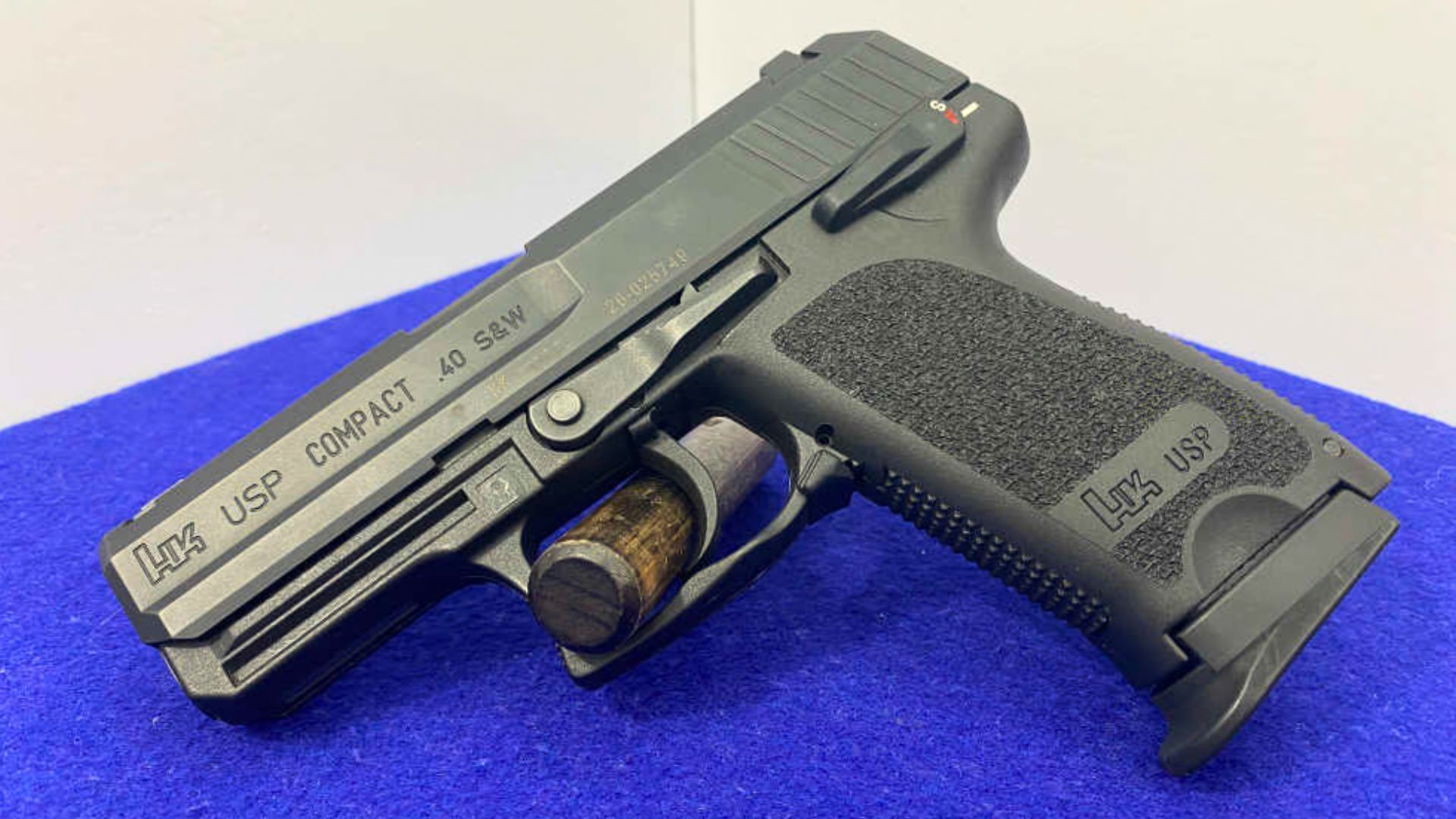
The USP Compact has that old-school, squared-off look that screams late-90s duty gun. It’s not sleek, and it’s not trying to be. What you get instead is a pistol that’s built around durability, with a reputation for taking abuse and still cycling like it’s supposed to.
In your hands, it feels like a serious piece of equipment. The controls are positive, the slide has enough mass to stay stable, and the gun tends to run clean or dirty with little complaint. It’s also a pistol you can practice with for years without feeling like you’re wearing it out. If you want a compact that looks plain but performs with quiet confidence—especially when conditions aren’t perfect—the USP Compact is a classic for a reason.
Beretta 92FS

The Beretta 92FS looks almost boring in its standard form: big frame, open slide, fixed-profile controls. Then you shoot it and remember why it’s been carried for decades. The weight and balance make recoil feel soft, and the gun’s tracking helps you keep the front sight where it belongs.
It’s also a pistol that tends to run and run. The design has seen long institutional use, parts are widely available, and magazines are easy to find. What you notice in practice is how forgiving it is when you’re trying to shoot fast with clean hits. The gun settles quickly, and the sight picture returns in a predictable way. If you want a plain full-size pistol that makes accuracy feel easier than it should, the 92FS still earns respect.
Beretta PX4 Storm Compact

The PX4 Compact isn’t ugly, but it’s definitely not trendy. It has a rounded, utilitarian shape that looks more like a service tool than a showpiece. The payoff is in how it shoots: many shooters find it tracks smoothly and stays controllable when you start leaning on the trigger.
That matters because real performance is about repeatability. The PX4 Compact tends to run reliably when maintained like a normal carry gun, and it gives you enough grip to manage recoil without white-knuckling it. It also has a reputation for being comfortable to shoot for long sessions, which keeps you training instead of quitting early. If you want a pistol that looks ordinary but behaves well in fast drills, the PX4 Compact is an easy gun to respect.
Ruger Security-9

The Ruger Security-9 looks like a basic polymer pistol because it’s meant to be exactly that: affordable, straightforward, and practical. No fancy machining, no boutique features—only a handgun that aims for dependable function at a price that leaves room for ammo and range time.
When you keep it stock and feed it decent mags and common 9mm loads, it can be a solid performer for the money. The grip is comfortable, recoil is manageable, and the controls are easy to learn. It’s not a match gun, but it doesn’t need to be to put accurate rounds where they belong at typical defensive distances. If you value a pistol you can carry, train with, and not worry about cosmetically, the Security-9 fits that “boring but effective” lane.
Ruger American Pistol Compact

The Ruger American Pistol Compact is one of the more overlooked plain pistols out there. It looks like a duty gun designed by engineers, not marketers, with a squared slide and straightforward controls. The upside is that it’s built to be shot a lot, not admired.
In use, it tends to feel stable for its size, and it generally runs well with standard 9mm ammo. The grip geometry works for a lot of hands, and the gun’s overall balance helps it track without feeling snappy. It’s also a pistol you can keep stock and still get solid results, which is the whole point of this category. If you want a carry-capable handgun that’s more about function than flash, the Ruger American Compact deserves more attention than it gets.
Springfield XD Service Model

The Springfield XD Service Model has never been a style icon. It’s a chunky, straightforward polymer pistol that looks like it belongs in a duty holster, not an influencer post. But it earned a following because many of them run reliably and shoot better than their plain appearance suggests.
On the range, the full-size grip gives you control, and the gun tends to feel steady when you’re working through practical drills. The design has been around long enough that support gear is easy to find, and you can keep your setup straightforward: solid sights, quality magazines, and a holster that fits. The key is leaving it alone and training with it. If you want a pistol that looks ordinary but can hold up to regular use, the XD Service Model fits the theme.
FN 509

The FN 509 looks like a duty pistol because it was built with that role in mind. The styling is plain and purposeful—blocky slide, textured grip, practical controls. The performance comes from how stable it feels when you start shooting quickly and how well it tolerates regular, hard use.
In training, you notice that it’s easy to hang onto and easy to track. The grip texture helps, and the gun tends to return to the same spot between shots. It’s also supported well with magazines and holsters, so you can set it up once and keep it consistent. If you want a boring-looking pistol that’s built for repetition and reliability, the 509 is a serious, work-focused option that doesn’t need to look fancy to earn trust.
Canik TP9SF

The Canik TP9SF doesn’t look special at first glance—another polymer striker pistol with a plain slide and basic lines. Then you shoot it and realize why it has a reputation for punching above its price point. The gun often offers a clean trigger feel and controllable recoil, which makes practical accuracy easier.
The real advantage is that you can leave it stock and still get good performance. For many shooters, it tracks well in fast strings and stays predictable across long range sessions. That encourages training, and training is where boring pistols become great pistols. Stick with quality magazines and proven ammo, and keep your setup consistent. If you want a budget-friendly handgun that performs like it costs more, the TP9SF is a strong example.
Walther PPQ M2

The Walther PPQ M2 has a clean, understated look that doesn’t scream for attention. It’s a modern polymer pistol that feels more like a tool than a statement piece. Where it earns its reputation is in how easy it can be to shoot well, especially when you’re trying to run the trigger quickly without throwing shots.
A lot of that comes down to ergonomics and consistency. The grip shape helps you settle into the same hand position every draw, and the gun tends to track in a way that keeps the sights returning predictably. Even though it’s been succeeded by newer models, support gear and parts are still common, and plenty of shooters keep them in rotation for a reason. If you want a plain-looking pistol that delivers smooth, repeatable performance, the PPQ M2 belongs here.
Smith & Wesson SD9 VE

The SD9 VE is about as plain as a modern handgun gets. It’s a budget-minded, polymer striker pistol with no pretension and no luxury touches. That plainness is exactly why it’s interesting: when you keep your expectations realistic, it can perform reliably and shoot acceptably with a steady diet of practice ammo.
The trigger isn’t built for match work, but the gun can still do its job if you put in reps and leave it stock. The grip is serviceable, recoil is manageable, and the controls are easy to learn. For a lot of owners, it becomes a “train and carry” pistol that they don’t feel precious about. If you want a basic handgun that looks boring and can still perform well for the price, the SD9 VE is a practical pick.
Like The Avid Outdoorsman’s content? Subscribe to our newsletter so you never miss an article.
Here’s more from us: