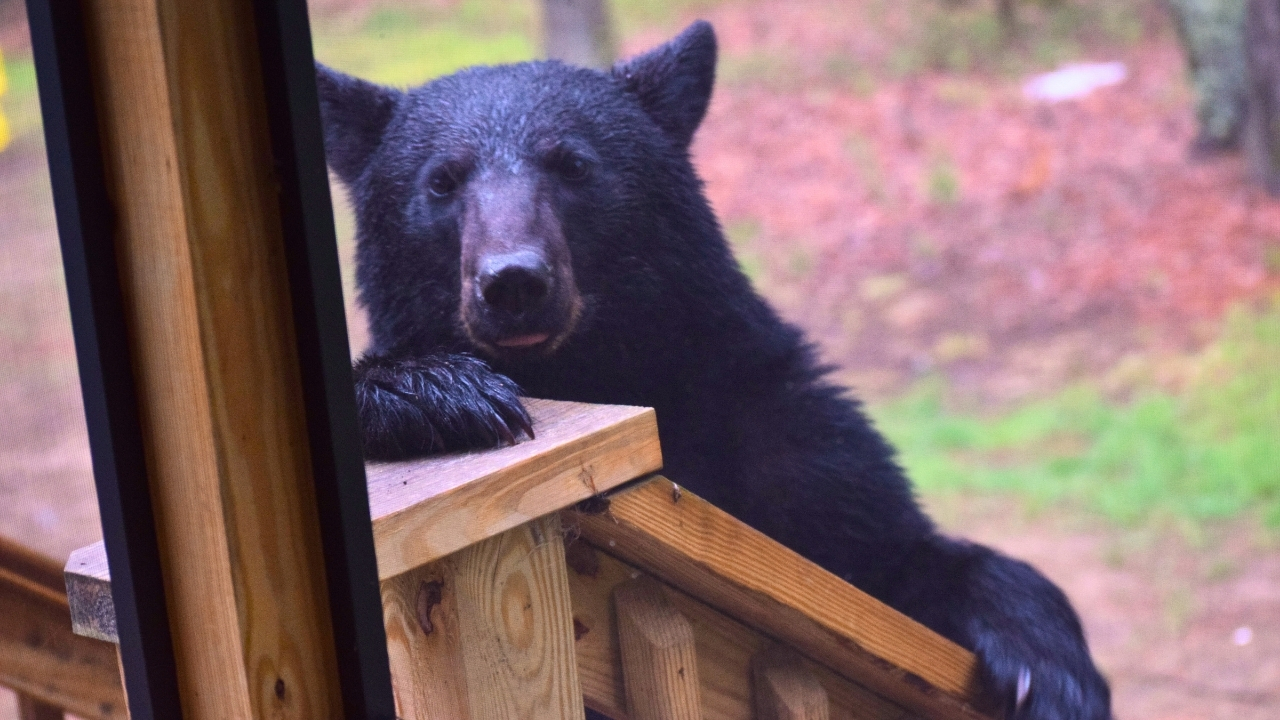
Photo credit: ASWPhotography/Shutterstock.com
Black bears showing up on porches and checking trash cans isn’t a freak thing anymore—it’s how a lot of “normal” neighborhoods work now. As bear numbers climb and housing pushes farther into the woods, more of that overlap is happening right behind swing sets and garden sheds instead of deep in the timber. Add in bird feeders, backyard chickens, grills, and rolling trash carts, and you’ve basically built a snack route that runs right past the back door.
This list isn’t about scaring you away from bear country. It’s a reality check on which states are seeing more bears in backyards, why it’s happening, and what that actually looks like on the ground. If you hunt, camp, or just live anywhere near these 15 states, it’s time to assume bears are around and treat your yard like part of the habitat, not a safe little bubble outside it.
Connecticut

Connecticut went from “occasional bear sighting” to “check the yard before you let the dog out” in a hurry. Wildlife officials logged more than 12,000 bear sightings in 2025, with bears reported in nearly every town in the state. A record number of home and garage entries has turned places like West Hartford, Simsbury, and Torrington into case studies in what happens when food and trash stay outside.
Most of these encounters aren’t deep in the woods — they’re on playsets, decks, and driveways. Bears are showing up for bird feeders, trash, backyard chickens, and pet food, and they’re learning fast which neighborhoods pay out. DEEP is begging people to pull feeders in spring and lock trash down, because every “cute bear at the bird feeder” video is another step toward a bear that walks straight up to a sliding door.
New Jersey

New Jersey has become the poster child for big bears in tight neighborhoods. From West Orange to Milltown, police and wildlife officers are now used to calls about a 300- or 400-pound black bear wandering through fenced yards, checking grills and trash cans as it goes. Some incidents have been enough to shut down school outdoor activities until the bear moves on.
The state tracks nuisance reports and keeps putting out the same message: unsecured garbage and easy food sources are driving most of this. Bears cruising through backyards isn’t rare anymore; it’s the default in parts of north Jersey once spring hits. If you leave trash loose or keep feeders up, you’re basically baiting a heavy, food-conditioned animal into your driveway.
Vermont

Vermont’s bear numbers are healthy, and the bears absolutely know what’s happening around town centers. Biologists say nearly half of reported conflicts involve trash, and state forms now specifically ask about bears getting into backyards and neighborhood food sources. In places like Stowe and other ski-town neighborhoods, it’s normal to have bears working trash routes and chicken coops just like they would a natural food edge.
Locals are being told to treat trash, bird feeders, and even outdoor grills like bait piles. Towns are posting “bear-proof your garbage” reminders, and the running theme is simple: once a bear gets a big calorie hit in a neighborhood, it’ll keep coming back. That’s why Vermont agencies keep hammering the point that a fed bear is usually a bear that gets shot later.
Massachusetts

Massachusetts has at least 4,500 black bears, and their range keeps pushing east into more suburban ground. State wildlife officials openly tell people it’s “not unusual” for bears to use residential areas, including yards with bird feeders, beehives, and small livestock. Every spring, MassWildlife is out reminding people to pull feeders, secure trash, and protect backyard chickens before bears make their rounds.
A lot of bear activity happens overnight, so most homeowners only see tipped feeders or torn-up bins the next morning. But as more bears learn that neighborhoods are easy calories, daytime strolls through backyards are getting more common too. The bears aren’t “seeking” people so much as roaming a route that now includes decks, compost piles, and chicken coops.
Colorado

Colorado has always been bear country, but the number of bears showing up around homes has jumped. Colorado Parks and Wildlife logged just over 5,000 bear reports in 2024 and more than 5,250 in 2025, with over 2,200 of those tied to property damage — sheds, garages, houses, vehicles, and fences. More than half were linked to trash, with plenty tied to bird seed, pet food, and chickens.
You also see the bad end of that trend when a food-conditioned bear decides doors and windows are just another obstacle. Colorado has had bears break into homes, including a high-profile case where a sow and three cubs entered a house and attacked a homeowner before being euthanized. That’s the end stage of “cute bear on the deck”: repeated backyard food hits, then a bear that treats houses as normal territory.
California

California may be the black bear capital of the world right now, with 60,000–70,000 bears spread over roughly 40% of the state. With those numbers, more bears are bumping into people, and the state logged more than 7,200 human-bear conflicts from 2017 to 2023. Plenty of those aren’t in backcountry basins — they’re around Tahoe cabins, foothill neighborhoods, and rural subdivisions with unsecured trash.
The same story keeps repeating: a hungry bear finds trash, birdseed, or pet food near a house, and that yard goes on the bear’s mental map. California’s first documented fatal black bear attack in 2023 drove home that you can’t keep treating bears like cartoon characters when they show up on the porch. If you live in bear range out there, the line between “wild” and “backyard” is basically gone.
Florida

Florida’s bear population climbed past 4,000 several years ago, and interactions have risen alongside it. The state now hosts an interactive online bear map that lets residents see nuisance reports and mortality incidents by area, because it’s become that common to have bears working through neighborhoods at night.
Those calls aren’t coming from deep swamp camps — they’re from driveways and cul-de-sacs on the edge of bear habitat. As development pushes into traditional travel corridors, bears are finding trash, bird feeders, and pet food instead of palmetto berries. Wildlife officers keep telling people that removing attractants is the only way to keep bears from treating suburban blocks like another feeding flat.
North Carolina

North Carolina is one of the strongholds for Eastern black bears, and a big chunk of that population lives around mountain towns where subdivisions run right into bear country. The Wildlife Resources Commission and local cities like Asheville have built entire outreach campaigns around the fact that bears are now regulars in residential areas, not rare visitors.
You’ll see “BearWise” messaging everywhere: secure trash, pull feeders, don’t leave pet food outside, and expect bears in your neighborhood. Urban–suburban bear studies around Asheville show exactly what hunters already know from trail cams — once bears figure out that yards mean easy calories, they’ll walk through fences, under decks, and right past parked cars to get it.
Tennessee

Tennessee’s bear population is growing and pushing west, and the call volume shows it. TWRA reports roughly 1,700 emergency calls related to black bears in 2024, with a big chunk tied to garbage and other attractants. Officials have also documented bears roaming neighborhoods in places like Williamson County and Nashville’s outskirts, far from the traditional high-country parks.
Layer in highly visible encounters — like a bear strolling through Gatlinburg’s Christmas parade route — and it’s clear these animals are comfortable inside town limits. Wildlife officers are blunt: if you live anywhere near the Smokies or expanding bear range, your yard can either be part of the problem or part of the fix, depending on how you handle food and trash.
Texas
Texas wasn’t on many people’s radar for backyard bear visits a decade ago, but that’s changed. Black bears are naturally recolonizing parts of West Texas, and state data show sightings jumping from roughly 80 in 2020 to at least 130 by 2025. Small towns on the edge of big country are learning how to share streets and alleys with a species most folks only remember from old stories.
Most Texas bear encounters so far are still in rural communities, but the pattern is familiar: as numbers grow and bears key in on trash, livestock feed, and backyard attractants, more of them will nose into residential areas. Agencies are trying to stay ahead of it with education and mapping, but anyone living in those counties now has to treat “bear in the yard” as a real possibility again.
Virginia

Virginia sits in prime bear country, and it’s one of the states flagged in national data as seeing more human–bear encounters. As housing spreads up the hollows and into ridge shoulders, bears are finding bird feeders, unsecured trash, and backyard chickens right in the middle of what used to be quiet travel corridors.
Wildlife officials keep pointing out that most conflicts don’t happen when someone’s glassing a clear-cut; they happen when a bear hits the same trash can three nights in a row and stops caring that porch lights come on. Virginia hunters and homeowners are now in the same boat: lock down food sources or expect to see a 200-pound “neighbor” on the game cam behind the house.
Alabama

Alabama isn’t the first place most folks picture when they think about black bears, but both state biologists and national data say encounters are climbing. The state shows up on that 18-state list for increased human–bear incidents, and a lot of that boils down to isolated bear pockets rediscovering easy calories in farmyards and rural neighborhoods.
Most of these bears are still ghosts that move at night, but the sign they leave is obvious: tipped cans, raided feeders, and muddy prints around porches. As populations expand and connect across the Southeast, more Alabama residents are being told to follow the same BearWise rules as their neighbors to the east — shut down the buffet in the backyard before a bear finds it.
Arizona

Arizona’s black bears cover big, rough country, but they’re not staying up in the canyons anymore. As drought and heat scramble natural food patterns, bears are more willing to drop into foothill neighborhoods that back right up to public land. Arizona is also on the list of 18 states with rising human–bear encounters, and much of that is trash and pet food in semi-rural communities.
In a lot of these spots, homeowners don’t think of themselves as “living in bear country” — they think of themselves as living near the golf course or at the edge of town. Then a bear shows up on a Ring camera dragging a trash can or raiding a grill. That’s the new normal when wild food is unstable and backyards are stacked with calories.
Nevada

Nevada’s black bears used to be more of a Tahoe-basin story, but that’s not really true anymore. The state also shows up on the list of places with surging human–bear conflicts, and many of those are in and around residential areas where bears have learned that dumpsters and cans pay better than foraging in the hills.
Tight neighborhoods backed up against steep country give bears everything they want: cover, water, and a nightly buffet of unsecured trash. Wildlife agencies and local governments are pushing hard for bear-resistant containers and better community habits, because once bears make the jump from “rare visitor” to “regular on the block,” it’s hard to walk that behavior back.
Missouri

Missouri’s black bear population is still growing and expanding north, and the state is already on that national list for increased bear encounters. As the range pushes out of the Ozarks, more small towns and rural subdivisions are finding bears on porches, in barns, and nosing around backyard grills.
The wildlife agency’s message looks a lot like what you see in more established bear states: treat bird feeders, trash, and pet food as attractants, not decorations. Hunters are spotting the same bears on cameras deep in timber and then again behind somebody’s garage a few days later. That overlap between “hunting spot” and “backyard” is only going to tighten as Missouri’s bear numbers keep climbing.
Like The Avid Outdoorsman’s content? Be sure to follow us.
Here’s more from us: