Photo credit: Janice Chen/Shutterstock.com
A lot of animal charges do not begin with “aggressive wildlife.” They begin with a human mistake: getting too close, too casually, for too long. Wildlife agencies and the National Park Service keep repeating the same warning in slightly different ways. If an animal changes its behavior because of you, you are already too close. Yellowstone requires visitors to stay at least 25 yards from large animals like bison, elk, deer, moose, and coyotes, and at least 100 yards from bears, wolves, and cougars. Great Smoky Mountains National Park says approaching elk within 50 yards, or any distance that disturbs them, is illegal.
That sounds simple, but hikers keep breaking the rule in the same ways. They want a better photo. They assume the animal looks calm. They think one more step will not matter. They try to pass too close on a trail. They bring a dog into an animal’s space. They surprise a bear by moving quietly through cover. Different species react differently, but the trigger is usually the same: people erase the buffer zone the animal was counting on.
Bison charge when people treat them like slow, harmless scenery
Bison may be the clearest example of a charge that happens because people crowd a large animal that looked calm right up until it was not. Yellowstone says bison will defend their space when threatened and warns that if they are approached too closely they may bluff charge, paw, bellow, stare, bob the head, or raise the tail before a real charge. The park’s repeated message is that visitors must stay more than 25 yards away.
That warning is not theoretical. In June 2025, Yellowstone reported a man was gored after a large group approached a bison too closely near Old Faithful. In another 2025 incident, Yellowstone again reminded visitors that wild animals can become aggressive if people do not respect their space. The mistake was not misreading some hidden sign. It was closing distance on an animal that was already telling people where the line was.
Moose charge when hikers enter their space, especially with dogs nearby
Moose charges are often driven by the same core mistake, but dogs make the situation even worse. Denali says plainly that if a moose charges you, it is because you are in its space, and it warns that walking dogs near moose is especially dangerous because moose may react dramatically. Colorado Parks and Wildlife says moose react to dogs as they would a wolf, one of their primary predators, and recommends keeping dogs leashed and under control or even leaving them home in some backcountry situations.
That pattern shows up in real incidents too. In May 2025, Colorado Parks and Wildlife warned people to keep their distance after a cow moose with calves attacked a man and injured dogs near Woodland Park. Agency guidance emphasized giving mothers with young extra space. So the “one mistake” here is still getting too close, but hikers often make it worse by bringing a dog into the encounter and turning a moose’s defensive reaction up fast.
Bears charge when hikers surprise them at close range
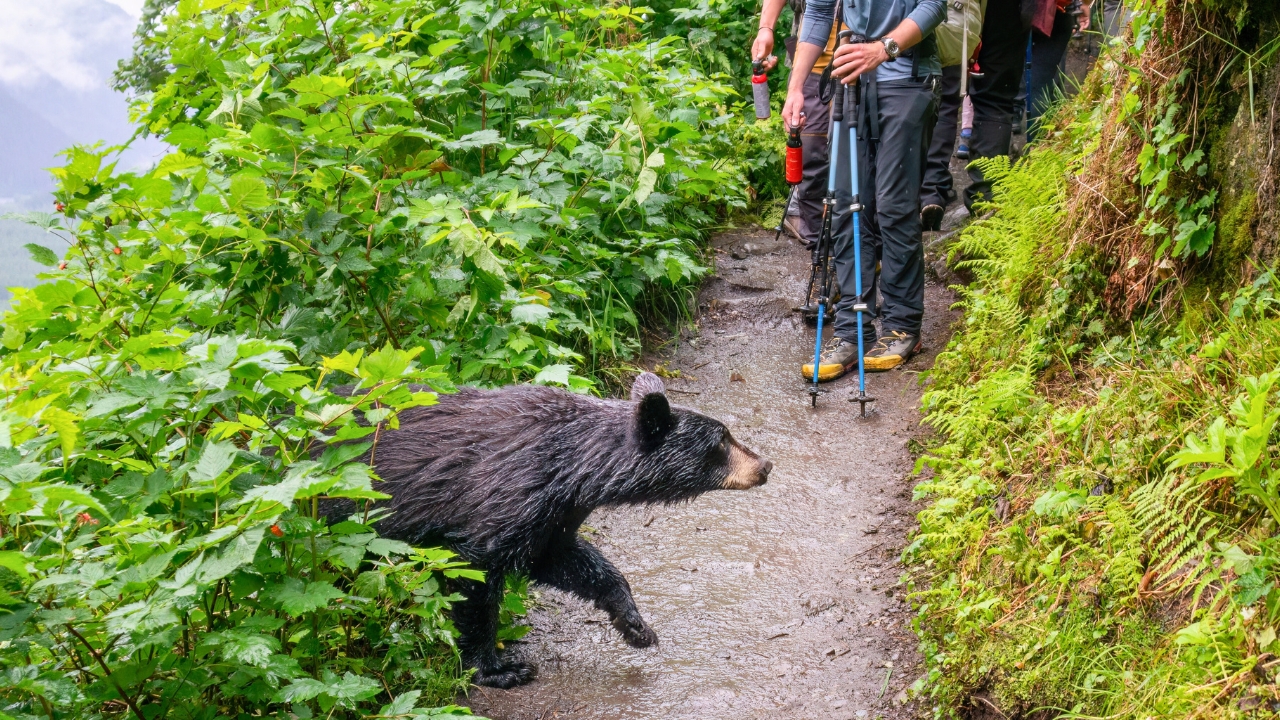
With bears, the mistake is often not “walking too close on purpose,” but “failing to avoid a close surprise.” The National Park Service says the vast majority of bear attacks happen when people surprise a bear. Its guidance is consistent: make noise, hike in groups, stay alert for fresh sign, avoid hiking at dawn, dusk, or night in bear country, and do not run from a bear.
That matters because hikers often imagine bear trouble as a long-distance confrontation, when many dangerous encounters begin suddenly at short range. NPS specifically discourages trail running in bear country because you do not want to surprise a bear or provoke an attack. In other words, the recurring human error is moving through bear habitat without giving the bear enough warning that you are coming.
Elk charge when people ignore seasonal behavior and personal space
Elk are another animal people underestimate because they are familiar and often visible from roads, fields, and park trails. But the Park Service repeatedly warns that approaching elk too closely is dangerous and illegal in some parks. Great Smoky Mountains National Park says approaching within 50 yards, or any distance that disturbs elk, is illegal. Grand Canyon National Park and Redwood-area park guidance also stress distance and watching for signs of agitation.
The common human mistake is assuming an elk that is standing still or feeding will tolerate one more approach. That gets even riskier during the rut, when bulls are more aggressive, and around cows with calves. The animal may look calm right until the moment it drops its head and closes ground fast. Again, the issue is not mystery behavior. It is hikers and visitors pushing past the obvious distance the animal was trying to keep.
Cougars are less likely to “charge,” but hikers still create the bad encounter the same way
Cougar attacks on people are rare, but wildlife guidance still points to the same broad mistake pattern: people move through cougar country without enough awareness, or they create conditions that increase the odds of a close encounter. Washington Department of Fish & Wildlife says attacks are rare, but it advises hikers not to hike alone in cougar country, to make enough noise to avoid surprising a cougar, and to keep small children close.
This matters because people often treat “rare” as “not worth thinking about.” That is not how wildlife safety works. Rare events still have patterns, and one of those patterns is letting distance collapse before you even know the cat is there. Cougars are not a common charging animal in the same way bison or moose are, but the underlying hiker mistake is familiar: moving too casually through habitat where a big animal may be closer than you think.
The mistake behind most charges is simpler than people want it to be
People like animal-encounter advice that feels clever: read the ears, read the tail, memorize the posture, know the species. Some of that matters. But the most consistent guidance from wildlife agencies is much more basic. Do not crowd wildlife. If you cause it to move, stop feeding, change direction, posture defensively, or pay special attention to you, you are too close. Yellowstone says exactly that in its wildlife guidance: if you cause an animal to move, you are too close.
That is the real pattern behind a lot of charges. Hikers assume they still have room when they do not. They confuse calm with safe. They forget that a trail is not neutral ground if the animal is already using it. And they keep walking forward when the smartest move would have been the simplest one: stop, back away, and give the animal more country than you think it needs.
Like The Avid Outdoorsman’s content? Subscribe to our newsletter so you never miss an article.
Here’s more from us: