Photo credit: BGSmith/Shutterstock.com
Mule deer don’t crash for one neat reason. It’s usually a stack: drought that cooks summer range, a bad winter that wipes out fawns, habitat chopped up by roads and development, and disease creeping around in the background. Some states are holding steady in pockets, sure — but there are still a bunch of places where “seeing fewer deer” isn’t just talk. You’re watching recruitment stay low, age structure get weird, and units that used to be reliable turn into a grind.
This list is about where the struggle shows up the most right now — either because the state’s own data is blunt about declines, or because conditions (drought/winterkill/habitat fragmentation) keep kneecapping herds year after year.
Arizona

Arizona mule deer are getting hammered by drought and poor recruitment in a lot of units. The Western Association of Fish & Wildlife Agencies’ 2025 rangewide status report notes that Arizona’s statewide population parameters show declines in most game management units and specifically calls out drought impacting recruitment. That’s not internet doom — that’s straight management language.
When recruitment stays low, everything downstream gets ugly: fewer yearlings, fewer mature bucks later, and more pressure to cut opportunity just to stop the bleeding. Arizona’s terrain can look “deer-y,” but the feed and water piece is the choke point. If you’re hunting there, you’ll notice deer concentrating harder around what little groceries exist, and whole hillsides that used to hold does just feel empty.
New Mexico

New Mexico’s drought story is long-term, not one bad season. That same 2025 rangewide report says most of New Mexico experienced severe to extreme drought conditions and that the long-term drought has reduced recruitment, leaving populations below objectives through most of the state. That’s the definition of a slow grind decline: fewer fawns making it, year after year.
What makes New Mexico especially tough is how patchy it gets. You’ll have a burn scar that kicks out good feed and looks better, then you’ve got other areas where forage and water just never bounce back. Hunters feel it because you’re not only seeing fewer deer — you’re seeing fewer doe groups, and that’s the real red flag.
Utah
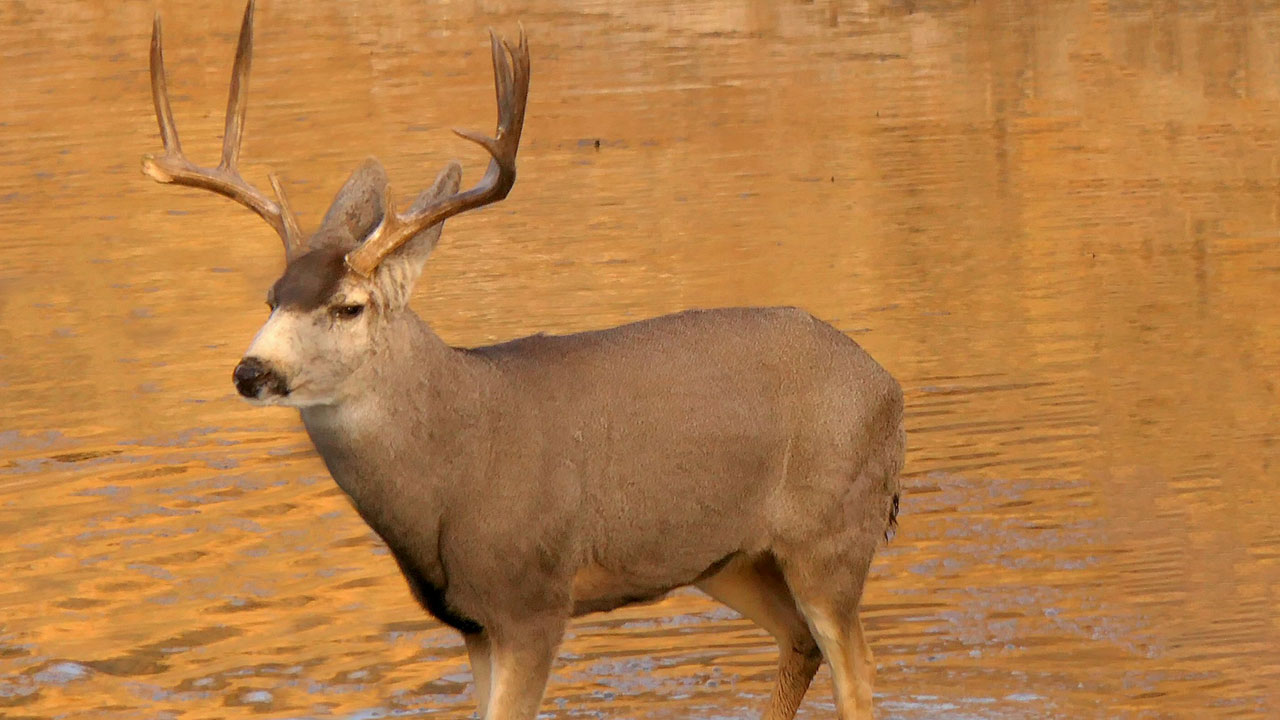
Utah is one of the clearest “numbers don’t lie” situations. Utah’s statewide mule deer management plan puts the 2023 postseason estimate around 279,000 deer — about 69% of the long-term objective of 404,000. When a state is that far under its own objective, you’re not talking about a minor dip.
Utah’s problems are the usual suspects stacked together: drought cycles, winter severity, habitat fragmentation, and pressure where migration routes and winter range get squeezed. You can still find deer in Utah, but the struggle shows up in the overall age structure and recruitment. Guys who’ve hunted it a long time will tell you the same thing: you work harder now for fewer “no-doubt” deer days.
Nevada

Nevada has been a rough one for mule deer for a long time, and a lot of hunters don’t realize how far down some herds are compared to “back then.” The Mule Deer Foundation’s trend summaries keep pointing to Nevada as one of the states still below historical levels, with drought and habitat pressures playing a big role.
Nevada’s habitat looks big, but water and forage drive everything, and drought years can crush fawn survival. Add wildfire, invasive grasses, and fragmented winter range, and you end up with herds that don’t rebound fast even when you get a decent year. If you’re hunting Nevada, you’ll see the struggle in how far you have to cover to turn up consistent doe groups — and how inconsistent those pockets are.
Oregon

Oregon gets lumped in as “plenty of public land,” but parts of Oregon are still on the wrong side of the mule deer trend line. MDF’s 2024 roundup specifically flags parts of Oregon as still declining, tied to drought, disease, and other stressors that stack up over time.
The other Oregon reality is habitat change. Fire can help short-term browse in spots, but it can also wreck winter cover, change movement patterns, and increase road density and disturbance. So you get these uneven results: one area looks better, another stays flat or slides. Hunters feel like deer “vanished,” but it’s usually deer redistributing into the few zones that still feed them.
Washington

Washington is a tale of two worlds: mule deer in some east-side areas and black-tailed in the west, and both can struggle for different reasons. Tough winters in the broader region have caused localized die-offs, and Washington’s deer picture gets complicated fast when winter range and migration corridors get squeezed by human footprint and disturbance.
The hunting-side symptom is that deer get more concentrated into fewer wintering pockets, and that makes them easier to hammer and harder to rebuild. If you’ve hunted Washington long enough, you’ve watched units that once had “normal” deer sightings become places where a decent buck feels like a rare event.
Idaho

Idaho has some solid deer country, but it’s not all roses. Idaho Fish and Game’s 2025 deer/elk outlook says some mule deer populations in the Magic Valley region have recently declined due to severe winters, summer drought, and habitat loss from wildfires — and they even eliminated some antlerless opportunities to help those herds.
That’s the key: when a state starts pulling opportunity back, it’s usually because the herd can’t take it. Idaho’s struggle shows up as “pockets that still hunt well” surrounded by areas where recruitment keeps taking hits. If you’re the guy who hunts the same spots every year, you notice the empty country first.
Wyoming

Wyoming’s mule deer issues can be brutal when winter hits hard in the wrong places, especially in the southwest. Mule Deer Foundation has pointed out that the winter of 2023–2024 caused severe impacts (thousands of deer lost) in southwestern Wyoming and surrounding areas.
Wyoming also deals with the long-haul stuff: migration corridors crossing highways and development, plus drought years that shrink forage quality. The hunting symptom is those “used to be reliable” basins that now feel like you’re hunting memories. You can still find deer, but the overall struggle shows up in fewer fawns and fewer mature animals in the same country.
Colorado

Colorado is doing active mule deer work, and some herds look better than they did a decade ago — but there are still plenty of areas that struggle hard, especially where winter range is compromised and where deer get pinched by development and traffic corridors. Colorado Parks and Wildlife has an entire mule deer strategy and ongoing management effort built around those pressures.
Colorado’s problem isn’t “no habitat.” It’s that the best habitat is often the most pressured and the most fragmented. Deer end up forced into smaller usable zones, then severe weather hits and they can’t spread risk across a wider landscape. For hunters, that looks like more glassing for fewer deer, and more “all the deer are on private” days.
California

California’s deer situation varies wildly by region, but the state has plenty of areas where mule deer (and black-tailed deer) struggle under drought cycles, wildfire impacts, and habitat fragmentation. When the landscape keeps getting reshaped and dry years pile up, you don’t get consistent recruitment — you get spikes and crashes.
California also has a heavy human footprint in a lot of deer country — roads, recreation, housing pressure. Deer can live alongside people, but that doesn’t mean herds thrive. Hunters feel it when you’ve got beautiful country and not much sign, and when the deer that are there are locked into micro-habitats that don’t match old patterns.
Montana

Montana has some strong mule deer pockets, but the eastern prairie-breaks type country can get hammered by drought and poor forage conditions, and the overall statewide picture has had modern lows tied to harsh winters in past cycles. The WAFWA rangewide report describes those prairie-breaks environments as generally stable or decreasing in response to drought and poor forage.
Montana’s struggle isn’t always “no deer anywhere.” It’s uneven recovery. You’ll hear guys say, “they’re coming back here, but not there,” and that’s real. Drought and winter severity don’t hit evenly across the state. When a region stays dry and fawns don’t make it, the comeback stalls.
Texas

West Texas mule deer aren’t managed like the big mountain herds, but they’re still mule deer, and they still get punched by drought. When water is scarce and browse gets cooked, fawn survival is the first thing that suffers. In the rougher, arid parts of the state, one hard year can show up as a multi-year slump because the habitat recovery is slow.
Texas also has big predator and habitat dynamics that can vary by property. You might have one ranch that holds deer and another that feels empty. But in drought cycles, the “struggling hardest” version of mule deer is exactly what you see in the Trans-Pecos and other arid zones: fewer does, fewer fawns, and deer glued to the remaining groceries.
North Dakota

North Dakota isn’t a classic mule deer state like the Rockies, but where mule deer exist (especially in the badlands style country), severe winters can hit hard and recovery can be slow. The footprint is smaller, so a rough winter and a couple dry summers can make it feel like the herd vanished.
The struggle here is that deer don’t have endless options to shift into different habitat types. When conditions go bad, it’s not like they can just “go higher” into a new band of feed. If you’re hunting ND mule deer, you’re often hunting a relatively tight area — so any population dip is obvious fast.
South Dakota

South Dakota has mule deer primarily in the west and badlands type terrain, and while there are signs of improvement in some metrics, plenty of areas remain below objective and can be slow to recover depending on conditions and harvest structure. The rangewide report notes many areas are still substantially below objective, even with years of restricted doe harvest.
That’s the kind of “slow rebuild” struggle hunters feel. You might see some improvement, but you don’t see that old-school density come back quickly. If weather and habitat line up wrong, the comeback stalls. So even when things aren’t crashing, it still qualifies as “struggling” compared to what the country should hold.
Nebraska

Nebraska mule deer are very region-specific, and they’re vulnerable to the same combination: drought stress, tough winters, and habitat fragmentation in a state where the mule deer footprint isn’t huge. When the footprint is smaller, problems hit harder because there’s less “buffer” habitat to keep numbers stable.
The hunter-side reality is that you can have a couple years where deer sightings feel normal, then you get a rough winter and a dry spring, and suddenly the age classes look thin. In tight-footprint states, the struggle shows up in how quickly a local area can go from “decent” to “why am I not seeing deer anymore?”
Kansas

Kansas mule deer are limited and regional, and that makes them sensitive to pressure and habitat shifts. In places where mule deer are already living near the edges of what they like, drought and land-use change can hit harder than people expect. You’re not talking about huge, resilient herds — you’re talking about smaller populations where a couple bad years show up immediately.
If you hunt Kansas mule deer country, the struggle often looks like fewer mature bucks showing up and fewer doe groups using the same patterns. It’s not always a dramatic crash, but it’s a “thin” feeling that doesn’t go away unless conditions line up right for multiple years.
Like The Avid Outdoorsman’s content? Subscribe to our newsletter so you never miss an article.
Here’s more from us: