Photo credit: Riley Stanton, CC BY-SA 4.0/Wiki Commons
Copperheads are not snakes that need deep wilderness to survive. In much of the eastern and southern United States, they do extremely well in the exact kind of broken-up habitat people create around neighborhoods: wooded lots, creek banks, rock walls, brush piles, sheds, gardens, and overgrown property edges.
That is what makes them so easy to stumble across. Their camouflage is excellent, they often stay still instead of fleeing immediately, and they can live surprisingly close to homes without being noticed. In these 20 states, copperheads are common enough around suburban and semi-rural areas that homeowners should know what to watch for.
Texas
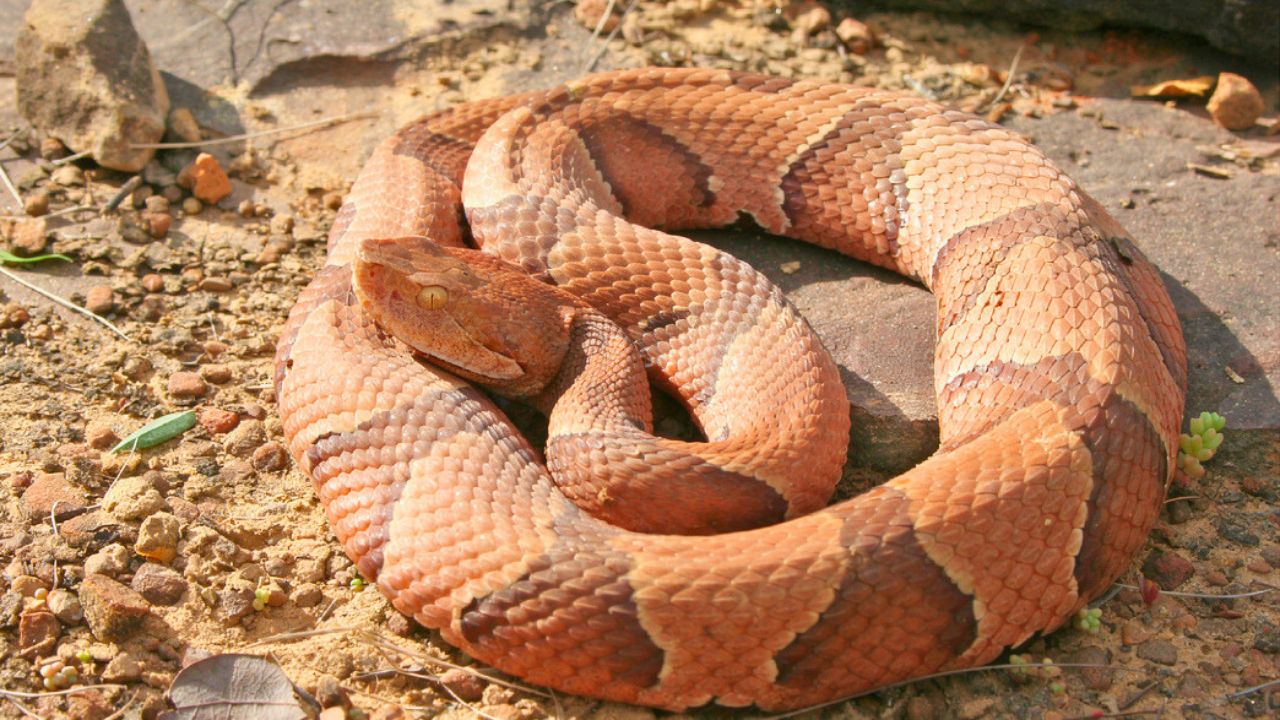
Texas has some of the best copperhead habitat in the country, especially across the eastern and central parts of the state.
Wooded neighborhoods, creek bottoms, piles of firewood, leaf litter, and shaded yards give them plenty of cover. They also show up around barns, sheds, landscaping, and rural homes where rodents and insects are abundant. In much of Texas, you do not need to live deep in the woods to encounter one.
Arkansas
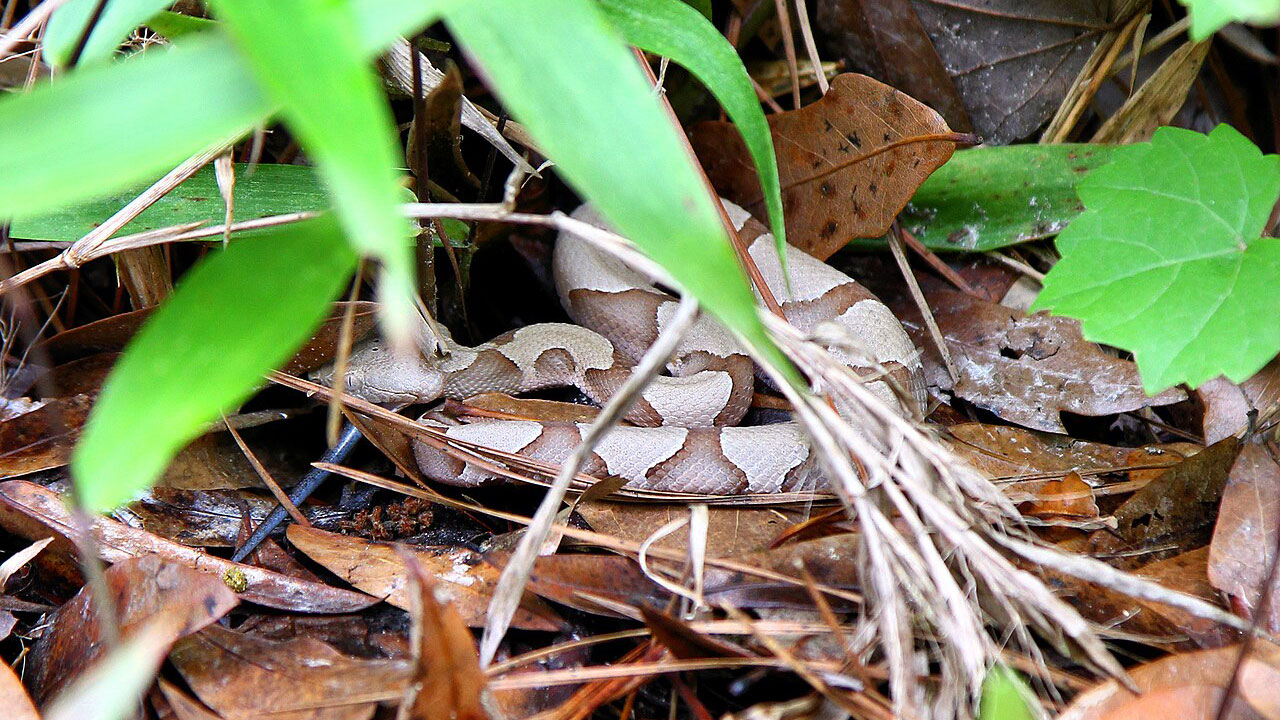
Arkansas gives copperheads nearly everything they need.
Forested hills, rocky ground, streams, fallen timber, and rural development overlap constantly throughout the state. Homes built near wooded slopes or creek bottoms can have snakes moving through the property without the owner ever realizing it. Copperheads are especially easy to miss in dead leaves because their pattern blends almost perfectly with the ground.
Missouri
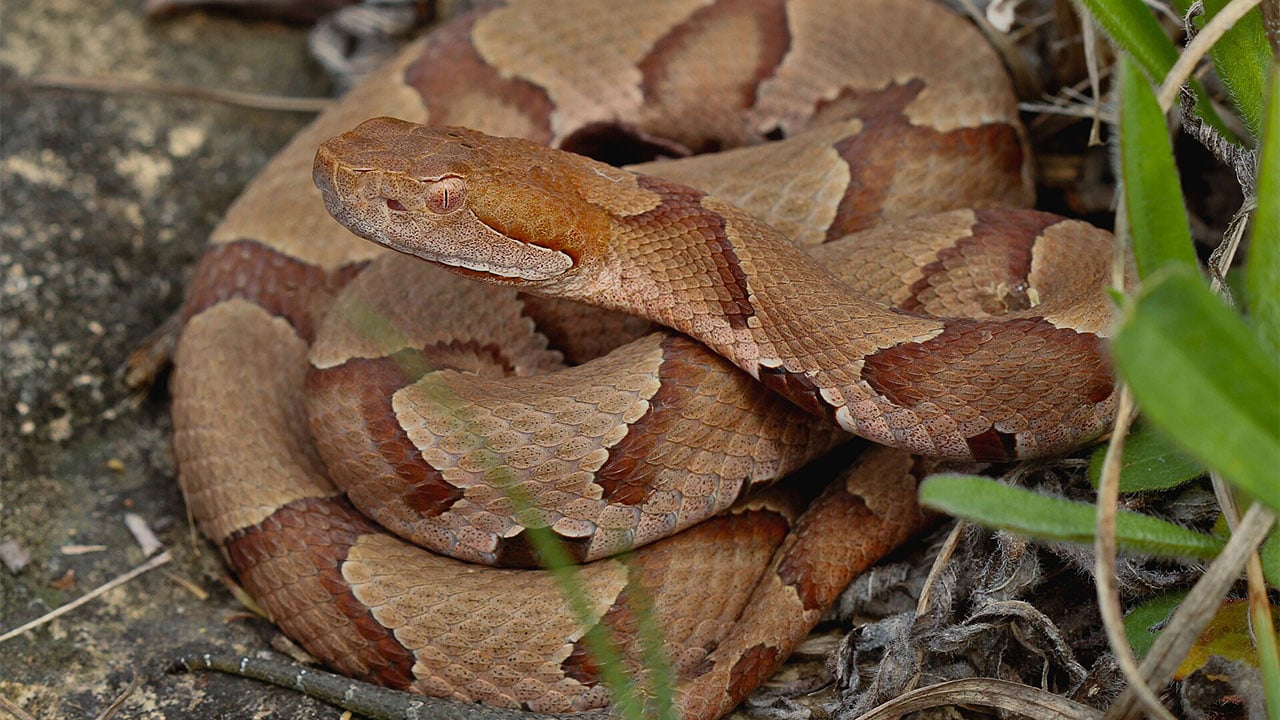
Missouri has a strong copperhead population across much of the state.
They do particularly well in rocky wooded areas, but suburban expansion has placed plenty of homes right next to that habitat. Retaining walls, woodpiles, brushy fence lines, and drainage areas can all create excellent hiding places. A copperhead does not need a huge forest when a neighborhood provides several small patches of cover connected together.
Tennessee

Tennessee’s wooded hills and expanding suburbs create ideal conditions for copperheads.
Around Nashville, Knoxville, Chattanooga, and smaller communities, housing developments often back directly into forest, creeks, or rocky slopes. That puts people and snakes in the same places. A copperhead can spend the day tucked beneath leaves or landscaping and become active once temperatures cool in the evening.
Kentucky
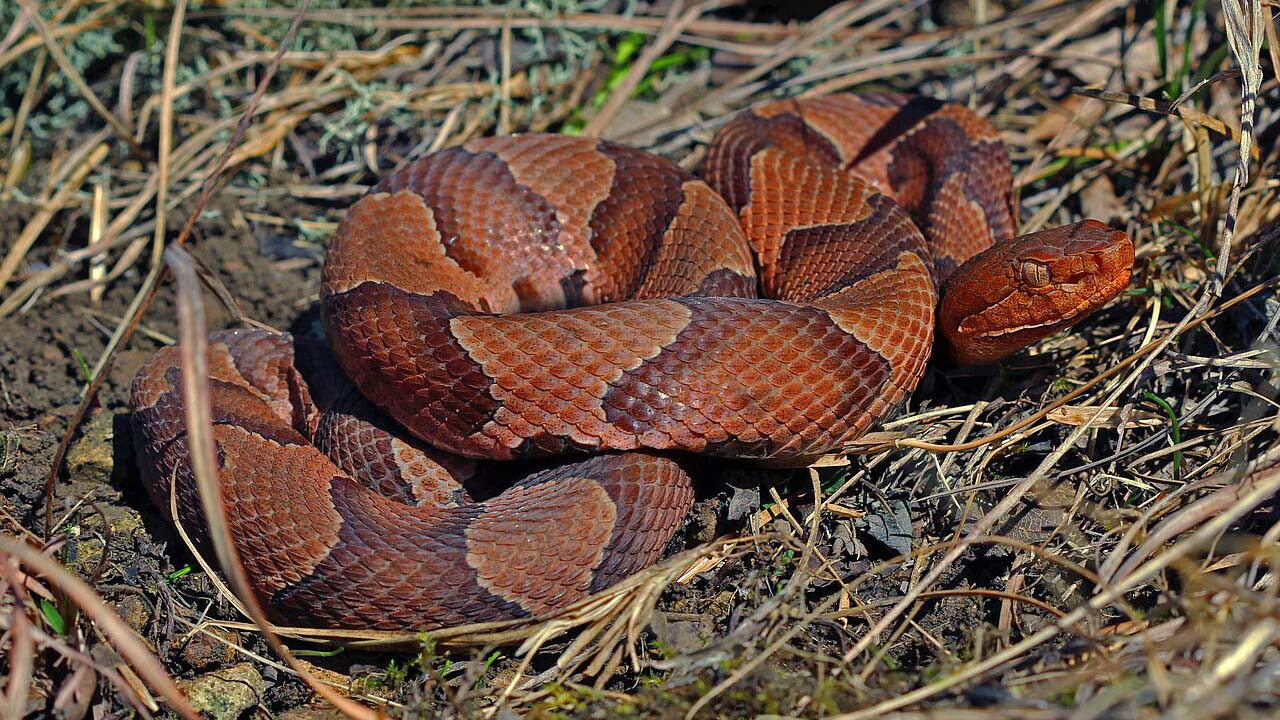
Kentucky has extensive forests, rocky terrain, farmland, and wooded residential areas.
Copperheads fit into that landscape extremely well. They often use fallen logs, stone piles, creek banks, and overgrown property edges for cover. In neighborhoods built into wooded hills, a backyard may provide almost the same shelter the snake would find farther into the forest.
Virginia

Virginia has a large amount of excellent copperhead habitat, including areas close to major population centers.
Wooded suburbs are particularly favorable because mature trees, leaf litter, stone landscaping, and streams provide cover while rodents and other prey remain abundant. People can live in the same neighborhood for years without seeing one and then suddenly find a copperhead beside a patio or woodpile.
West Virginia
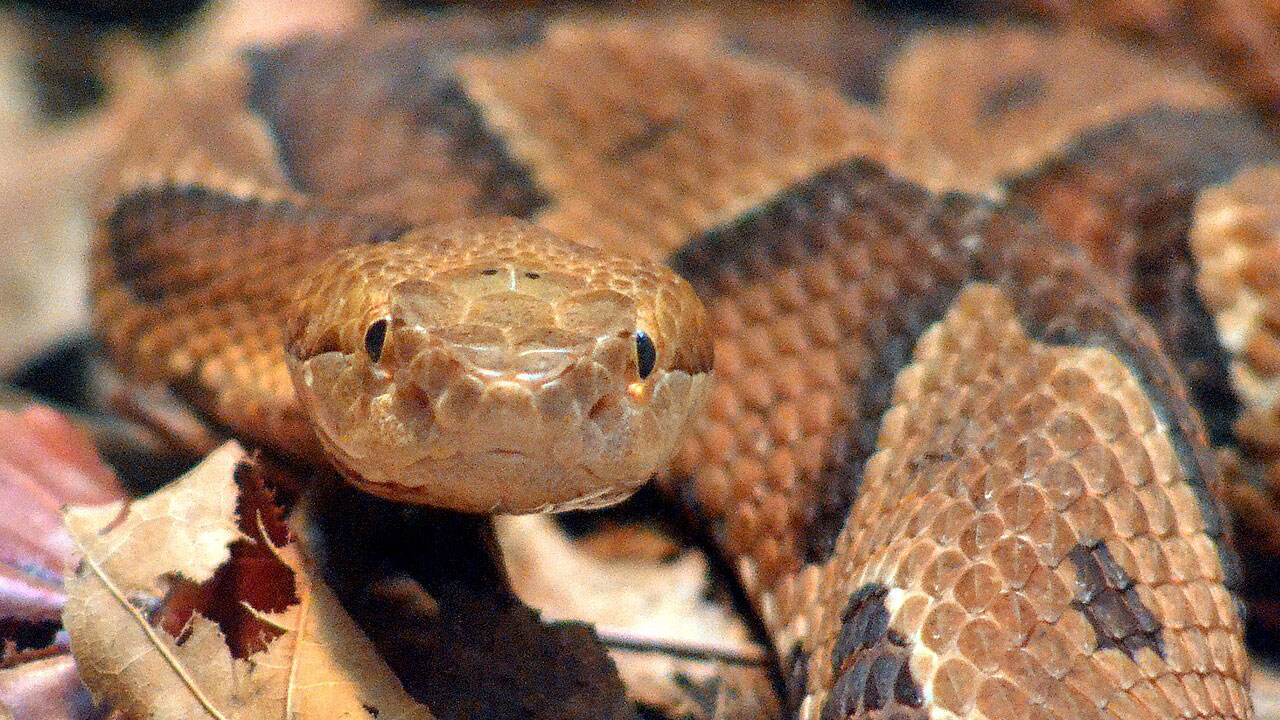
West Virginia’s steep, rocky, heavily wooded landscape is nearly tailor-made for copperheads.
Homes are often built along hillsides, hollows, and creeks where snakes already live. Rock piles, old structures, and brush around rural properties give them even more hiding places. In many parts of the state, a home does not have to be remote for copperhead habitat to begin almost immediately beyond the yard.
North Carolina
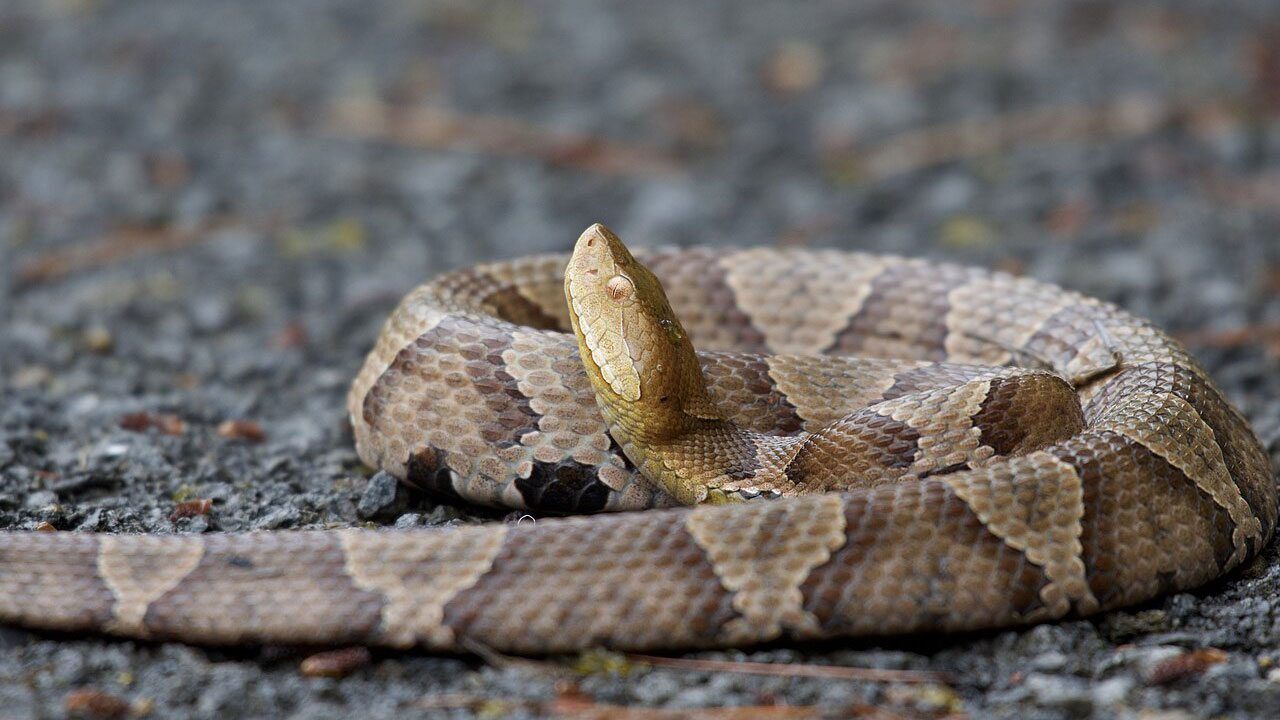
North Carolina has copperheads across a large portion of the state, including heavily developed areas.
The combination of hardwood forests, pine woods, creeks, suburban greenbelts, and warm weather allows them to live remarkably close to people. Raleigh, Charlotte, and other growing areas continue pushing neighborhoods into habitat where copperheads already occur. The snakes often remain after construction is complete.
South Carolina
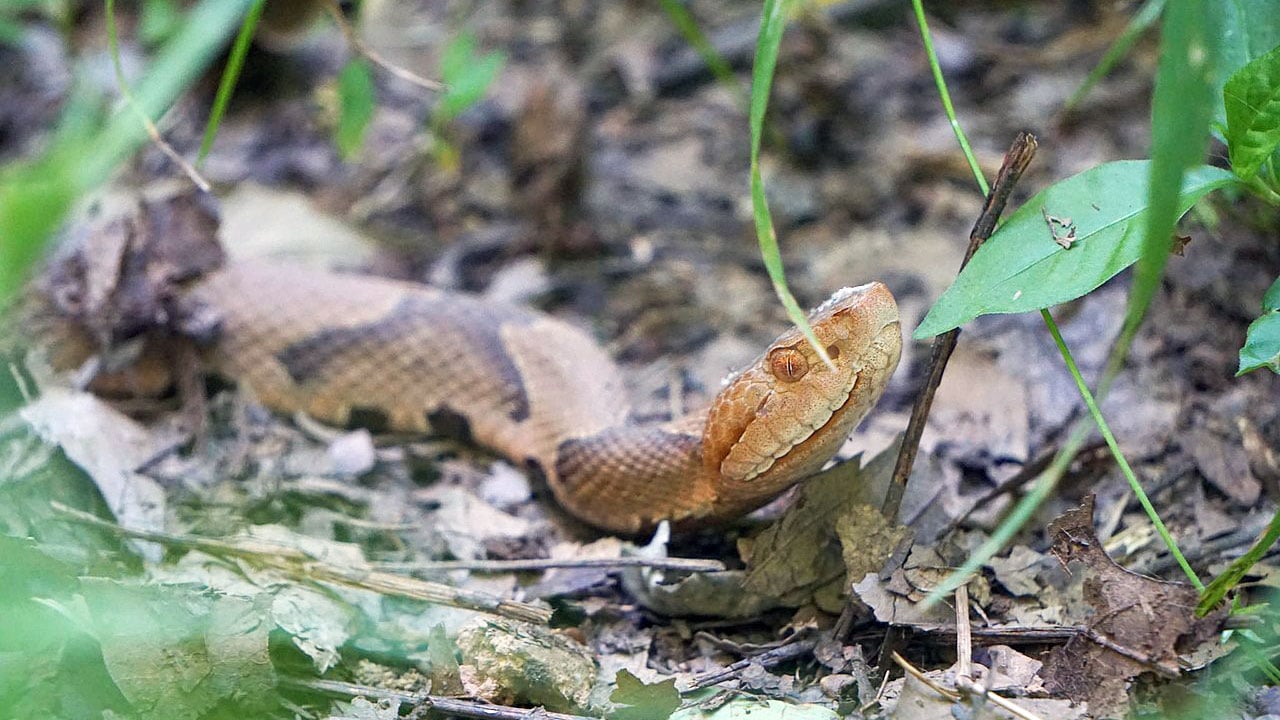
South Carolina’s warm climate gives copperheads a long active season.
Wooded subdivisions, low creek bottoms, piles of landscaping debris, and shaded areas around homes provide plenty of shelter. They can also appear around garages, porches, and sheds while following prey. In heavily vegetated yards, their camouflage makes them especially difficult to spot before you get close.
Georgia

Georgia has extensive copperhead habitat, particularly in northern and central portions of the state.
Suburban growth around Atlanta and other cities has put thousands of homes directly beside wooded corridors and creeks. Copperheads can move through those strips of habitat and end up surprisingly deep inside neighborhoods. They are often encountered around stacked firewood, stone walls, and overgrown edges rather than in completely open lawns.
Alabama

Alabama’s combination of forests, humidity, warm temperatures, and abundant prey makes it excellent copperhead country.
Rural homes are obvious places to encounter them, but they can also thrive around suburban developments with nearby woods or streams. Leaf piles and shaded landscaping can hide a copperhead almost completely. People often notice one only after it moves.
Mississippi

Mississippi provides a warm climate and plenty of wooded habitat for copperheads.
They can live around creek bottoms, farms, timberland, and residential properties with thick vegetation. Rural yards with sheds, old boards, brush piles, and stacked lumber offer particularly good shelter. The snakes do not need to travel far when food and cover are already available around the property.
Oklahoma

Eastern Oklahoma has much more suitable copperhead habitat than the state’s open western landscapes might suggest.
Wooded hills, rocky areas, creeks, and suburban developments create plenty of places for them to hide. Around homes, they may use landscaping stones, retaining walls, woodpiles, and thick ground cover. A property near even a relatively small wooded drainage can occasionally see copperheads moving through.
Kansas
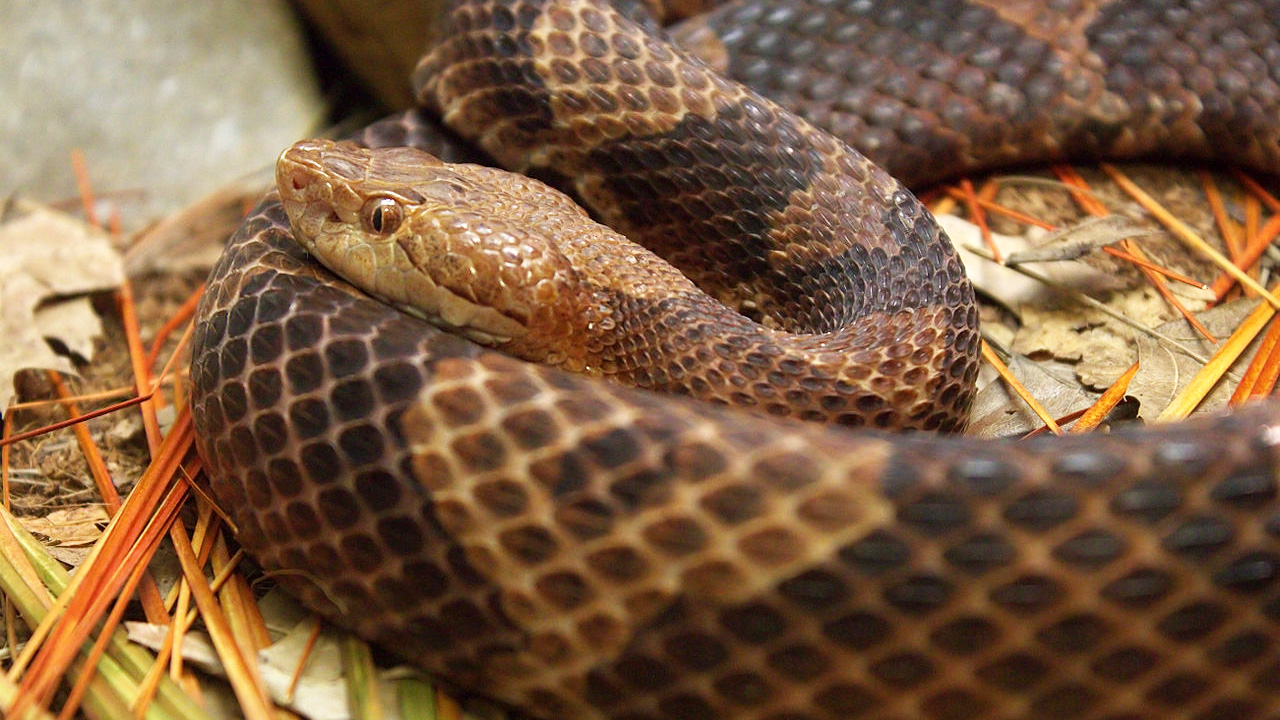
Copperheads are not distributed evenly across Kansas, but the eastern portion of the state can support them well.
Wooded river corridors and rocky hills provide natural habitat, while expanding neighborhoods create plenty of edge habitat. Homes near creeks, parks, and forest patches can have snakes much closer than residents expect. Their limited visibility makes encounters feel sudden even when the animals have been nearby for some time.
Illinois

Southern Illinois contains habitat that looks very different from the flat farmland many people associate with the state.
Wooded hills, rocky bluffs, and river systems give copperheads suitable territory, and homes near those areas can experience encounters. They are not something most Chicago-area residents need to think about, but farther south, suburban and rural properties can overlap directly with snake habitat.
Indiana

Southern Indiana provides forests, rocky terrain, and warm enough summers for copperheads.
The species is much less of a concern across large portions of the state, but where they do occur, homes near wooded hills and streams can put people surprisingly close to them. Hiking trails, parks, cabins, and rural yards are all places where an unnoticed snake may be resting beneath leaves or debris.
Ohio

Copperheads are limited mainly to parts of southern Ohio, but they can still occur close to homes within their range.
The state’s forested hills and rocky areas offer suitable habitat, particularly near the Ohio River region. Development around those areas creates the same suburban edge conditions copperheads tolerate elsewhere. A wooded backyard bordered by rocks or brush can be enough to bring one close to the house.
Maryland

Maryland has a surprising amount of copperhead habitat despite its dense population.
Western and central portions of the state contain wooded ridges, parks, streams, and rocky terrain, sometimes directly beside residential communities. Copperheads can remain tucked into small natural areas surrounded by development. People walking dogs or doing yard work near wooded edges are more likely to encounter one than someone crossing an open lawn.
Pennsylvania

Copperheads occur across parts of Pennsylvania, especially in rocky and wooded areas.
The state’s older suburbs often contain mature forests, stone walls, creek valleys, and large undeveloped patches between neighborhoods. Those features allow snakes to remain surprisingly close to people. Rocky slopes exposed to the sun can be particularly attractive because copperheads can warm themselves while staying close to cover.
New Jersey

New Jersey may seem too densely developed for venomous snakes to thrive, but copperheads still occupy suitable areas in the northern part of the state.
Rocky forests and wooded ridges can sit surprisingly close to houses and busy roads. Once development reaches those areas, copperheads do not automatically disappear. They may continue using small pockets of habitat around neighborhoods, especially where stone, brush, and mature woods provide places to hide.
The biggest reason copperheads get so close to people is not aggression. It is that many backyards accidentally recreate their preferred habitat. Woodpiles, thick leaves, stacked stone, brush, rodents, shaded landscaping, and nearby creeks can give them almost everything they need without ever leaving the neighborhood.
Like The Avid Outdoorsman’s content? Subscribe to our newsletter so you never miss an article.
Here’s more from us: