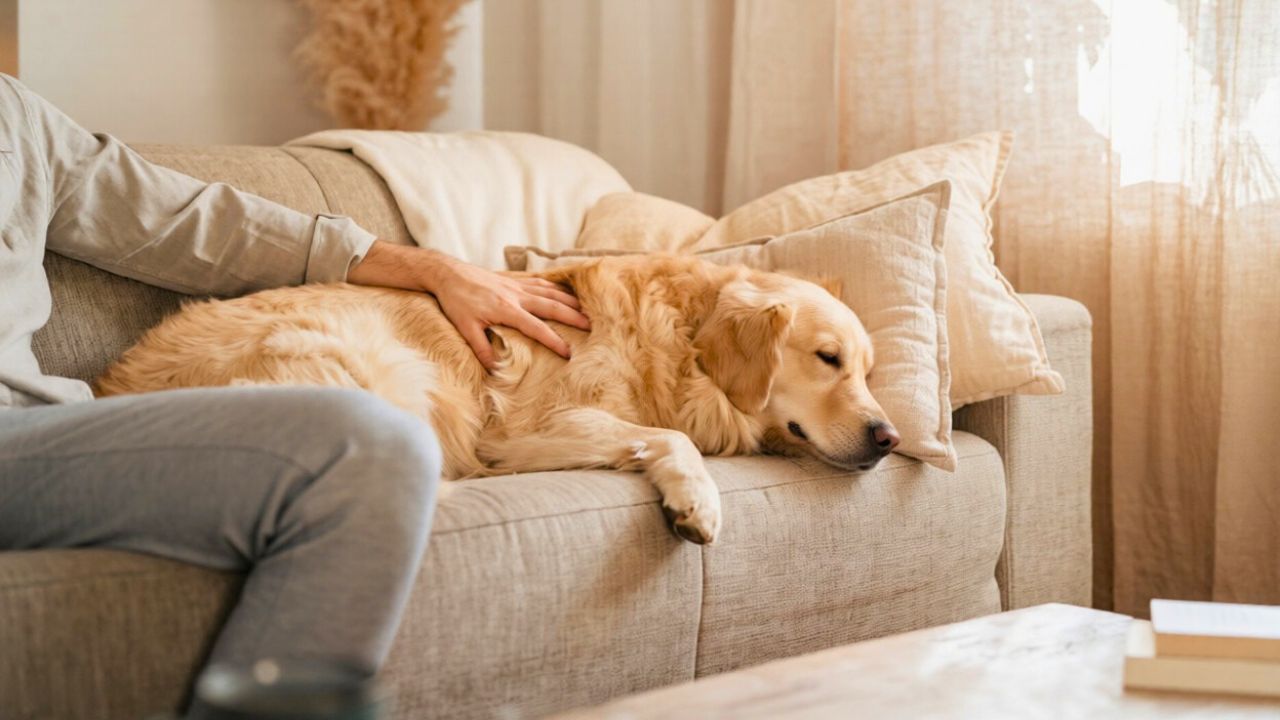
Photo credit: Luza Studios/istock.com
A lot of dogs like to sleep near you. These dogs prefer contact. Not across the room, not at the foot of the bed with a little space—actual skin-to-fur, pressed against your leg, curled into your side, or stretched out so one paw stays on you like a security line. For some breeds, it’s comfort. For others, it’s bonding. And for a few, it’s basically instinct. Dogs are pack animals, and many of them rest better when they can feel their person nearby. That doesn’t always mean they’re anxious. Sometimes it just means they’re affectionate and naturally wired to settle best with closeness.
That said, if your dog can’t sleep unless they’re glued to you, it can become a problem—especially if you ever need them to sleep in a crate, stay with a sitter, or settle in another room. The sweet spot is a dog that enjoys touch but can also relax independently when needed. If you love a cuddly sleeper and you don’t mind sharing your space, these nine breeds are known for sleeping best when they can touch you.
Cavalier King Charles Spaniel
Cavaliers are famous for being affectionate, and bedtime is where that trait really shows up. Many of them prefer to sleep pressed against their person, and they’ll reposition throughout the night to maintain contact. They’re gentle, warm little dogs, and being close seems to calm them. A Cavalier doesn’t just want to be in the same room—they often want to be physically connected.
If you’re okay with a dog that’s basically a living stuffed animal at night, Cavaliers fit that role perfectly. If you need boundaries, it’s important to teach them early that a bed or crate nearby is still safe. But left to their own choices, most Cavaliers will pick “touching you” every time.
Labrador Retriever
Labs are big, but a surprising number of them still want contact when they sleep. They might not climb onto your pillow, but they’ll press their body against your leg or wedge themselves against the side of the bed like they’re trying to be as close as possible. Labs are social and bonded dogs. When they’re relaxed, contact is often their preferred way of settling.
The trick is teaching them how to be close without taking over the entire bed. Labs can sprawl. They can also overheat, so they may shift positions throughout the night. But many Lab owners learn quickly that their dog’s best sleep happens when it can feel the family nearby.
Golden Retriever
Goldens are classic “cuddle sleepers.” They’re sensitive, affectionate, and they often like physical touch as reassurance. Many Goldens sleep best when they can lean against you or rest a paw on you. They’re also the kind of dog that checks in emotionally, and bedtime is when they seem to relax into that bond the most.
Because they’re so people-oriented, Goldens can develop habits where they expect full access at night. If that works for your house, great. If it doesn’t, you’ll want to establish a consistent routine early. Goldens are usually willing to follow rules as long as you’re consistent, but their default preference is closeness.
Vizsla
Vizslas are basically the poster child for “I need to be touching you.” They’re often called Velcro dogs for a reason, and nighttime makes it even more obvious. Many Vizslas will burrow, curl up tight, and try to sleep as close as physically possible. They’re affectionate, sensitive, and deeply bonded, and contact seems to settle them.
If you want a dog that sleeps like it’s trying to merge into your body heat, a Vizsla fits that bill. But they also need independence training, because the same closeness that feels sweet at night can turn into separation stress during the day if you never teach them to be comfortable alone.
Dachshund
Dachshunds love burrowing and warmth, and they often sleep best when they can press against their person. They’ll wedge themselves under blankets, tuck into the curve of your legs, and act like that’s the natural sleeping arrangement. Many Dachshunds bond hard with one person, and that bond shows up most clearly at bedtime.
They can be stubborn, but they’re also creatures of habit. If you allow bed sleeping, many Dachshunds will make physical contact part of the routine. If you don’t, you’ll want to set clear boundaries early, because once they decide “this is my spot,” they tend to commit.
Chihuahua
Chihuahuas are small, they get cold easily, and they often feel safer with contact. That combination creates dogs that sleep best when they can touch you—sometimes directly on you. Many Chihuahuas will curl into your neck, tuck behind your knees, or press against your side for warmth and comfort.
Because their bond can be intense, it’s important to make sure the dog is confident and well socialized, not fearful. A confident Chihuahua sleeps close because it likes you. An anxious Chihuahua sleeps close because it’s worried. Training and routine help keep that difference clear.
Shih Tzu
Shih Tzus are affectionate companion dogs, and many of them prefer nighttime closeness. They’ll often settle into your side, curl against your hip, or sleep touching your feet. They’re not usually intense about it—they just like contact and routine. For a lot of Shih Tzus, being physically close is part of what makes them feel relaxed.
They tend to adapt well to whatever bedtime routine you establish, but if you allow bed access, many Shih Tzus will quickly decide touch equals comfort and will keep choosing it night after night.
Pug
Pugs are snuggly by nature, and they often sleep best when they can be close enough to touch you. They’re social, affectionate, and they love being included, even at bedtime. A Pug will usually find the warmest, safest spot near you and claim it.
The main thing to consider with Pugs is comfort and breathing. They can snore, they can get warm, and they may shift positions. But in terms of temperament, many Pugs are happiest when they can fall asleep with physical contact and stay close through the night.
Italian Greyhound
Italian Greyhounds are another breed that’s all about warmth and contact. They’re often sensitive dogs, and they settle best when they can curl up against you, usually under a blanket. They love sleeping close because it feels safe and warm, and many of them treat bedtime as the main bonding event of the day.
Because they can be delicate, it’s important to be mindful of safety if they’re in bed with you, especially in a busy household. But if you’re looking for a dog that genuinely seems to sleep better when it can touch you, Italian Greyhounds are one of the most consistent examples.
Like The Avid Outdoorsman’s content? Subscribe to our newsletter so you never miss an article.
Here’s more from us: