Photo credit: AI-generated image created using ChatGPT. Illustrative only
Estate work has a way of turning simple family wishes into a paperwork problem, especially when a firearm is involved. One Boston-area executor learned that the hard part wasn’t figuring out who gets Dad’s antique gun—it was figuring out how to move it legally from Maine to Massachusetts and deliver it to a brother who also lives in Massachusetts.
In the source post, the executor said the gun was an antique, but he didn’t know the year it was made and wasn’t sure whether his father had a license to carry (though he believed he did). What he did know was this: the gun was sitting in Maine, and probate documents said it was going to his brother. The question was how to get it across state lines without stepping on a landmine.
The “antique gun” label didn’t automatically make it simple
Outdoorsmen hear “antique” and often assume “collector piece” or “grandpa’s old wall-hanger,” and sometimes that’s true. But legally, “antique” can mean different things depending on the jurisdiction, how the gun is defined, and how it’s transferred. The executor in the post didn’t know the year of the gun, which is a big detail when you’re trying to sort out what rules apply.
Even if the firearm is old and hasn’t been fired in years, the state you’re standing in still may treat it like a firearm for transfer and possession purposes. The moment you put it in a case, load it in a vehicle, and cross a border, you’ve moved from “family heirloom” territory into “transport and transfer” territory.
He wasn’t just moving a gun—he was transferring one through an estate
This wasn’t a private sale at a sporting goods counter. It was a probate transfer, with an executor handling property that belonged to the estate and then delivering that property to the heir named in the will.
That executor role matters because it puts the responsibility on one person to do it right. If you’re the one picking up the firearm, storing it temporarily, transporting it, and handing it over, you’re the one who can get jammed up if the process doesn’t meet the rules where the gun starts, where it travels, and where it ends up.
One attorney pointed to three layers of law at the same time
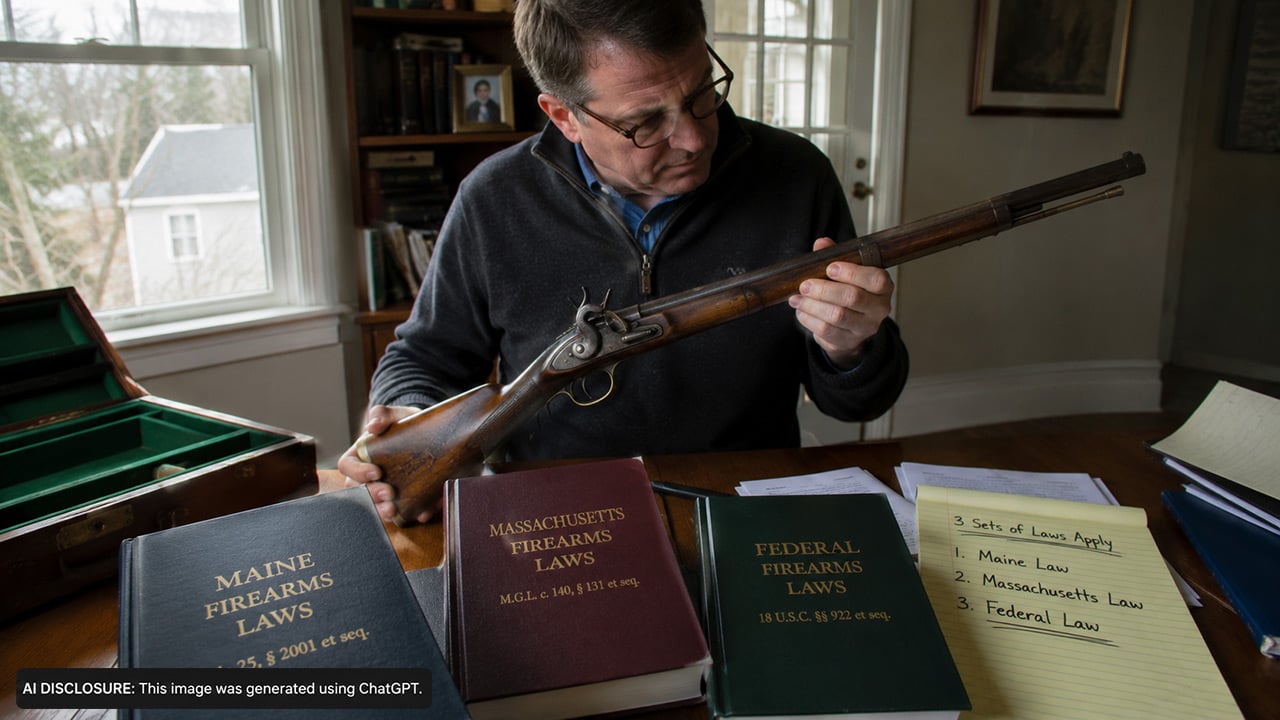
An elder law attorney who answered the question didn’t sugarcoat it: the executor needed to consider federal law, Massachusetts law, and Maine law before taking action. That’s the real-world headache with interstate gun issues—what’s fine in one place can be a problem in the next.
The attorney’s answer also highlighted two practical points that tend to catch families off guard. First, if the brother is going to inherit the gun, he will need to apply for a license to carry. Second, the gun will also need to be registered with the state. Those aren’t small steps, and they aren’t things you want to discover after the firearm is already in the wrong hands or the wrong state.
Massachusetts was the “home state” complication
Plenty of folks can drive across Maine with a cased long gun and not think twice. Massachusetts is different, and that difference is exactly why the executor asked the question in the first place. Both brothers lived in Massachusetts, meaning the final stop for the firearm was a state known for tighter rules on possession, licensing, and compliance.
In this situation, the attorney focused on the brother’s need to be properly licensed and on registration requirements. From a practical standpoint, that means the heir can’t just “take it because it’s in the will” and assume the will is a free pass. A will can say where property is supposed to go, but it doesn’t erase the legal requirements tied to that property.
The safest advice was also the most boring: talk to an attorney first
The executor wanted a clear, do-this-then-that checklist: Do I need to register it? How do I deliver it? Can I transport it? But the attorney’s guidance was to consult an attorney before taking any action involving the guns.
That’s not an attempt to dodge the question—it’s a recognition that the details matter. The exact type of firearm, its manufacturing date, whether it’s truly considered an antique under relevant definitions, where it’s currently stored, and the brother’s current licensing status can all change what the “right” move looks like. When three sets of laws can apply at once, guessing gets expensive fast.
What outdoorsmen can take from it before they’re in the same spot
This is one of those situations that hits hunting and gun-owning families more often than anyone likes to admit. A firearm gets left behind in a camp, a cabin, or a parent’s home out of state. Then the family tries to sort it out while also dealing with probate timelines, grief, and siblings who just want to “get it done.”
The useful lesson here is to slow down and treat an inherited gun like you’d treat any other regulated item: confirm what it is, confirm what the recipient is legally allowed to possess, and confirm the rules for the states involved before you move it. The attorney’s answer specifically called out licensing for the inheriting brother and registration with the state, along with the need to account for federal, Massachusetts, and Maine law.
If you’ve got older firearms in the family—especially ones stored out of state—it’s worth having those conversations early. Write down what’s what, keep records with estate paperwork, and don’t assume “antique” equals “no rules.” When it comes time to hand down grandpa’s gun, the goal is to pass on a piece of family history, not a legal problem.
Like The Avid Outdoorsman’s content? Subscribe to our newsletter so you never miss an article.
Here’s more from us: