Photo credit: AI-generated image created using ChatGPT. Illustrative only
A month-to-month renter in Pensacola thought he was doing the responsible thing. He said his gun was lost or stolen, so he reported it to police. Instead of the situation cooling down, it lit a fuse between him, law enforcement guidance, and a landlord who didn’t want firearms or ammo in the home at all.
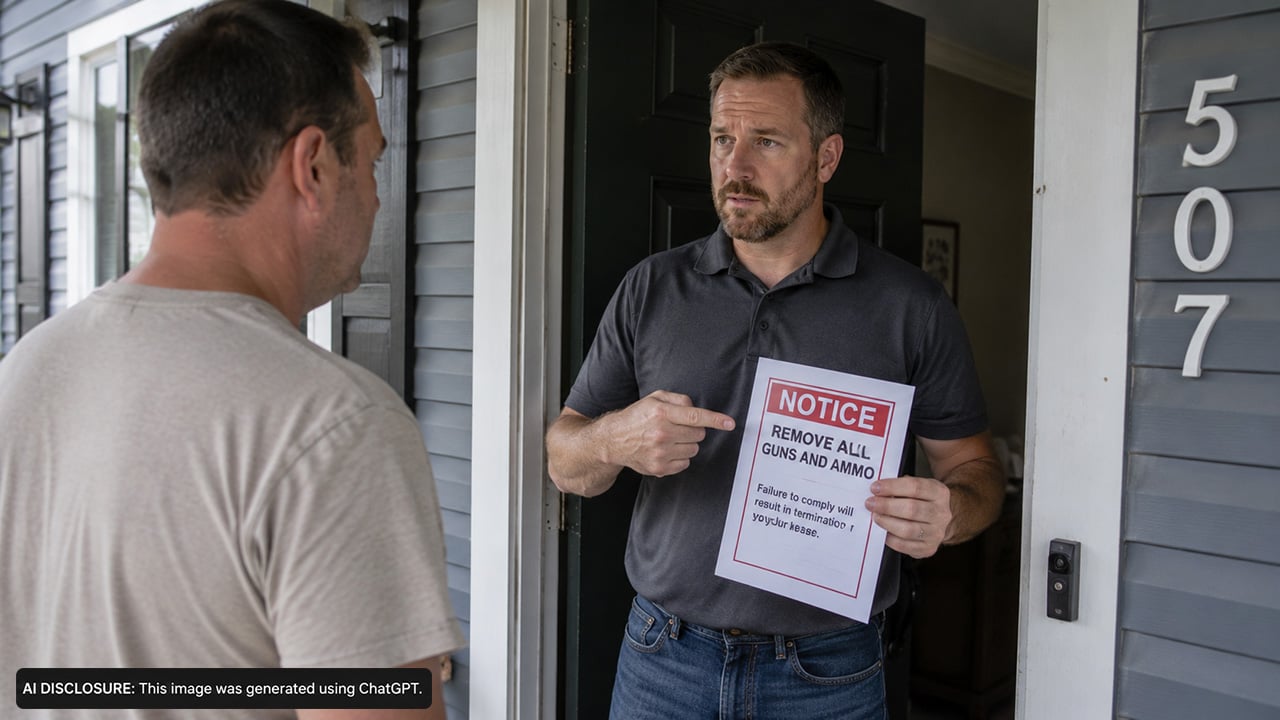
In the discussion, the renter explained that police told him he “can not have gun in home if a felon” lives there—referring to his roommate. The renter believed he was in the clear as long as the roommate didn’t have possession. The landlord’s response was blunt: remove any guns and ammo or be told to move out.
How a stolen gun report turned into a lease problem
Most gun owners understand the basic playbook when a firearm goes missing: report it, document it, and hope it turns up before it’s used in something ugly. But in this case, reporting the loss apparently triggered a second issue—who else lived in the home.
The renter said his roommate is a felon. That matters because firearms in a shared space can create legal risk fast, even when the gun owner thinks everything is “under control.” The police, at least according to the renter, took a hard line: no gun in the home with a felon present.
The “possession” trap in shared living spaces
The renter’s argument was the one you hear a lot: as long as the felon doesn’t have “possession,” it’s fine. On paper, that sounds like a simple line—my gun, my safe, my rules. Real life is messier, especially when multiple adults share rooms, closets, common areas, and access.
The attorney who responded didn’t sugarcoat it. He pushed back on the renter’s confidence and pointed out that possession can be “a complicated issue.” In plain outdoorsman terms: if a gun is in a house where a prohibited person lives, you’re stepping into a gray area where mistakes are expensive and intentions don’t always matter.
Why the landlord likely felt he could lay down the law
The landlord’s stance was simple: remove guns and ammo or lose the place. That can feel like an attack on a right, especially for folks who keep a firearm for home defense or who hunt and need a place to store gear between weekends.
But the attorney’s reply framed it as property rights. If the landlord is a private landlord, he said the tenant has no constitutional right that overrides the landlord’s control of his own property—“Their property their rules.” That doesn’t mean every landlord can do anything they want in every situation, but it does explain why some landlords don’t want to be anywhere near a scenario that could bring police, liability, or trouble to the address.
Month-to-month leases: stability feels real until it isn’t
The renter’s big question was whether the landlord could legally end a month-to-month lease over this, and what would count as wrongful termination. A lot of outdoorsmen rent at some point—new job, divorce, seasonal work, saving up for land—and month-to-month can feel like freedom until someone decides they want you gone.
Even without diving into the weeds of Florida notice requirements, the practical lesson is this: month-to-month arrangements are easier to end than long-term leases, and landlords often have wide latitude to set house rules—especially when they believe a situation increases risk. If you’re renting and you need to keep firearms, you want that spelled out clearly in writing, not assumed.
What gun owners can take from this without getting sideways
This whole mess has a familiar smell to it: one bad break (a stolen gun) creates a chain reaction. The police advice, the roommate’s status, and the landlord’s ultimatum all stack up until the tenant is choosing between his housing and having any firearms or ammo under that roof.
If you’re a gun owner renting with roommates—especially if you don’t control who is and isn’t legally allowed around guns—this is where you get serious about boundaries. Secure storage isn’t just “good practice,” it’s the difference between “my property” and “someone else had access.” And if a roommate is prohibited, the smartest move may be avoiding that living arrangement altogether, because even careful people can get jammed up when a gun is merely present in the wrong environment.
The renter in this situation wasn’t asking how to bend rules. He was asking what rights he had when a landlord demanded guns and ammo be removed. The answer he got was a reminder a lot of us don’t like: leases, roommates, and firearms don’t mix well unless everything is clear, legal, and locked down tight.
Like The Avid Outdoorsman’s content? Subscribe to our newsletter so you never miss an article.
Here’s more from us: