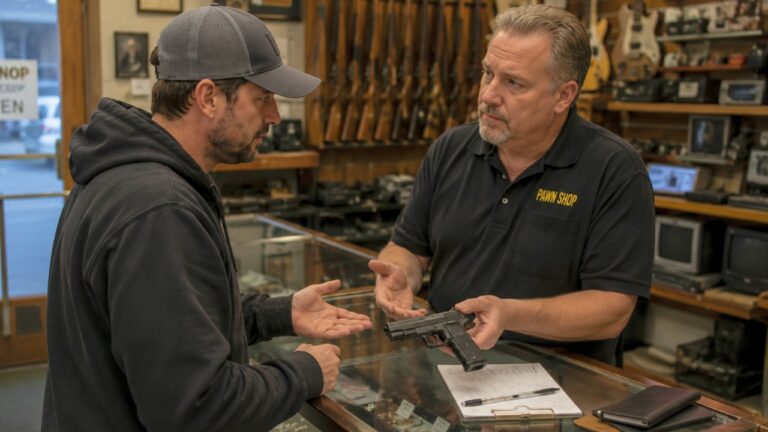
Photo credit: AI-generated image created using ChatGPT. Illustrative only
A gun left loose in a vehicle is the kind of mistake that turns a bad night into a career-and-courtroom problem fast. That’s especially true in places with strict storage rules, where “I’ll deal with it later” can land like “I don’t take it seriously.”
That’s the situation laid out in the source post, which summarizes a case involving a Boston police officer accused of leaving a loaded firearm unsecured on the front seat of his vehicle after officers responded to an argument with his girlfriend.
A domestic call turned into a gun-storage case
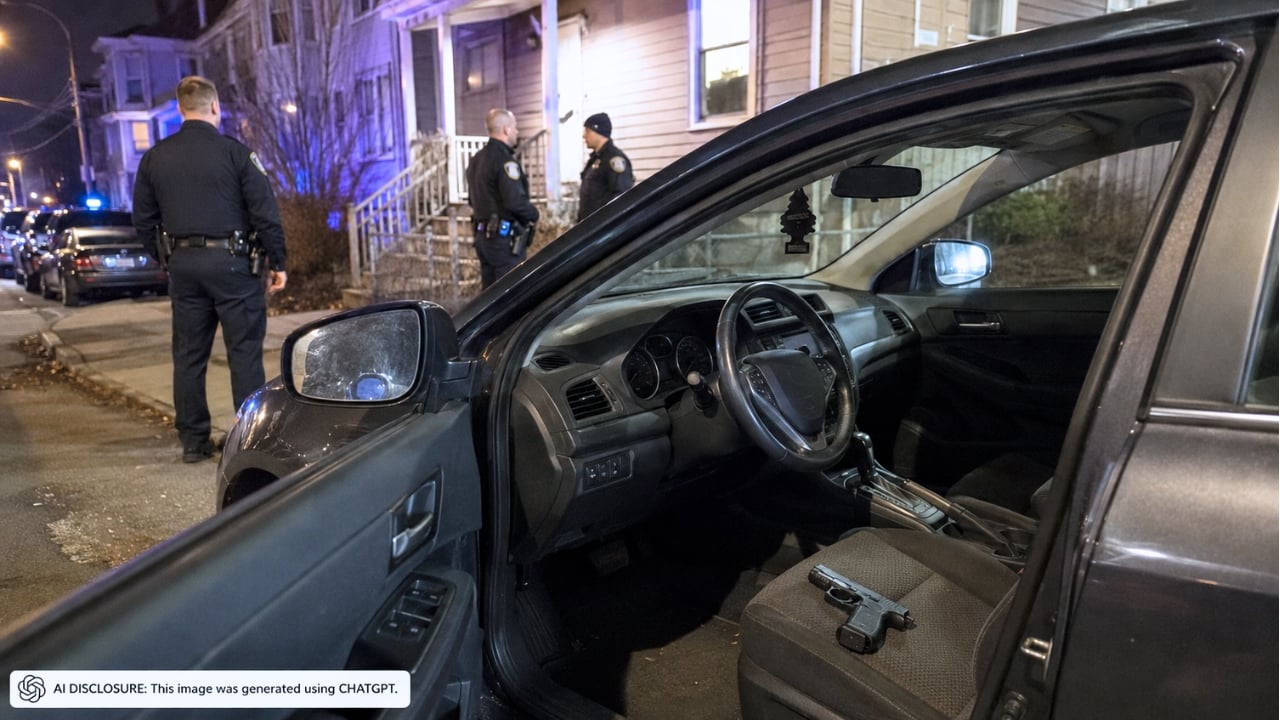
Per the information shared, officers went to Officer Sean Cullen’s home last December following an argument between him and his girlfriend. During that response, fellow officers reportedly found a loaded gun “loose in the front seat” of his vehicle.
For anybody who spends time around firearms—whether it’s a carry pistol, a truck gun you shouldn’t have, or the shotgun that rides behind the seat during deer season—that detail jumps off the page. A loaded gun rolling around in plain reach is a recipe for a bad outcome: a curious kid, a theft, a negligent discharge, or a split-second decision that gets uglier because the gun wasn’t controlled.
The charges weren’t minor
Cullen, 45, is charged with a felony count of improper storage of a large capacity firearm and a misdemeanor count of improper storage of a firearm, according to the court-record summary included in the pasted material. He was arraigned in Boston Municipal Court in West Roxbury earlier this month, pleaded not guilty, and a judge released him without setting bail.
That mix—felony plus misdemeanor—tells you how seriously the system treats storage violations in that jurisdiction. Outdoorsmen tend to think in common-sense terms: keep it holstered, keep it cased, keep it locked, keep it on your person, keep it away from hands that shouldn’t touch it. When the law adds felony exposure on top of those basics, “I was in a hurry” stops being an explanation and starts being a life-changing gamble.
The “front seat” detail is what gun owners will fixate on
A lot of folks hear “improper storage” and picture a safe left open at home. This one reads more like the classic vehicle mistake: leaving a firearm accessible and unsecured where a passerby—or anyone else who gets into the vehicle—can get their hands on it.
If you’ve spent time in a deer camp parking area, a boat ramp lot, or even a gas station off a rural highway, you already know how quickly vehicles get rummaged through. Theft is one angle. The other is pure safety. A loaded gun sitting out on the front seat isn’t “stored,” it’s staged—and if you’re not in full control of it, it’s a liability.
The fishing-trip claim added another layer
The pasted material also includes a piece that will sound familiar to anyone who’s ever heard folks make excuses after the fact. In a Jan. 22 interview mentioned in the source, Sgt. Lozano reportedly said he smelled alcohol on Cullen’s breath. Cullen, according to that same summary, told the sergeant he had lost a “.380 Smith & Wesson during a fishing trip” and never reported it, leaving him with only a shotgun and his department-issued gun.
Gun owners joke about “lost it in a boating accident,” but in real life it’s not funny, and it’s not a clean way out. A firearm that goes missing and isn’t reported creates its own set of problems—moral, practical, and potentially legal—because you’ve got a gun out there with no paper trail showing you tried to do the right thing when it disappeared.
What readers and commenters zeroed in on
The reaction included in the pasted material is blunt: one commenter guessed the officer “wasn’t very well liked” because other officers didn’t “look the other way.” That’s not a legal argument, but it is a real-world observation about how quickly accountability shows up when relationships are strained.
And whether a person is law enforcement or just a regular working guy who hunts on weekends, that’s an outdoors lesson worth keeping: don’t count on favors, don’t count on discretion, and don’t count on someone else covering your mistake. If you’re handling firearms, your habits have to be solid on your worst day—not just when everything’s calm and you’re headed out to sight in a rifle.
The practical takeaway for “truck gun” culture
A lot of folks like the idea of a firearm living in the vehicle “just in case.” But this case is a reminder that a vehicle is not a holster and it’s not a safe. It’s a piece of sheet metal with windows, parked in public, and it’s often the first place thieves check.
If you choose to keep a firearm in a vehicle at all, the only responsible direction is tighter control: know your local storage requirements, keep it secured in a way that prevents quick access by unauthorized hands, and don’t let emotions or alcohol turn “I’ll handle it later” into “now I’m facing a felony.” The outdoors is full of enough surprises. Your firearm storage shouldn’t be one of them.
Like The Avid Outdoorsman’s content? Subscribe to our newsletter so you never miss an article.
Here’s more from us: