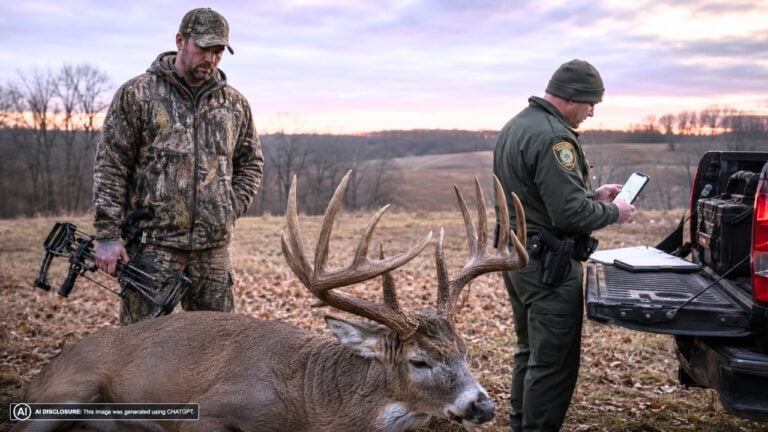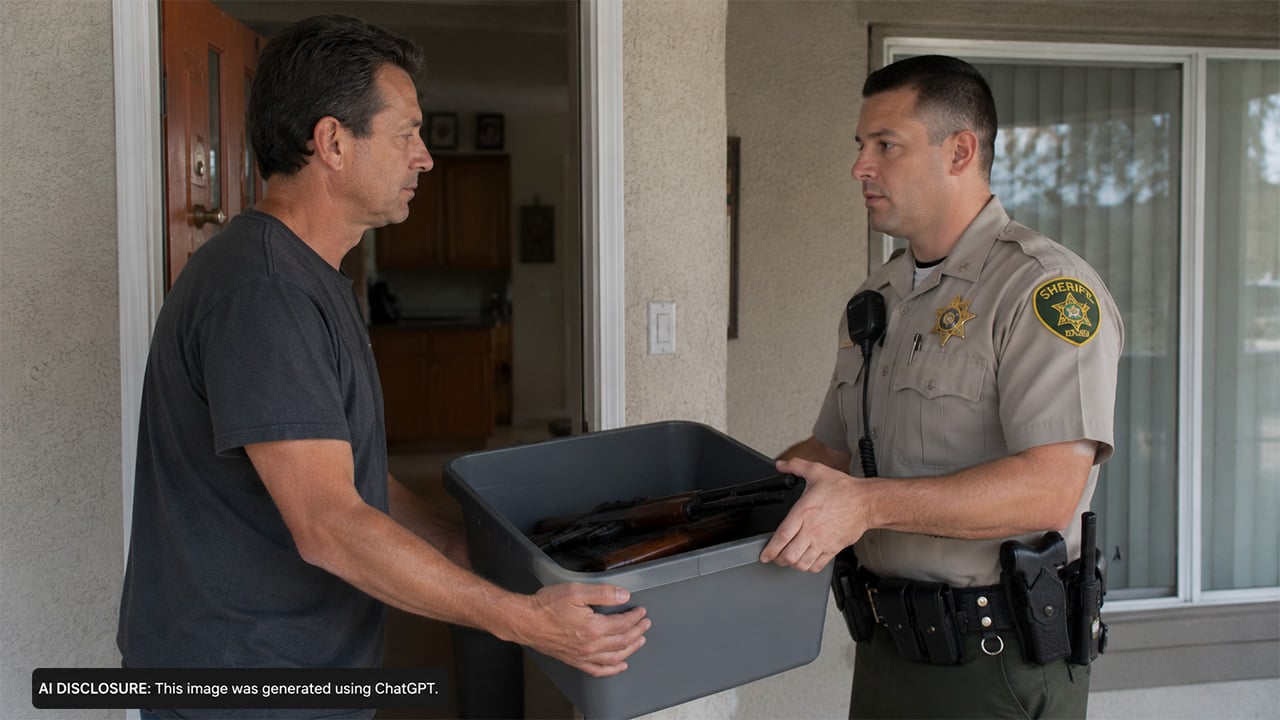
Photo credit: AI-generated image created using ChatGPT. Illustrative only
For a lot of gun owners, the part that keeps you up at night isn’t a bad day at the range or a busted scope—it’s the feeling that one paperwork storm can separate you from property you’ve owned your whole life. That’s exactly where one California gun owner says he’s landed after a temporary restraining order got his firearms taken, even though the judge later kicked the whole thing out.
In the original post, the man explained that his ex sought a restraining order against him about two years ago. The court immediately granted a temporary order, and as part of that process he was required to surrender all of his guns. He fought it, and the judge ultimately dismissed the restraining order “with prejudice,” meaning it wasn’t just tossed for now—it was shut down in a way that generally prevents it from being refiled on the same claims.
A temporary order did what temporary orders often do
Even if you’ve never been through it, most gun owners understand the basic mechanics: when a restraining order enters the picture, the system can move fast and hit hard. In this case, the man said the restraining order was granted temporarily right away, and that quick decision triggered an immediate requirement—turn over every firearm he had.
That’s the part that catches many people flat-footed. Temporary orders can be issued before the court fully sorts out who’s telling the truth and who isn’t. It can be a blunt tool, and when firearms are involved, there’s rarely much wiggle room in the moment. You comply first, then you fight.
He fought it—and the judge dismissed the case with prejudice
According to the post, he did fight it in court, and he won in the sense that matters most: the judge dismissed the restraining order with prejudice. From a common-sense perspective, that sounds like the finish line. If the court says the underlying restraining order was baseless enough to end that way, most folks would assume the state hands back the property and everyone goes home.
But the outdoorsman’s reality isn’t always tied to common sense—it’s tied to process. The guns were already out of his possession, and now a new layer of bureaucracy is standing between him and getting them back.
Now comes the second hit: pay, apply, and register
After the dismissal, he said police told him he must go through the California Department of Justice to apply to retrieve his firearms. That process, as he described it, comes with fees and a requirement that the guns be registered—despite him saying he legally owned them through inheritance and wasn’t required to register them in the first place.
This is where the story turns from courtroom drama into something every hunter and gun owner recognizes: the cost of being “cleared” but still treated like you’re not. Time off work. Fees. Forms. Delays. And the nagging feeling that even when you do everything right, you’re still paying for someone else’s bad claim.
Why it stings for inherited guns
The man emphasized that these weren’t guns he bought last week on a whim. He said they were inherited and legally owned. Anyone who’s been handed down a rifle or shotgun from family understands the tie that comes with it—sometimes those guns are the connection to a grandfather’s deer camp, a dad’s old duck blind, or a family member who taught you safe handling before you were big enough to shoulder the stock right.
So when the state tells a person they have to “register them” to get them back, it doesn’t just feel like an administrative step. To many owners, it feels like the rules changed midstream—and the burden lands on the person who already went through the court fight and won.
The practical consequences: you’re disarmed, on the clock, and out money
He described feeling like his rights were being “seriously trampled” even after the judge “obviously saw the BS.” Whether you agree with that wording or not, the practical problem is straightforward: the guns are not in his hands, and the path to retrieve them runs through another state process that costs money.
For outdoorsmen, this isn’t abstract. Being without your firearms can mean missed seasons, canceled range time, and a real shift in home-defense planning—especially for rural folks who may have longer law enforcement response times. And it puts a person in an uncomfortable spot where “winning” in court doesn’t translate to getting back to normal life quickly.
What people tend to focus on in situations like this
In the post, the man asked whether there’s any recourse or whether he’s stuck following the DOJ process. While the source material doesn’t include a thread of replies, the question itself is the same one gun owners ask any time property is taken under a temporary order: how do you get your firearms back without stepping into another trap?
In California especially, the hard-earned lesson many gun owners repeat is that the return process can be its own battle. Even when the underlying issue is dismissed, separate administrative requirements can still apply. That’s not a moral judgment—it’s a reality of how layered gun rules can be, particularly around restraining orders and firearm possession.
At the street level, folks usually focus on three things: getting everything in writing, keeping records of lawful ownership (especially with inherited guns), and moving carefully so an honest mistake doesn’t become a new problem. The man’s frustration makes sense: he’s already been through court, and now it feels like a second penalty is waiting at the counter.
For anyone watching this from a deer stand or a tailgate, the takeaway is simple and sobering: in some states, a temporary order can separate you from your guns fast, and getting them back may still require a paid, state-run process—even when a judge later shuts the original case down. That’s worth remembering long before anyone ends up in a courthouse hallway trying to get their life back to normal.
Like The Avid Outdoorsman’s content? Subscribe to our newsletter so you never miss an article.
Here’s more from us: