Photo credit: AI-generated image created using ChatGPT. Illustrative only
Divorce can turn normal household stuff into a tug-of-war, but firearms add a whole extra layer of risk—legal, financial, and personal. One California gun owner found himself staring that reality in the face when the guns his wife had bought him as gifts suddenly became leverage in the breakup.
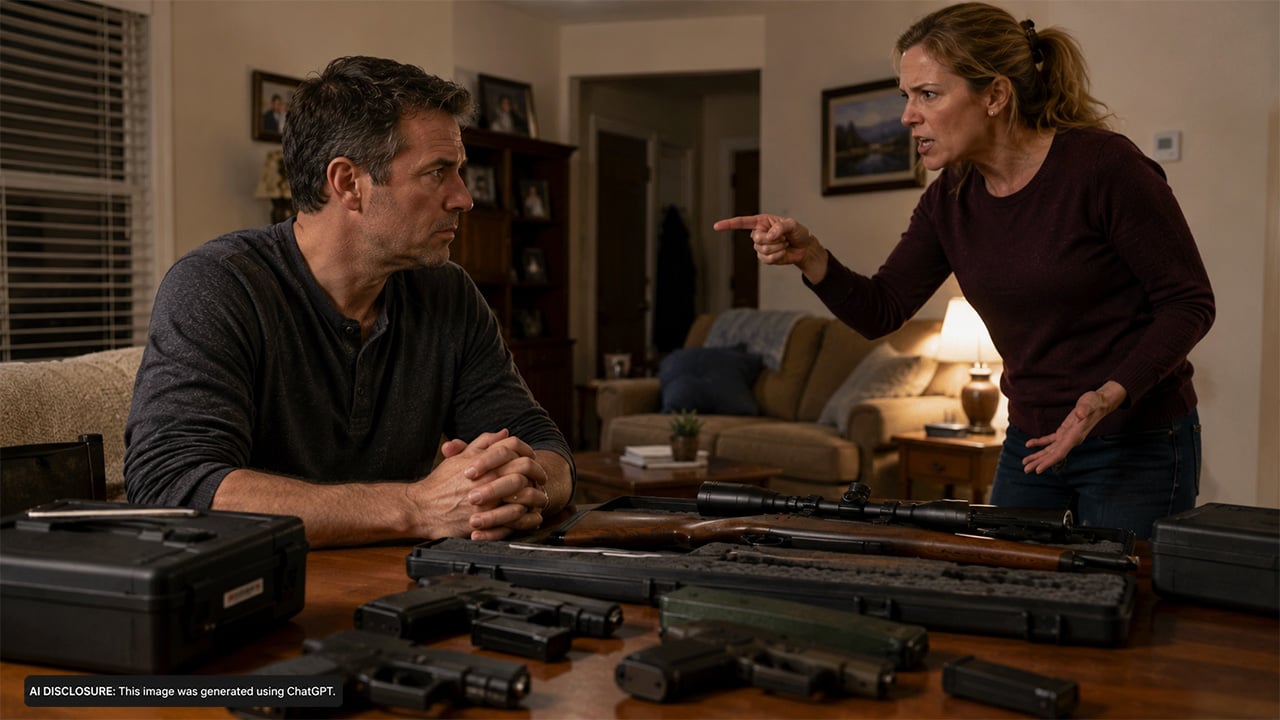
In the original post, the man said he’s going through a divorce and owns several handguns and a rifle that were purchased for him by his wife as birthday and Christmas gifts. Now she’s telling him that if he doesn’t give her those firearms, she’ll call police and report them stolen.
When “gifted” guns become a divorce bargaining chip
Most of us understand a gift to be a gift. You hand it over, it belongs to the other person, and you move on. But divorce is where simple assumptions get tested—especially in a state like California where firearm ownership is tightly regulated and paper trails matter.
The man’s question was blunt and practical: is it legal for her to do that? That’s the kind of thing a lot of gun owners worry about, because a false stolen-gun report isn’t just “drama”—it can bring law enforcement to your doorstep, put your firearms at risk of being seized, and create a record you’ll be dealing with long after the divorce paperwork is signed.
Why California changes the stakes
California is not a handshake-and-a-bill-of-sale kind of place when it comes to guns. Ownership, transfers, and possession can involve records, dealer processing, and rules that vary depending on exactly what was bought, how it was transferred, and when it happened.
That matters here because the firearms were purchased by the wife, but described as gifts to the husband. In many households, that’s normal—one spouse buys the other a hunting rifle, a home-defense handgun, or a range toy. In California, though, what feels normal at the gun counter doesn’t always line up cleanly with what the state considers properly transferred or properly documented.
The “report them stolen” threat and what it can trigger
Threatening to report guns stolen is a pressure tactic with teeth. Even if the claim is false, it can force a gun owner into reacting under stress—trying to explain, trying to prove a negative, trying to keep everything calm while officers are asking pointed questions.
And for the outdoors crowd, it’s easy to see how quickly this gets messy. If you’ve got firearms in the home that you use for hunting season, predator control on rural property, or just weekend range time, you’re not just dealing with an argument—you’re dealing with potential evidence, potential confiscation, and the very real risk of being treated like the “bad guy” until everything is sorted out.
Even if nobody gets arrested, the practical consequences can still hurt: interruption of your ability to possess firearms, legal fees, and a long, slow process to get property returned if it’s taken for “safekeeping” while things get investigated.
The core question: who actually owns those firearms?
The post didn’t include make/models, dates, or paperwork details, so the ownership question turns on a few real-world factors gun owners should recognize. One is whether the guns were properly transferred to him under state rules. Another is how they’re treated as marital property in the divorce itself—something that can differ from what feels fair around the kitchen table.
There’s also the common confusion between “who paid” and “who owns.” In everyday life, buying a gift is a clear signal. In a divorce, spouses sometimes argue that property belongs to whoever purchased it, or that it’s community property regardless of who opened it on Christmas morning.
None of that makes a false stolen report a good idea. But it does explain why the smartest play usually isn’t a shouting match or a standoff. It’s getting clarity—on the legal transfer history, on documentation, and on what the divorce process can require.
Practical steps gun owners think about in situations like this
When a relationship breaks down, the first priority should be safety and staying on the right side of the law. That doesn’t mean giving up your rights. It means avoiding the kind of decisions that create criminal exposure or put you in a bad position with a judge later.
A few practical themes tend to come up among gun owners in scenarios like this: keep communication calm, don’t “hide” guns or play games with possession, and get qualified legal advice fast—especially in California. People also tend to stress gathering whatever legitimate documentation exists (purchase records, gift messages, serial-number records, safe combinations, prior transfer paperwork) and storing firearms securely in a way that doesn’t inflame the situation.
Another common point: divorce is not the time to treat gun storage casually. If tensions are high, secure storage matters for everyone involved. A locked safe, controlled access, and a documented inventory can prevent accusations from turning into “he said, she said” chaos.
Where this leaves the husband—and a reminder for the rest of us
Based on the post, the husband is stuck between two bad choices: hand over firearms he believes were gifted to him, or risk his wife making a stolen-gun report. Neither option feels like a win, and that’s exactly why firearms and divorce don’t mix well without a clear plan.
If there’s a lesson here for hunters and gun owners, it’s this: the time to think about documentation and lawful transfers is when times are good, not when lawyers get involved. Gifts are great. But in states with strict rules, you want those gifts to be clean, legal, and easy to prove—because when life goes sideways, “it was mine” isn’t always enough to keep trouble off your porch.
Like The Avid Outdoorsman’s content? Be sure to follow us.
Here’s more from us: