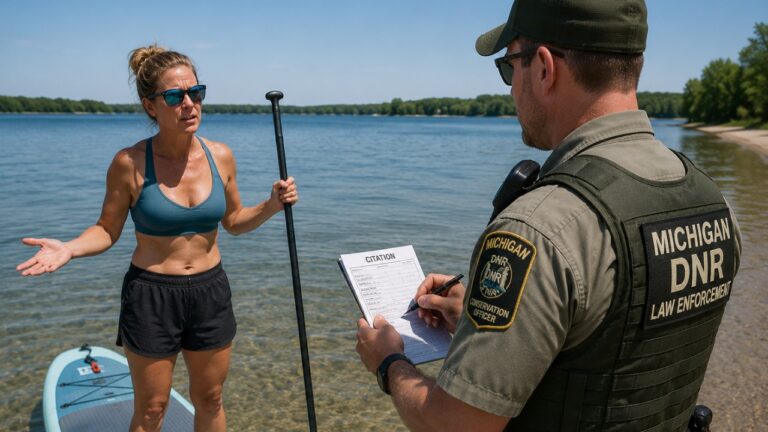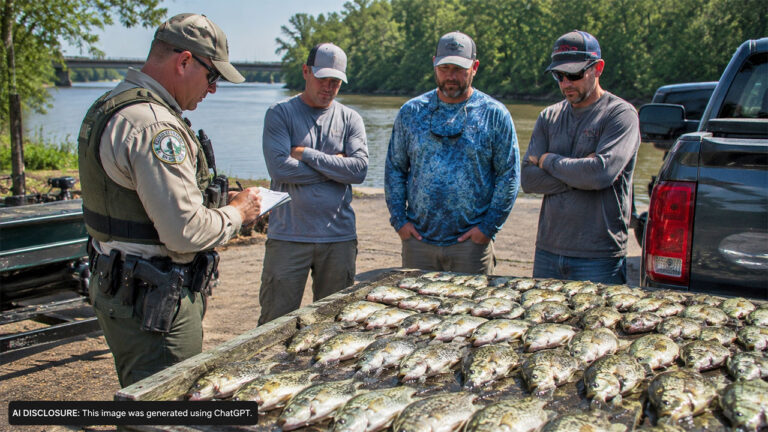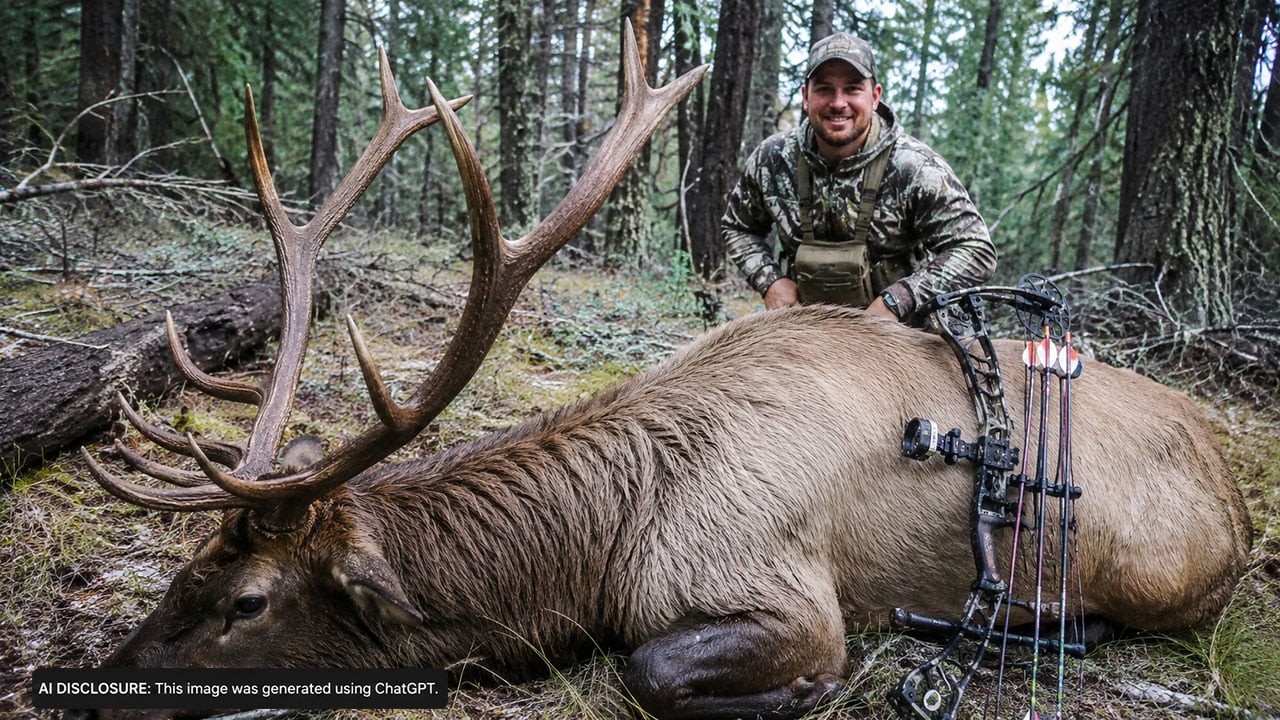
Photo credit: AI-generated image created using ChatGPT. Illustrative only
Every elk town has that one bull everyone talks about—the animal with the goofy, unmistakable rack that shows up just often enough to keep hunters dreaming. In North Idaho’s Wolf Lodge area, that was a trophy-class bull that locals had watched and pursued for years.
That bull is now the center of a felony conviction for a Coeur d’Alene man, and the detail that broke the case open wasn’t a boot print or a social media post. It was a bullet found in the hide. The Idaho Department of Fish and Game laid out the case in the original post, and it reads like a reminder that you can’t “stage” your way out of an illegal kill—especially when the physical evidence is literally stuck to the animal.
A famous bull, an archery-only season, and a rifle shot that didn’t belong
Idaho Fish and Game says Joel Rose, of Coeur d’Alene, illegally killed the bull elk with a rifle on Sept. 10, 2024, during an archery-only season. The kill happened near Rose’s residence on private property in the Wolf Lodge area of Kootenai County.
The bull wasn’t just another elk. Fish and Game described it as well-known and easily recognizable because of its unique antler configuration—an animal other hunters had been chasing for several years. That matters, because it means people were paying attention, and it narrows the odds that an illegal kill slips by unnoticed.
A tip kicked the whole thing loose
This case didn’t start with an officer randomly stumbling across a carcass. Fish and Game credits a tip submitted through the Citizens Against Poaching hotline for putting eyes on the situation.
That tip led to the discovery of a 6.5 mm bullet recovered from the hide of the elk, which is what “sparked the investigation,” in Fish and Game’s words. That’s a big deal in an archery-only season. If you’re doing things right, there shouldn’t be a rifle bullet anywhere in the picture—especially not in the animal.
The evidence didn’t match the story an arrow was trying to tell
Conservation officers executed a search warrant at Rose’s residence on Sept. 11, 2024, to collect evidence. What they found, Fish and Game says, pointed to a very specific sequence of events.
The investigation revealed the elk had been killed by two lethal shots from a rifle. After the animal was already dead, an arrow had been inserted into the carcass. That’s the kind of detail that hits hunters the wrong way, because it isn’t a “mistake in the moment.” It’s an attempt to make a rifle kill look like a legal archery harvest.
Fish and Game also noted that after the elk was killed with a rifle, Rose posed for photos with the elk with an arrow protruding from the carcass. If you’ve spent any time around hunting communities, you know how quickly those kinds of pictures get around—and how they can come back to haunt you when the rest of the facts don’t line up.
The rifle, the bullet, and what ballistics can prove
During the search, officers seized a 6.5mm Creedmoor rifle that Fish and Game said was equipped for long-range shooting and had a silencer for sound suppression. They also seized other evidence, including the elk’s antlers and meat, along with a bow and arrows.
Then came the part that’s hard to explain away: ballistic analysis. Fish and Game says the rifling characteristics from the seized rifle were consistent with the bullet recovered from the elk hide. In plain terms, it tied the projectile to the gun.
Hunters sometimes underestimate how “quiet” a crime isn’t once evidence gets handled correctly. A bullet recovered from a hide isn’t just a clue—it can be a fingerprint. And in this case, it appears to have been the hinge the whole case swung on.
A rut-time trophy target and the cost of crossing the line
Fish and Game also said additional evidence revealed Rose had been specifically targeting the trophy-class bull during the archery-only season, which overlaps the rutting period in North Idaho. That’s when those big, recognizable bulls are most vulnerable—more vocal, more visible, and often more predictable.
But the bigger point for anyone reading this is what Idaho law considers a felony in wildlife cases. Fish and Game stated that unlawful killing, possession, or wasting of wildlife becomes a felony when the damage assessment is more than $1,000.
Because this bull’s antlers scored greater than 300 inches under the Boone and Crockett scoring system, Idaho classified it as a “trophy” under state code, with an assessed damage value of $5,000. In other words: it wasn’t just an illegal elk. It was an illegal trophy elk, and the state put a number on it that pushed the case into felony territory.
After a two-day jury trial on June 26 and 27 in Kootenai County, Rose was convicted of a felony for the unlawful killing, possession, or wasting of wildlife. Sentencing is set for August.
What most hunters will take from this one
This isn’t the kind of story hunters like to read, but it’s the kind that sticks. The average archery hunter works for years to draw tags, learn a unit, get access, and then grind through September heat and broken sleep for a chance at any legal bull—let alone a 300-class animal.
What stands out here is how ordinary the enforcement side looks when it’s done right: a citizen tip, a recovered bullet, a warrant, a seized rifle, and a ballistic match. No drama needed. The evidence does the talking.
Fish and Game also used the case to remind people to report suspected wildlife crimes through the Citizens Against Poaching hotline. Whether you’re a hunter, a landowner, or just someone watching a well-known animal get chased year after year, that tip line is one of the few tools the public has to keep seasons meaningful and keep the honest folks from getting cheated.
In the end, an arrow stuck in a dead bull doesn’t make it an archery kill, and it doesn’t erase what a bullet can prove. This case shows how fast a trophy can turn into a felony when somebody decides the rules are for everyone else.
Like The Avid Outdoorsman’s content? Subscribe to our newsletter so you never miss an article.
Here’s more from us: