Photo credit: AI-generated image created using ChatGPT. Illustrative only
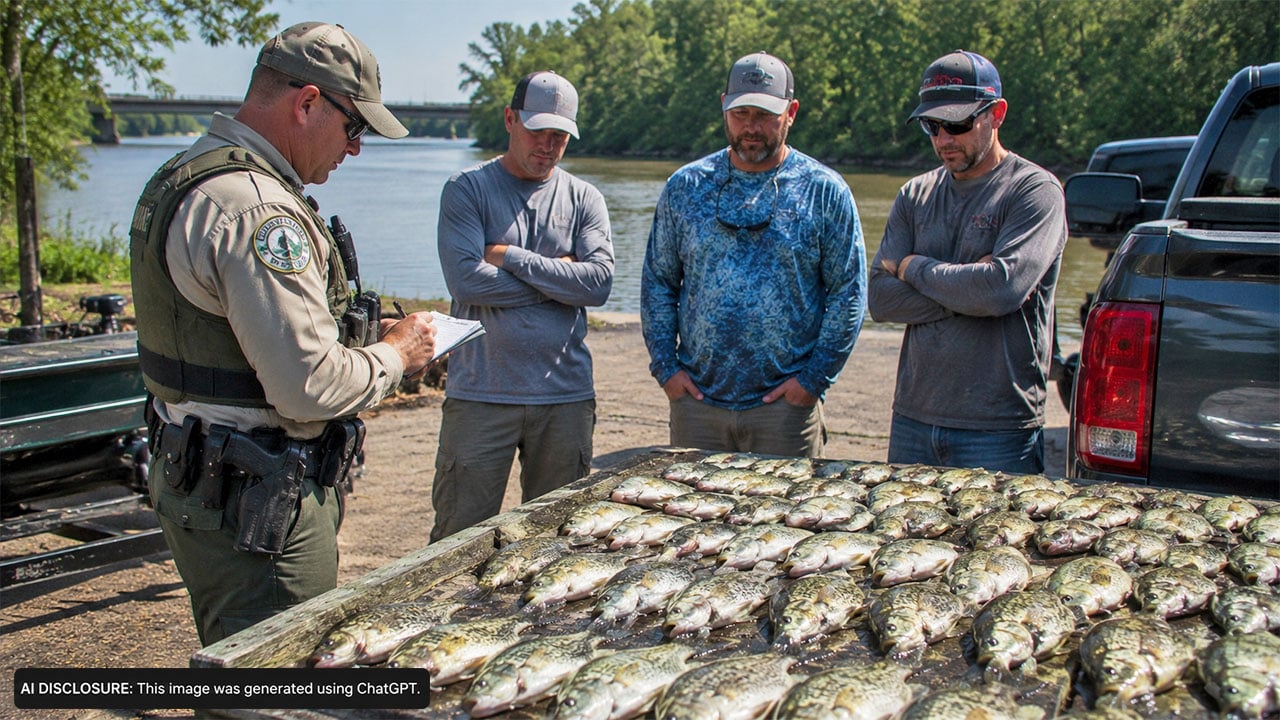
On the Neches River in Tyler County, a routine patrol turned into the kind of stop that every law-abiding angler hates to see happen to “their” fishery. A Texas Game Warden made contact with three fishermen after watching them work an area for a couple hours and then checking the boat before it left.
Details of the encounter were shared in the source post, and the story reads like a checklist of what not to do on a public river: too many fish, some of them short, and missing basic safety gear.
A warden heard a boat, then took the long way to a better look
Texas Parks and Wildlife officials said the warden was in the area listening for duck hunting activity when he heard a boat traveling upstream on the Neches. Instead of waving them down right away, he walked through nearby woods and got eyes on the anglers from the bank.
That detail matters, because it shows this wasn’t a quick “gotcha” at the ramp. The warden observed the three anglers actively fishing for about two hours before making contact, then waited until the boat was about to leave the area to conduct a resource and water safety inspection.
118 crappie in the boat, with 43 more than the legal possession limit
When the inspection happened, the group was found in possession of 118 crappie. Officials said that total included 43 fish over the legal possession limit, plus multiple undersized crappie mixed in.
This is where a lot of folks get tripped up—possession is possession. It doesn’t matter if the fish were caught one at a time, if the bite was “too good,” or if the plan was to “sort them out later.” Once you’re holding more than you’re allowed, you’re already on the wrong side of it, and the bigger the number gets the harder it is to explain away as a simple mistake.
Undersized fish added to the trouble
On top of being over the limit, the anglers were cited for possession of undersized crappie. That’s a separate problem from having too many fish, and it usually points back to one of two things: not checking length as you go, or deciding it’s easier to keep everything and worry about it later.
Either way, size limits exist for a reason. On crappie water, especially river systems that see pressure, keeping short fish can quietly eat into future quality. It’s not just about enforcement; it’s about protecting the next run of good slabs that everybody is chasing.
The stop also turned into a safety check—and the boat came up short
Officials said the group couldn’t produce required boating safety equipment, including life jackets, a fire extinguisher, and a certificate of number. That combination is a bad look, but it’s also a real safety concern on moving water.
The Neches isn’t a kiddie pond. Weather changes, current changes, and a simple mechanical problem can become a long day in a hurry. Having wearable life jackets on board and a serviceable extinguisher isn’t “rule-book stuff” for the sake of it—it’s the kind of gear that matters when something goes sideways.
Citations were issued, warnings were given, and the extra crappie went back
Texas Parks and Wildlife said each angler received citations for exceeding the daily possession limit and for possession of undersized crappie. The warden also issued warnings for multiple water safety violations, and warnings for failing to present a fishing license and identification when requested.
One point worth noting: officials said the 43 crappie that exceeded the legal limit were released back into the Neches River. That doesn’t erase the violations, but it does mean the fishery got those extra fish back instead of losing them to a bad decision.
What outdoorsmen should take from it before the next trip
This is one of those stories that’s easy to read and shake your head at—until you remember how fast “a good day” can turn into a cooler full of problems. If you’re chasing crappie, keep a running count that’s honest, not optimistic. If you’re fishing with buddies, talk about the limit at the start and decide who’s keeping what before the first fish hits the deck.
And don’t treat the safety gear like optional accessories. Before you ever leave the ramp, make sure you’ve got the required items on board and you can put your hands on them quickly. Game wardens check fish and they check safety, and on a public river you should assume you’ll be inspected sooner or later—because that’s how the resource and the people on it get protected.
Like The Avid Outdoorsman’s content? Subscribe to our newsletter so you never miss an article.
Here’s more from us: