Photo credit: AI-generated image created using ChatGPT. Illustrative only
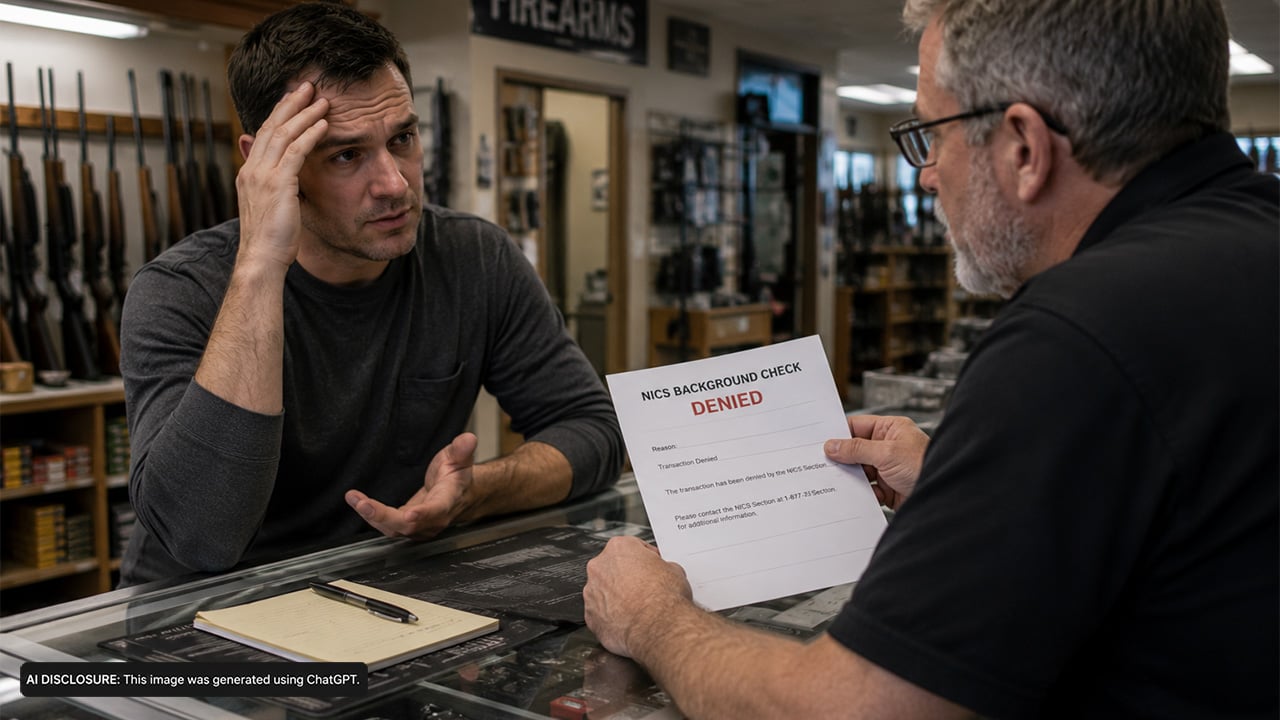
There’s a certain kind of frustration that only happens at a gun counter: you’ve got your paperwork in order, you’ve bought firearms before, and you’re just trying to do things the right way—then the background check won’t clear. That’s the spot one gun owner found himself in when he went to buy another firearm and was told the check “wouldn’t go through,” with the dealer suggesting it can happen when somebody has already tried to buy a gun using your name and information.
In the original post, the buyer said he already owned one pistol—a VP9 he purchased a few months earlier—so the sudden snag didn’t make much sense. The dealer’s advice was simple: come back the next day and try again. But the buyer’s bigger question was the one most outdoorsmen would ask in that moment: do you need to start the process for a UPIN?
A normal purchase turned into a hard stop at the counter
The buyer’s account was straightforward. He went in to purchase a gun, and the background check “wouldn’t go through.” No long story, no admission of trouble, just the kind of hang-up that leaves you standing there wondering what box got checked somewhere that shouldn’t have been.
What made it stand out was the explanation he got from the dealer. The dealer told him that, usually, this kind of issue can mean someone tried to buy a gun under his name and information—a “strawman” situation, in the words used in the post. Whether that’s the actual reason or a common shop explanation for an unclear delay, it got the buyer thinking about identity misuse instead of a simple paperwork hiccup.
Why the “someone used your identity” angle hits hard
If you’ve ever had a credit card number stolen, you know identity problems have a way of showing up at the worst times. But when the first sign is a blocked firearm purchase, it lands differently. It’s not just about money—it’s about your record, your rights, and the possibility that your name is attached to something you never did.
The dealer’s comment is the kind that makes a person replay the last few years in their head: where your information has been used, what forms you’ve filled out, and whether you’ve ever lost an ID or had documents copied. Even if the hang-up ends up being a simple delay, it’s a reminder that your personal information is worth protecting like your gear and your guns—because it can cause real-world trouble when it’s in the wrong hands.
He’d already bought a VP9 recently, which made the delay feel off
One detail the buyer included matters: he already owned a VP9 he purchased a few months earlier. That’s important because it suggests he’s been through the process successfully in the recent past. When something changes that quickly, most folks assume either (1) the system is having a day, or (2) something about your identity is getting confused with someone else’s.
Gun buyers who hunt, shoot, and live rural tend to plan purchases around seasons, trips, and budgets. A random delay isn’t just annoying—it can throw off training plans, carry plans, or a hunting setup if you were buying a specific gun for a specific job. Even if you’re not in a rush, it’s unsettling when a routine process suddenly becomes a question mark.
The dealer’s “come back tomorrow” advice is common—so is the uncertainty
The shop’s recommendation was to return the next day and try again. That’s a familiar script at many counters: sometimes the system delays, sometimes it clears later, and sometimes it doesn’t. From a practical standpoint, the dealer’s move gets the buyer out of the store without guessing too hard about the cause.
But that doesn’t answer the question every responsible gun owner wants answered: is this a one-off delay, or the start of repeated problems? When you’re told it “usually” means someone tried to buy under your information, you’re not going to sleep well just waiting for tomorrow’s attempt. You’re going to start looking for ways to get ahead of it.
UPIN came up for a reason: people want a way to stop repeat headaches
The buyer asked plainly whether he should get a UPIN number. That question tells you where his head was at: he didn’t just want tomorrow’s purchase to go through—he wanted a longer-term fix if his name was getting tied up in other people’s nonsense.
A UPIN is often discussed among gun owners as a way to help reduce repeated delays or mix-ups tied to similar names or identity confusion. It’s not something most folks think about until they’ve been burned once. And when the first warning sign is a failed or stalled background check, it’s natural to start looking for the tool that might keep it from happening every time you buy a gun.
What most gun owners do next when something feels wrong
The post shows a pretty normal progression: the buyer asked around, couldn’t get a solid answer, and started looking for a practical next step. That’s the outdoorsman mindset—don’t panic, don’t assume, but don’t ignore it either. When your name and firearm paperwork get tangled up, you want to handle it early, while it’s still just a delay at the counter and not a bigger mess.
The other piece here is simple common sense: keep your personal documents squared away. Make sure IDs are current, use consistent information on forms, and pay attention to where your personal details are shared. If a dealer suggests your identity may have been used, it’s at least worth taking seriously enough to watch for repeat issues and consider options—like a UPIN—if delays become a pattern.
In the end, this wasn’t a story about doing something wrong at the gun counter. It was about how fast a normal purchase can go sideways when the system can’t match you cleanly—or when someone else has tried to ride on your identity. If you ever find yourself in the same spot, the best move is the same one you’d make with a questionable trail camera photo on your property: document what you can, keep your head, and take the next step that reduces the chances of it happening again.
Like The Avid Outdoorsman’s content? Be sure to follow us.
Here’s more from us: