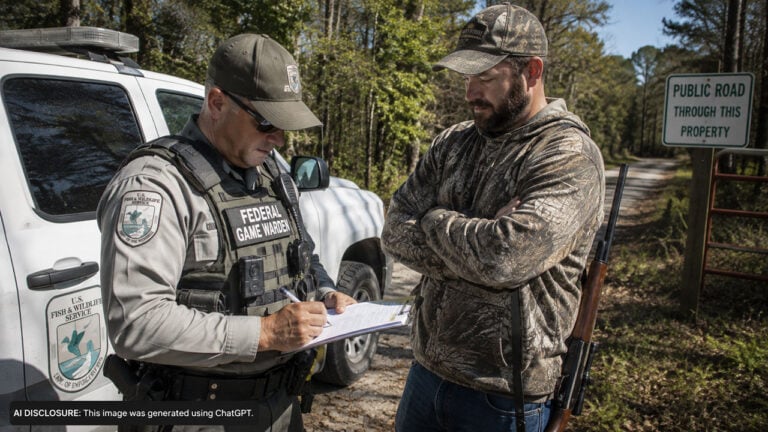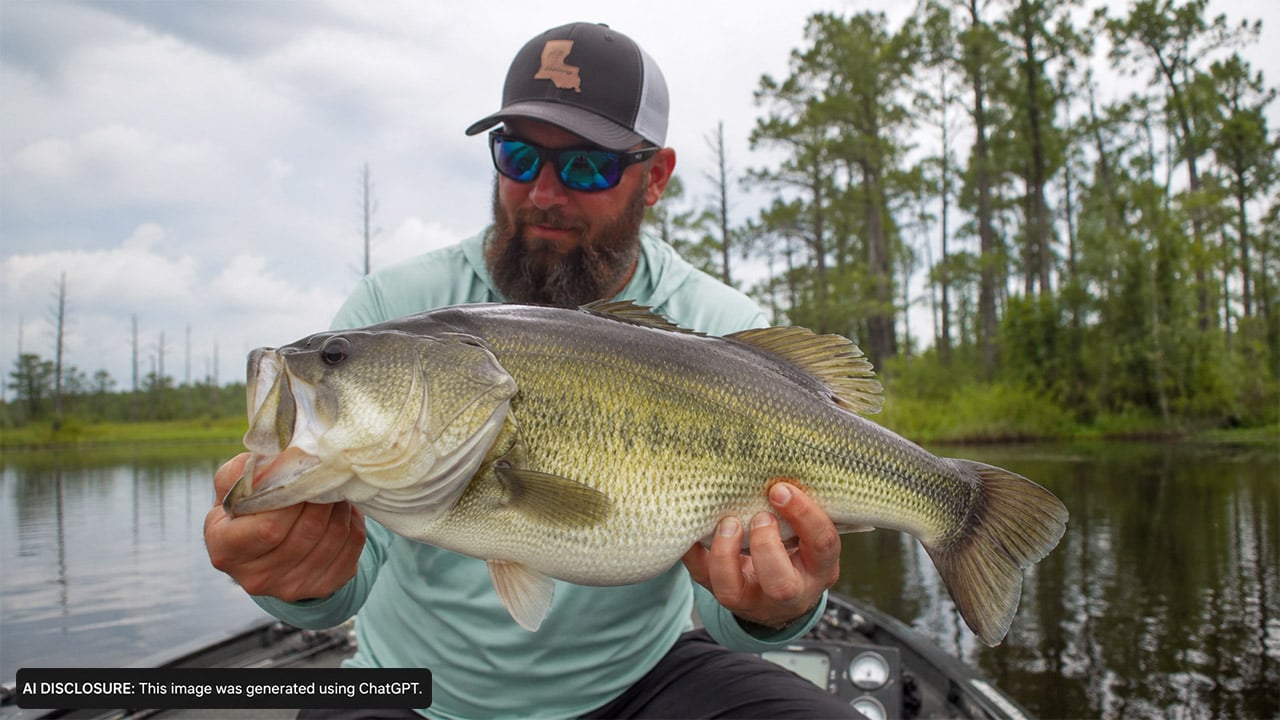
Photo credit: AI-generated image created using ChatGPT. Illustrative only
Most bass anglers know the feeling: you finally stick a true giant, your hands are shaking, and all you can think about is getting a weight and a picture before she goes back. In Louisiana, one man’s big-bass moment is now tied to felony charges after agents say he tried to cash in on a free replica program using the wrong lake.
Details in the source post outline how a catch that was allegedly made on Vernon Lake ended up submitted to the Toledo Bend Lake Association’s Lunker Bass Program—a Toledo Bend-only program that rewards anglers for catching and releasing heavy bass.
How the free-replica program works (and why the lake matters)
The Toledo Bend Lake Association’s Lunker Bass Program is straightforward: catch a bass weighing at least 10 pounds on Toledo Bend Lake, keep it alive, and bring it to a certified weigh station. If everything checks out, the program provides a free fiberglass replica so the angler can have a “mount” without killing the fish.
But that deal depends on trust and documentation. The program requires the angler to sign official paperwork verifying the location, date, and time of the catch. That lake detail isn’t a technicality—it’s the entire point of a Toledo Bend-based conservation and promotion program.
Agents say they saw the fish before the program post ever went up
According to the Louisiana Department of Wildlife and Fisheries, agents were patrolling at the Hickory Ridge launch on March 15 when they saw Jody Kyle Jeane, 40, and another man loading a bass boat onto a trailer. Jeane allegedly offered to show the agents a 12-pound bass he’d caught, describing it as his personal best and saying he planned to have it mounted.
That’s the kind of dock talk game wardens hear every spring. The difference here is what happened the next day.
A social media photo and “unique tail markings” tied it together
The day after the boat-ramp encounter, agents saw a social media post from the Lunker Bass Program showing a photo of Jeane posing with a big bass. Agents said they recognized it as the same fish based on unique tail markings, and they also noted he was wearing the same clothes.
That detail matters because this isn’t an accusation built on rumor or someone being jealous over a big fish. The agents reportedly believed they could identify the fish itself, then connect that fish to the earlier conversation at the launch.
The allegation: a Vernon Lake bass entered as a Toledo Bend catch
Louisiana wildlife agents allege Jeane caught the fish on Vernon Lake but submitted it to the Toledo Bend Lake Association’s Lunker Bass Program anyway. The key accusation is that he signed official documentation falsely claiming the bass was caught on Toledo Bend Lake.
In other words, the case isn’t about whether he caught a trophy bass. It’s about using paperwork to place that fish in a program where it didn’t qualify—then attempting to receive something of value (the free replica) based on that claim.
Forgery and attempted theft: the stakes got big in a hurry
Agents obtained an arrest warrant for forgery and attempted theft, and Jeane was booked into the Vernon Parish jail on April 1, according to the report. He is now in custody in Sabine Parish.
The penalties described in the story are what will make most outdoorsmen sit up straight. Attempted theft carries up to a $1,000 fine and six months in jail. Forgery carries up to a $5,000 fine and up to 10 years in jail. That’s a steep price tag for what some folks might mistakenly view as “just a fish story.”
What outdoorsmen will take from this: paperwork counts, and programs will protect themselves
This is one of those situations where the practical lesson is boring—but it’s also the lesson that keeps you out of trouble. Anytime you sign “official documentation” tied to a state-regulated activity or a program with strict rules, treat it like a legal document. Because it is.
The Toledo Bend Lake Association also indicated there may be a possibility going forward that anyone submitting an entry to the TBLA Lunker Program could be subjected to a polygraph “if deemed necessary.” Whether you love or hate polygraphs, that kind of response tells you how seriously these organizations take the integrity of their programs.
Most anglers would rather see a big bass swim off than turn into a courtroom problem. If you land a trophy on a lake that isn’t eligible for a particular reward program, the simple play is to celebrate the fish for what it is—your personal best—and get your replica made the old-fashioned way, on your own dime. That option costs money, but it doesn’t cost your freedom.
Like The Avid Outdoorsman’s content? Subscribe to our newsletter so you never miss an article.
Here’s more from us: