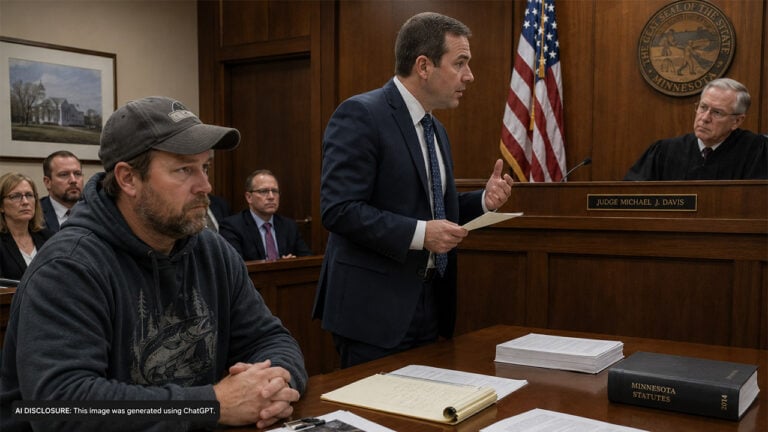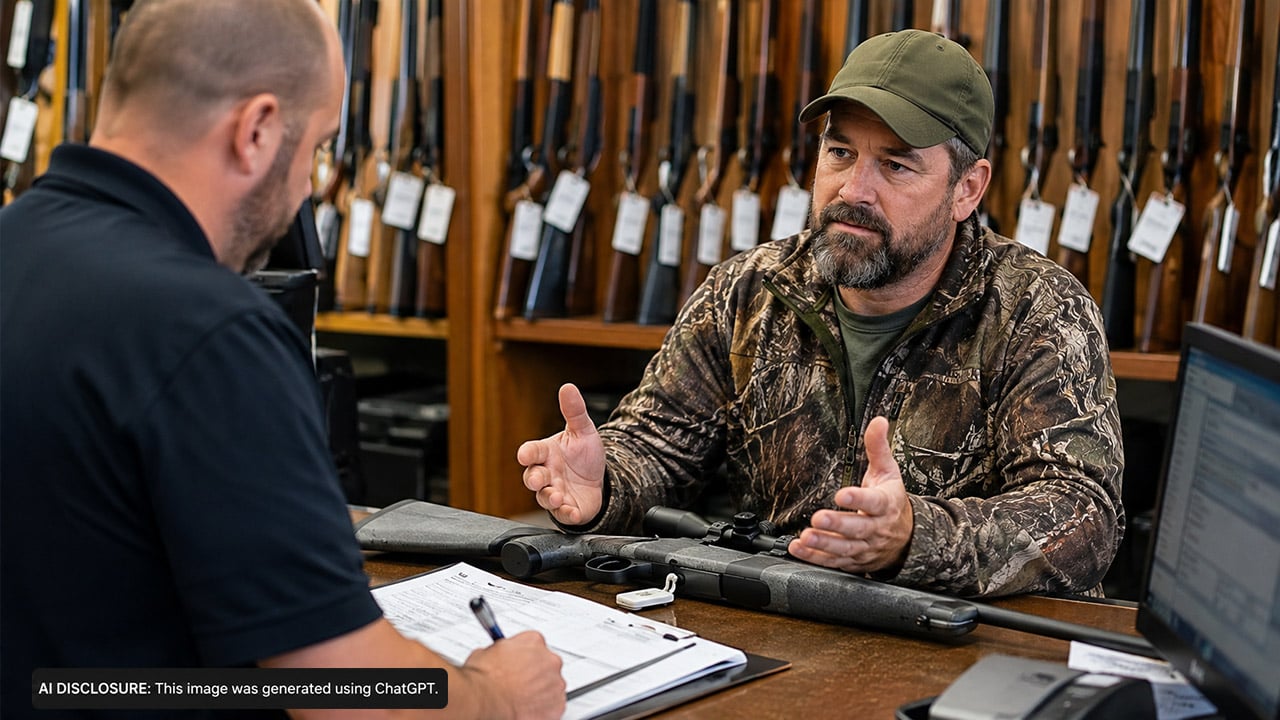
Photo credit: AI-generated image created using ChatGPT. Illustrative only
Buying a rifle should be straightforward: do the paperwork, clear the background check, pay the man, and head to the range or the deer woods. But one hunter’s purchase turned into a mess when a simple documentation mistake led to a denial, an appeal that went his way, and then a dealer who still wouldn’t complete the transfer. The account was shared in the original post, and it’s the kind of situation that can leave any law-abiding buyer feeling stuck.
The buyer said he’s a non-immigrant visa holder and had a valid hunting license, which matters because it can be part of the exception that allows certain non-immigrant visa holders to purchase firearms legally. He brought his documentation to a local gun shop to complete the transfer. That’s when the trouble started.
A small paperwork miss turned into a hard “deny”
According to the buyer, the local gun store failed to attach his hunting license to the “additional file” needed for the transfer. Two days later, the background check came back denied.
If you’ve been around gun counters long enough, you know how fast a “deny” changes the whole mood. Whether it’s a name mix-up, a bad box checked, or missing supporting documents, a denial is a dead stop—and it can take the fun right out of a purchase you might have planned for weeks.
The appeal went fast—and it flipped the outcome
The buyer said the appeal process was “smooth,” and he overturned the denial within four days. That’s a quick turnaround compared to what many folks expect when government paperwork gets involved.
From a practical standpoint, this is the part that’s easy for hunters to understand: he did what he was supposed to do to clear his name and get the transaction back on the rails. He wasn’t trying to skirt anything. He went through the process and got the denial reversed.
Even with the reversal, the shop wouldn’t transfer the firearm
Here’s the part that will get most gun owners shaking their heads. Even after the buyer said he had the denial overturned, the dealer reportedly “seems to not be willing to transfer” the firearm and told him to return it.
Like the buyer acknowledged, a gun store can refuse service. But in real life, that doesn’t make the situation feel any less wrong when the hang-up started with the shop’s own paperwork mistake. The buyer’s frustration boiled over because he believed he was paying the price for an error he didn’t make.
The transfer fee became another point of friction
To make it worse, the buyer said the shop still wanted its $40 transfer fee, even though the denial and the extra hassle were tied to the missing hunting license attachment. For working folks, $40 isn’t life-changing, but it’s enough to feel like you’re being charged for someone else’s bad day at the counter.
Transfer fees are common and fair when the transfer is handled cleanly. But when a transfer derails over an avoidable shop-side oversight, that fee starts to feel less like “the cost of doing business” and more like salt in the wound.
The dealer shipped the firearm back without consent, and the buyer faced a restocking policy
In an update, the buyer said the shop returned the firearm to Aero without his consent. He added that the shop at least dropped the “no transfer” fee issue, but now there would be a 30% restocking fee for FFL items due to Aero’s policy.
That’s the real-world punch in the gut: even when you win the appeal, you can still lose money and time if the firearm gets shipped back and the seller’s policies kick in. A restocking fee isn’t unusual in the online gun-buying world, but 30% can turn an already stressful situation into a costly one.
What hunters and gun buyers can take from this
This kind of problem is exactly why seasoned buyers treat firearm paperwork like they treat tag soup and boundary lines—slow down and verify. If your purchase involves special documentation, don’t assume it’ll be handled correctly just because you handed it over at the counter.
One of the simplest habits that can save headaches is asking the clerk, politely but directly, to confirm the required documents are attached and noted before anything is submitted. If the shop has a process for scanning or copying paperwork into a file, it’s not out of line to ask what was included. You’re not trying to be difficult—you’re trying to avoid a denial that can jam up your life, even if it gets overturned later.
The other lesson is to understand the human side of gun retail. A shop can decide it doesn’t want to proceed with a transfer, even if you’ve cleared the legal hurdle. That may not feel fair, but it’s the reality in many places. When you’re choosing an FFL to receive a firearm, reputation matters. A good dealer is worth driving past three other shops to use, especially when your purchase isn’t a basic “walk in and buy” transaction.
At the end of the day, the buyer did what most hunters would do: he followed the rules, appealed the denial, and got it corrected. The hard part is learning that a corrected denial doesn’t always put the rifle in your hands—especially when a shop decides it’s done with the deal and a return shipment triggers the seller’s restocking policy.
Like The Avid Outdoorsman’s content? Subscribe to our newsletter so you never miss an article.
Here’s more from us: