Photo credit: AI-generated image created using ChatGPT. Illustrative only
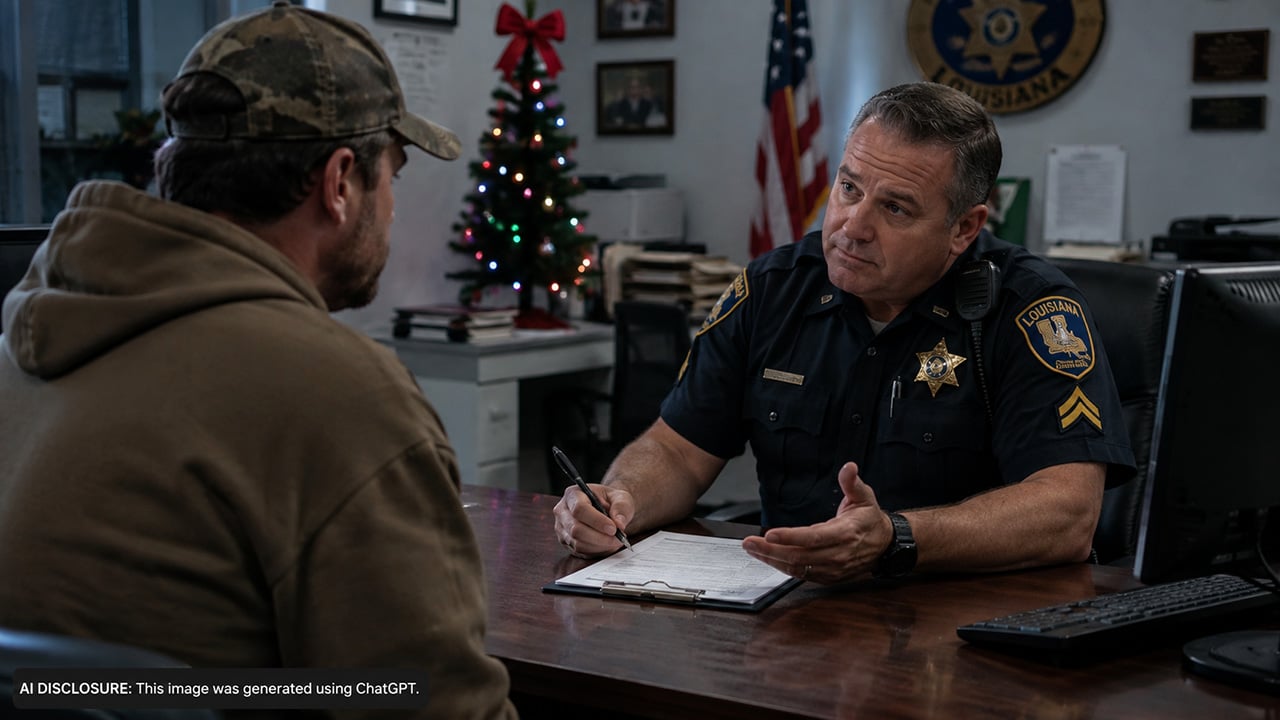
Having a gun taken out of your vehicle is the kind of gut-punch that sticks with you. In this case, a Louisiana gun owner did what most responsible folks would do after a holiday-time smash-and-grab: he reported it stolen, got a police report, and tried to make sure he wouldn’t be tied to whatever happened next.
He also didn’t expect the story to turn around. The officer taking the report told him he doubted he’d ever see the gun again, but months later a detective called with unexpected news: the stolen firearm had been recovered from someone who’d been arrested. The details were shared in the original post, along with the problem that followed—getting the gun back might now take a lawyer and a court motion.
The theft was bad enough, but the paperwork mattered
A lot of outdoorsmen treat a “truck gun” like just another tool—until it’s gone. When this gun was stolen out of the owner’s car around the holidays, his first priority wasn’t just replacing a $600 firearm. It was making sure there was a clear paper trail.
That’s a real-world concern for any gun owner. If a stolen gun turns up later in a crime, you want to be the guy who reported it, not the guy trying to explain why he didn’t. He went through the reporting process and got the police report specifically so he wouldn’t wind up being investigated for something he didn’t do.
The officer’s reaction is what most people hear
Anybody who’s ever had gear stolen—guns, chainsaws, four-wheelers, you name it—has heard some version of the same line: “You probably won’t see it again.” It’s not always said to be rude. It’s often just the reality of how quickly stolen property changes hands and disappears.
That comment set the tone for how the owner viewed the loss. He assumed it was a lost cause and mentally wrote it off, the same way a lot of folks do when a theft doesn’t have an obvious suspect or a clean lead.
Then the detective called: the gun was recovered
What changed everything was a phone call about two weeks before he posted. A detective told him someone had been arrested and the stolen gun was found in that person’s possession.
That’s the moment most gun owners imagine ending with a simple handoff: show your paperwork, prove it’s yours, take it home. Instead, the detective pointed him toward the local district attorney’s office, which is where the process started to feel less like common sense and more like red tape.
The DA’s office said a lawyer and a motion might be required
When the owner contacted the DA’s office, he was told that a “recent-ish change” to Louisiana gun laws meant he now needed a lawyer to file some type of motion in order to get his gun back. That’s a hard pill to swallow when the firearm is already confirmed stolen and already recovered.
From a practical standpoint, it creates a second hit to the wallet. The gun cost around $600, and his big question wasn’t political or philosophical—it was basic math: if attorney fees and court costs are more than the gun is worth, does it even make sense to chase it?
It also puts gun owners in an awkward spot. Most people are fine jumping through reasonable hoops to prove ownership and keep firearms out of the wrong hands. But having to hire a lawyer just to retrieve your own property—after you did everything right—feels like getting punished twice.
Why recovered firearms can get stuck in the system
Even without getting deep into legal weeds, it helps to understand why the system sometimes clamps down when a firearm is evidence. If the gun was recovered during an arrest, it may be tied to an open case, pending charges, or an evidence hold. That can freeze property until a judge or prosecutor is satisfied it’s no longer needed.
On top of that, agencies and DA offices often want a court order before releasing a firearm, even to the rightful owner. It’s partly liability and partly procedure—making sure the person picking it up is legally allowed to possess it, and making sure the release won’t interfere with whatever case is being built.
The owner in this situation wasn’t trying to skirt anything. He was trying to understand what “a motion” even means in plain English, and what it typically costs when a lawyer has to get involved.
The real-world lesson for gun owners: prevention, documentation, and expectations
This kind of story lands close to home because it’s not about some exotic scenario. It’s about a gun left in a vehicle around the holidays—exactly the season when parking lots fill up, people travel, and thieves go shopping.
The prevention side is the obvious one: don’t leave guns in vehicles if you can help it, and if you must, lock them up in a vehicle-safe and keep them out of sight. A smash-and-grab thief isn’t looking for a fair fight—he’s looking for easy.
The second part is documentation. The reason this owner had a fighting chance at all is because he reported it stolen and had the report on record. In the real world, having your serial number recorded, keeping purchase info, and getting that report filed quickly can be the difference between “we think it’s yours” and “prove it.”
And finally, expectations: even when law enforcement recovers a stolen gun, getting it back may not be quick or cheap. The call from a detective feels like the finish line, but for some folks it’s the start of a new process—one that can involve prosecutors, evidence rules, and yes, sometimes paying an attorney to ask a judge for the release.
If there’s a silver lining here, it’s that the gun was recovered at all, which doesn’t always happen. But the frustration is understandable: you do the responsible thing, you get told you’ll never see it again, and when you finally do get good news, you find out there may be another bill waiting on the other end.
Like The Avid Outdoorsman’s content? Be sure to follow us.
Here’s more from us: