Photo credit: AI-generated image created using ChatGPT. Illustrative only
Most days, magnet fishing turns up the usual river-bottom junk: rebar, old tools, maybe a bike frame if you’re lucky. But every now and then, you drag up something that changes the whole feel of the outing in a hurry.
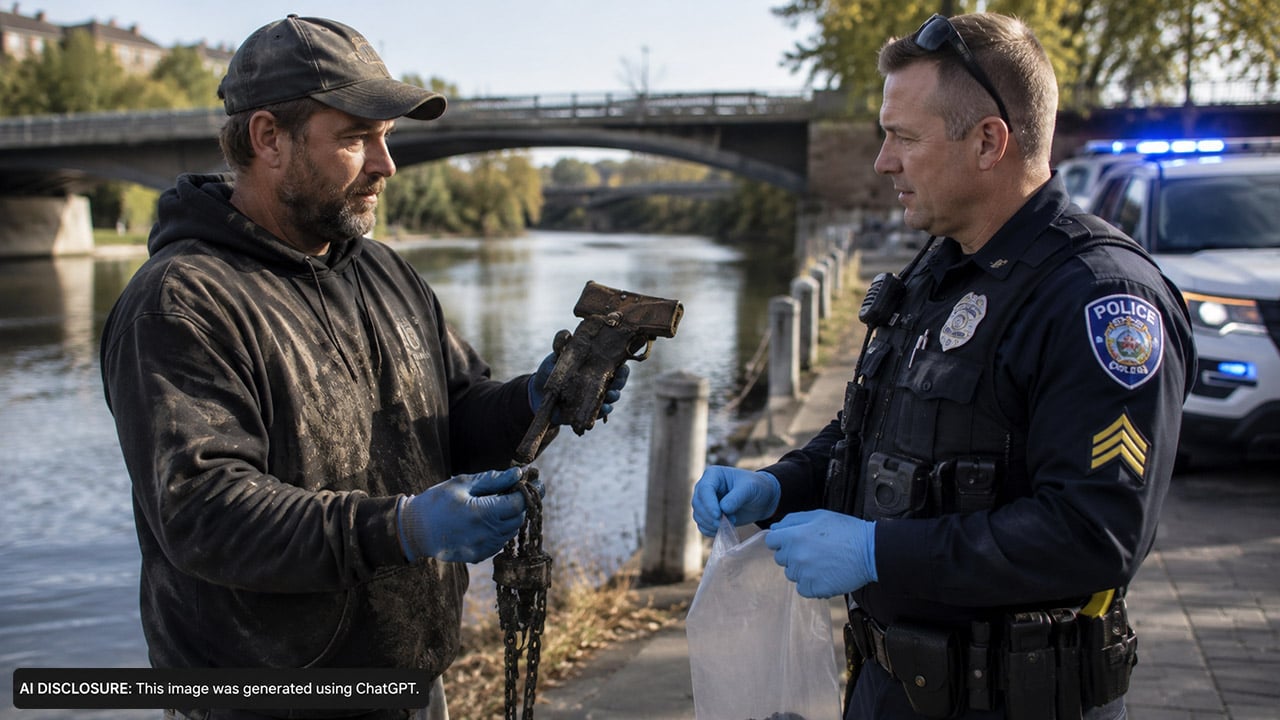
That’s what happened to one magnet fisherman who shared the original post after pulling a firearm from the water—what he and others believed to be a WWII-era CZ-27 pistol—still sitting in its holster. After filming the find, he decided to hand it over to police “just to be safe.”
A routine magnet-fishing trip turned into a serious find
The post describes the discovery happening “a few months ago” during a normal magnet-fishing session. Instead of another chunk of scrap, the magnet brought up a handgun that appeared to be a CZ-27 from the WWII era, and it wasn’t loose in the mud—it was still in its holster.
That detail matters. A holstered pistol suggests it may have gone into the water as a complete package, not as random parts tossed overboard. It also means you’re handling more than corroded metal; you’re dealing with an object that could still have a loaded magazine, a live round, or evidence tied to who it belonged to and why it ended up there.
Why an old river gun can still be dangerous
Folks hear “WWII-era” and think “museum piece,” but age doesn’t automatically make a firearm harmless. Waterlogged guns can be unpredictable. Springs rust into odd positions, debris jams actions, and mud can hide a live cartridge like it’s glued in place.
Even if it’s in rough shape, treating it like it could fire is just plain common sense. And in the real world, the bigger risk is often what you can’t see: a loaded chamber, a compromised holster that lets the trigger snag, or someone handling it like it’s a trophy instead of a potential hazard.
The holster adds another layer—history and possible evidence
A pistol still holstered isn’t just a cool detail for the camera. Holsters can preserve markings and serial numbers better than an exposed gun would, and they can also hold onto other clues—wear patterns, straps, or even items tucked inside.
On top of that, a holster is a signal the gun may have been carried intentionally. Sometimes that points to nothing more than a lost sidearm. Other times, it’s exactly the kind of find that law enforcement would want to document properly, even if it turns out to be old and unrelated to anything current.
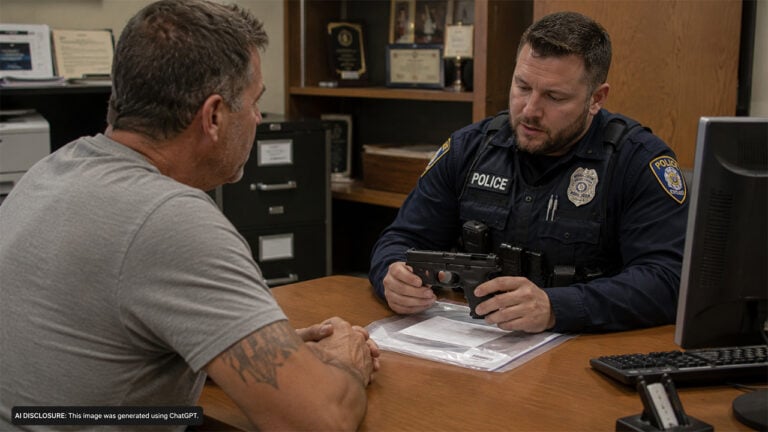
Turning it over to police was the smart “keep it simple” move
In the post, the magnet fisherman said that at the end of the video he decided to hand the gun into the police “just to be safe.” That’s the decision that keeps a fun hobby from turning into a mess.
From a practical outdoorsman’s standpoint, there are a few reasons that choice makes sense. First, it removes the immediate safety risk—no guessing games about whether it’s loaded or stable. Second, it avoids the headache of being the guy driving around with a recovered firearm of unknown status. And third, if it does have any investigative value, it stays in the right hands instead of bouncing around in someone’s truck, shop, or garage.
If you ever pull up a firearm while magnet fishing, here’s the common-sense play
This isn’t complicated, but it does require discipline. If you bring up a gun—especially one that’s still holstered—don’t start trying to “see if it works,” don’t try to clean it on the bank, and don’t treat it like a collectible you just scored.
Handle it as little as possible and keep it pointed in a safe direction the whole time, even if you think it’s seized up. The safest route is what the poster did: contact local law enforcement and let them decide what needs to happen next. Policies vary by area, but the goal is the same everywhere—reduce risk, avoid bad decisions, and document the find the right way.
Magnet fishing is a good way to clean up waterways and scratch that treasure-hunter itch. But when the “treasure” is a pistol from the bottom of a river, the win isn’t keeping it—it’s making the safe call and walking away without turning a hobby into a problem.
Like The Avid Outdoorsman’s content? Be sure to follow us.
Here’s more from us: