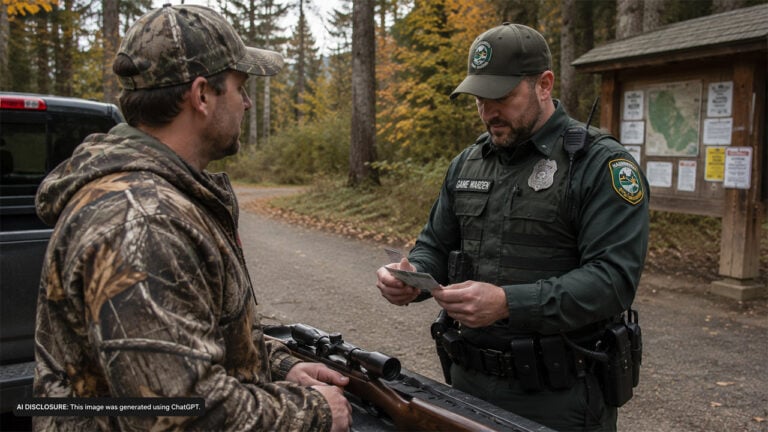
Photo credit: AI-generated image created using ChatGPT. Illustrative only
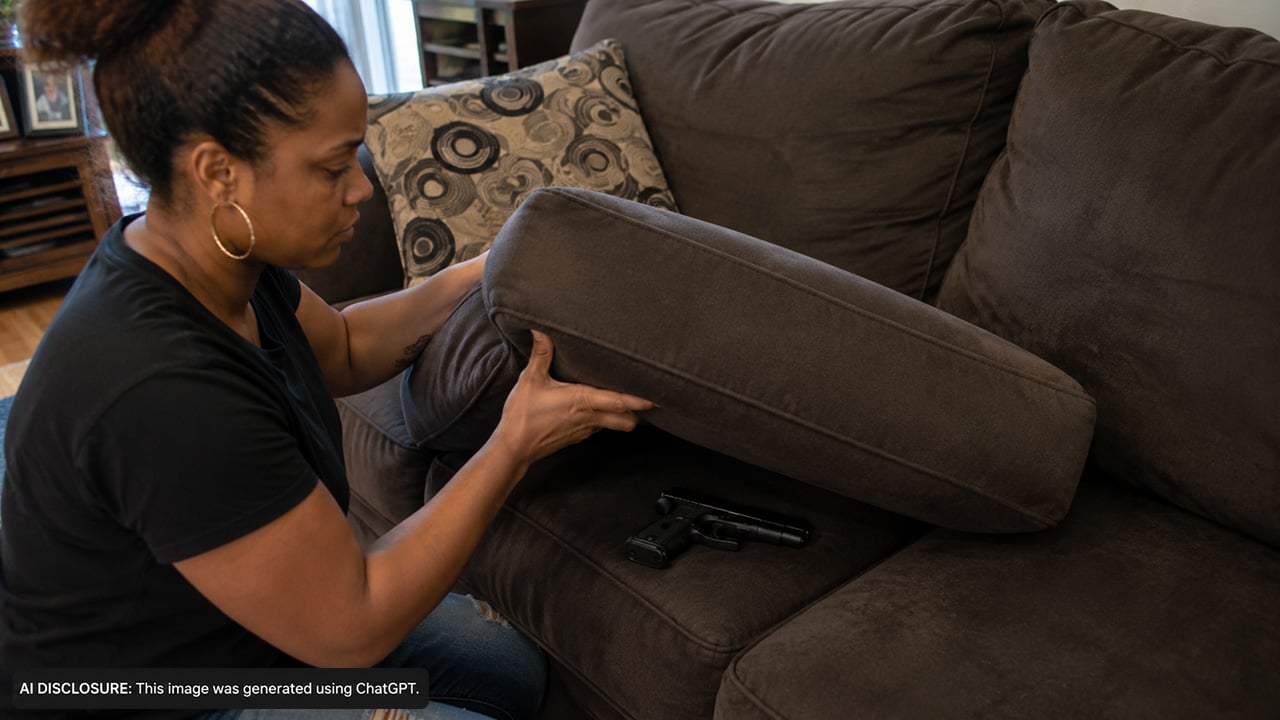
Picking up kids at an ex’s place is already a situation that calls for a steady head. But one Georgia parent says it took a hard turn when she went into her ex’s bedroom and found a loaded handgun tucked under a couch cushion—easy enough for an adult to stumble onto, and potentially easy enough for a child to find too. In her mind, it wasn’t just sloppy storage. It felt like something darker.
In the source post, the mother said she suspects her ex is “holding” the gun for her boyfriend, who she believes is dealing drugs. That suspicion is what pushed her from “this is unsafe” into “this could be evidence,” and she asked what she could do if the gun was still there the next time the kids stayed over.
A loaded handgun under a cushion isn’t “hidden,” it’s accessible
Folks who live with firearms tend to understand a simple truth: kids are curious, and couches get jumped on. A pistol under a cushion isn’t locked up, isn’t controlled, and isn’t even reliably “hidden.” It’s just waiting for the wrong set of hands.
That’s what makes this situation different than an argument about gun ownership in general. This wasn’t a safe, secured firearm in a home with a plan. This was a loaded gun placed where it could be found by accident, during normal life, in a house where children are coming and going.
She suspected the gun was tied to drugs—and maybe a violent crime
The mother said she thinks her ex is keeping the gun for her boyfriend and believes he’s involved in drug dealing. With that, she also said she thinks there’s a “good chance” the firearm could have been used in a crime.
That’s a heavy suspicion to carry around, especially when your kids are sleeping under the same roof. Even if the gun had nothing to do with anything else, her concern was that it was sitting there loaded, unsecured, and close enough for a child to find as easily as she did.
The toughest part: wanting proof without making things worse
In plain language, her question boiled down to this: if the gun is still there next time, how can she get evidence her lawyer can use? That’s a normal instinct—people want documentation when custody and safety are on the line.
But there’s a razor edge here. Going back into someone else’s private space to “get evidence” can turn into its own mess fast, especially if it looks like snooping, trespassing within the home, or tampering. And if the firearm truly is connected to criminal activity, the last thing a parent needs is a confrontation or a misunderstanding that escalates in front of the kids.
Calling law enforcement: what she was really asking
She also asked the most practical question in the whole post: should she call the police, and if so, what does she say? That’s the point where the situation stops being about winning an argument and starts being about immediate safety.
If you’re a gun owner, you know there’s a difference between “I don’t like guns” and “there’s a loaded firearm unsecured where children can access it.” One is an opinion. The other is a safety complaint. When kids are involved, that distinction matters, because the priority is removing risk—not scoring points.
For outdoorsmen and parents: the real lesson is safe storage, every time
This story hits a nerve for anyone who keeps firearms around a family. Most of us grew up with guns in the house and turned out fine because there were rules, habits, and usually a locked cabinet, safe, or at minimum a consistent storage routine. A loaded handgun under a couch cushion isn’t a “routine.” It’s negligence.
If you’ve got kids in your home—even part time—your setup needs to be boringly solid: locked storage, controlled access, and a plan that doesn’t depend on memory or “they’ll never look there.” Kids look everywhere. And when custody schedules, visitors, and new relationships enter the picture, the standard has to go up, not down.
For the Georgia mother in this situation, the fear wasn’t just that there was a gun. It was that the gun was loaded, unsecured, and possibly tied to dangerous people and dangerous choices. When you’re trying to co-parent, you can’t control what an ex does—but you can take safety seriously, avoid direct confrontation, and lean on the proper channels when something crosses the line into immediate risk.
Like The Avid Outdoorsman’s content? Be sure to follow us.
Here’s more from us: