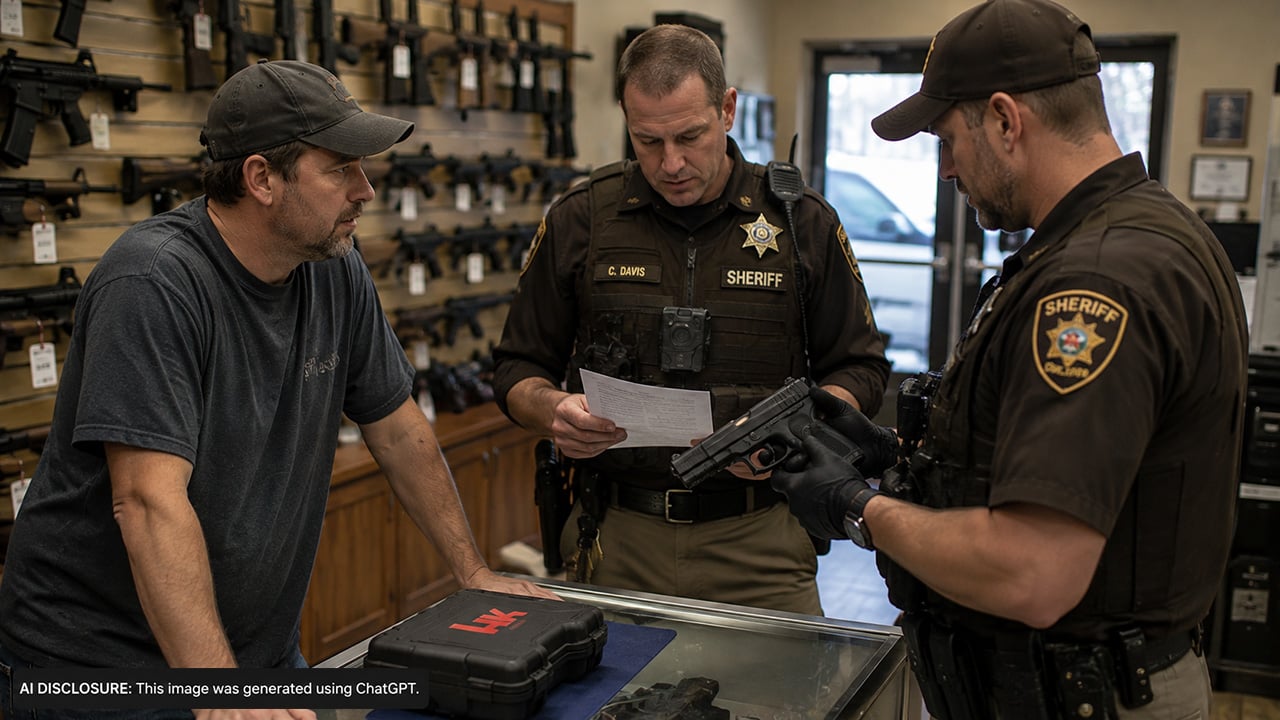
Photo credit: AI-generated image created using ChatGPT. Illustrative only
Buying a used carry gun from a shop you trust is supposed to be the easy route. You pay your money, do the paperwork, and go home with a pistol that’s already proven it can run.
But one buyer’s experience with a used HK P30 shows how fast that “safe” purchase can turn into a mess, even when you try to do everything right. The details come from the original post, where the buyer laid out a timeline that’ll make any gun owner double-check their own habits.
He did the serial number check before buying
The buyer picked up a used HK P30 at a local store he described as reputable. The shop owner had bought the gun from someone who had sold them multiple firearms before, without any issues, so there were no obvious red flags.
Still, the buyer didn’t just rely on reputation. Before buying, he contacted the Sheriff’s Office with the serial number to verify it wasn’t stolen, and he was told it was clean. That’s a step a lot of folks talk about doing, but not everyone actually does.
Two days later, the Sheriff came to take it
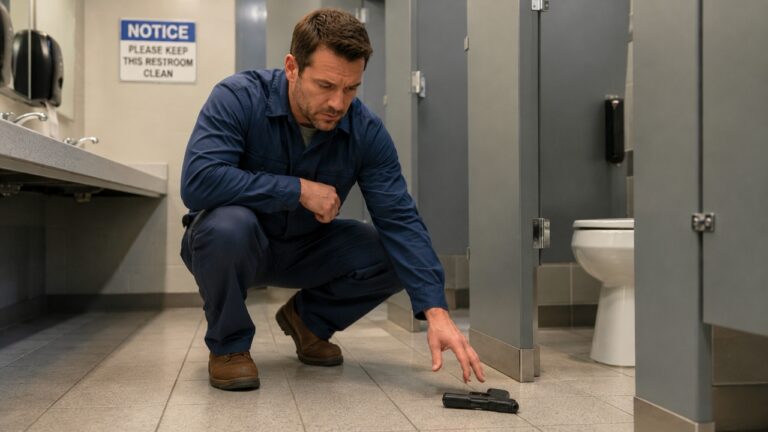
Just two days after the purchase, the local Sheriff showed up and confiscated the pistol, saying it had been reported stolen. The buyer’s frustration was straightforward: he felt like he’d covered his bases, and now he was out the gun and $650.
From his perspective, the situation didn’t just feel unfair—it felt like the rules changed after he followed them. It’s also the kind of experience that makes people wonder what “checking the serial number” really accomplishes if a report can come in right after the sale.
The handoff happened fast, and documentation got missed
In an update, the buyer clarified how law enforcement got involved with him directly. The Sheriff’s Office contacted the gun store about the firearm, and the gun store provided the buyer’s contact information.
The Sheriff called and left a voicemail. When the buyer called back, he was told the Sheriff was at the buyer’s house to see if he was home. The buyer said he was at school carrying the pistol (which he noted was legal where he attends because he has a CCW license). The Sheriff then came to the school and reclaimed the pistol from him, and later that evening came back to retrieve the other two magazines that had been sold with it.
The buyer said he wasn’t given a receipt or case number at the time, and it slipped his mind to ask because it happened quickly. That right there is one of those real-world moments you can picture: you’re trying to be cooperative, you’re caught off guard, and paperwork becomes an afterthought—until it isn’t.
The shop’s response mattered, and it turned the temperature down
After the confiscation, the buyer contacted the shop owner. The owner apologized and told him they’d wait a few days to see how the investigation shook out, in case there was a chance the gun could be returned.
The buyer didn’t want a refund at first because the deal was strong: $650 for an immaculate HK P30, plus an Alien Gear holster and three magazines. Still, the shop owner offered a full refund if the pistol couldn’t be returned, which is exactly the kind of customer-service move that separates “reputable” from “we sold it, not our problem.”
A possible deployment-related sale added a layer of complication
A later update suggested the case might not be a simple theft in the usual sense. After a brief conversation with a different deputy, the buyer was told it may have involved the original owner’s spouse or family member selling the firearm while the owner was deployed.
The buyer noted he’s active duty himself and could sympathize with the original owner if that was true. It’s also a reminder that “stolen” can sometimes mean “sold without permission” or tied up in a family dispute, and that can still land the gun back in law enforcement’s hands while it gets sorted out.
What gun owners tended to focus on: proof, receipts, and who makes it right
Even without a blow-by-blow of every outside opinion, the pressure points in this situation are obvious to anyone who has bought, sold, or carried guns for long. First is documentation: when a gun is seized, you want a receipt or case number, and you want it immediately. Not because you’re trying to be difficult, but because memories fade and shifts change—and you need a clean trail showing what was taken (including magazines) and by whom.
Second is the chain of responsibility. The buyer did a pre-check and bought from a shop he trusted, yet he still ended up without the gun. That leaves the practical question most gun folks would ask: if the firearm can’t be returned, who eats the money? In this case, the shop stepped up, which is a big deal. Plenty of outdoorsmen have seen the opposite happen with used gear, from rifles to boats: once it walks out the door, the seller suddenly stops answering calls.
In the end, the shop went above and beyond
In the final update, the buyer said that after speaking with the Sheriff, he realized he was “99%” not getting his firearm back. He stopped by the store, and the owner took the long view.
The shop ordered him a brand new HK P30 V3 and waived the difference in cost. He’d paid $650 for the used pistol, and new ones run around $950, but the shop made him whole with a new gun rather than just cutting a refund check. The buyer also mentioned he was planning to put a down payment on an M1 Garand the shop had in stock after he picked up his new P30—and said he’d be running the serial number hard before paying it off.
If there’s a grounded lesson here, it’s that you can do your homework and still get caught in somebody else’s problem. The best insulation isn’t just a serial-number check—it’s buying from a shop that will stand behind the sale, and making sure every step of the process is documented when things go sideways.
Like The Avid Outdoorsman’s content? Be sure to follow us.
Here’s more from us: