Photo credit: AI-generated image created using ChatGPT. Illustrative only
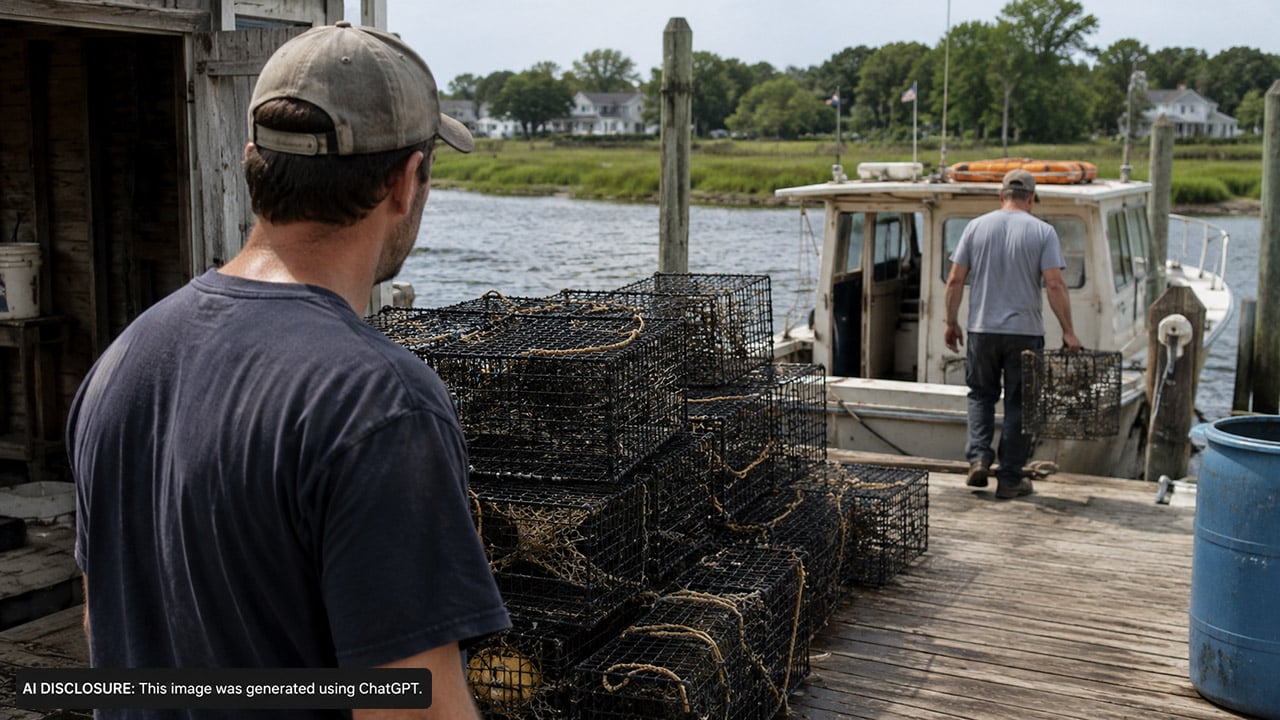
Working water on the Chesapeake isn’t like weekend crabbing off a pier. Gear costs real money, timing matters, and your season can get wrecked fast if you can’t put pots in the water. That’s exactly where one Virginia waterman says he found himself after buying 40 crab pots for a new apprenticeship and trusting the mentor he’d worked for nearly a decade.
In the original post, the apprentice explains he entered Virginia’s waterman apprenticeship through the VMRC and, under his permit, was allowed to fish 40 pots as long as he worked under a mentor. He bought the pots—about $1,600 worth—and the two worked together for roughly a month before the relationship went sideways.
When the apprenticeship turned into a power struggle
According to the apprentice, the mentor started getting mad about paying him for labor and also paying him for crabs caught in the apprentice’s traps. Then came the text message that changed everything: the mentor told him he could pick his pots up “when he got them out of the water,” back in early May.
That kind of line would make any fisherman’s stomach drop, because pots don’t just represent money spent—they’re your ability to fish tomorrow morning. And when someone else controls your gear, they control your income.
Why “just go get your pots” wasn’t an option
Most folks reading this will say, “Go get your stuff.” The problem is the apprentice says he doesn’t own a boat, and he also added a key detail: legally, the mentor isn’t allowed to fish those pots when the apprentice isn’t present, and the apprentice isn’t allowed to fish without the mentor present either.
So even if he knew exactly where every string of pots was sitting, he couldn’t simply run out there and haul them. That’s a brutal spot to be in—your property is on the water, and you’re effectively locked out from retrieving it without the very person who’s refusing to cooperate.
A “buyout” offer that shrank overnight
The apprentice says a mutual acquaintance—someone he described as “a pretty decent guy”—was trying to mediate. Two weeks before the post, the message relayed to him was that the mentor wanted to buy the pots and pay him what he’d paid for them. Not perfect, but at least it would put cash back in the apprentice’s pocket and let him move on.
Then the story took another turn: the apprentice says 20 of the 40 pots were apparently stolen while in the mentor’s possession. After that, the mentor only wanted to pay for the 20 that remained, cutting the deal in half.
From the apprentice’s perspective, that’s not just bad luck—it’s the consequence of being told to wait more than a month to retrieve his own gear, while someone else kept control of it.
The real-world stakes: time, tide, and lost income
Crab pots aren’t like a forgotten tackle box in the garage. They sit out on open water where theft, storm damage, and “mystery relocations” are part of the hard reality. When your pots are out there and you’re not the one tending them, every day becomes another roll of the dice.
There’s also the plain fact that in-season time matters. If you lose a month arguing over gear, you don’t just lose gear—you lose fishing days, you lose cash flow, and you lose momentum when you’re trying to get established as a working waterman. Apprenticeships are supposed to build you up. This one, at least as described, did the opposite.
What options the apprentice seemed to be weighing
The apprentice asked what he could do and whether he could legally get compensation for all the pots since they were in the mentor’s possession “without my consent.” He also noted he couldn’t call the mentor because his number had been blocked, and he’d prefer to talk it out rather than jump straight to a legal fight.
In plain outdoorsman terms, this looks like a mix of property dispute and control of access. The apprentice is saying: I bought the gear, I was told I could retrieve it later, it didn’t get returned when promised, and now half of it is gone. Even if the mentor didn’t personally steal a single pot, the apprentice is pointing to a basic responsibility issue—if you’re the one holding someone else’s property and you delay its return, you may end up on the hook when it disappears.
There’s also a practical step that often matters in these gear disputes: documentation. Receipts for the pots, texts about when they’d be returned, any messages about the buyout offer, and anything showing the mentor agreed the pots belonged to the apprentice. Out on the water, folks do a lot on handshakes. When it goes bad, paper and screenshots are what you’ve got.
A hard lesson for anyone running traps, stands, or equipment on someone else’s terms
This isn’t only a commercial crabbing problem. Hunters run into similar trouble with stands on leased land. Trappers deal with permission changes mid-season. Even anglers sometimes stash gear at a dock or property they don’t control. When the relationship is good, it’s convenient. When it breaks, your gear can become leverage.
The cleanest move—whenever it’s possible—is to keep your property where you can access it and retrieve it without needing the other party’s cooperation. If regulations, permits, or logistics make that impossible, then you’ve got to tighten up everything else: written agreements, clear pickup deadlines, and a plan for what happens if the partnership ends.
Because when somebody decides your gear is “hostage,” you can lose a whole season while you’re trying to do things the right way.
Like The Avid Outdoorsman’s content? Subscribe to our newsletter so you never miss an article.
Here’s more from us: