Photo credit: AI-generated image created using ChatGPT. Illustrative only
A lot of us grew up with one “real” rifle—the one that went to deer camp, rode behind the truck seat, and taught us what a clean trigger break feels like. In Wisconsin, one hunter says his childhood hunting rifle has been sitting at his parents’ house for years because it was convenient, and later, because it felt safer once he had a child. Now he’s planning to cut off contact with his family and wants the rifle back—without turning it into a blowup that drags law enforcement into the mix.
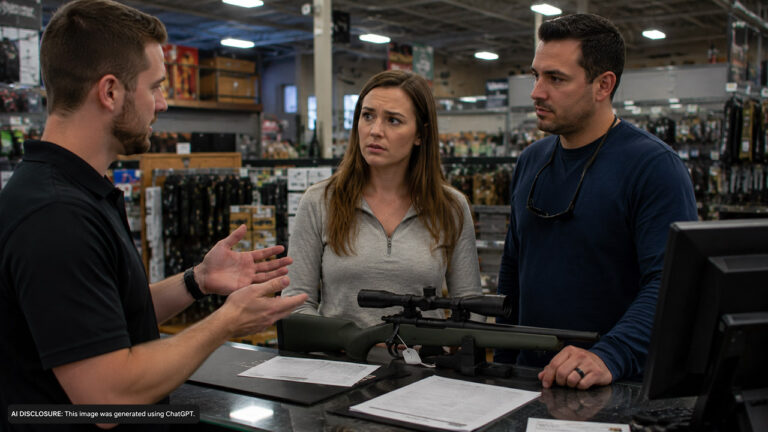
The hunter laid out his concern in the original post: his dad bought the firearm at a gun store and is the “registered owner” in the sense that the purchase record traces back to him. The rifle was gifted to the son for Christmas a long time ago when he was a minor. There’s no paperwork showing a transfer, and he’s worried his dad could report it stolen out of spite or as a way to force contact.
A common setup: a youth rifle that never left mom and dad’s house
On paper, this sounds like a family squabble. In real life, it’s a situation plenty of hunting families recognize. A kid gets a rifle as a gift, shoots it under supervision, and it lives in the home safe because that’s where the adults are and that’s where the safe is.
In Wisconsin, the poster noted that young hunters can start early with hunter safety and parental supervision. That tracks with how a lot of families handle it: the rifle is “yours,” but it’s stored and controlled by the parents until you’re older, then it just kind of stays there because it’s easy. Add a new baby to the mix and “it’s safer at their place” becomes an understandable reason to leave it.
Why “gifted” doesn’t always feel simple once relationships go sideways
The entire conflict hinges on a detail hunters don’t think about when things are good: ownership versus possession. The rifle was described as a Christmas gift to the poster, but his dad purchased it and there’s no paper trail documenting a later transfer.
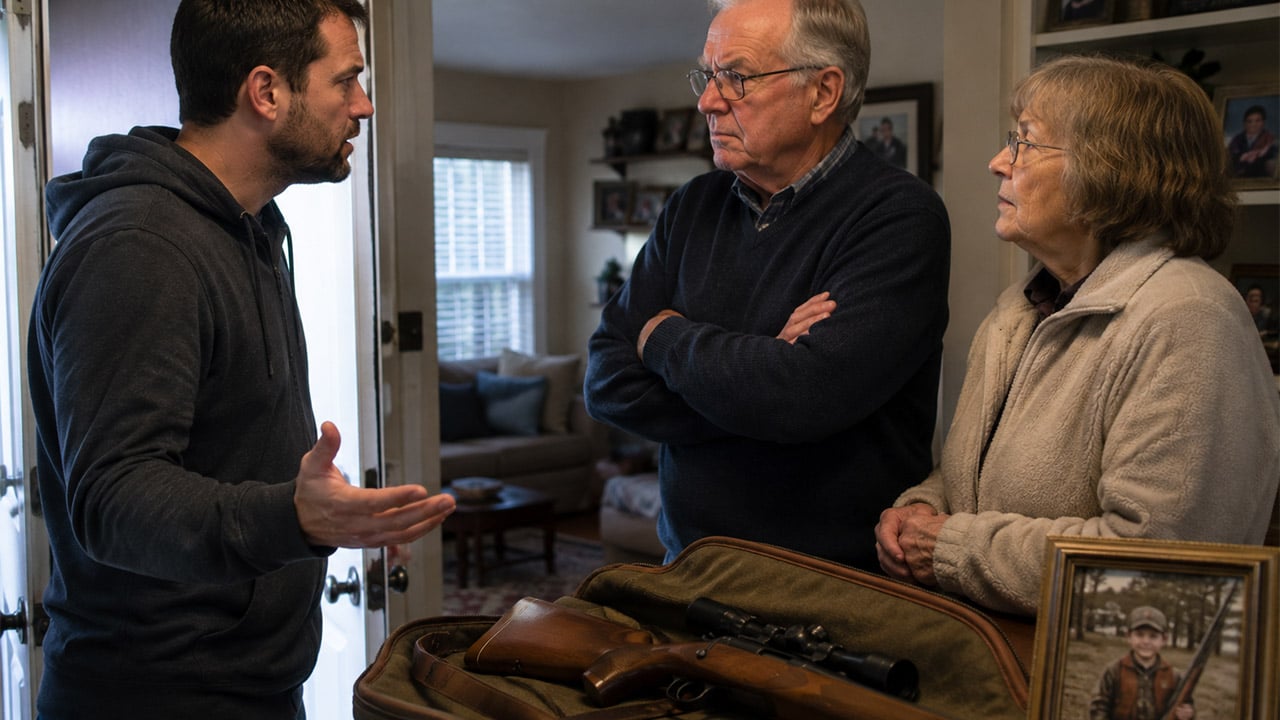
In many families, a gift is a gift, period. But if the relationship turns sour, the person who originally bought the gun may suddenly treat it like a loaner or “my gun that I let you use.” That’s where the “he said, he said” problem the poster mentioned can get ugly fast—especially with a firearm, where a stolen-gun report can have real consequences even if the facts are complicated.
There’s also a practical angle outdoorsmen understand: old hunting rifles aren’t just tools, they’re memories. That emotional attachment can make people act irrationally. A gun that sat quietly in a safe for years becomes the one thing somebody wants to use as leverage.
The plan to retrieve it: legal risk meets real-world family dynamics
Right now, the poster says he’s low contact but still “free to come and go” at his parents’ house, the way some families operate—doors unlocked, family treated like family. He wants to pick up the rifle when he drops off a letter formally going no contact.
That’s the moment where things can go from calm to chaotic. If the parents don’t agree with the no-contact decision, the rifle can become the flash point. Even if the son believes it’s his property, walking out with it without a clear agreement could be interpreted by the father as theft, especially if the father believes the purchase record makes it “his.”
Hunters tend to be practical about risk. And the risk here isn’t just a hurt feeling—it’s the possibility of a stolen firearm allegation, a law enforcement interaction, and the rifle getting tied up while everyone argues about what happened years ago at Christmas.
Wisconsin realities: private sales, records, and what “registered owner” really means
The poster pointed out something that confuses a lot of gun owners: in Wisconsin, private firearm sales don’t require registration the way some states handle it. That can leave people thinking the only “real” owner is whoever bought it at the gun counter.
Federal law also doesn’t create a universal firearm registration list for ordinary sporting guns, but gun shops do keep required sale records. So when the poster says his dad is the “registered owner,” what he’s really describing is traceability and documentation: the retailer paperwork points to the dad as the original buyer. That’s not the same thing as an ironclad, always-and-forever proof of current ownership, but it can shape how a dispute looks at first glance when someone makes a report.
Bottom line: a lack of paperwork doesn’t automatically make the son wrong, and it doesn’t automatically make the dad right. It just makes the situation easier to muddy up—exactly the “quagmire” the poster is trying to avoid.
What outdoorsmen tend to focus on in disputes like this: documentation, witnesses, and avoiding a scene
Even without seeing a stack of comments, you can predict what experienced gun owners key in on when someone describes this kind of standoff. The firearm itself is only half the problem. The other half is how to get it back without creating a bigger mess than the rifle is worth.
In the real world, the cleanest path usually involves reducing misunderstandings and leaving a trail that shows you acted responsibly. That can mean calmly asking for the rifle in writing before the no-contact letter is delivered, picking it up by agreement, or arranging a neutral transfer where nobody can later claim “you snuck in and took it.” It can also mean gathering any proof you already have—old texts about the gift, photos of you hunting with it over the years, or family members who remember it being given to you.
Another practical consideration is safety and transport. If you do retrieve a firearm from someone else’s home, you want it handled like a grown-up transaction: unloaded, cased, and moved without any argument in the driveway. The fastest way to turn a property dispute into a public problem is a shouting match with a gun case involved.
And if a person genuinely believes someone is going to make a false stolen-gun report, it’s usually smart to avoid any move that looks like “taking” rather than “retrieving.” You don’t want the optics of a surprise grab to be the main fact everyone remembers.
The bigger lesson for hunters: don’t leave ownership of your gear in the gray area
This is a hard reminder that “family guns” can become complicated once time passes and relationships change. If a firearm is truly yours, treat it like yours. Store it in your own safe when you can, keep your own records, and don’t rely on childhood understandings when adulthood gets messy.
If you’ve got a rifle sitting at a parent’s place “for safekeeping,” it’s worth having the simple, uncomfortable talk before things sour: “That’s my gun, and I’d like it back by X date.” It’s not about being cold. It’s about keeping a hunting tool—and a piece of your past—from turning into leverage in a family fight.
In this case, the poster’s worry isn’t really about the rifle being lost in the woods or rusting in the safe. It’s about a clean break and the possibility that a treasured hunting gun becomes the last string somebody pulls to force contact. When firearms are involved, the smartest move is usually the one that keeps everyone calm, keeps everything documented, and keeps you out of a situation you’ll regret.
Like The Avid Outdoorsman’s content? Be sure to follow us.
Here’s more from us: