Photo credit: AI-generated image created using ChatGPT. Illustrative only
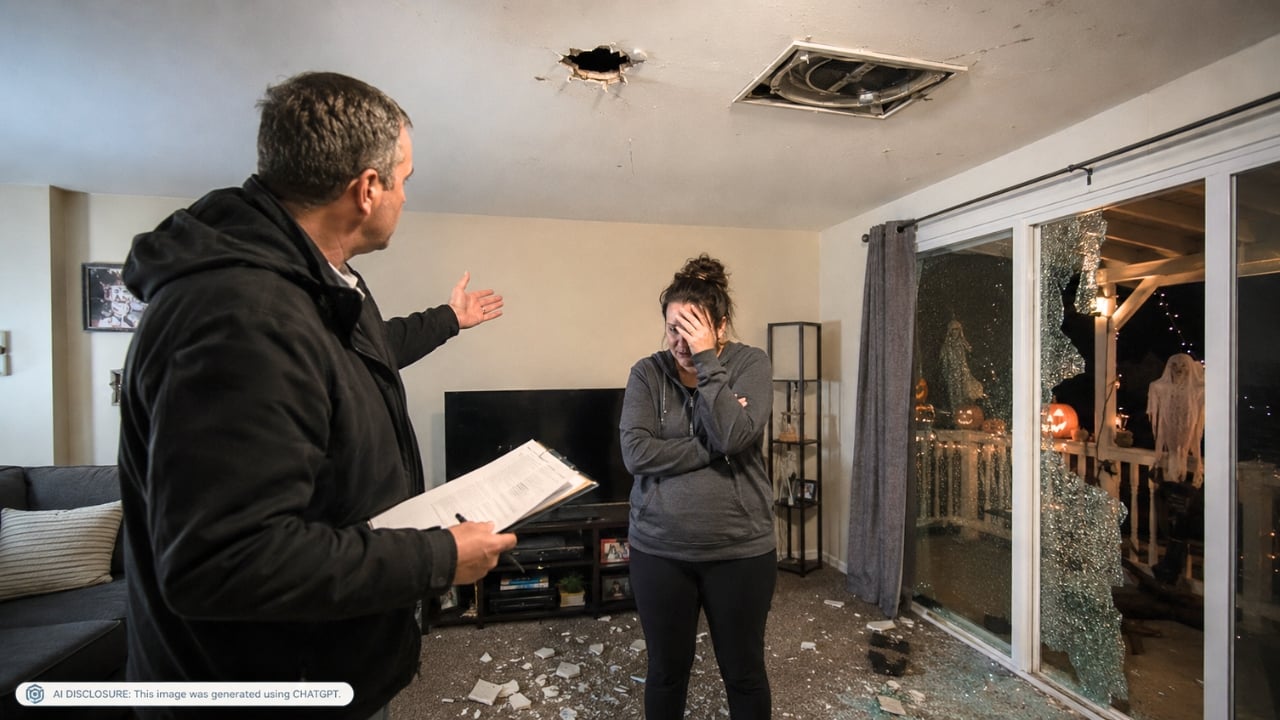
On Halloween night in Oregon, a renter was at home when something most folks only talk about in gun-safety classes happened for real: a bullet fired “up into the air” somewhere nearby came back down through the roof. It didn’t just leave a neat little hole, either. The round reportedly broke an in-ceiling heating unit and shattered a sliding glass door, turning a random act of recklessness into a major repair bill.
After filing a police report, the renter wrote about the situation in the original post, explaining that investigators probably won’t identify the shooter. That’s when the second punch landed: the landlord told the tenant the incident was their fault and said they’d be charged for repairs estimated at more than $10,000.
What a “celebration shot” looks like when it comes down
Out in the country, most responsible shooters know better than to send rounds skyward. There’s no safe “up” without a proper backstop, and gravity doesn’t care if it was a joke, a celebration, or someone being careless after dark. At some point, that projectile comes back down, and it can still hit with enough energy to punch through roofing, drywall, and whatever is underneath.
In this case, the renter said the bullet came through the roof, damaged an in-ceiling heating unit, and then smashed a sliding glass door. That’s not cosmetic. That’s systems, glass, and likely electrical work—exactly the kind of “simple hole” that turns into a contractor’s checklist fast.
The landlord’s move: calling it the tenant’s fault
The tenant’s confusion is understandable. They didn’t fire the shot. They didn’t invite someone to shoot at the house. Yet the landlord allegedly told them the incident was their fault and that they were responsible for paying for the damage.
In plain terms, this sounds like an attempt to shift a property-owner problem onto the person who happens to be renting the place. Landlords can and do charge tenants for damage—but typically that’s damage the tenant caused, or damage caused by someone the tenant is responsible for. A random bullet coming out of the night is a different animal.
No rental insurance in place made the situation feel even tighter
The renter said they don’t currently have rental insurance because they’re in the middle of switching insurance companies “for everything.” That’s a real-world scenario a lot of folks can relate to—changing policies, waiting on paperwork, thinking you’ll finalize it next week.
But the gap matters. Renter’s insurance often helps with personal property and liability, not necessarily the structure itself (that’s usually the landlord’s building policy). Still, when you’re standing in a living room with broken glass and a heater that took a hit, not having a policy to call can make the whole thing feel like it’s closing in from every side.
Why this usually isn’t on a tenant to pay
In most normal landlord-tenant situations, the structure—roof, built-in heat, doors and windows—belongs to the property owner, and the owner carries insurance for the building. When damage happens from something outside the tenant’s control (wind, fallen branches, vandalism by strangers), that’s generally treated as a property-loss issue, not “tenant-caused damage.”
That doesn’t mean a landlord won’t try. Sometimes it’s a misunderstanding, sometimes it’s a hard-nosed move, and sometimes it’s a landlord hoping the tenant panics and agrees to pay. The big practical point for the renter is that an accusation isn’t the same thing as a legitimate charge, and a demand for $10,000 isn’t automatically enforceable just because it’s said confidently.
What people tend to focus on in situations like this
Even without a suspect shooter, there are a few things that matter right away: documentation, the police report, and getting the damage clearly tied to an outside incident. The renter did one of the most important steps immediately by filing a police report. That creates a timeline and a formal record that this wasn’t routine wear-and-tear or something that happened during a party inside the house.
The next common focus is keeping the communication trail clean. When a landlord claims the tenant is “at fault” for a bullet coming through a roof, that’s the kind of statement you want in writing. Not for internet points—because disputes like this are often decided by what can be proven, not by who feels wronged.
Practical options when the shooter probably won’t be found
The renter asked what options they have, and the real-world answer usually comes down to a few lanes. First: keep leaning on that police report and gather photos of every part of the damage—roof entry point, debris, the heating unit, and the broken sliding door—plus any receipts for temporary fixes like boarding up glass.
Second: push back on the landlord’s claim in writing and ask how, specifically, the landlord believes the tenant caused it. If the landlord has building insurance (many do), this is the kind of loss that typically goes through the owner’s policy, even if it’s frustrating and even if there’s a deductible involved.
Third: if the landlord tries to collect anyway—through charges, deductions, or threats—the renter may need to look at tenant-rights resources in Oregon or consult an attorney familiar with landlord-tenant disputes. A $10,000 claim isn’t a minor scuff on the wall. It’s the kind of number that can follow someone, and it’s worth taking seriously before signing anything or agreeing to pay.
And finally, even though it doesn’t solve this particular mess, the outdoor takeaway is the same one we tell new shooters and old hands alike: rounds sent into the air don’t disappear. They land somewhere. If you’re the one pulling the trigger, “somewhere” could be a neighbor’s roof, a kid’s bedroom, or a stranger’s sliding door—and the damage doesn’t stop at the first thing it hits.
The renter’s situation is a hard reminder that reckless shooting doesn’t just risk lives—it drops expensive problems into innocent laps. The landlord may be able to demand money, but that doesn’t make the tenant automatically responsible. Paperwork, photos, and a calm refusal to accept blame for someone else’s shot are the best first steps when the hole in the roof isn’t yours to own.
Like The Avid Outdoorsman’s content? Be sure to follow us.
Here’s more from us: