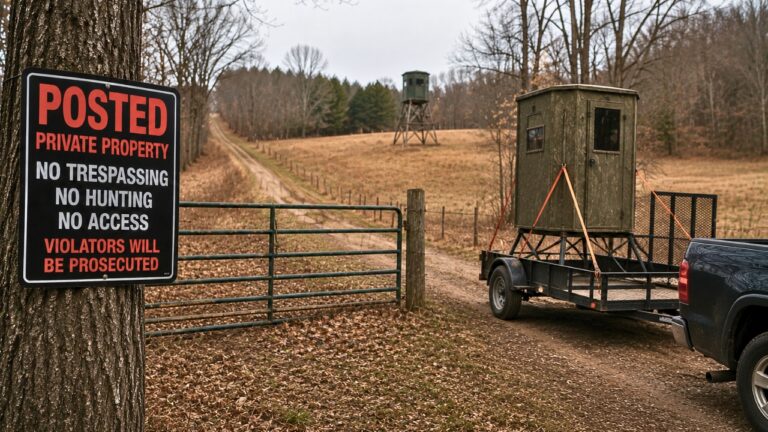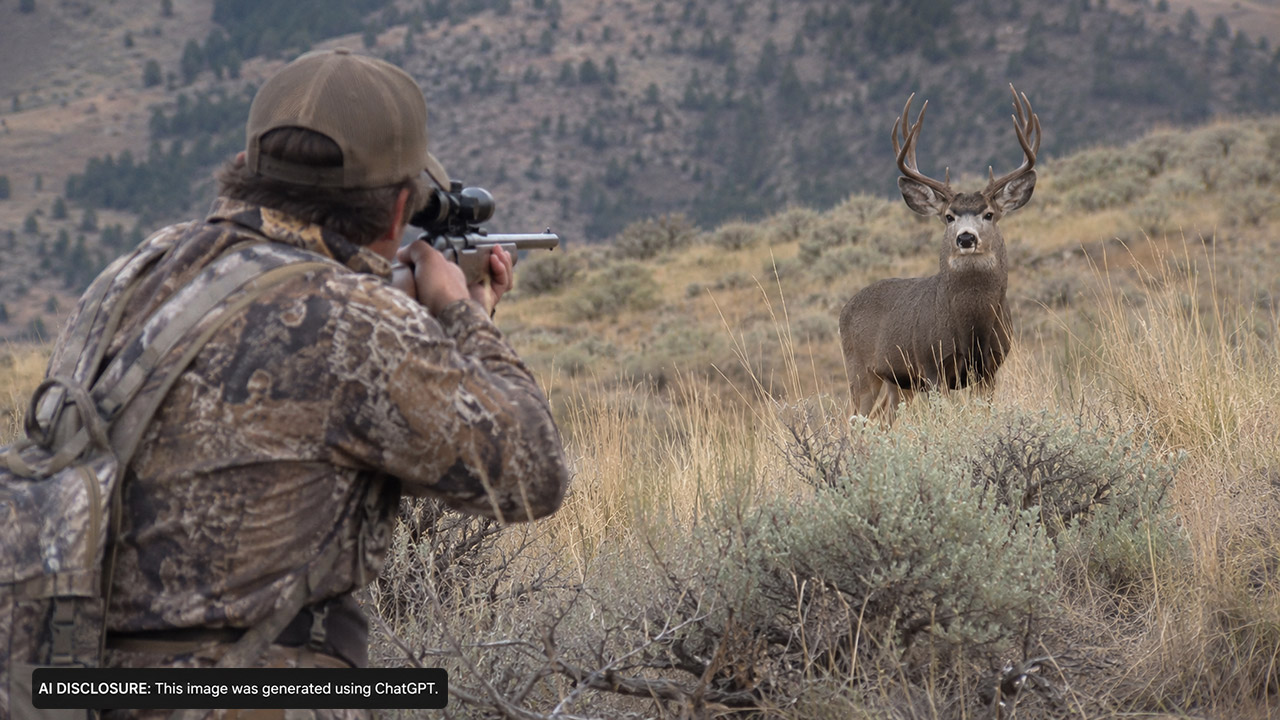
Photo credit: AI-generated image created using ChatGPT. Illustrative only
In Montana, access is everything. It’s the handshake at the gate, the phone call ahead of time, the “yes” that turns private ground into a privilege instead of a problem. When someone uses a professional role to get onto a place and then treats that access like a free hunting pass, it doesn’t just burn one relationship—it throws heat on every hunter and every landowner who still tries to do things the right way.
That’s the backdrop in a Fergus County case covered in the original post, where Montana Fish, Wildlife and Parks says a Lewistown-area realtor, Hyatt Voy, used a listing visit to reach ranch property owners were trying to sell, then killed a trophy mule deer buck during the 2024 general season without landowner permission.
A property visit turned into a poaching case
FWP’s account is pretty plain: Voy gained access through his real estate work, visited the property as part of a potential listing, and then killed the buck without permission. That detail matters because it wasn’t a boundary-line mistake or a “thought I was on the right side of the fence” story. The access point itself was tied to business trust.
Landowners let a lot of people through a gate in the course of a year—contractors, potential buyers, surveyors, agents. In rural country, that access is usually built on the assumption that the visitor is there for the job at hand, not to look for an opportunity to pull a trigger.
The landowner complained, wardens got involved, and Voy admitted it
According to FWP, wardens responded after the landowner made a complaint. That’s often how these cases start: the person who knows the ground best notices something off, sees a vehicle that doesn’t belong, hears shots at the wrong time, or finds evidence that doesn’t match the permissions they’ve given out.
FWP says Voy later admitted to the crime. That admission is a big hinge point in cases like this, because once a person owns it, the conversation turns from “did it happen” to “what’s the consequence going to look like,” especially when the animal is a trophy buck and the permission piece is missing.
The buck didn’t go to waste, but the antlers still become evidence
FWP said the deer was donated to a food bank. That’s at least one small good outcome in a bad situation, because wasted game is the kind of thing that makes even non-hunters sour on hunting in a hurry.
The antlers, according to the release, will be kept for educational use or sold at auction. That’s a reminder to anyone tempted to cut corners: “trophy” parts aren’t just bragging rights. In the wrong context they’re also the easiest, most visible proof that something illegal happened.
The sentence: 102 days in county jail, plus fines and a long loss of privileges
In the Tenth Judicial District Court in Lewistown, Voy was sentenced to four years with the Montana Department of Corrections, with all time suspended except for 102 days, FWP said. He also has to pay $8,000 in fines and restitution.
FWP said his hunting, fishing, and trapping privileges were suspended for seven years in Montana and in 48 other member states of the Interstate Wildlife Violator Compact. That’s the part a lot of folks don’t think through. The penalty doesn’t just follow you at home; it can shut down out-of-state plans too.
And the timing is intentional. Voy has already served 10 days, but FWP said he must report back for the remaining 92 days in September—right at the beginning of the 2026 fall hunting season in Montana. Missing that chunk of season isn’t just uncomfortable; for a lot of hunters it’s the one time of year they plan for all year.
This wasn’t treated as a one-off mistake
FWP said Voy has an “extensive history” of hunting-related violations going back to 2015 in Park, Garfield, and Fergus counties. They also said the 2024 unlawful possession charge was his third offense of that type since 2017.
That history matters in sentencing. Plenty of hunters have made a bad call and spent the rest of their lives regretting it, but repeat behavior is what pushes a case from “learn your lesson” into “the court is going to make sure you learn it.”
FWP also noted that in October 2025, Voy was found guilty in a jury trial in Stanford for felony unlawful possession of a trophy mule deer buck and for hunting without landowner permission, a misdemeanor. Separate incidents, same theme: taking an animal without the permission that makes private-land hunting legitimate.
The ripple effect: trust, permission, and the reputation of everybody else
In her sentencing order, District Court Judge Heather Perry connected the dots that most rural folks already understand. She wrote: “Hunting without permission and lying about it results in a negative appearance for all of the professional realtors who work very hard to maintain both their reputation and trust of their clients and potential clients. Similarly, responsible hunters are very careful to treat the opportunity to hunt on private land as a privilege, so the landowners continue to allow hunting.”
That’s the real damage. A poaching case doesn’t stay contained to one person and one deer. Landowners tighten up access. They stop answering calls. They post more ground. They tell the next guy “no,” even if he’s squared away, because they’ve already been burned once.
For hunters who do it right—ask first, get it in writing when it makes sense, follow property rules, and leave gates the way they found them—cases like this are frustrating because the consequences land on everyone. It’s also why game wardens tend to take trespass-and-kill cases personally. Permission is the foundation of private-land opportunity.
At the end of the day, this one came down to choices. A person can show up for business, do the job, and leave. Or they can turn that access into an angle and risk their freedom, their money, and their ability to hunt across a big chunk of the country for years. Fergus County’s sentence makes it clear which choice Montana expects from people who want to keep hunting seasons—and landowner trust—alive.
Like The Avid Outdoorsman’s content? Subscribe to our newsletter so you never miss an article.
Here’s more from us: