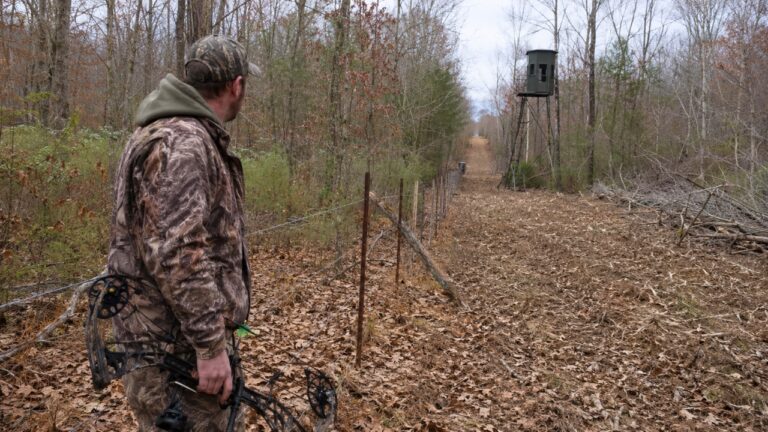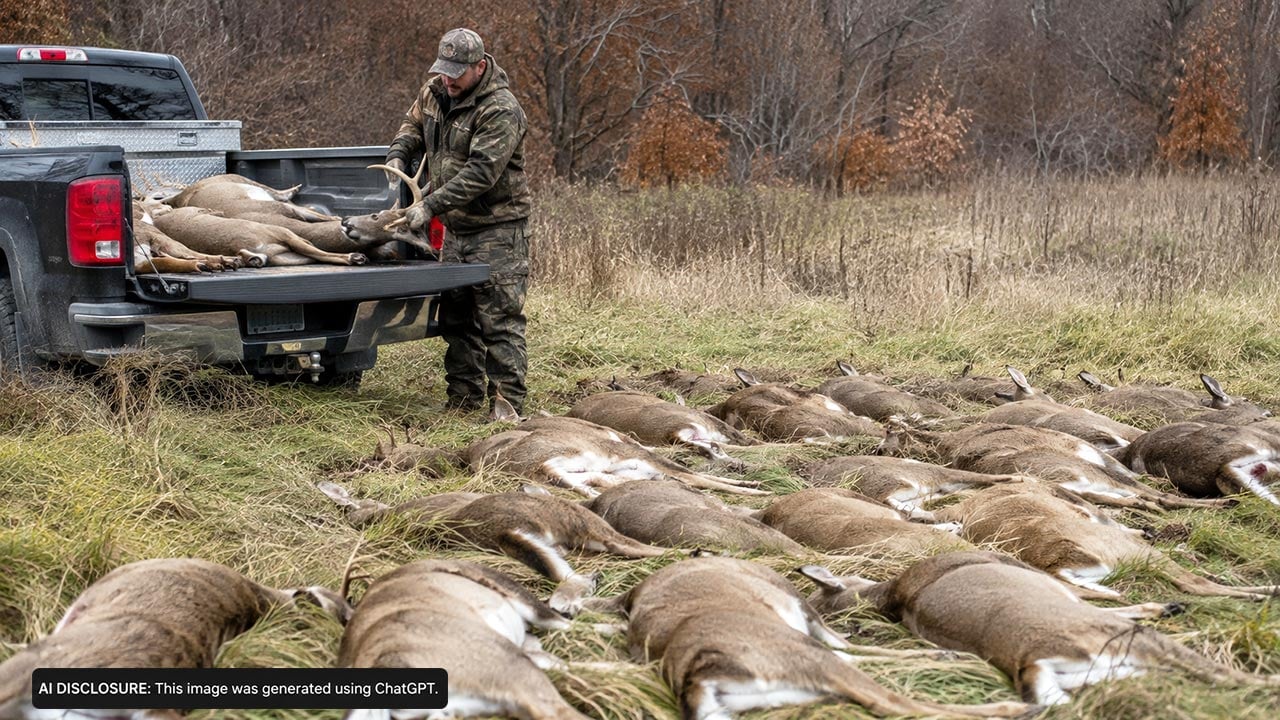
Photo credit: AI-generated image created using ChatGPT. Illustrative only
Most folks think deer culling work is “just shooting deer” with a government stamp on it. But the paperwork is the whole ballgame, and when it goes sideways the penalties can stack up fast. A Wisconsin sharpshooter learned that the hard way after dropping more than 100 deer for a county program and then getting hit with a five-figure fine over one missing license year.
Details in the original post lay out how a multi-year investigation by Wisconsin conservation wardens ended with a $10,000 fine and a one-year loss of hunting privileges for a man who says he isn’t even a hunter.
A long-running deer removal program ran into a hard stop
The sharpshooter is Christopher Tuhy of East Troy, who worked for Wildlife Management Service (WMS), a company that’s been contracted by local government entities in Southeastern Wisconsin for decades to remove nuisance deer. In 2022 alone, Tuhy shot more than 100 deer as part of that work.
This wasn’t a weekend-lease situation or a guy filling his own tags. These operations run on DNR-issued culling permits that are typically held by government agencies, with the contractor acting under the permit’s conditions. That’s where the red tape starts: the permits come with specific rules on everything from carcass tagging and registration to optics use and CWD sampling.
The charge he pleaded to: deer culling without a deer license
In December, Tuhy pleaded guilty to 10 civil counts of hunting deer with an improper license. The key detail: a deer hunting license is required for deer culling work, and Tuhy didn’t have one in 2022.
Tuhy told Outdoor Life he’d simply forgotten to buy it that year. He did have a license in the three years before and the three years after 2022, and he said he’s not a hunter. Even so, the legal requirement didn’t care about intent—he was cited and fined $1,000 per count, totaling $10,000.
On top of the money, his hunting privileges were revoked for one year. That revocation isn’t just symbolic, either. It also means he can’t work as a sharpshooter during that period.
Why the fine ballooned: investigators documented hundreds of other problems
If you’re wondering how a “forgot to buy a license” mistake turns into a $10,000 hit, the district attorney’s explanation offers a clue. Waukesha County DA Lesli Boese told Outdoor Life that the agreement took “into account many factors,” including citations the state agreed not to issue to fully resolve the case and the forfeitures tied to those citations and the underlying facts.
Open-records investigation files filled in the rest. According to those documents, the DNR’s investigation found more than 500 violations. The majority were failures to register deer by 5 p.m. the day after being shot, which is required by Wisconsin law. The report also flagged transportation of unregistered deer—another issue that can turn a paperwork violation into something that looks a lot more serious.
In other words, the missing license wasn’t the only concern on the table. It was the count they settled on.
Antlers, registration, and even car-killed deer added to the scrutiny
The investigation files also questioned whether antlers from culled bucks were being properly handled. Under the culling permits, antlers are supposed to be returned to the DNR—not kept by sharpshooters. That matters in suburban-style culls, because those deer can grow big racks that folks would absolutely want to hang on a wall.
According to the report, WMS owner Andrei Landron told wardens that antlers from culled deer are cut off at Bunzel’s Old Fashioned Meat Market in Milwaukee. But an employee at the processing facility reportedly said most bucks came in with antlers already removed, and that only small bucks tended to arrive with antlers attached. The antlers from those small bucks were tossed into a bucket with other unwanted racks, and Bunzel’s said they treated WMS like any other customer, following processing instructions as given.
The report also stated that a WMS employee took a large set of antlers home, allegedly to show a relative, and intended to return them. The antlers were never brought back, but wardens later recovered them. That employee was not charged, according to the source material.
Another detail in the documents: car-killed deer had reportedly been registered as culled deer by WMS. That’s less about hunting law and more about the integrity of the removal program, since local government is footing the bill for deer removal under these contracts.
The contractor says compliance has gotten harder, not easier
Landron acknowledged there’s plenty of red tape in this line of work and told Outdoor Life he felt the fine was unusually severe for an unintentional mistake. He also explained that WMS isn’t only a deer business—he runs a sprinkler business that employs workers in summer, and culling keeps people working in winter.
More importantly, Landron said the working relationship with the DNR has changed in the last three to four years, becoming more challenging. In his words, permit requirements and enforcement expectations appear to shift year to year, sometimes without enough explanation or continuity. Whether you agree with that or not, anyone who has dealt with permits—burn permits, nuisance tags, special seasons, depredation work—knows how quickly “we’ve always done it this way” can turn into a ticket.
Landron said WMS wants to get back to a cooperative relationship with wardens and emphasized they don’t want employees feeling threatened or uniquely scrutinized while doing their jobs. He also argued that communities they serve still have serious deer overpopulation issues, and that sharpshooting remains the most effective tool available.
A blunt ending: he paid to move on, and the job goes on without him
One detail that sticks out is that Tuhy’s $10,000 fine was well above the $343.50 maximum per charge listed in the bond schedule, yet it was the only fine levied from the investigation. Tuhy told Outdoor Life he pleaded guilty and agreed to the high fine so he could put it behind him: “I just want this to be over with.”
For hunters and landowners watching from the outside, it’s a reminder that nuisance-deer work isn’t a free pass—it’s often a tighter rulebook than regular hunting. When the state starts counting paperwork misses by the hundreds, the cleanest path out may be expensive, even if the original mistake was as simple as one forgotten license.
Like The Avid Outdoorsman’s content? Subscribe to our newsletter so you never miss an article.
Here’s more from us: