Photo credit: AI-generated image created using ChatGPT. Illustrative only
A New Jersey gun owner says he’s spent the last year living separately from his wife, trying to keep his kids safe, and watching his firearms rights get yanked back and forth through the court system. In the original post, he laid out a high-conflict, high-stress situation where restraining orders and police calls have repeatedly triggered gun seizures—even when he says he’s done what he was told to do to get his property back.
What he’s really asking isn’t just a legal question. It’s the kind of question you hear from a worn-out dad who’s been living on adrenaline: is it even worth fighting to get his firearms, FID, and permit to carry back if he believes another false allegation will just start the whole cycle over again?
How it started: violence at home and a camera that caught it
The man says his wife’s mental health has deteriorated over roughly five years. He describes dissociation, memory gaps, changes in handwriting and accents, and swings in behavior that range from childlike to aggressive. He also claims she has gotten violent with knives toward him and the kids.
The situation hit a breaking point last summer, when he says his wife assaulted him while he was sitting with their children on the couch. He describes trying to hold onto the kids while she peeled his fingers back, with the kids screaming. A home security camera, he says, recorded the incident, and police watched the footage when they arrived.
He also says that when he tried to reach for his phone to call for help, she pulled his pants down, and he ran out of the house to call police. He claims officers had trouble wrapping their heads around the dynamics, including why he didn’t physically push her away, and how a woman could injure a man in that situation. Anyone who’s dealt with a domestic call knows how fast confusion turns into “sort it out in court.”
A restraining order flips the switch on gun seizures
According to the post, after that incident his wife presented herself as the victim and filed a restraining order against him. He says she also told police he was hiding guns with neighbors and threatening people.
He states that days earlier—anticipating trouble—he had moved his firearms and ammunition offsite to a secure facility. But the restraining order still triggered the standard machinery: a full seizure of his firearms, plus the loss of his Firearms ID (FID) and Permit to Carry (PTC).
That part is important for gun owners outside New Jersey to understand. In some states, a domestic restraining order can flip a light switch and suddenly your guns, permits, and legal standing are all in jeopardy. Even if you’ve done nothing criminal, you’re now playing defense, and the timeline isn’t yours anymore.
He paid for a psychiatric evaluation—and the process still stalled
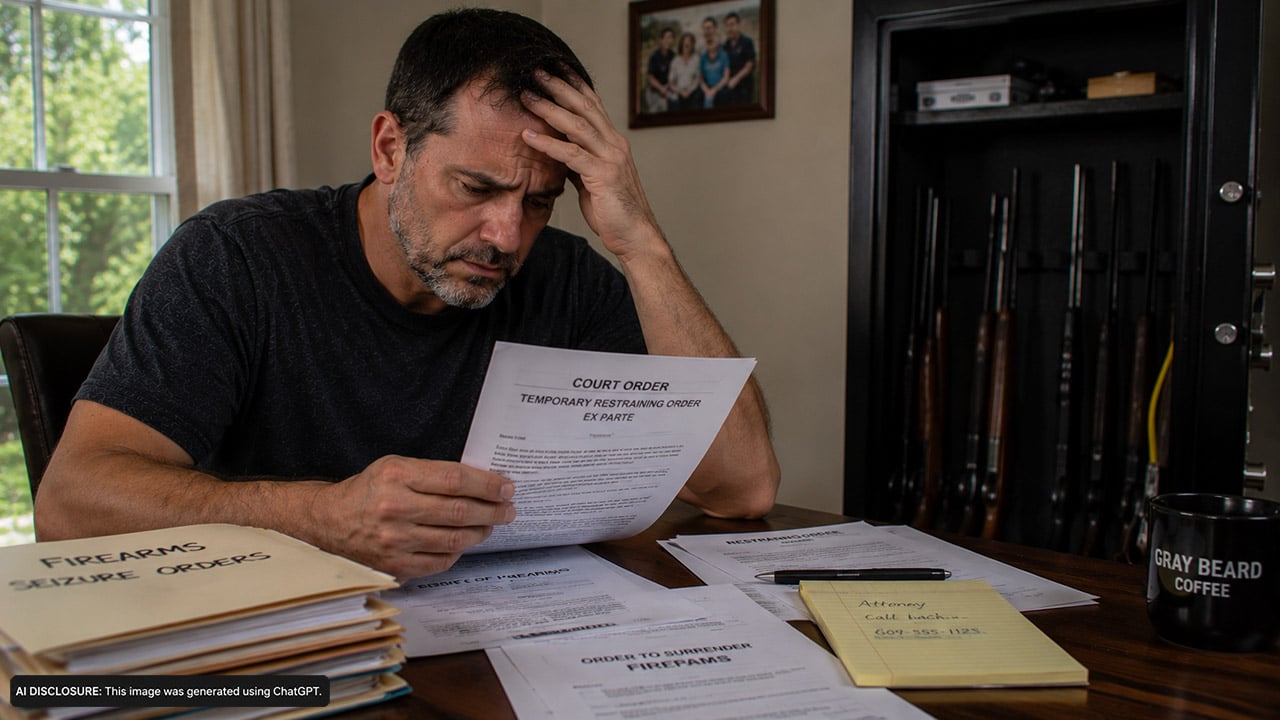
Months later, he says he went to court with an attorney. The prosecutor allegedly acknowledged he had a clean record but wanted the “mental health box” checked before returning anything. So he paid $6,000 for a 31-page psychological evaluation and submitted it in October.
Then nothing moved. He says the prosecutor “dragged her feet for months,” and his attorney couldn’t get her to engage despite repeated attempts.
This is the part that makes a lot of outdoorsmen grind their teeth. You can do what’s asked—pay real money, jump through the hoop, get the paperwork—and still sit in limbo. Meanwhile, hunting season doesn’t pause, range time doesn’t pause, and your ability to protect yourself in a lawful way doesn’t pause either. It just shuts off.
Custody and child safety concerns turn the situation volatile
In January, he says things escalated again. He claims he learned that during her parenting time, his wife was potty training their 4-year-old “at knifepoint” multiple times. He says CPS investigated again and that the kids corroborated the allegations about a knife being held to his son.
He also claims his wife became aggressive in front of CPS caseworkers, police were called, and CPS advised him to keep the kids until they returned the following week. The next morning, he says his wife came banging on his door insisting CPS had “given her the green light.” He didn’t open the door.
Then comes one of the more alarming moments in his account: while he says he was on the phone with CPS, his wife allegedly called in an “armed hostage situation” to try to get the kids from him. He reports police entered his home, saw the children were fine, checked a civil restraint document, and told his wife to leave. He says he obtained a restraining order that day to protect himself and the kids.
Whether you’re a gun guy or not, that’s the kind of chaos where any 911 call can become a life-altering event. For gun owners, it can also become a rights-ending event, even before the dust settles.
Another restraining order, another attempted seizure—and a prosecutor digs in
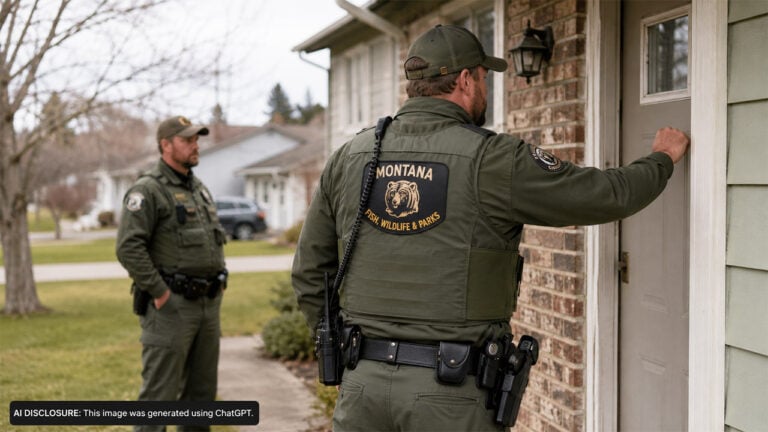
He says his wife filed a counter restraining order five days later, alleging he was using CPS to harass her. The sheriff’s department showed up to serve him, and he says that triggered another gun seizure process.
But there was a twist: he told them his firearms had never been returned from the first restraining order. He says deputies confirmed that with the police department and left.
At that point, you’d think the earlier psychiatric evaluation would matter. But he says when his attorney finally reached the prosecutor, she still wouldn’t return the firearms—despite the 31-page evaluation—because of the newer restraining order and police call. He says he was told he’d need to go to court and litigate again to try to get back his firearms, FID, and PTC.
That’s where his question gets heavy. He’s not asking how to “win.” He’s asking how long you can keep paying, filing, and fighting when the other side can keep pulling the same lever and forcing the system to act against you.
What gun owners tend to learn the hard way in situations like this
The post reads like a caution sign for anyone who owns firearms and is stuck in a high-conflict separation. When courts and protective orders get involved, your gun rights often become collateral damage, and the process can be slower than the danger that started it.
The man says he moved firearms and ammunition offsite ahead of time, which shows he was thinking about safety and liability. But it didn’t prevent seizure paperwork, and it didn’t stop the administrative grind afterward. That’s a reality check: in some jurisdictions, being proactive doesn’t keep you out of the gears once a restraining order is filed.
It also highlights a practical, outdoorsman-level truth: documentation matters, but it’s not always decisive on the schedule you need. He says there was security camera video. He says there was a lengthy psych evaluation. He describes CPS involvement and police responses. And still, the question on the table is whether he’ll ever get fully clear of the next allegation.
If you find yourself in anything even resembling this, the “gear” that matters most isn’t a rifle or a holster—it’s an attorney who knows the local gun permit system, the restraining order process, and the exact steps for restoration. And it’s a paper trail that’s clean, organized, and relentless, because you may have to prove the same thing more than once.
He ended his post with a line that tells you exactly where his head is: he wants someone to tell him it’s finally okay to rest. That’s not about guns. That’s about exhaustion. But for gun owners in states with aggressive seizure triggers, the sad answer is that rest often doesn’t come until the legal side is resolved, the custody side stabilizes, and every interaction is handled like it might end up in front of a judge.
Like The Avid Outdoorsman’s content? Subscribe to our newsletter so you never miss an article.
Here’s more from us: