Photo credit: AI-generated image created using ChatGPT. Illustrative only
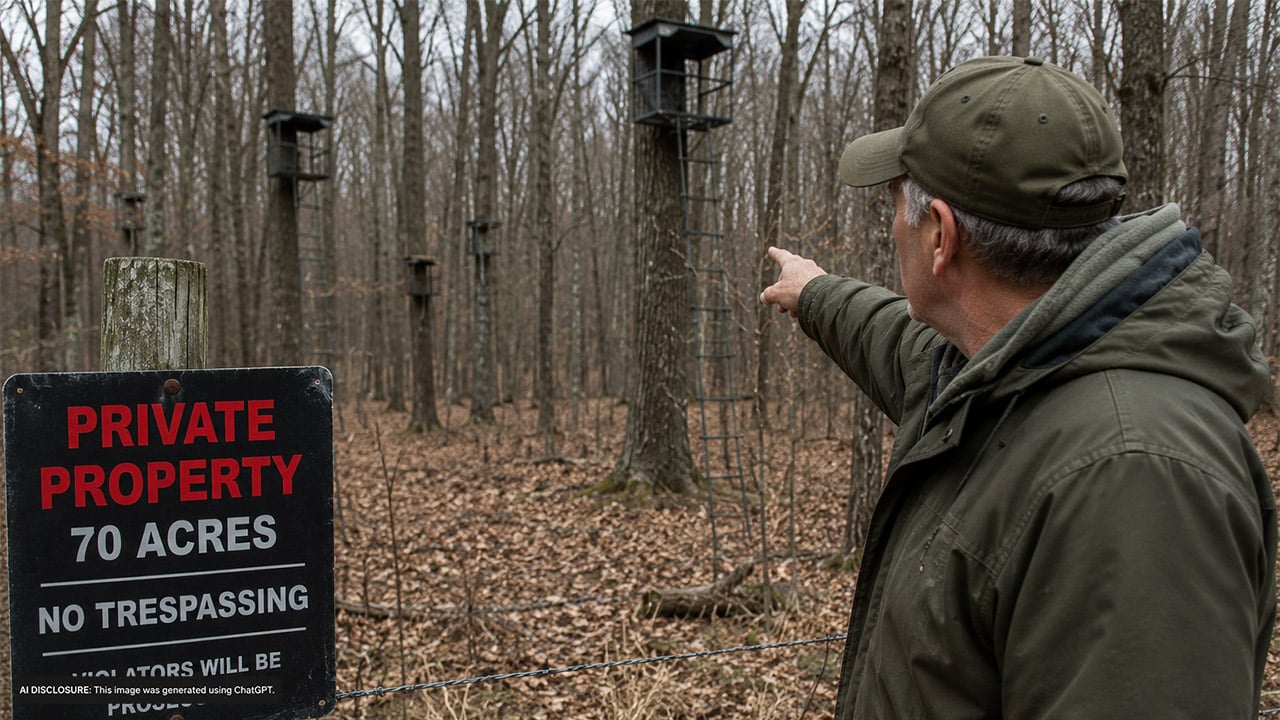
A posted line is supposed to mean something. In Pennsylvania, a landowner with about 70 acres of woods said he’s done the work—signs up around the property—and still ends up running off “5–10 different guys” every season who try to hunt it anyway.
This year, his preseason scouting walk turned up a new wrinkle: multiple ladder stands already set up back in his timber. In the original post, he explained that he allows only two other hunters plus himself, and they all use climbers—so none of those fixed stands belonged there. His question was simple and practical: what can he legally do with those stands?
The property was clearly marked, but the pressure kept coming
The landowner wasn’t describing a one-off mistake where someone wandered across a line during a drive. He said his 70 acres are posted, and every year he has to kick multiple people off the property for trying to hunt it.
That detail matters because it changes the tone from “honest confusion” to a pattern. When you’re dealing with repeat trespass pressure, you’re not just protecting your deer hunting—you’re protecting safety, liability, and peace of mind for everyone who’s supposed to be there.
A preseason walk revealed ladder stands that didn’t belong
Instead of finding only rub lines and fresh trails, he found multiple ladder stands set up throughout the woods. For hunters who run climbers, that’s about as clear a sign as you can get that somebody else has been treating your place like public land.
And ladder stands aren’t a small footprint. Somebody hauled in sections, strapped them to trees, and likely planned to return in the dark with a weapon once the season opened. If those stands are placed near good travel corridors, it also suggests the trespassers weren’t just “passing through”—they’d scouted enough to pick spots worth committing hardware to.
Why strange stands are more than just an annoyance
Most landowners are irritated by trespassers. But an unknown stand on your ground brings an extra set of concerns that a lot of folks don’t think about until it happens.
First is safety. If you or your permitted hunters slip into a spot before daylight, you could unknowingly set up near someone who has no business being there. Second is liability and damage: straps can girdle trees, steps can scar bark, and a poorly set ladder stand can be a wreck waiting to happen. Third is the simple reality that equipment left in the woods tends to multiply—once one person gets away with it, others try their luck.
The big question: can a landowner remove them?
The landowner asked what he could do with the stands: throw them out, take them, or something else—and what laws apply. That’s the spot a lot of hunters and landowners find themselves in: you don’t want to tolerate trespass, but you also don’t want to create a bigger headache by handling property the wrong way or confronting the wrong person.
In situations like this, the smart play is usually to treat it like evidence of an ongoing problem. Document what you’re seeing, note locations, and avoid any face-to-face showdowns. A ladder stand can feel like “finders keepers” when it’s sitting on posted ground, but the cleanest outcomes tend to come when you involve the right authority early and let them guide the next steps.
Most advice pointed toward documentation and calling the game warden
While the post itself doesn’t list individual comments, the landowner later said he appreciated the advice and “some good laughs,” which tells you the discussion leaned into the usual mix: practical tips, strong opinions, and a few jokes that always show up when trespass and deer stands come up.
The key action he took, though, was straightforward—he contacted the local game warden. That’s often the best first call in a hunting-related trespass situation because wardens deal with hunting violations and know how to handle stands, bait issues, access points, and patterns of illegal hunting pressure. They also know how to proceed without turning a property dispute into a personal confrontation in the woods.
He brought in the local game warden to look at everything next week
In an update, the landowner said he got ahold of the local game warden, and the officer is coming out with him next week to check everything out. He also mentioned there were “some other issues related to trespassers and hunting” that the warden will be looking into.
That’s a solid, grounded step. It creates a record that the property is posted, the stands were discovered, and there’s a recurring problem—without the landowner having to guess what’s legal to do with someone else’s equipment or risk an ugly interaction if the trespassers show up while he’s removing stands.
For landowners who’ve fought this battle before, the takeaway is familiar: posting signs is important, but it doesn’t automatically stop determined trespassers. The real difference often comes from documenting what’s happening, tightening up access points, and getting a warden involved early—before the season chaos starts and before an unknown stand turns into a dangerous surprise on a dark morning in the timber.
Like The Avid Outdoorsman’s content? Be sure to follow us.
Here’s more from us: