Photo credit: AvidOutdoorsman
Divorce has a way of turning everyday items into “evidence,” and firearms are usually near the top of that list. When somebody calls law enforcement and says a safe full of guns vanished, officers can’t treat it like a casual misunderstanding. Guns aren’t just property—they’re public-safety concerns, and the paper trail matters.
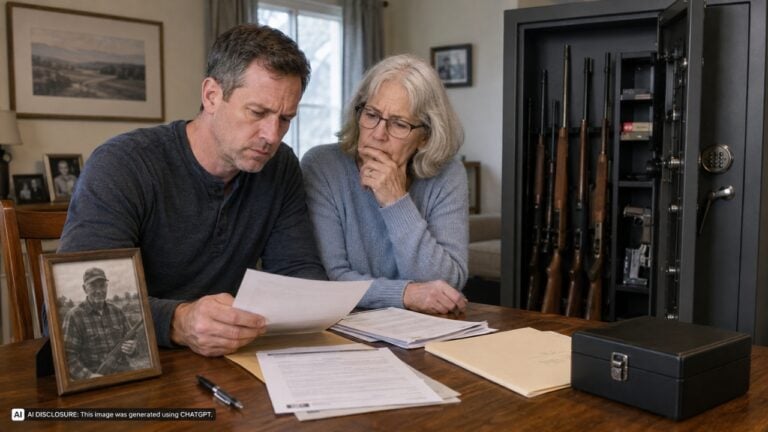
That’s exactly how this recent dispute played out when a wife reported a long list of firearms stolen while the couple’s separation was unfolding. She provided make, model, and even a couple serial numbers, describing them as her husband’s hunting rifles, a few handguns, and “older family guns” that she said had been kept in the home. The call triggered a theft report, and it also triggered a question that comes up more than folks want to admit: were those firearms actually stolen, or were they removed and secured because the marriage was coming apart?
The initial report looked like a straightforward gun theft
On the surface, the complaint read like something you’d see after a break-in—missing firearms, a rough time window, and the concern that they could be floating around out there. In a rural setting, that kind of report gets attention fast. A stolen deer rifle today might be a pawn shop item tomorrow, or it might be used in a bad decision that nobody can take back.
Officers followed the usual steps: document the list, attempt to verify serial numbers, and ask basic questions about storage and who had access. The wife reportedly said the firearms had been in the house and were now gone during the period the couple was splitting property and changing who stayed where.
Then the husband showed up with a folder that changed the tone
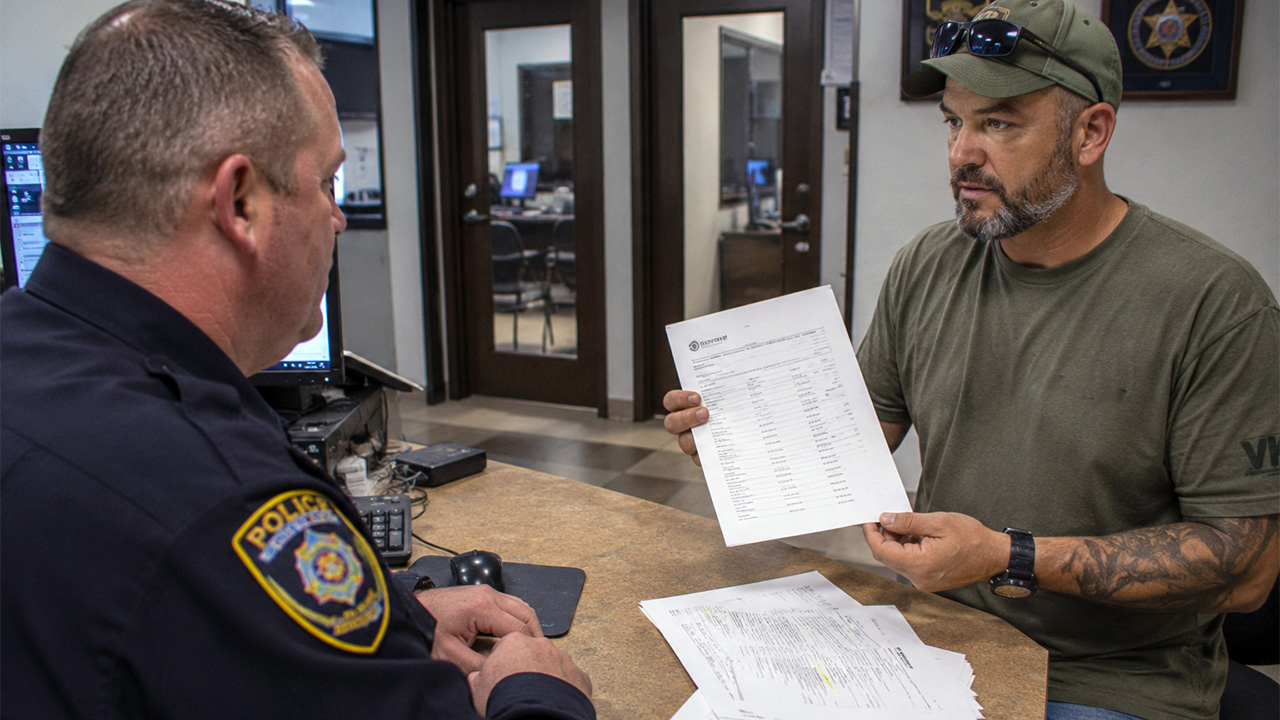
The husband didn’t respond with yelling or a social media post. He showed up with documentation—purchase receipts, order confirmations, and a couple of manufacturer warranty cards. He had paperwork for every firearm she listed, including older guns he’d bought used through legitimate channels and newer pieces purchased at retail.
That receipt stack matters for two reasons. First, it helps establish ownership quickly in the real world, even if a court still needs to sort out marital property. Second, it tells investigators this might not be a “guns stolen by a stranger” situation at all, but a domestic dispute where one party is using a theft report as leverage.
Receipts don’t solve divorce court, but they do shape the police response
In many states, firearms acquired during a marriage can still be considered marital property depending on how they were purchased and titled, even if one spouse paid. That’s for attorneys and a judge to hash out. Law enforcement, on the other hand, is looking at whether a crime occurred—burglary, theft, false reporting, or something else.
When someone can show an unbroken trail of purchase records, it helps officers separate “ownership dispute” from “criminal theft.” It also gives them a clearer path to follow: confirm the guns exist, confirm they weren’t sold illegally, and determine whether the reporting party had reason to believe an actual theft occurred.
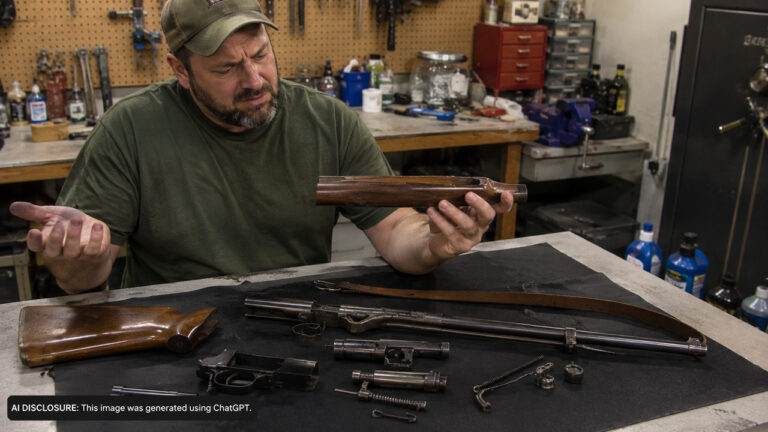
One detail that tends to come up in these cases is where the guns went. If the husband had removed his firearms to a secure location—like a locked safe at a trusted relative’s home, a storage arrangement that’s lawful locally, or another secured residence—that can look a lot less like theft and a lot more like preventative common sense. The key is that moving them doesn’t give someone permission to hide assets or violate a court order. It just reduces the chance they end up mishandled, damaged, or used as a bargaining chip.
The real friction point: access, storage, and who “knows the combo”
This kind of dispute usually isn’t about the gun itself. It’s about control and access. If one spouse knows where the safe key is, knows the code, or has historically had free access, that becomes a big gray area in the heat of a separation.
From a gun-owner’s perspective, this is where you see the value of doing the boring stuff before life gets messy: keep an up-to-date inventory, store serial numbers separately, and keep proof of purchase where you can get it quickly. If you’ve got optics, suppressors where legal, or other serialized items, paperwork matters even more. When officers are standing in a driveway trying to determine what’s real, your phone photo of a receipt or your emailed invoice can keep the situation from spiraling.
There’s also a safety component that a lot of people don’t want to talk about. During divorces, tempers run hot. If both parties have access to firearms and neither is thinking clearly, that’s a recipe for tragedy. Removing guns from the immediate conflict zone—legally and responsibly—can be the smartest move in the room, provided it doesn’t violate any protective order or court directive.
What other outdoorsmen focused on: documentation, cameras, and staying calm
When gun owners talk about these situations, the same themes come up every time. Keep your receipts. Keep a serialized inventory. Photograph your firearms and note identifying marks. If you’ve got a gun room or a safe, consider a simple camera system that records who comes and goes—because in a domestic dispute, memories get selective fast.
Plenty of folks also pointed out that reporting guns “stolen” during a divorce can backfire hard. Even if someone believes they’re “owed” half the safe, a theft report is not the right tool to solve a property disagreement. It brings law enforcement into a situation that often needs a judge, and it can create criminal exposure if the report is knowingly false.
Another point that came up is something hunters understand instinctively: don’t escalate. This is not the time to show up at the other person’s place demanding property back, especially if firearms are involved. If you want to keep your rights and keep your family safe, you let attorneys and the court process do the heavy lifting while you focus on being steady.
The practical lessons gun owners can take from this mess
If you own firearms and you’ve got a marriage that’s on the rocks, treat your paperwork like you treat your hunting license in your wallet—something you don’t want to be without when you need it. Digital copies of receipts, screenshots of online orders, and a simple spreadsheet with serial numbers can save you from a long, expensive headache.
Also, think through storage before it becomes urgent. A quality safe is a start, but so is controlling access. If your spouse has the code and you’re entering a separation, talk to your attorney about lawful options instead of trying to “outsmart” the situation. And if law enforcement shows up, be respectful and be ready to provide proof without turning it into a shouting match in the yard.
At the end of the day, the woods don’t care about your divorce and deer season doesn’t pause for court dates. But your rights, your reputation, and your safety can all get tangled up when firearms are used as leverage. Keeping clean records and making calm decisions won’t fix a broken marriage, but it can keep a bad situation from getting worse.
Like The Avid Outdoorsman’s content? Be sure to follow us.
Here’s more from us: