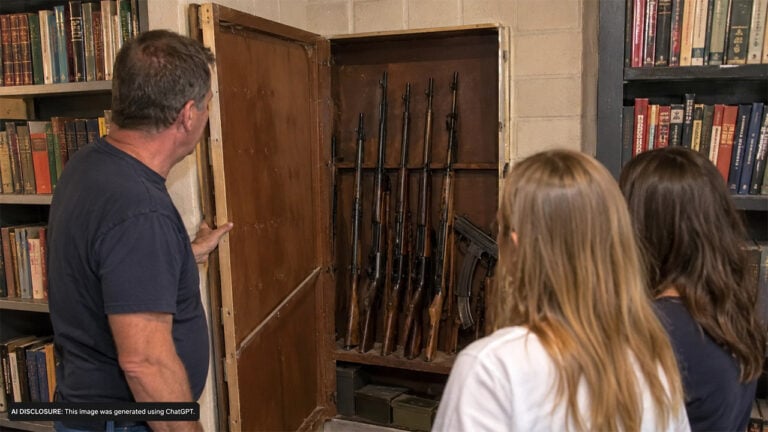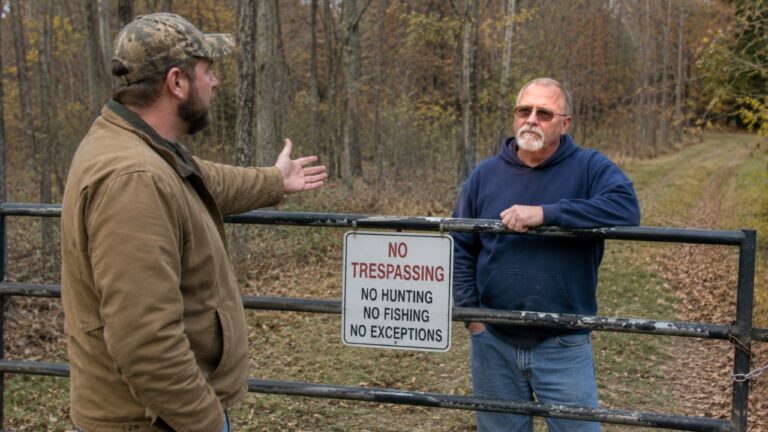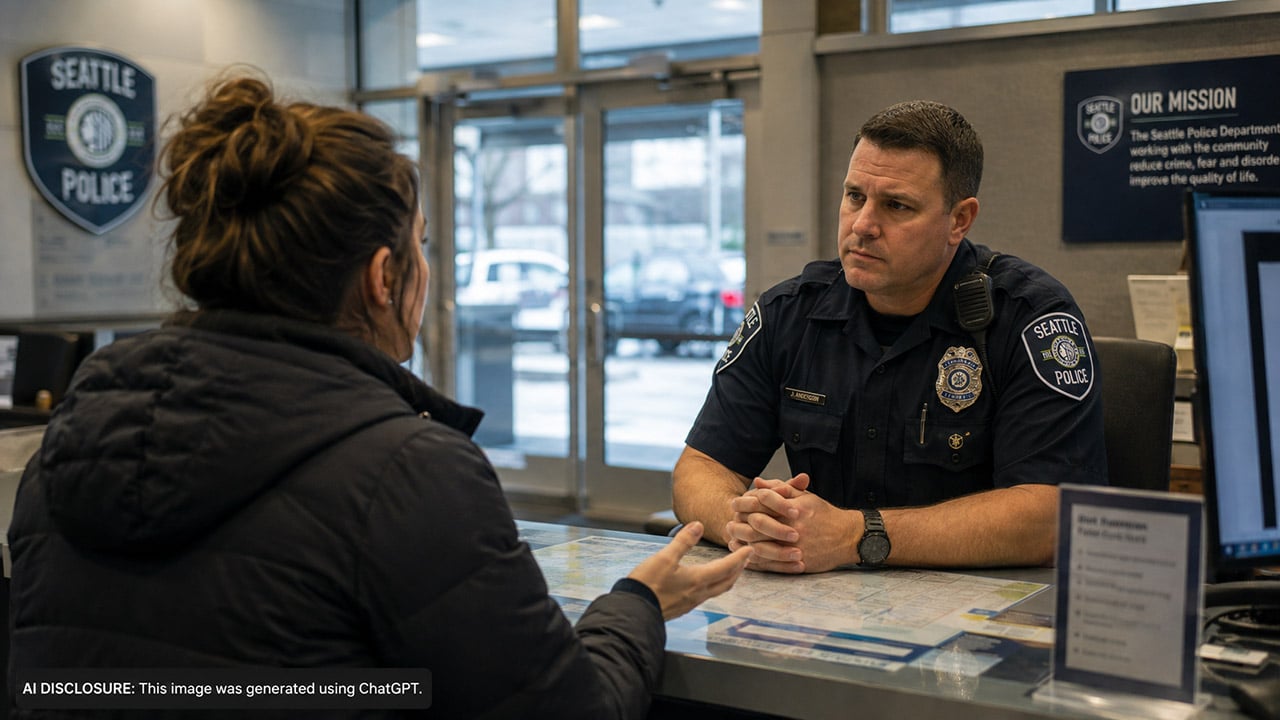
Photo credit: AI-generated image created using ChatGPT. Illustrative only
When you leave a bad situation, you expect at least the basics to follow you: your clothes, your documents, your peace of mind. For one Washington woman, one item didn’t come with her when she moved out—a handgun she says is registered to her—and it turned into a mess that feels familiar to a lot of folks who’ve ever tried to untangle property issues after a breakup.
In the original post, she explained that her boyfriend had been domestically violent, she moved out about six months earlier, and while trying to get her name removed from the lease, he refused to give her firearm back. She also said she tried contacting law enforcement where she lives now, but because it was a different county than where she used to live, she was told they couldn’t help.
Leaving an abusive home is hard enough—then the gun becomes the loose end
The details she shared were straightforward: she moved out, the gun stayed behind, and her ex wouldn’t return it. A lot of outdoorsmen understand why that’s more than a simple “property dispute.” If a firearm you own is out there in someone else’s hands—especially someone who’s already shown violent behavior—that’s a real safety concern.
And there’s another angle here that gun owners tend to think about immediately: liability and accountability. Even if the law doesn’t treat the situation the way people assume it does, nobody wants a firearm associated with their name floating around where they can’t control storage, access, or use.
The county line problem: why her new police department didn’t take it
She said the police department in her new county told her they couldn’t help because it happened in a different county. That might sound like a brush-off, but jurisdiction is a real thing. Local agencies typically work incidents that occur inside their boundaries, and they’ll often push you back toward the agency where the alleged theft or unlawful possession happened.
From a practical standpoint, that means the first call that feels “logical” (your current local PD) isn’t always the call that gets traction. When property is withheld back where you used to live, the complaint usually starts there—even if you’ve already moved on and changed addresses.
Lawyers pointed her back to where the gun was taken
Two attorneys answered the question and both aimed at the same target: make the report where the theft occurred. One attorney stated she needed to “lodge a complaint where the theft occurred,” adding that possession of a stolen firearm is a felony.
The second attorney suggested contacting police and/or the county prosecutor’s office in the county where she used to reside, noting that the ex-boyfriend’s actions “may rise to the level of theft/taking” of her handgun. That’s an important distinction. Sometimes the fight after a breakup is just who gets what; other times, it crosses into criminal territory when someone refuses to return property that isn’t theirs to keep.
If law enforcement won’t resolve it quickly, a court order may be the next tool
The family law attorney also laid out the next rung on the ladder: if police or prosecutors can’t help, she may have to go to court to get an order directing him to return it. That’s not the quick, clean fix people want, but it’s often how these situations end up being handled when there’s no immediate enforcement action.
The attorney also noted it might not fit neatly into a domestic violence protection order case if she isn’t currently afraid for her safety. That’s a key point for readers: different legal tools exist for different problems, and the right tool depends on the facts, timing, and what can be proven. They recommended talking with a lawyer about options after speaking with police/prosecutors, and even mentioned asking for fees connected to having to pursue the issue.
For gun owners, the big lesson is documentation and a clear paper trail
This is where the outdoorsman angle gets real. Breakups happen, people move, and sometimes the “I’ll get it later” stuff turns into “you’re never getting it.” When that “stuff” is a gun, you want a clean trail showing it’s yours and that you attempted to recover it through the right channels.
That doesn’t mean confronting the person or trying to “retrieve” it yourself. It means doing what the attorneys pointed to: making a complaint in the jurisdiction where the gun was kept, being clear about what happened, and escalating to the prosecutor’s office or civil court if that’s what it takes. It’s also a reminder to keep purchase records, serial numbers, and any paperwork you have stored somewhere safe and accessible—because when things go sideways, memory and handshake agreements don’t carry much weight.
At the end of the day, the outdoors crowd tends to be practical. A firearm isn’t a lamp you can replace on a weekend trip to town. If it’s yours and it’s being withheld, it needs to be treated seriously, reported in the right place, and handled in a way that doesn’t create more risk. This woman’s situation shows how quickly a county line can turn a straightforward request into a slow grind—and why knowing where to file the complaint can matter as much as the complaint itself.
Like The Avid Outdoorsman’s content? Subscribe to our newsletter so you never miss an article.
Here’s more from us: